‘Camouflage’ creature — half-hidden in streams — is a new species in Brazil. See it
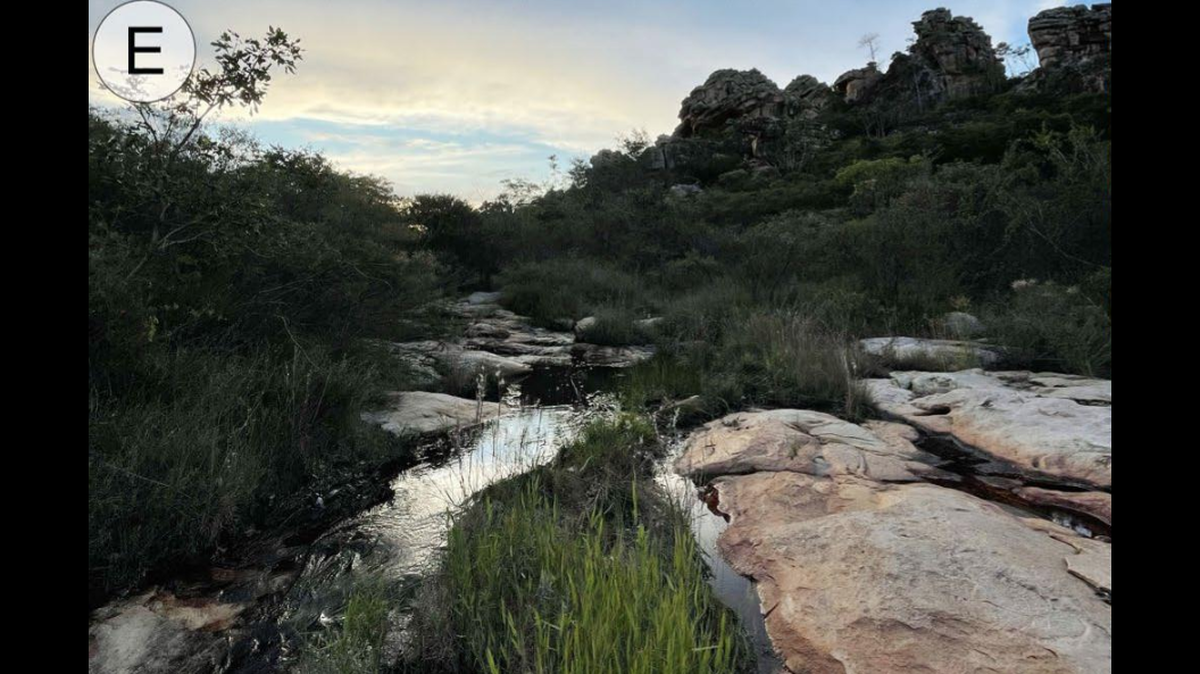
In the eastern Brazil state of Bahia, the arid environment is scattered with grazing animals and dotted with wind turbines on elevated patches of land.
There, more than 27 inches of annual rain create temporary pools and streams, and offer a place for creatures to dip into the water.
Researchers surveying the area noticed small frogs sticking halfway out of the temporary streams and thought they looked like the genus Rupirana, according to a study published March 14 in the peer-reviewed Journal of Vertebrate Biology.
This was “unexpected,” researchers said, as previously discovered Rupirana frogs lived more than 100 miles away on a specific mountain peak.
The animal “raised questions,” and researchers decided to take a closer look at the frog’s genetics — then discovered a new species.
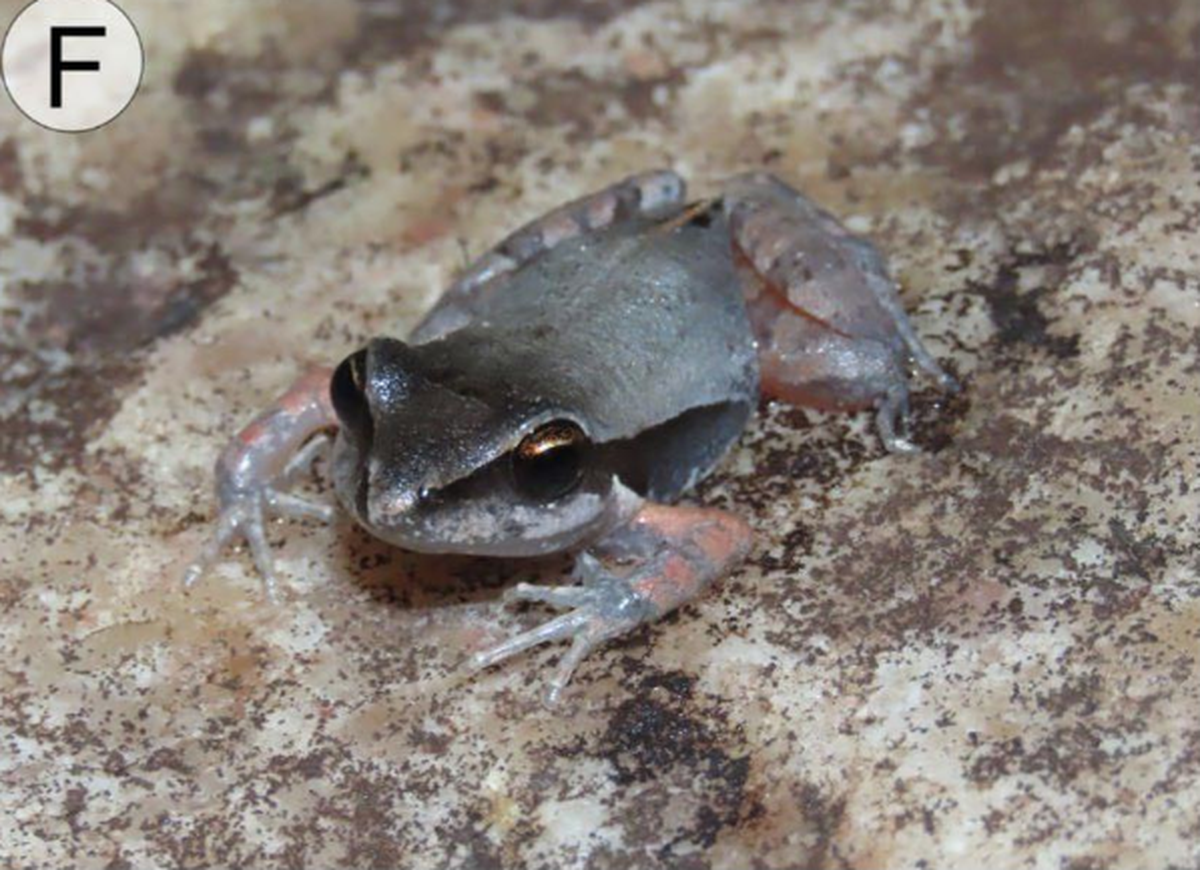
Rupirana kaatinga, or the white forest frog, has “smooth” skin, a rounded snout and lets out a pulsing call, according to the study.
The frog’s back is “predominantly gray” with two lines of brown spots and a dark stripe that starts at the nostrils and runs to the flank, or side, according to the study.
“The arms and legs display transverse dark bands, adding a camouflage pattern to the animal,” researchers said. “The inner thighs and inguinal region (or groin) are vibrant orange, contrasting with the rest of the body. The belly and gular region (or throat) are cream-colored with very light gray vermicular spots.”
There is some variation between frogs of the new species, researchers said. Some of the frogs have more brown, red or green backs, while juvenile frogs have orange bands compared to the darker colors found on adults. Only males exhibit vocal slits and sacs, used to call.
The white forest frog is set apart from other related species by its smooth skin and shorter call duration with a lower number of pulses in each call, according to the study.
The new species earns its name from the landscape it calls home, researchers said.
“The name ‘Caatinga’ is derived from the Tupi-Guarani language and means ‘white forest’,” according to the study. “This name alludes to the whitish landscape presented by the vegetation during the dry season, when most plants shed their leaves, and the trunks becomes whitish and dry.”
The region has a high degree of seasonality, researchers said, and animals living there base their life cycles on the cycles of rain and drought.
The new species of frog is no different.
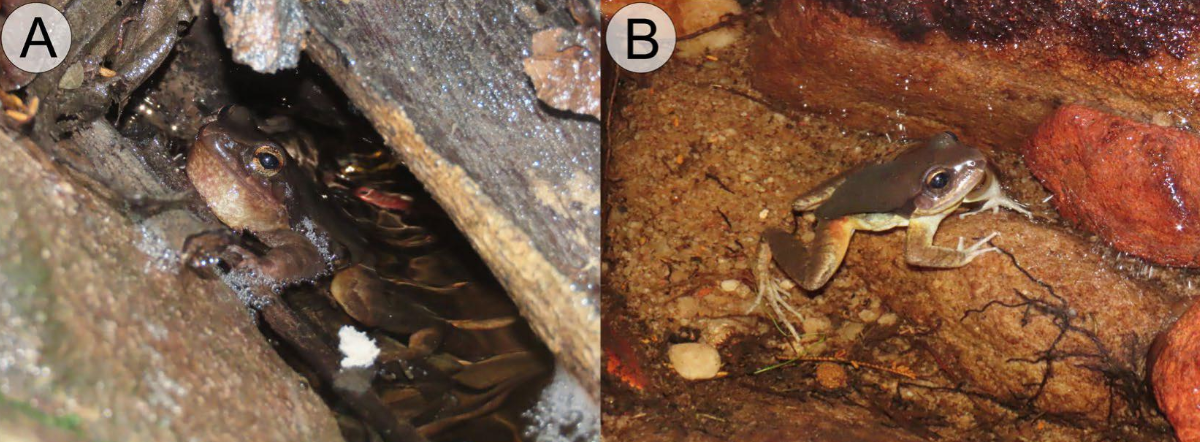
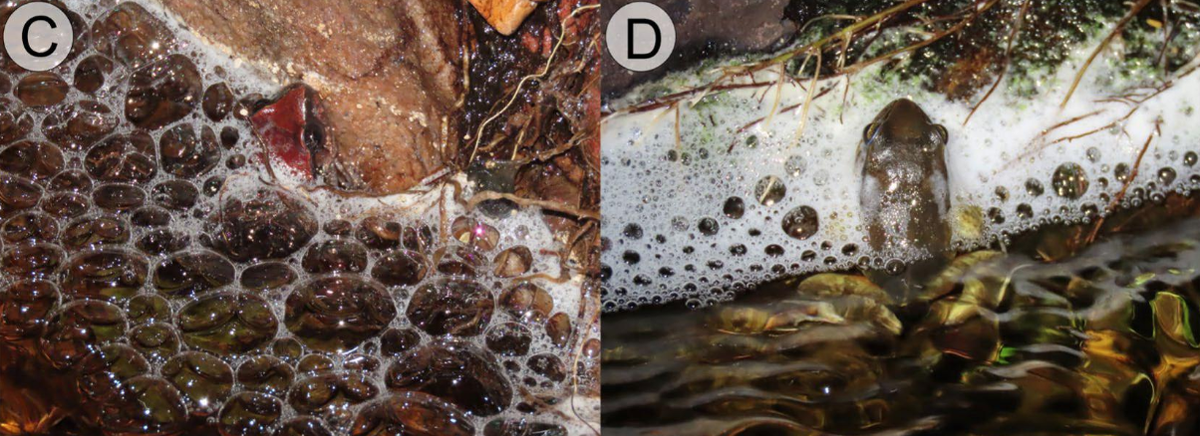
“We found R. kaatinga sp. nov. in temporary streams, characterized as seasonal lotic streams with flowing water primarily in the months of December, January and February. Males of the R. kaatinga sp. nov. were observed emitting calls while positioned with the posterior half of their bodies underwater,” researchers said. “They preferred concealed locations, often nestled beneath leaves and small rocks.”
The area is a hotspot for wind turbines, researchers said, and as more companies eye this region for wind farm development, there is a chance more species could be discovered.
“Notably, the discovery of R. kaatinga sp. nov. in the Serra do Assuruá was made possible due to wind farm development in this isolated and hard-to-access region,” researchers said.
Wind farm projects also allow researchers to keep a close eye on the local species to ensure the habitat modification has not been detrimental, according to the study.
“The discovery of (the white forest frog) in the Serra do Assuruá — a region undergoing rapid transformation due to wind farm development — highlights these concerns,” researchers said. “While the discovery is scientifically exciting, it underscores the urgent need to carefully monitor the impacts of such development on local biodiversity.
The Serra do Assuruá is in the north-central region of the Bahia state of Brazil, on the country’s east coast.
The research team includes Sarah Mângia, Guilherme do Amaral, Márcia Müller and Diego J. Santana.
This story was originally published March 17, 2025 at 10:23 AM with the headline "‘Camouflage’ creature — half-hidden in streams — is a new species in Brazil. See it."