Neon creature — with ‘velvety’ skin — found mating in rainforest. It’s a new species
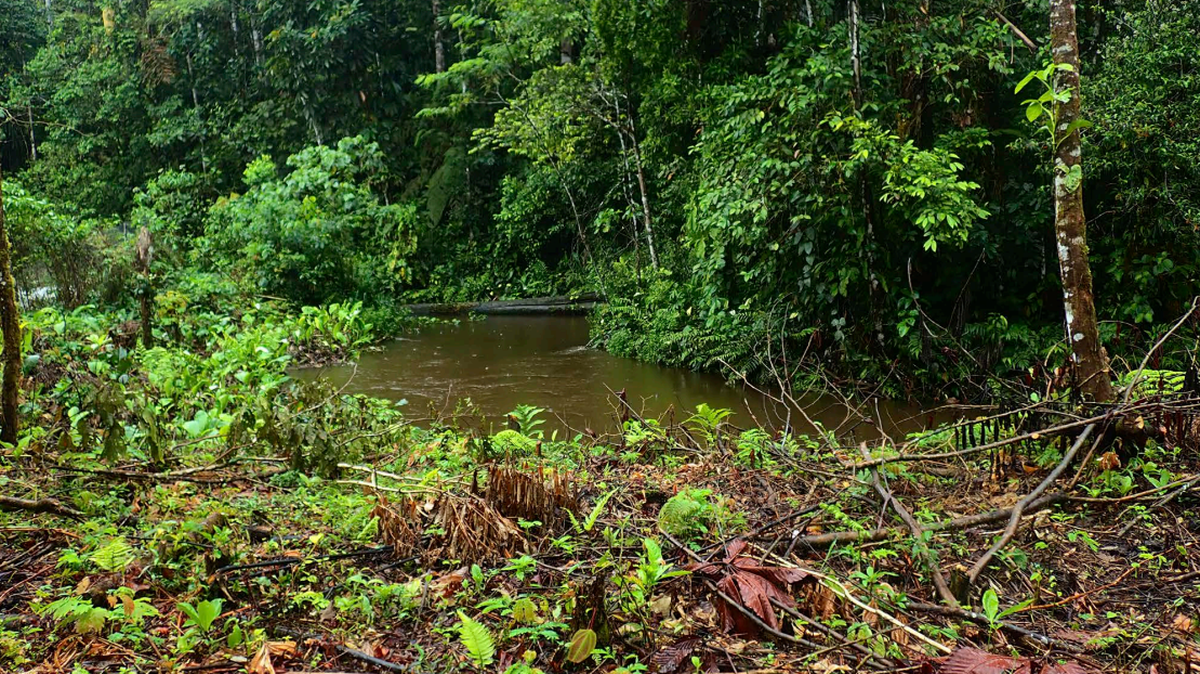
In a rainforest of Ecuador, a neon-colored creature with “long” limbs perched near a stream and called out for a mate. Its pulsing call worked — but also attracted the attention of nearby scientists.
The mating animals turned out to be a new species.
Researchers hiked into the lowland rainforest of Pastaza Province in 2021 in search of amphibians, according to a study published Nov. 15 in the peer-reviewed journal Salamandra. They hoped to find some harlequin toads, a poorly understood but highly threatened group of frogs.
During the visit, researchers found several toads with bright red hands, the study said. Intrigued, they captured a few of these animals and took a closer look. The toads matched some museum specimens previously misidentified as a known species but, more recently, believed to be unique.
Researchers soon realized they’d discovered a new species: Atelopus colomai, or Coloma’s harlequin toad.
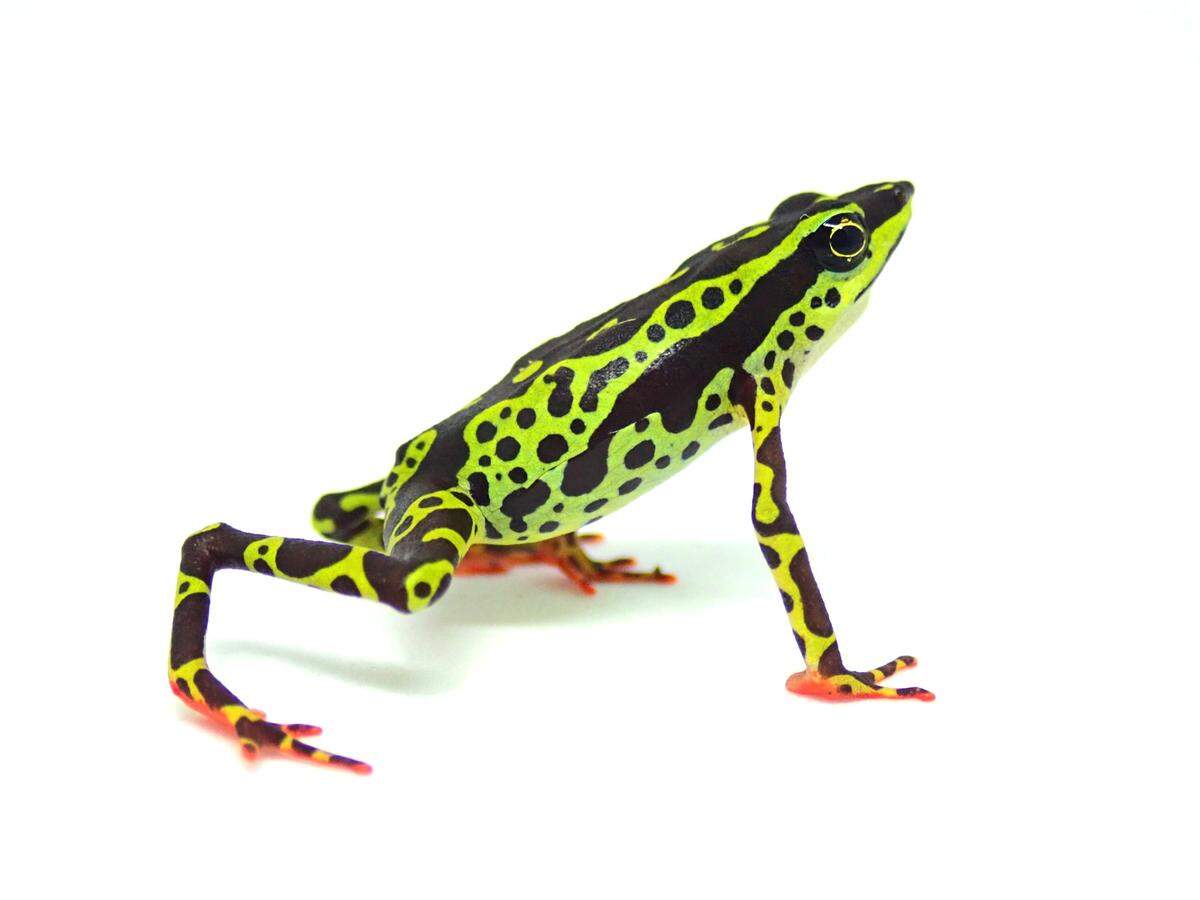
Coloma’s harlequin toads are considered “small-sized,” reaching just over 1 inch in length, the study said. They have “slender” bodies, “long” limbs and “smooth” skin with a “velvety appearance.”
Photos show the neon coloring of the new species. Seen from above, it has a mixture of black markings and bright yellow-green patches. Its eyes are “black with a golden yellow ring.”
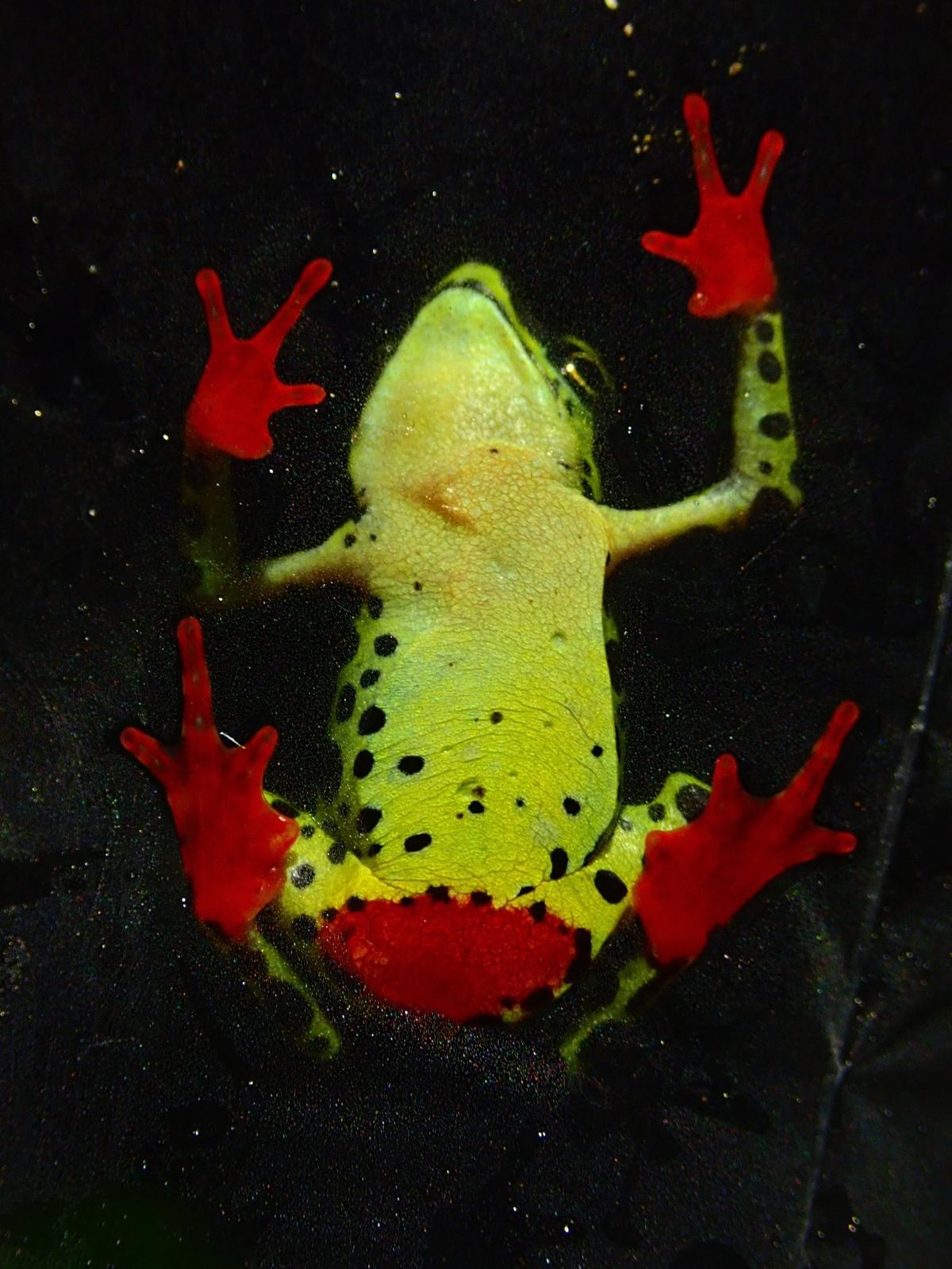
Seen from below, the toad has a yellow-green belly with bright red-orange hands, feet and groin, a photo shows.
The new species varied slightly in pattern and hue but generally looked similar, the study said. Female toads tended to be larger than males.
Coloma’s harlequin toads live in lowland rainforests near “clear water streams and rivers,” researchers said. Male toads were heard calling and found perched on “branches, fallen trees and rocks.” Males were also territorial, approaching any intruding male and pursuing it while intensely calling.
Female Coloma’s harlequin toads were only found at night “sleeping on leaves” or other plants several feet off the ground, the study said.
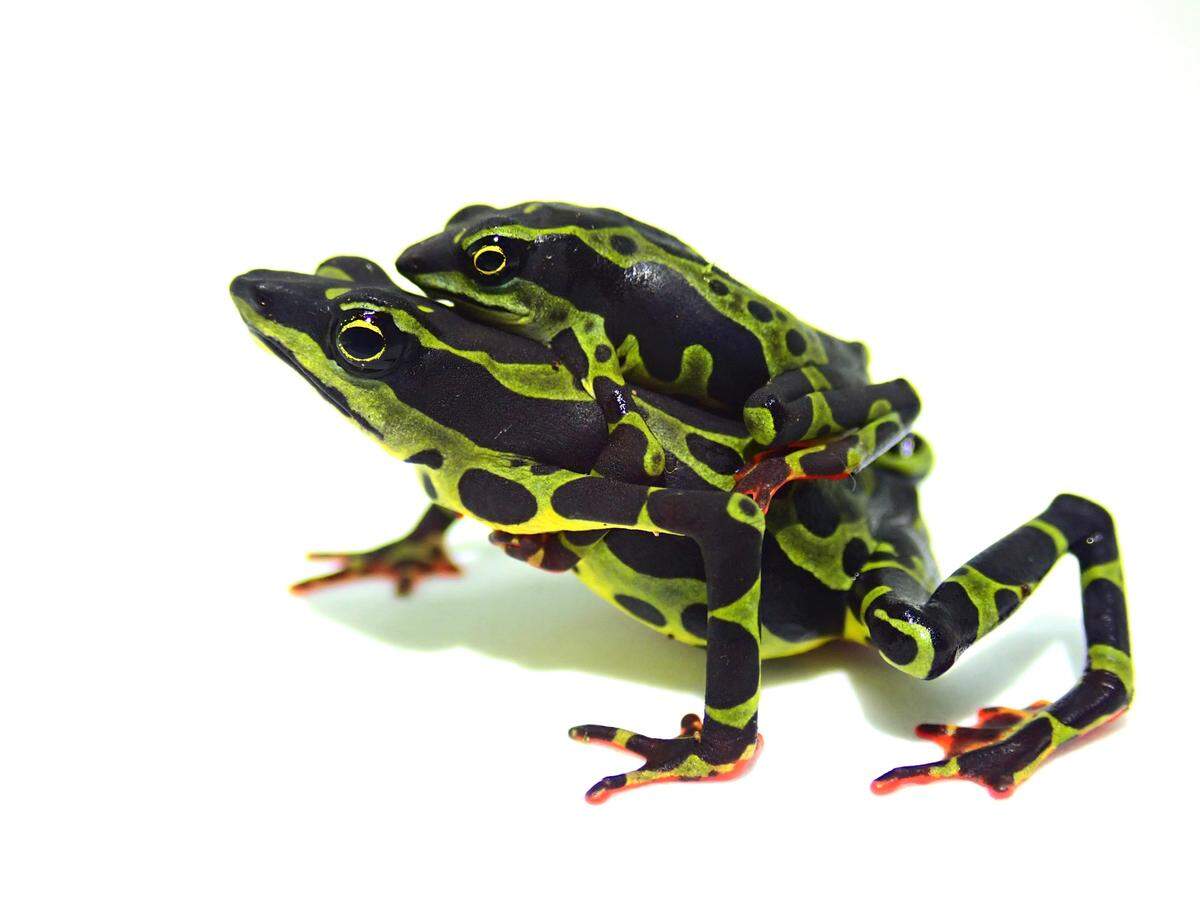
Researchers also observed several mating pairs of toads and documented the entire life cycle of the new species. Photos show the toad’s progression from tadpole to adult.
The new species is probably endangered and “likely to be threatened by climate change in the near future,” the study said. Researchers currently have two colonies of Coloma’s harlequin toads in laboratories as “survival-assurance.”

Researchers said they named the new species after Luis Coloma, a scientist “who has continuously contributed to the study and protection of harlequin toads for decades.”
Coloma’s harlequin toads have historically been found at 30 locations in two provinces of eastern Ecuador but, in recent decades, have only been found at six sites in Pastaza, a province bordering Peru, the study said.
The new species was identified by its DNA, size, color pattern, calls, skull shape and other subtle physical features, the study said.
The research team included Amadeus Plewnia, Andrea Terán-Valdez, Jaime Culebras, Renaud Boistel, Daniel Paluth, Amanda Quezada Riera, Christopher Heine, Juan Reyes-Puig, David Salazar-Valenzuela, Juan Manuel Guayasamin and Stefan Lötters.
This story was originally published November 18, 2024 at 7:46 AM with the headline "Neon creature — with ‘velvety’ skin — found mating in rainforest. It’s a new species."