‘Crocodile’-like creature with orange fingertips found on farm. It’s a new species
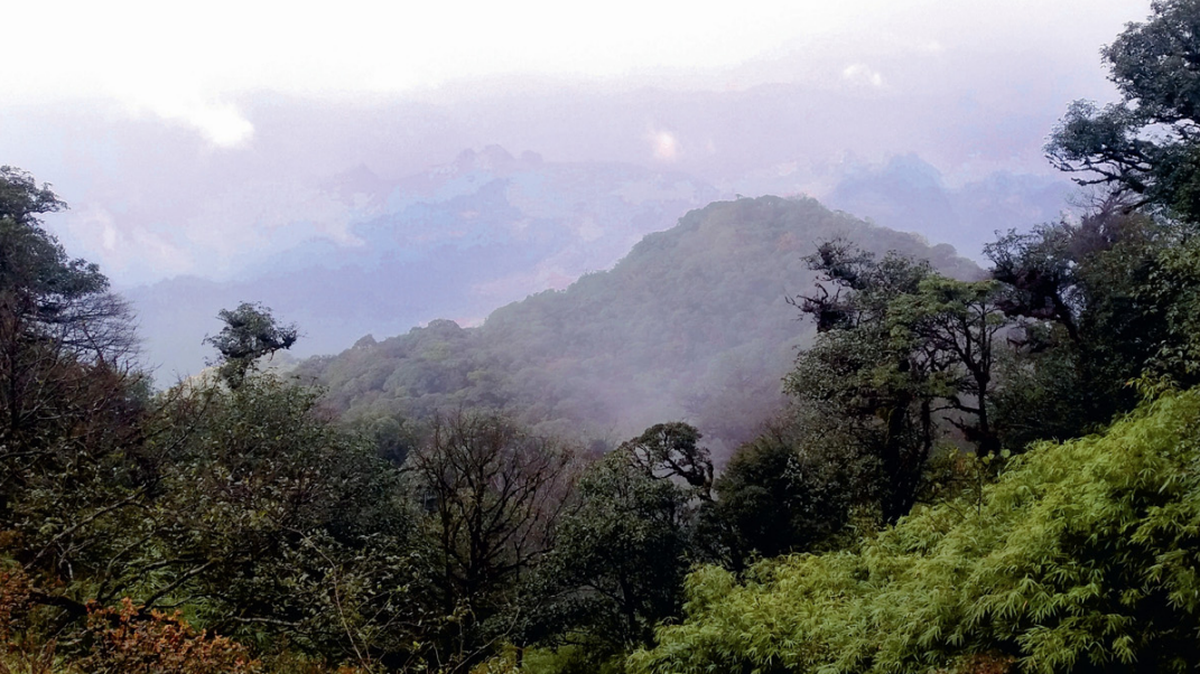
At a mountainous farm in northern Vietnam, a “crocodile”-like creature with “long” limbs sat in a slow-moving stream. Something about it caught the attention of visiting scientists — and for good reason.
It turned out to be a new species.
Researchers visited Kolia Organic Farm and a nearby mountain pass in 2017 to survey wildlife, according to a study published Nov. 12 in the peer-reviewed journal Alytes. Previous scientists had encountered “cryptic”-looking salamanders in the area, and researchers wanted to study these animals more closely.
During their surveys, researchers found several salamanders with orange fingertips, the study said. Intrigued, the team took a closer look at the animals, analyzed their DNA and realized they’d discovered a new species: Tylototriton koliaensis, or the Cao Bang crocodile newt.
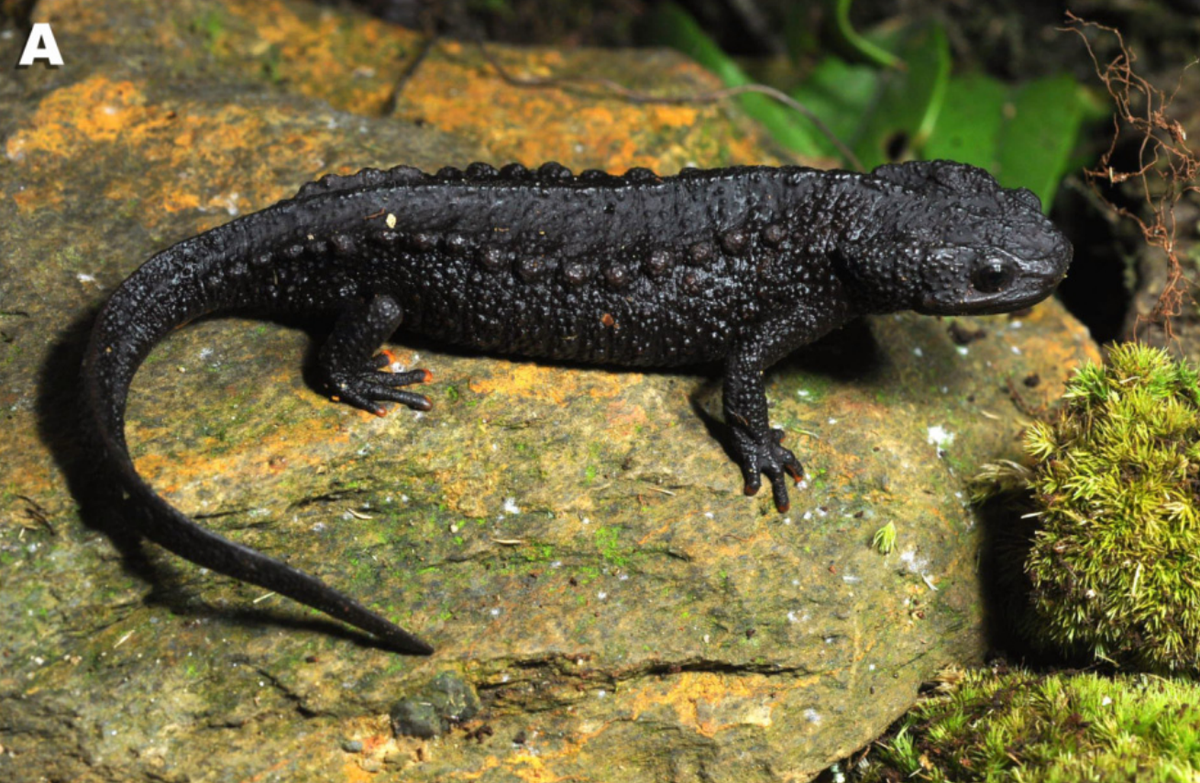
Cao Bang crocodile newts are considered “medium”-sized, reaching over 5 inches in length, the study said. They have “stout” bodies with “rough” skin and rows of “knob-like warts.” Their heads are “large” but their limbs are “very long and thin.”
Photos show the black coloring of the new species.
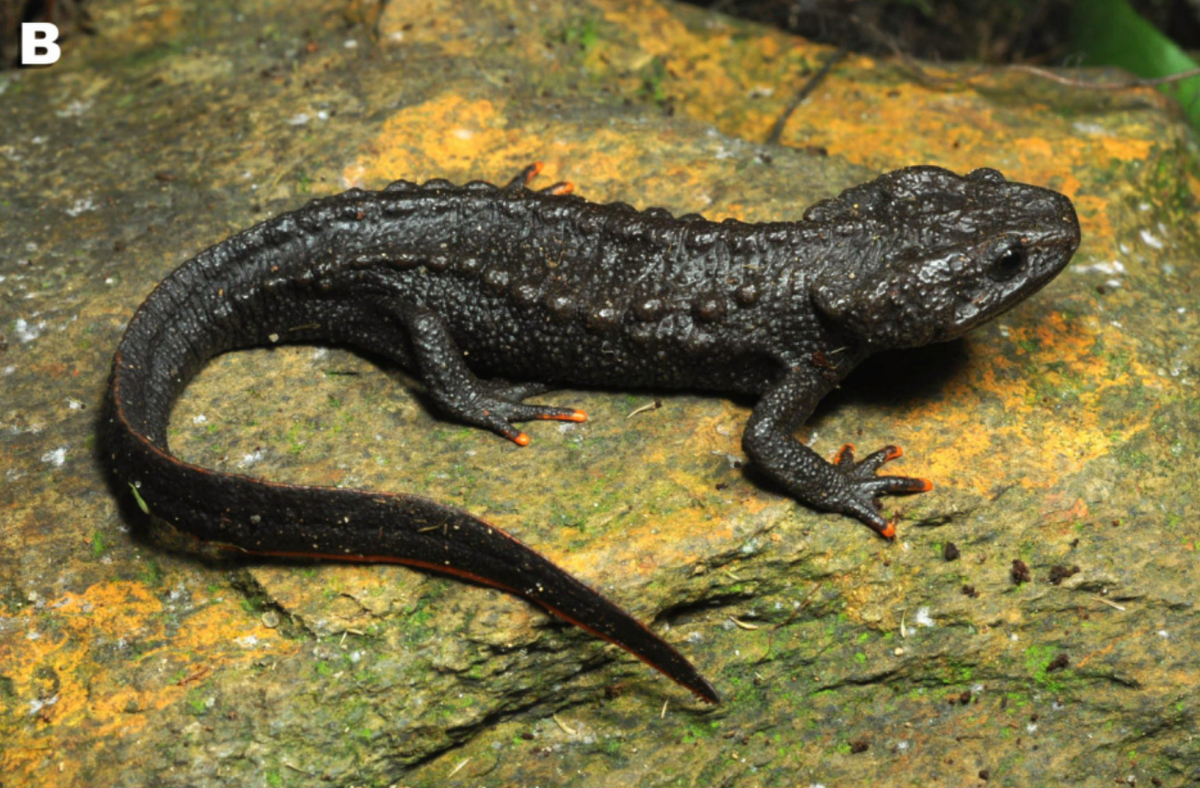
Seen from above, the newt has a uniform hue with “bright orange” marks on its fingertips and toes, researchers said. Seen from below, it has a dark gray stomach and an orange stripe down the center of its tail.
Cao Bang crocodile newts live in a mountain forest at elevations of 3,300 feet or more where the weather fluctuates from a colder dry season to a warmer rainy season, researchers said. During the rainy summer, the newts breed in “slow-flowing streams and temporary pools.” During the winter, it “hides under rocks and cavities.”
The new species is “probably threatened by extinction” due to “destructive” human activity but already has a “protected status” under Vietnamese law, the study said. Crocodile newts are generally “among the most threatened amphibians in the world.”
Researchers said they named the new species “koliaensis” after the Kolia farm and mountain pass where it was first discovered. The new species’ common name refers to the Cao Bang province where it has, so far, only been found.
Cao Bang province is in northern Vietnam, a roughly 1,100-mile drive north from Ho Chi Minh City and along the border with China.
The new species was identified by its teeth, skull, body shape, orange markings and other subtle physical features, the study said. DNA analysis found the new species had at least 2% genetic divergence from other related newts.
The research team included Nikolay Poyarkov, Tan Van Nguyen, Son Xuan Le, Dac Xuan Le, Dmitriy Arkhipov, Vladislav Gorin, Axel Hernandez and Christophe Dufresnes.
This story was originally published November 14, 2024 at 5:47 AM with the headline "‘Crocodile’-like creature with orange fingertips found on farm. It’s a new species."