‘Torpedo-shaped’ ocean predator with teeth on its tongue turns out to be new species

Anglers off the coast of Pakistan felt something bite their baited lines and reeled in a “torpedo-shaped” predator with teeth on its tongue. It turned out to be a new species.
Scientists Sher Khan Panhwar and Imtiaz Kashani visited Gwadar fish harbor in November 2023 to survey the catch. They wanted to study the region’s black king cobia, or Rachycentron canadum, a type of “large” fish popular commercially, they wrote in a study published Oct. 30 in the peer-reviewed journal Zoologischer Anzeiger.
During the visit, researchers noticed a few cobia fish with “confusing” coloring and “distinct” physical features. Intrigued, they took the fish to a laboratory for analysis.
Researchers scrutinized the unusual cobias’ looks, dissected them and compared them with typical cobias, the study said. Patterns quickly emerged. The fish from Gwadar were subtly but consistently different. Researchers realized they’d discovered two new species.
The first new species was Rachycentron blochii, or the blotchy cobia, the study said. These “torpedo-shaped” predators measured about 3 feet long and weighed about 8 pounds. They had “small” eyes, “pointed” snouts and small teeth on their jaws, tongues and the roof of their mouths.
Inside the blotchy cobia’s stomach were “small fishes, crustaceans, (and) cephalopods,” the study said.
Researchers said they named the new species after “the large gray blotches” on its sides. The name “blotchii” also refers to the Balochi language commonly spoken in the area where it was discovered.
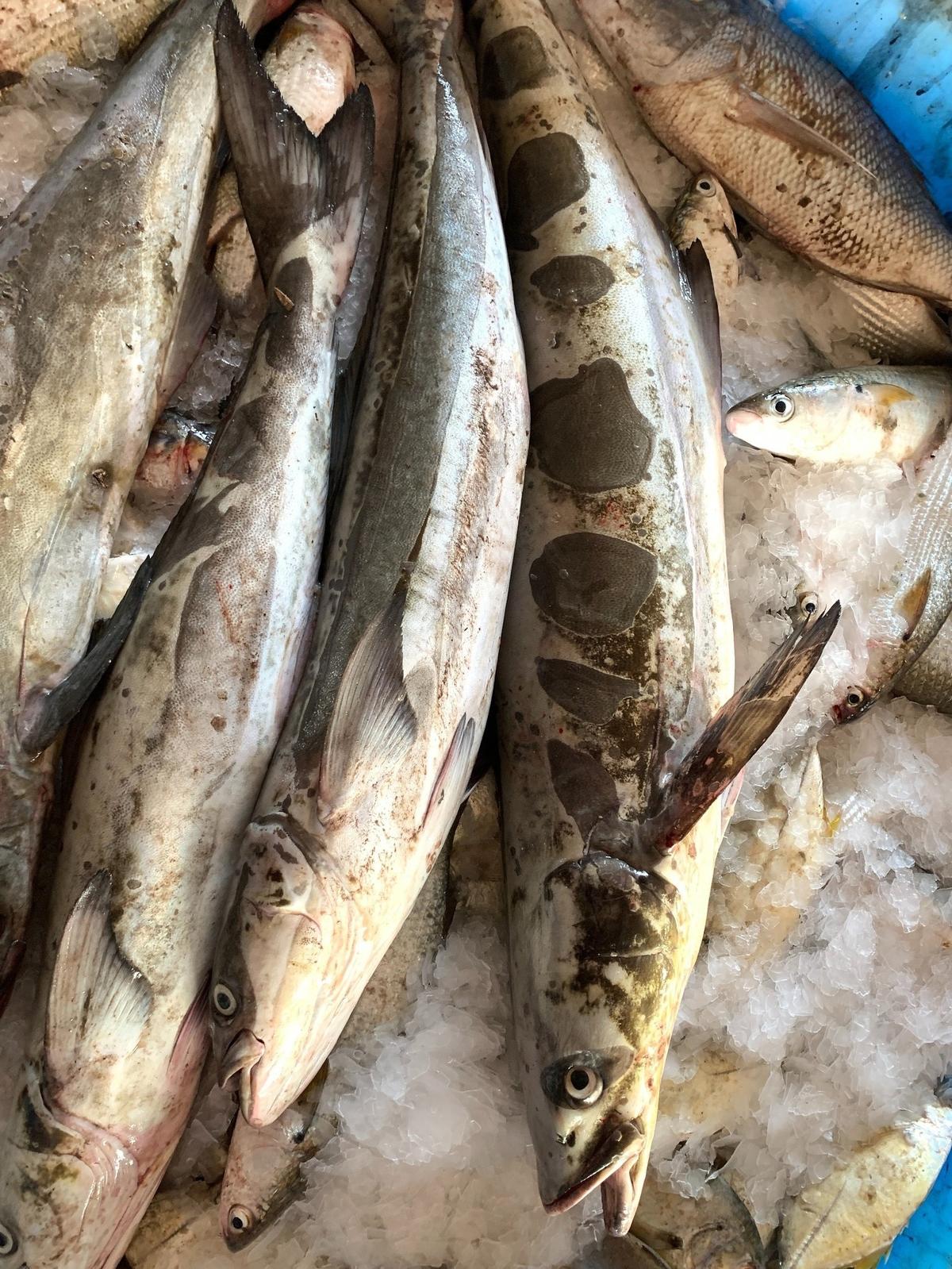
The second new species was Rachycentron makranesis, or the Makran cobia, researchers said. It measured about 2.5 feet long and weighed about 6 pounds. Its head was “short” and “pointed” with “moderate-sized” eyes and small teeth on its jaws, tongue and the roof of its mouth.
Makran cobias have a “greenish” coloring with a “striking gray band” running along their sides, the study said. Their four stomachs contained mostly digested material and a few recognizable “crab parts.”
Researchers said they named the second new species after the Makran coast where it was discovered and, so far, the only area where it has been found.
A photo shows both of the new species, which are “highly sought after” commercially.
Because the new species were caught by anglers, very little is known about their behavior or lifestyle, the study said. Generally, cobia are “solitary” fish known for their “voracious” and “aggressive” feeding habits.
The new species were identified by their coloring, head and fin shape, scale shape and other subtle physical features, the study said. Only two blotchy cobia and one Makran cobia were analyzed. Researchers did not provide a DNA analysis of the new species.
Gwadar fish harbor is in Gwadar, a roughly 1,260-mile drive southwest of Islamabad and along the Makran coast.
This story was originally published November 5, 2024 at 9:36 AM with the headline "‘Torpedo-shaped’ ocean predator with teeth on its tongue turns out to be new species."