Did recent rain storms end the drought in SLO County? Here’s what experts say
Storms have brought substantial amounts of rain to San Luis Obispo County over the past month. So is the drought over?
Not really, experts say.
“Drought, it’s a small word. But it’s a complicated concept when you really start thinking about the details,” said Sam Stevenson, a climate scientist at UC Santa Barbara.
The U.S. Drought Monitor shows that San Luis Obispo County — along with much of California — has seen notable improvements in drought conditions over the past several weeks.
The U.S. Drought Monitor is a partnership between the National Drought Mitigation Center at the University of Nebraska-Lincoln, the U.S. Department of Agriculture and the National Oceanic and Atmospheric Administration.
It produces maps showing what areas of the country are suffering from differing levels of drought conditions. The lowest level of drought the system uses is “abnormally dry,” followed by “moderate,” “severe,” “extreme” and “exceptional” drought.
As of Thursday, the western half of San Luis Obispo County was experiencing “moderate drought” conditions, while the eastern half was under a “severe drought.”
That’s compared to Jan. 3, when much of the county’s western half was in “severe drought” while the eastern half was experiencing “extreme drought” conditions, according to the U.S. Drought Monitor.
Recent rainstorms have certainly eased the drought conditions the Central Coast has been experiencing, experts say.
“It put significant moisture in the soil,” said Chris Surfleet, a forest hydrologist and professor in Cal Poly’s Natural Resources Management and Environmental Sciences Department. “That is probably going to carry us through much of the spring.”
SLO County sees above-average rainfall due to storms
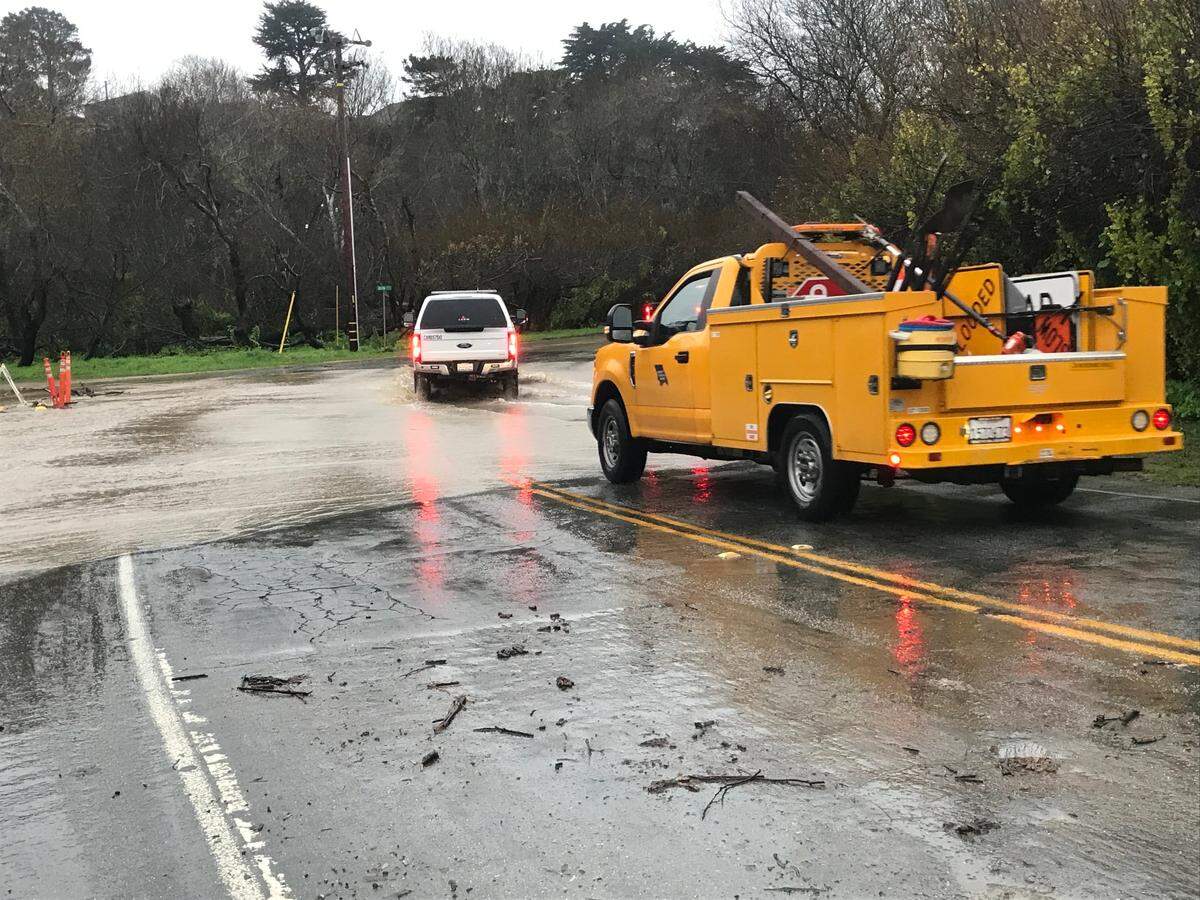
During the severe winter storm that hammered SLO County on Jan. 9 and 10, areas of San Luis Obispo County saw 2 to 10 inches of rainfall. The following weekend, another 1 to 2 inches of rain fell across much of the county.
The rain has caused local reservoir levels to rise and rivers and streams to reach flood stages as they burst well past their banks.
The Salinas Dam at Santa Margarita Lake has been overflowing for more than a week.
Areas of SLO County have already received more rainfall than they see in a typical rain season, which runs from July 1 to June 30.
Cambria has measured 23.4 inches of rain since July 1, which is 106% of its normal yearly average, according to the San Luis Obispo County Public Works Department.
Los Osos has measured 21.9 inches of precipitation, 122% of its annual average, while Templeton has measured 21.3 inches, 118% of its annual average, county data show.
According to the county, Camp San Luis Obispo has measured 26.5 inches of rain since July 1, 132% of its annual rainfall average, and Arroyo Grande has measured 18.8 inches, 104% of its normal annual rainfall.
The National Weather Service’s rain season for California runs from Oct. 1 through Sept. 30 every year.
According to the Weather Service, the Carrizo Plain has seen 244% of the rainfall it typically averages from Oct. 1 through Jan. 12, while Rocky Butte near San Simeon is at 527% for that same period.
Rocky Butte, widely considered the wettest spot in SLO County, received 47.9 inches of rain from Oct. 1 to Jan. 12, when it normally measures 20.26 inches for the entire year ending Sept. 30, according to the Weather Service.
That means it had already recorded 236% of its total average annual rainfall as of Thursday, the Weather Service’s data show.
Does rain mean end of drought for Central Coast?
Despite all that rain, the region isn’t out of the woods yet when it comes to the drought.
“The drought has been mitigated,” Stevenson said. “But the question is: What happens next?”
Stevenson’s research at the Bren School of Environmental Science & Management at UC Santa Barbara has found that the western United States has entered a period of continuously warmer temperatures and drier conditions.
“We’re going to have periods, like now, where we have a lot of water and things seem great,” Stevenson said. “But what we can’t do is get complacent, right, because that’s not going to necessarily be the case every winter.”
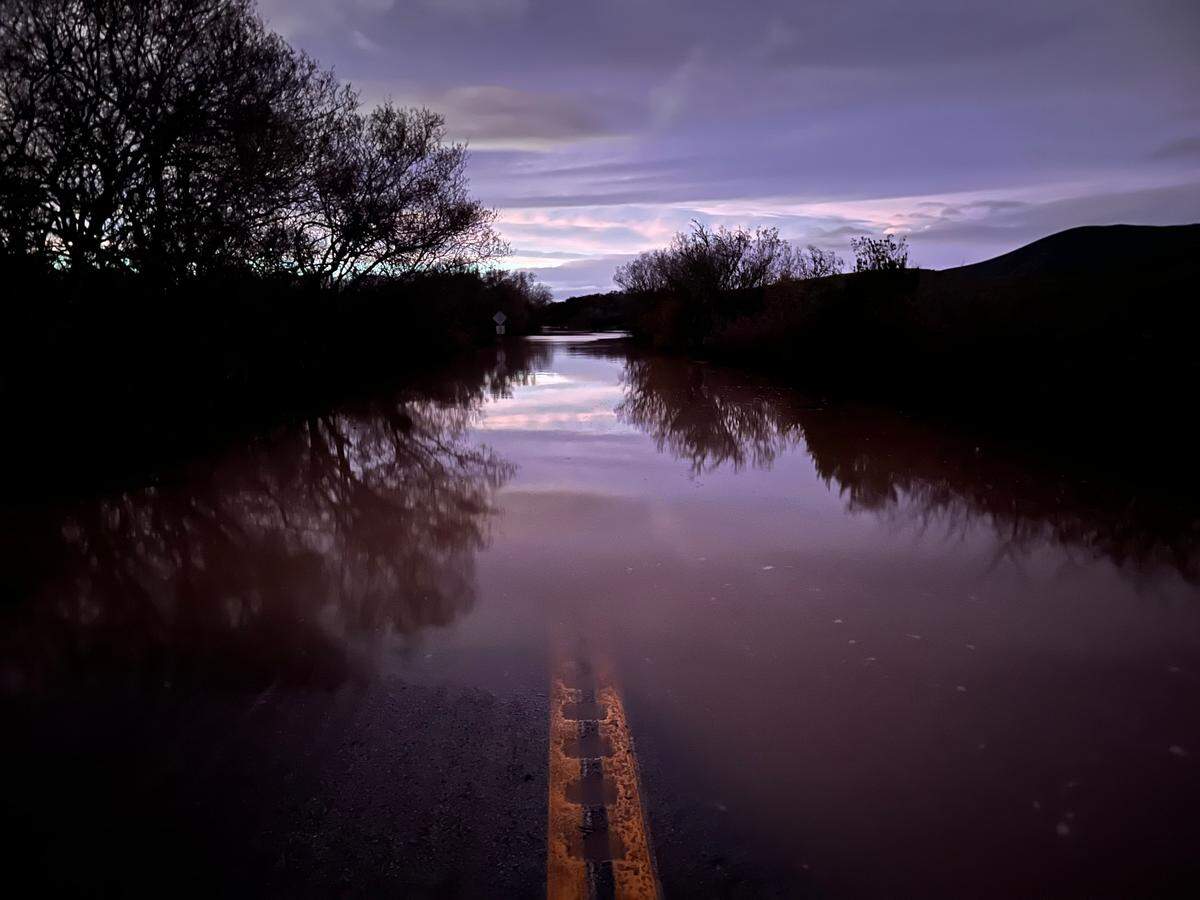
Climate scientists predict that as the planet warms and regions such as the western United States become drier, rainstorms will become less frequent and yet more severe.
Intense atmospheric rivers such as those that hit San Luis Obispo County this month and in late January 2021 are expected to happen more often as the atmosphere continues to warm.
“This is exactly what the climate models have been predicting for quite some time and what the climate community has been talking about, and we’re just kind of watching that unfold in real time,” Stevenson said.
“For me, it highlights the need to start recognizing that we’re seeing these manifestations of climate change and we need to start adjusting not just our reactive plans, but (also) our proactive plans for years and decades down the road,” she added, “because these trends are are only going to continue both in terms of the drought and the extreme rainfall.”
This story was originally published January 17, 2023 at 1:31 PM.