Paso Robles groundwater pumped far beyond sustainable levels, new report shows
A new report shows that over-pumping of the Paso Robles groundwater sub-basin has continued at unsustainable levels, an issue worsened by the ongoing drought that has resulted in greater irrigation needs for agriculture operations in the region.
In total, groundwater users in the basin in northern San Luis Obispo County — generally encompassing the area east of Highway 101 and north of Highway 58 — pumped 82,100 acre-feet of water in 2021, up from 67,300 in 2020, a 22% increase, according to the latest annual report for the basin.
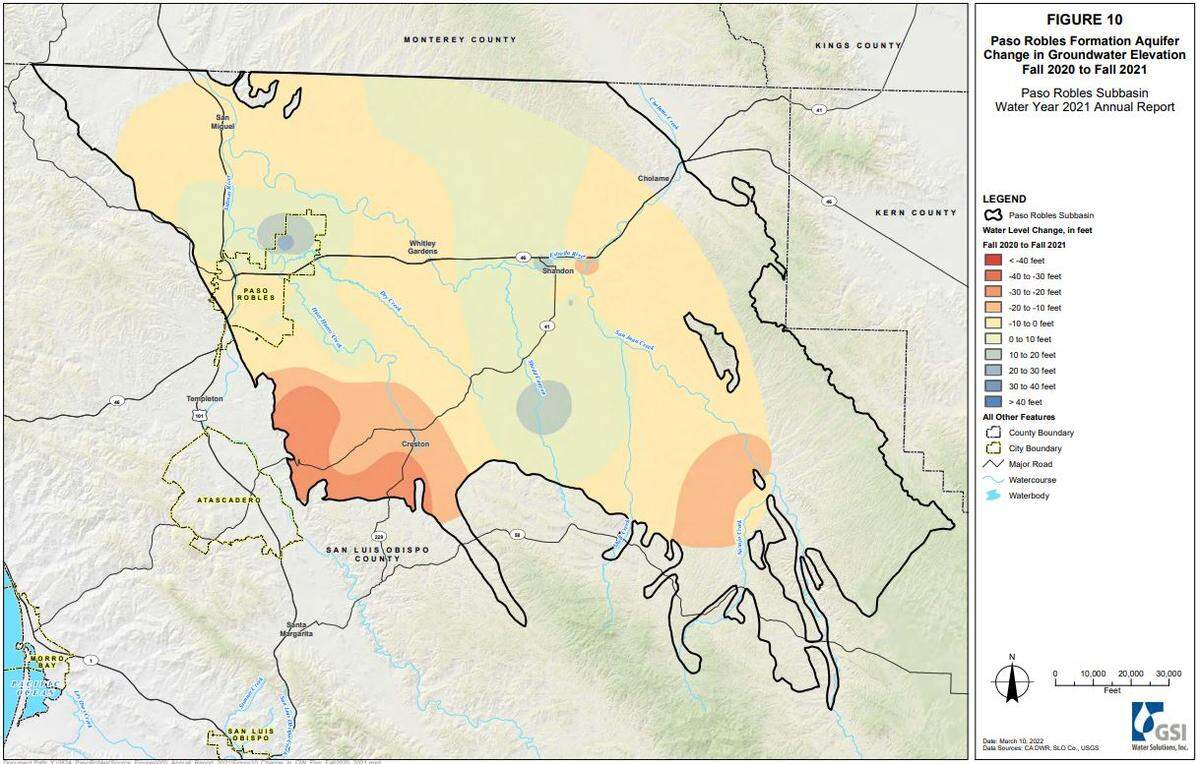
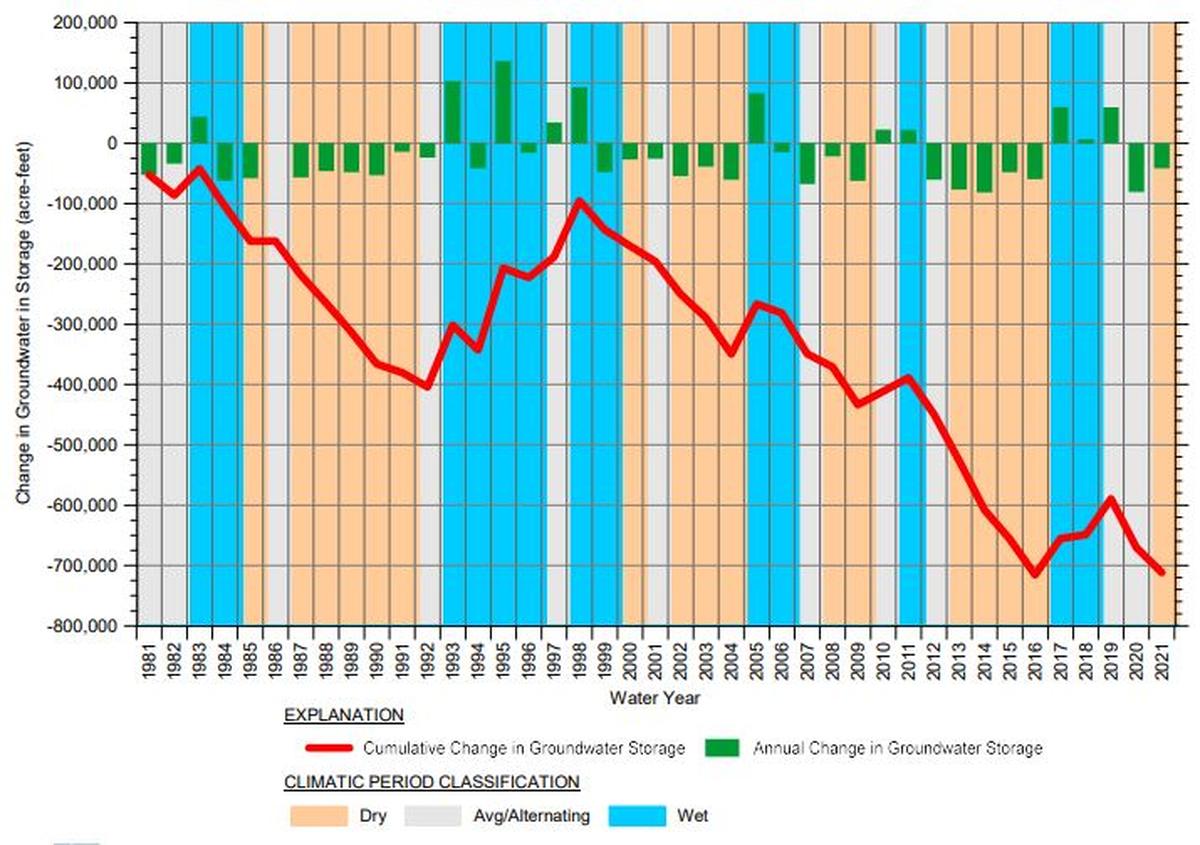
That’s a far cry from the estimated sustainable yield of 61,100 acre-feet per year and resulted in the basin’s groundwater supply being depleted by about 41,500 acre-feet, the annual report says.
In fact, the total groundwater pumped from the basin has exceeded the estimated sustainable yield in all of the past five years.
Of the total, agriculture users pumped the most water: a total of 75,500 acre-feet in 2021, according to the report. Municipal users pumped 1,553 acre-feet, while public water systems and rural domestic users pumped a total of 5,060 acre-feet.
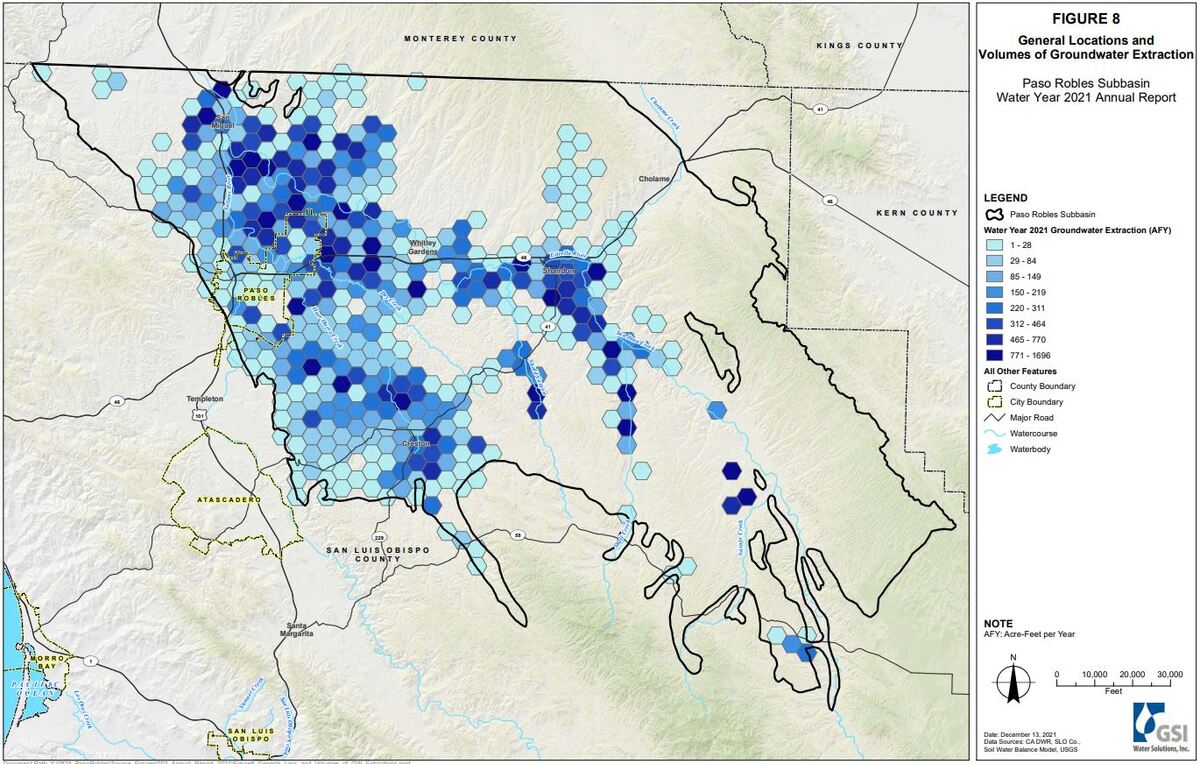
Municipal users increased their water consumption from 2020 to 2021 by 44 acre-feet, or 14.3 million gallons, and public water systems and rural domestic users have stayed consistent over the past five years, according to the report.
Agriculture users, on the other hand, increased their consumption by 14,800 acre-feet, or 4.8 billion gallons, the report says. That’s a 24% increase over the previous years. Most of the irrigated agriculture on the basin consists of vineyards.
The reason for the increase in consumption is pretty obvious, said San Luis Obispo County’s groundwater sustainability director, Blaine Reely.
“We had a much drier year in 2021 than we had in 2020,” he said. “So the growers had to use more groundwater to meet the crop demand. There was really no increase in crop acreage. We just didn’t get the rain.”
And as 2022 starts off as another unusually dry year — the Paso Robles area has received about 76% of its normal rainfall so far this season, according to data from the National Oceanic and Atmospheric Administration — Reely expects the basin to continue to be depleted beyond its sustainable yield for the time being.
Reely noted that the county currently has no way to force or incentivize growers to reduce their groundwater pumping, but it’s something the county is looking at as it implements its groundwater sustainability plan for the Paso Robles basin.
“We’re currently using more groundwater than the basin can sustainably manage,” Reely added. “We ultimately have to turn those trends around.”
The county and other entities that manage the basin — the Shandon-San Juan Water District, city of Paso Robles and San Miguel Community Services District — are working to improve the basin’s condition.
They’ll do that through the basin’s groundwater sustainability plan, a 1,100-page document that outlines the actions the entities will take to balance the needs of groundwater users in the area with the water available.
The agencies were required to draft the plan under the state’s Sustainable Groundwater Management Act (SGMA, pronounced “sigma”) because it is considered “a high-priority basin subject to critical conditions of overdraft.”
Generally, the plan outlines how the management agencies will promote water conservation measures for all users of the groundwater, as well as mandatory pumping limitations for those who live in areas where the groundwater is especially low. It also explains how the basin will be managed and monitored to ensure there is enough water available for future generations.
The agencies have applied for a $7.6 million grant from the California Department of Water Resources to “get things moving” on implementing some of the plan’s key measures, Reely said. Most of the grant is earmarked for building and executing two wastewater treatment plants in Paso Robles and San Miguel, from which the recycled water can be used for irrigation, he said.
Additionally, the county is working with Monterey County and the Department of Water Resources to allow water from Nacimiento Lake to be used for agriculture purposes within the Paso Robles groundwater basin area.
“I feel very good about the future of all groundwater basins in the county,” Reely said. “In the Paso Robles basin, we may still see high groundwater use for the next year. But I think after that, in the not-too-distant future ... we will have supplemental water supplies that we can deliver to parts of the basin that will really result in benefits. And I think we’ll start seeing some real movement toward sustainability.”