Should new homes be allowed in Cambria? Landowners in a battle with Coastal Commission
An upcoming decision from the California Coastal Commission on Friday may set a precedent that could effectively cut off any hope for new development in Cambria, which has seen population declines in recent years amid a struggle to maintain a sustainable water supply.
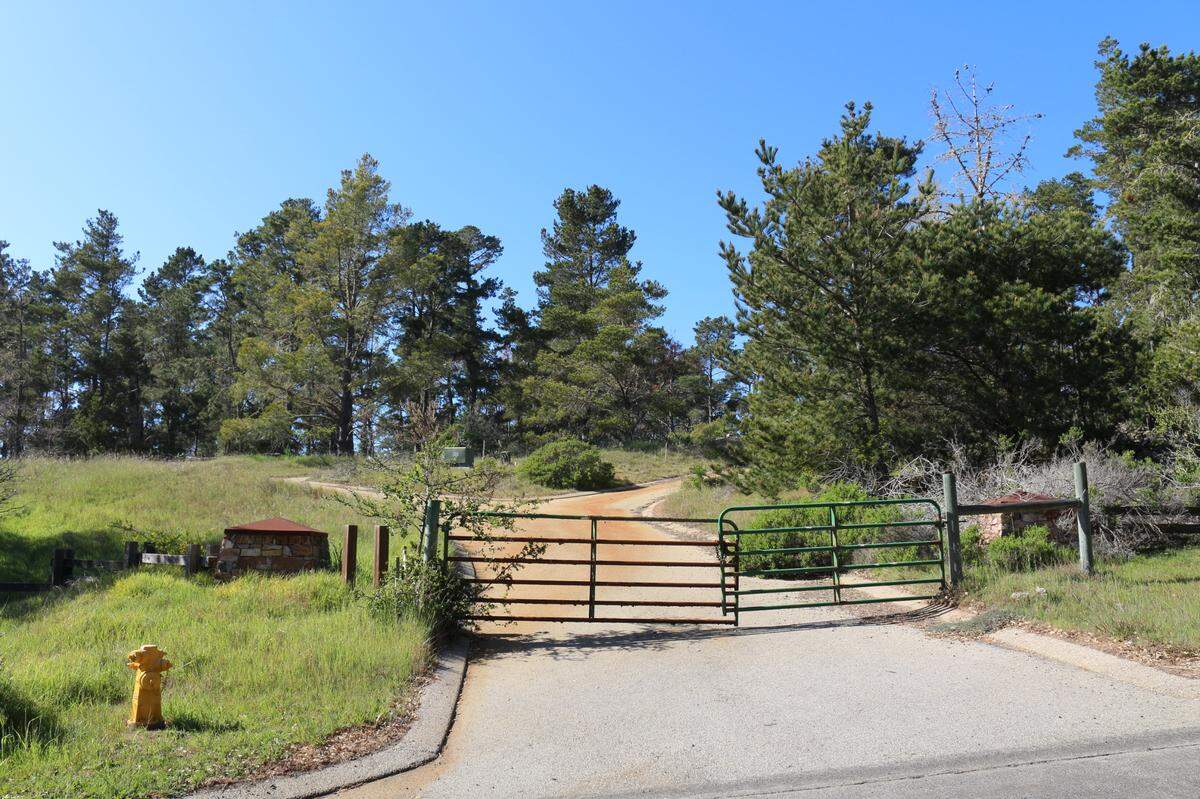
Commissioners will consider coastal development permits for two retirement homes proposed to be built in the Cambria Pines Estates neighborhood off Highway 1 just east of Moonstone Beach.
Coastal Commission staff say in their reports prepared for the hearing that Cambria simply does not have enough water for its current population, nor a growing one, to approve the projects. Such a conundrum is exacerbated every year the community experiences drought conditions as its water supplies are easily shriveled in a below-average rainy season.
Therefore, staff suggests commissioners deny the permits for the two homes.
However, Ty Green, a San Luis Obispo-based attorney for the property owners, says doing so would violate the owners’ vested rights to build their homes because they have been hooked up to the community’s water system and paying bi-monthly water bills since early 2001 — before a Cambria-wide moratorium on new water connections was established.
Green said he’s prepared to sue the Coastal Commission should it deny the permits for the two homes on Friday.
“The Coastal Commission has basically taken the position that there won’t be any more development in Cambria, period, until there’s another source of water,” he said. “My position is the Coastal Commission has effectively put a moratorium on all development in Cambria; that’s a violation of my clients’ constitutional rights.”
The two property owners — Al Hadian and Ralph Bookout — say they feel they’re stuck in a boxing match between two agencies that they didn’t sign up for.
Hadian is proposing to build a 4,000-square-foot house with three bedrooms, a 1,000-square-foot garage for four cars and a 1,200-square-foot workshop on a 24-acre property. Bookout wants to build a 3,136-square-foot home with three bedrooms and two garages for three total cars plus a 991-square-foot workshop on his 6.6-acre property.
The properties are on the Leimert tract in the Cambria Pines Estates neighborhood. Of those 18 tracts, 10 have homes built on them.
Beyond the water issues, the Coastal Commission raises issues with the homes’ proposals to cut down old-growth, native Monterey pine trees.
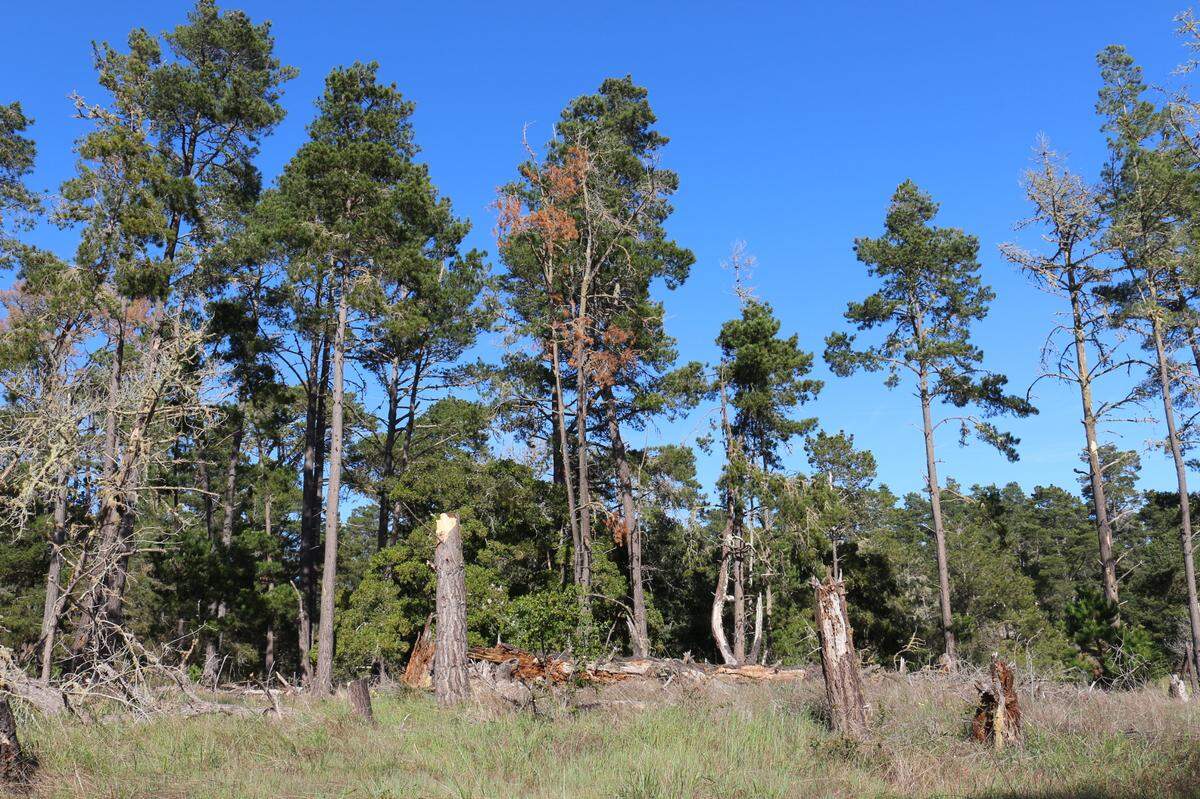
Hadian and Bookout say they, too, are troubled for the native Monterey pine trees on their properties. The trees have gone decades without much care or attention and therefore fallen prey to disease and drought-stress that for decades has killed thousands of the trees in Cambria, the property owners said.
“The Coastal Commission is worried we’ll cut down some pine trees, but what they don’t realize is that we’re required to replant four to one,” Bookout said, noting that he will plant at least 280 trees on the property to offset those he plans to cut down to build his retirement home. “The reason I got the six acres there was because I wanted to grow a lot of pine trees and help reforest the Monterey pines. I’m retired and I have a lot of energy left to make Cambria more beautiful.”
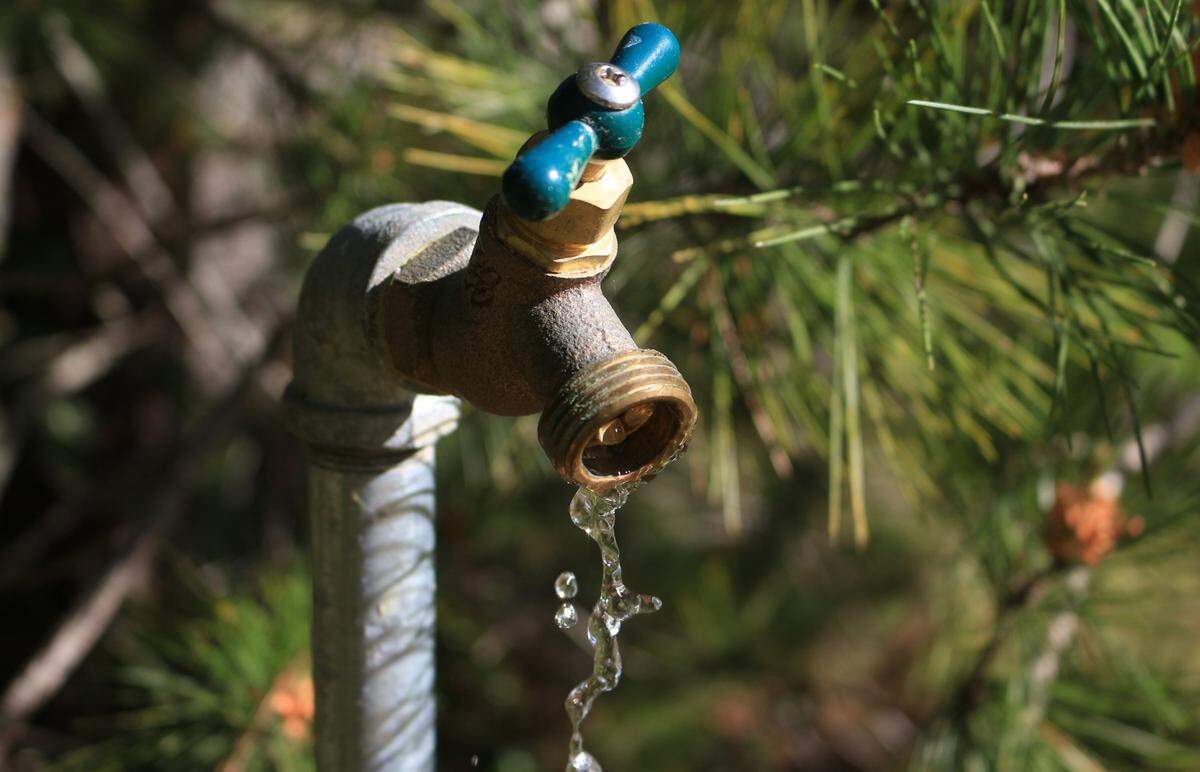
Water is enemy No. 1 against new development proposed in Cambria
Water supply issues have plagued Cambria for decades.
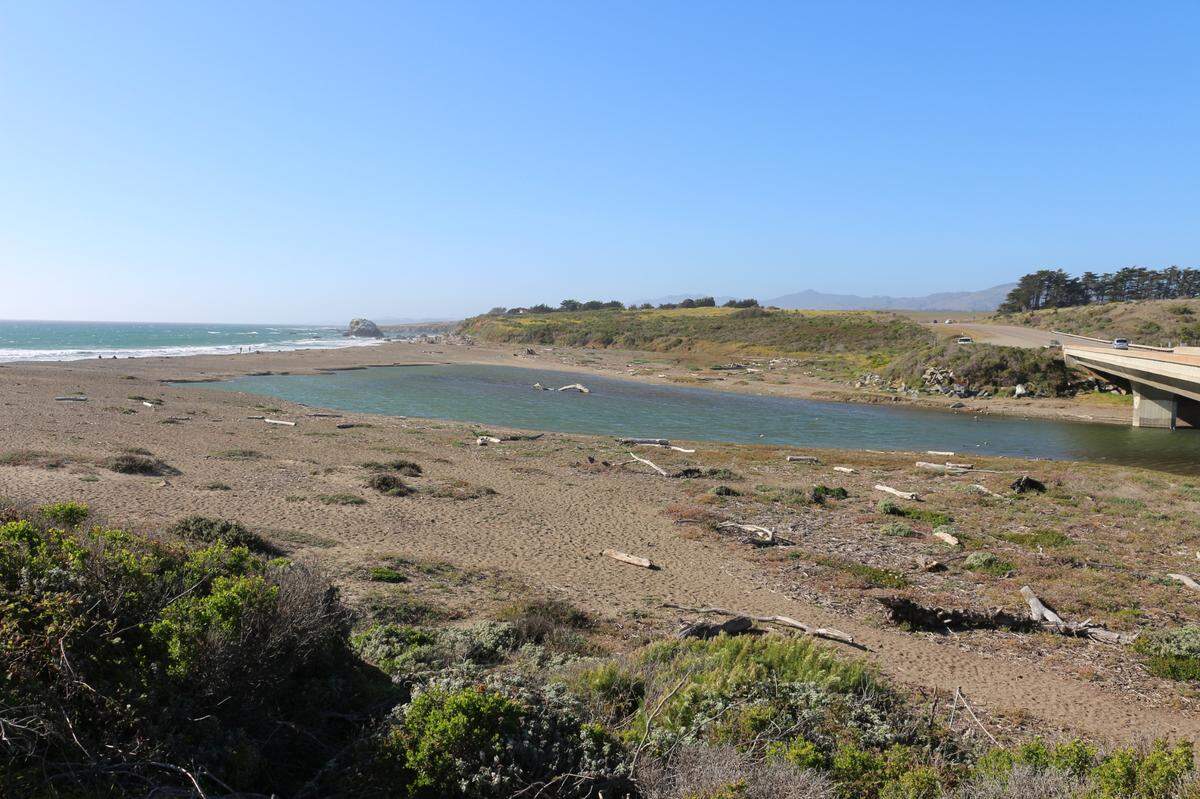
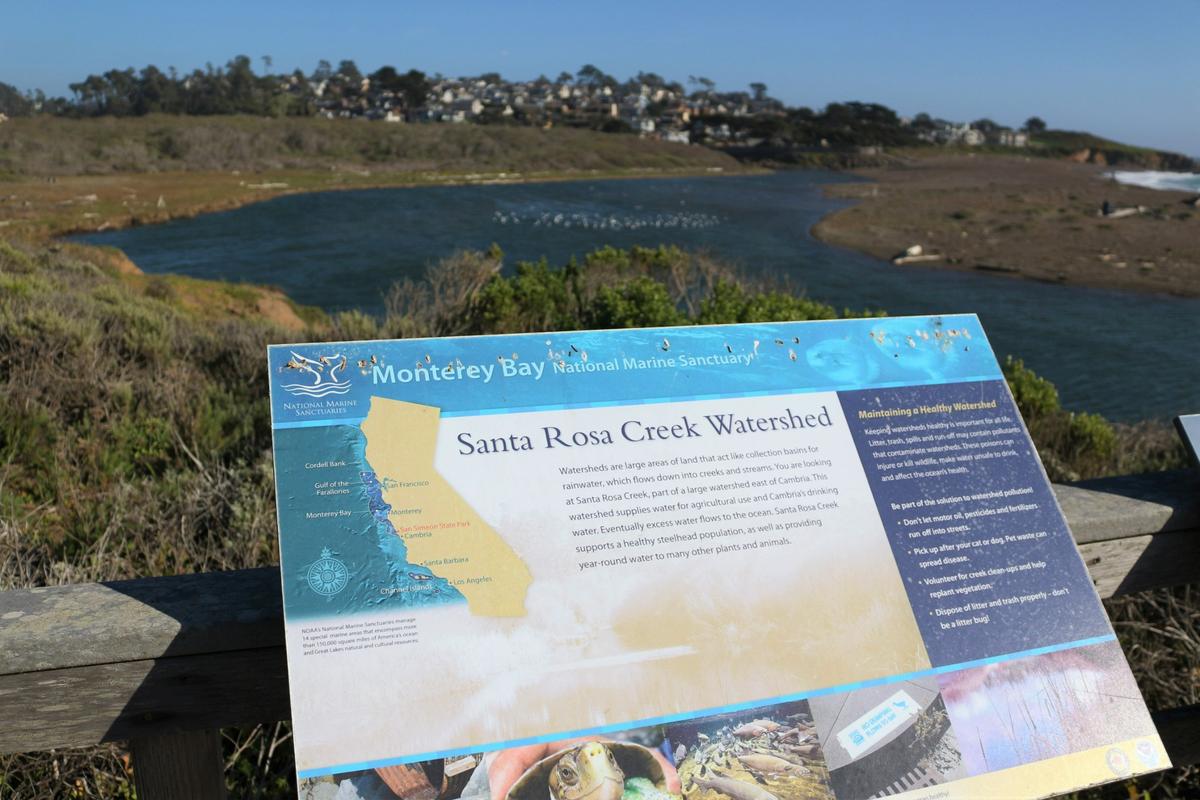
The unincorporated community home to about 5,700 people relies on four wells that tap into the groundwater beneath San Simeon and Santa Rosa creeks.
It’s under strict restrictions to pump no more than 1,017 acre-feet of water — or roughly 331.4 million gallons — from those wells each year. The community is allowed to pump that water as long as it also ensures that any water it takes does not diminish the creeks and therefore harm the aquatic species that rely on them for habitat, particularly the steelhead trout, which is considered threatened under the federal Endangered Species Act.
To date, the Cambria Community Services District (CSD) has reported it has stayed far below that restriction. In 2021, for example, it said it used a total of about 531 acre-feet of water.
Should the community grow by a projected 1% each year from 2026 to 2043, the CSD’s urban water management plan published in 2020 says water demand will rise as a result — but stay well within the 1,017 acre-feet per year threshold. That plan says the community is projected to use about 630 acre-feet of water in 2045 under such a growth allowance.
Allowing growth in Cambria would alleviate the waitlist for homes proposed to be built there. As of November, 658 properties were on that list.
But there’s been a tight hand over the throat of development in Cambria for decades due to the concerns of a dangerously inadequate water supply for the community.
A 1998 lawsuit arguing over the water rights for the property where Hadian and Bookout’s homes are proposed noted that Cambria has been pushed to find an outside water source so it can serve the long list of people who so desperately want to move to the beautiful coastal area that has typically enjoyed a mild climate year round.
“The district has failed and refused to develop adequate sources of water to enable it to perform its contractual obligations to Cambria West,” the lawsuit said. “Cambria West is informed and believes and thereon alleges that the district’s failure to develop new water sources was done for the purpose of restricting water service available to new development.”
But because Cambria is so isolated along the coast, connecting to other water sources such as the state or Nacimiento water projects has proven difficult and expensive. That, coupled with the environmental sensitivity of the area dashing hopes of a local seawater desalination plant, has left Cambria to rely on the two shallow aquifers under San Simeon and Santa Rosa creeks for water.
A water treatment facility that recycles wastewater into drinking water was built in 2014 as an emergency measure to supplement the community’s dwindling water supply during the exceptional drought conditions faced at the time. But since then, the facility, which could supply up to 250 acre-feet of water annually, has been inoperable due to a fatal design flaw and new permits aren’t expected to be issued for the facility until 2025.
Coastal Commission staff argue that where Cambria stands now with its water supply puts it in a precarious position.
First, the agency points out that the community has declared extreme water shortages during both the 2014 drought and in July 2021.
During the 2014 declaration, the CSD noted that without the water treatment facility that was being built at the time, “the community stands a real chance of literally running out of water, forcing Cambrians to shut businesses and possibly even leave homes,” according to a document provided to residents in November of 2014.
Second, the agency’s staff is investigating a California Coastal Act violation that has resulted from Cambria’s groundwater use. This violation, which has not yet officially been filed, arises because the creeks’ flows have allegedly been impeded by groundwater extractions, therefore leading to possible detrimental effects on the steelhead trout, other aquatic species and surrounding riparian habitat.
The CSD has contracted an outside firm to conduct a recent instream flow study to analyze how San Simeon Creek has fared from the community’s water use. The preliminary results from that study are expected to be shared at the March 17 CSD Board meeting, according to CSD General Manager John Weigold.
It would be the first such comprehensive study on either of the creeks since 2014. That 2014 study found that creeks during the severe drought year of 2013 did not have enough water to support a healthy steelhead trout population or healthy riparian habitat.
Another study conducted from 2015 to 2018 found that both San Simeon and Santa Rosa creeks have at times had very low or no flow at all — particularly during the spring and summer of 2015 and 2016 — which was similar, however, to many other creeks in the region.
Based on its assessment of Cambria’s water issues, the Coastal Commission staff argues the two homes proposed by Hadian and Bookout must not be approved.
But the homeowners and attorney Green argue that the community’s water supply is not the crux of the issue — but rather the contractual obligation by the Cambria CSD to provide water to its paying customers.
The CSD intends to honor such obligation, so if the Coastal Commission chooses to deny the Hadian and Bookout permits, “then they can have at it and get sued,” Weigold said.
Kip Morias of the San Luis Obispo County Planning and Building Department, which approved the building permits for the two homes before they were appealed to the Coastal Commission, said at a September 2021 county Board of Supervisors meeting that the homes were approved based on the proof provided to them of “sufficient services.”
“To satisfy this requirement, the county requires and relies on will-serve letters from service providers as evidence of sufficient service capacity for new development,” Morias said during that meeting.
The local coastal program for the North Coast area — a planning document approved by the Coastal Commission that governs development there — says that “new development not using CCSD connections or water service commitments existing as of November 15, 2001 ... shall assure no adverse impacts to Santa Rosa and San Simeon creeks.”
The water meters on the Hadian and Bookout properties were installed on about April 16, 2001, according to a letter sent that day by Robert Hamilton, former Cambria CSD utilities manager, to the property owners at the time.
Therefore, Hadian and Bookout argue that they had a Cambria CSD connection and an existing service commitment that existed as of Nov. 15, 2001, and as a result are not required to show whether their homes will cause any adverse impacts to Santa Rosa and San Simeon creeks.
The Coastal Commission staff argues that despite this language in the local coastal program, other provisions in that document clearly state that a project must show it can be served by an adequate water supply.
Hadian and Bookout both said they’re confused why there’s such an issue with their homes when a 33-unit affordable housing complex was approved in 2020 by the Coastal Commission, despite the community’s severe water issues being raised at the time.
“If there’s no water, how come you approved a 33-unit housing complex?” Hadian asked. “It was the politically right thing to do. So for political reasons, they voted to put 33 units in there, which will probably consume 33 times more water than I ever will.
“And then when it comes to a single-family house, and there’s no political power behind it — all of a sudden, we don’t have water.”
Homes would destroy rare Monterey pine trees, Coastal Commission says
In addition to the water issues, the Coastal Commission staff also says commissioners should deny the permits for the homes because they will result in damage to the sensitive and important habitat in the area.
Hadian and Bookout’s homes are proposed to be built in one of the few stands of native Monterey pine trees.
Monterey pine trees grow all over the world — but are only grown natively in five areas: Cambria, Monterey, Santa Cruz and two Mexican islands off the coast of Baja California.
The Coastal Commission staff says these native trees growing on the properties make it an environmentally sensitive habitat area, which require strict protections under the Coastal Act. Additionally, because the homes are not a “resource-dependent use,” the homes cannot be permitted.
Both home projects “would be a significant disruption of forest habitat values,” Coastal Commission says in their report.
Hadian’s project would involve cutting down about 50 native Monterey pine trees, while Bookout’s would involve cutting down about 70 trees.
Drive down Cambria Pines Road, however, and you’ll notice that a lot of native Monterey pine trees have already been cut down. Rows of tree logs line some properties, while some properties have several piles of chippings.
Hadian and Bookout both said the Monterey pine trees are their chief concern. They want their home developments to revitalize, not destroy, the forest habitat.
“Most of the trees are either dead or diseased,” Hadian said. “What I’m doing right now is growing seedlings and planting trees in order to revive the forest. You leave this forest for another couple of years the way it is, and the entire forest is going to be dead and dry.”
Hadian will have to plant at least 200 trees to offset the number he would cut down for his home. Bookout would have to plant at least 280 trees, which he says will be no problem.
“I like trees. I’m a certified tree hugger,” Bookout said.
Green, the property owners’ attorney, said he’s gearing up for “a fight against the Coastal Commission” on Friday. He hopes the commission overturns its staff’s recommendation and approves his clients’ homes.
“We’re collateral damage in the dispute between the CCSD and the Coastal Commission,” he said. “These applications do not open the floodgates to development in Cambria. These are very unique properties that fall under certain circumstances.”
Regardless, the Coastal Commission staff asserts that “there are no conditions of approval that could make” the homes permittable due to the outstanding water and sensitive habitat issues.
How to watch the Coastal Commission meeting
The Coastal Commission will meet on Friday beginning at 9 a.m. The permit applications for the two Cambria homes will have a combined hearing.
The meeting will be conducted virtually. To watch, go to cal-span.org or www.coastal.ca.gov (under “meetings” and “live stream” in the main menu) to find the live recording. Public comment requests must be submitted to the Coastal Commission by 8:30 a.m. Friday.
This story was originally published March 10, 2022 at 12:22 PM.
CORRECTION: This article was updated with the correct amount of water the Cambria Community Services District is allowed to pump each year, which is 1,017 acre-feet.