
Photos from the Vault

Carrizo Plain celebrates 25 years as a national monument, and it’s throwing a party

The Carrizo Plain has been called California’s Serengeti.

That feels like hyperbole. After all there aren’t any lions, leopards or elephants.

But it does have pronghorn, kit foxes and blunt-nosed leopard lizards.

Unfortunately, the giant kangaroo rats aren’t big enough to star in a monster movie.

Perhaps the rarest thing in an increasingly crowded California is that the Carrizo has solitude in abundance.

Wildflower fans explore a field of fiddleneck blooms at the Soda Lake overlook in March 2017.
Wildflower fans explore a field of fiddleneck blooms at the Soda Lake overlook in March 2017. David Middlecamp dmiddlecamp@thetribunenews.com

Turn off the engine of your car after the over hourlong drive from the coast, and often the first thing you hear won’t be human.

Birds singing, the yip of a coyote or wind rustling through grass.

A quarter-century ago this land was named a national monument.
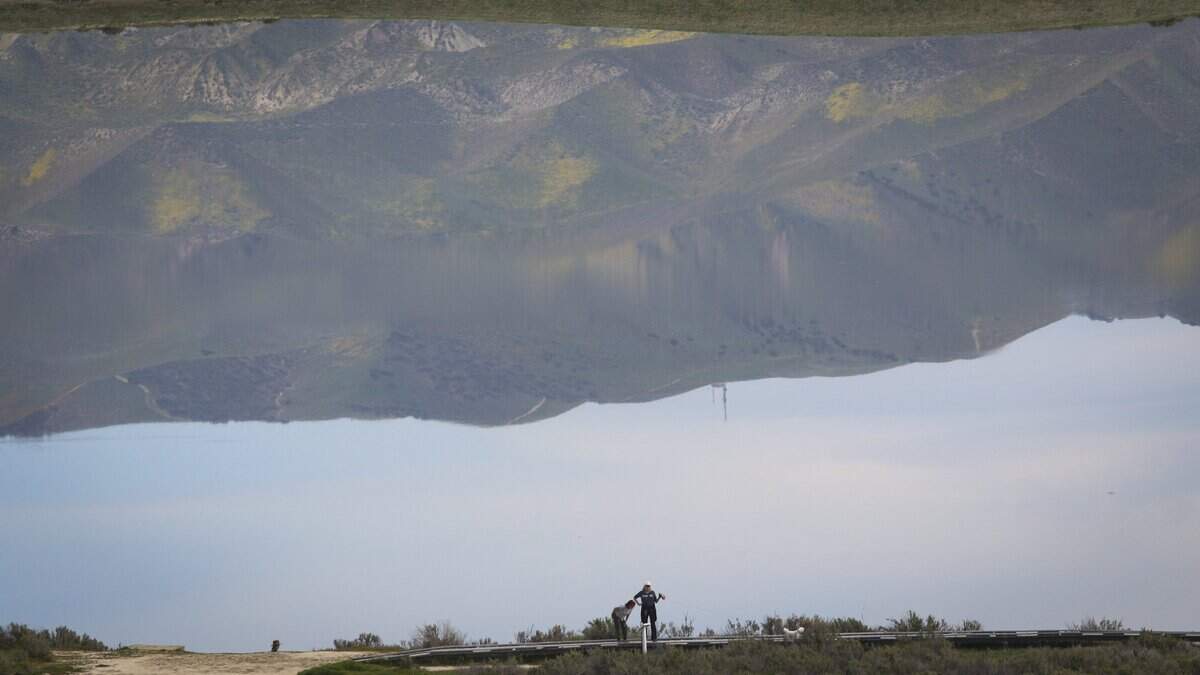
The landlocked Soda Lake reflects the Temblor Range as hikers take a look at a display on the boardwalk. Wildfowers got an early start in California Valley with heavy early rains then heat as seen here on Feb. 5, 2026. The display is limited to south and west facing hills at the moment and may be a staggered start to various areas.
The landlocked Soda Lake reflects the Temblor Range as hikers take a look at a display on the boardwalk. Wildfowers got an early start in California Valley with heavy early rains then heat as seen here on Feb. 5, 2026. The display is limited to south and west facing hills at the moment and may be a staggered start to various areas. David Middlecamp dmiddlecamp@thetribunenews.com

On his way out the door in January 2001, President Bill Clinton did what Congress had twice failed to do, bestow monument status on 204,107 acres of the Carrizo Plain.

This was a promotion from the previous status as “Natural Area,” which had little practical value.

In honor of those 25 years, the Bureau of Land Management planned a public celebration from 10 a.m. to 1 p.m. at the Guy L. Goodwin Education Center on Friday, April 10.

Johna Hurl, manager of the Carrizo Plain National Monument, prefers not to use the term super bloom when describing the wildflowers covering the area. However, she is planning for a larger than average number of visitors this year, as people flock to see the bloom in March 2019.
Johna Hurl, manager of the Carrizo Plain National Monument, prefers not to use the term super bloom when describing the wildflowers covering the area. However, she is planning for a larger than average number of visitors this year, as people flock to see the bloom in March 2019. David Middlecamp dmiddlecamp@thetribunenews.com

“The BLM is honored to have played a role in the stewardship of this exceptional landscape over the past 25 years,” said Carrizo Plain National Monument Manager Johna Hurl in a news release.

“Strong partnerships are key to preserving the area’s vibrant wildflower blooms, fascinating geological features, rare species, and unique cultural treasures,” she added. “As we look ahead to the next 25 years, we eagerly anticipate strengthening these collaborations and continuing our commitment to managing the Carrizo Plain for generations to come.”

Monument status has raised the visibility of the region and provided structure for funding for science and recreation.

Sharon Brossier and Jim Peirce visit the Goodwin Education Center in the Carrizo Plain National Monument. The couple has traveled California admiring the unfolding super bloom this year, including the vibrant wildflowers along Soda Lake Road.
Sharon Brossier and Jim Peirce visit the Goodwin Education Center in the Carrizo Plain National Monument. The couple has traveled California admiring the unfolding super bloom this year, including the vibrant wildflowers along Soda Lake Road. David Middlecamp dmiddlecamp@thetribunenews.com

More people tour the monument than in the days that it was private ranch land.

And every spring there is a drumbeat of questions about the region’s wildflower bloom.
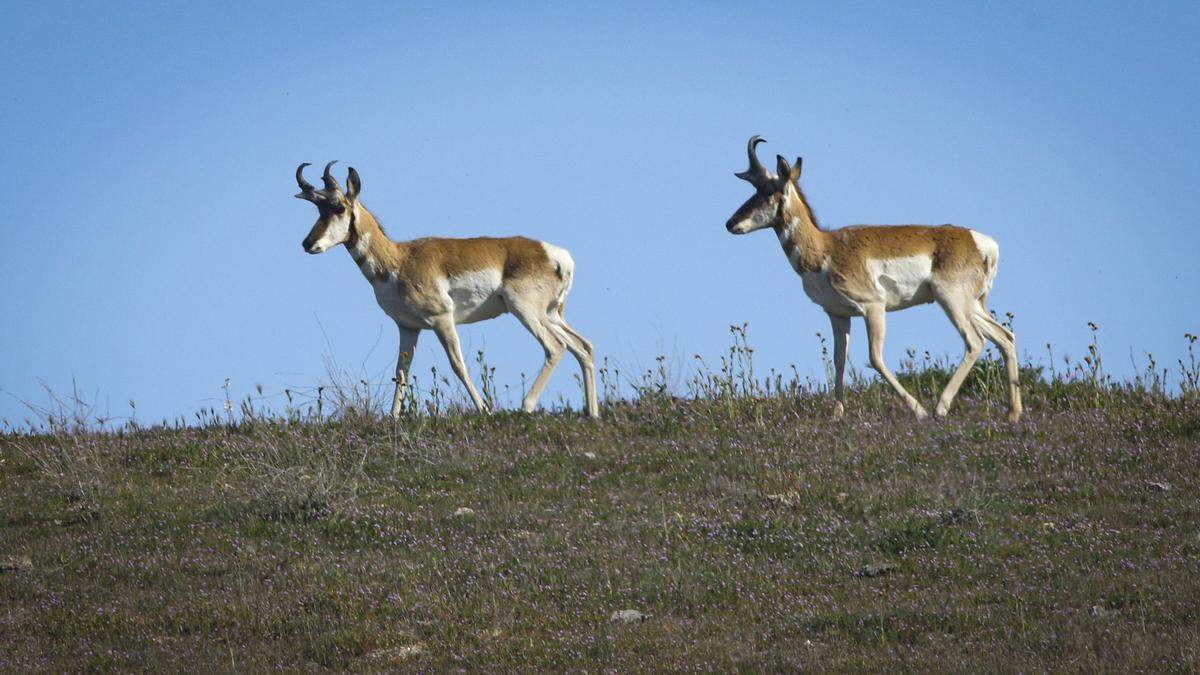
Wildflowers got an early but sporadic start in California Valley after a dry spell followed early winter rains.
A pair of pronghorn graze along Highway 58 on Feb. 5, 2026. Wildflowers got an early but sporadic start in California Valley after a dry spell followed early winter rains. David Middlecamp dmiddlecamp@thetribunenews.com

For a deep dive into the settler history of the area, Craig Deutche traces it in the book Another Place & Time, Voices From the Carrisa Plains.

That spelling of the name isn’t a typo. The place is so isolated, at least three versions can be found in common usage: Carisa, Carrisa and Carrizo.

David Sneed wrote this story Jan. 17, 2001, when the monument was created.

Carrizo Plain gets monument status

President’s declaration will keep 204,000 acres free from commercial development

In one of his last acts in office, President Clinton will declare San Luis Obispo County’s Carrizo Plain a national monument today.

The designation will protect nearly 204,107 acres of federal grassland in the southeastern corner of the county from oil, gas and real estate development and promote the area’s natural and cultural features, U.S. Rep. Lois Capps announced Tuesday.

Rep. Lois Capps took part in a tour celebrating the 15th anniversary of the creation of the Carrizo Plain National Monument on June 1. Capps is retiring after more than two decades in office. Photo from Nov. 2016.
Rep. Lois Capps took part in a tour celebrating the 15th anniversary of the creation of the Carrizo Plain National Monument on June 1. Capps is retiring after more than two decades in office. Photo from Nov. 2016. David Middlecamp dmiddlecamp@thetribunenews.com

“Carrizo is a local and national treasure,” Capps said. “It contains remnants of the once vast San Joaquin grasslands, significant Native American cultural sites like the Chumash Painted Rock, and the most visible portion of the San Andreas Fault.”

Capps, D-Santa Barbara, tried to protect the area by introducing legislation that would establish the Carrizo as a national conservation area. The bill had the support of Bakersfield Republican Rep. Bill Thomas, but it failed to gain enough backing to pass.

Wallace Creek swings 430 feet northwest as the creek bed issues from the Panorama Hills before finding its historic outlet. Geology outpaces rainfall in the dry Carrizo Plain and the Z shape is the result of 3,700 years of movement on the San Andreas Fault. In 1857 up to 30 feet of offset was recorded in the Great Earthquake. The group was part of a Cuesta College mini-course led by Steve Schubert in 2003.
Wallace Creek swings 430 feet northwest as the creek bed issues from the Panorama Hills before finding its historic outlet. Geology outpaces rainfall in the dry Carrizo Plain and the Z shape is the result of 3,700 years of movement on the San Andreas Fault. In 1857 up to 30 feet of offset was recorded in the Great Earthquake. The group was part of a Cuesta College mini-course led by Steve Schubert in 2003. David Middlecamp dmiddlecamp@thetribunenews.com

Interior Secretary Bruce Babbitt then recommended national monument status for the plain as a way to protect the area. The designation will be made under the Antiquities Act, which gives the president broad powers to protect areas with cultural and environmental significance.

Babbitt toured the Carrizo Plain in March 1999 and then visited Cal Poly in November of that year to discuss ways to manage the area.
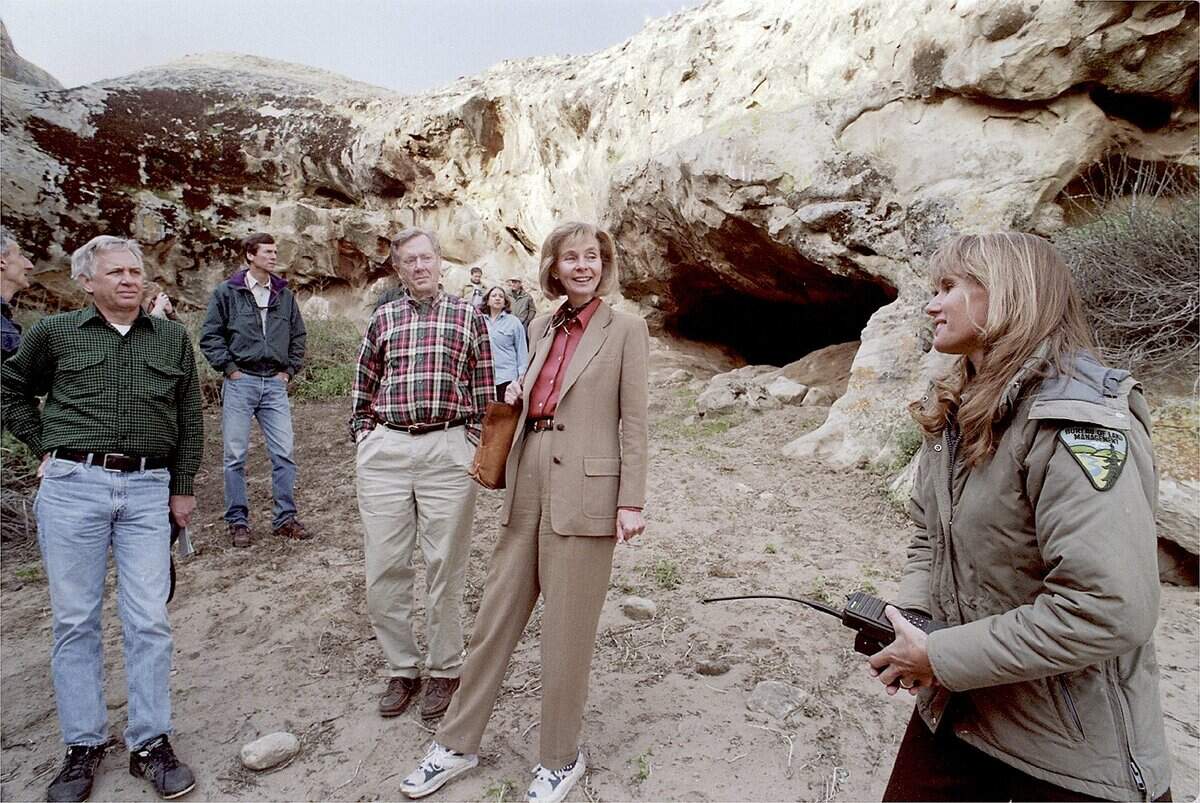
Johna Hurl, Carrizo Plain manager with the Bureau of Land Management, right, leads a sunrise tour of Painted Rock on the Carrizo Plain. The rock is sacred ground to the Chumash Indians. Tours of the rock this time of year by arrangement and escort avoid disturbing nesting birds including a golden eagle. Interior Secretary Bruce Babbitt is in plaid next to Congresswoman Lois Capps on March 29, 1999.
Johna Hurl, Carrizo Plain manager with the Bureau of Land Management, right, leads a sunrise tour of Painted Rock on the Carrizo Plain. The rock is sacred ground to the Chumash Indians. Tours of the rock this time of year by arrangement and escort avoid disturbing nesting birds including a golden eagle. Interior Secretary Bruce Babbitt is in plaid next to Congresswoman Lois Capps on March 29, 1999. David Middlecamp dmiddlecamp@thetribunenews.com

Environmentalists praised the designation, noting that the Carrizo Plain contains the greatest concentration of endangered species in the state, including the San Joaquin kit fox, giant kangaroo rat, blunt-nosed lizard and California jewel flower. It is also an important wintering site for sandhill cranes.

“Carrizo Plain is a sweeping landscape that has all but disappeared in California,” said Holly Slettland, conservation chairwoman for the Sierra Club’s local Santa Lucia Chapter. “I’m glad to see that this is one place where it will remain forever.”

Although some ranchers in the area have criticized federal protection of the plain because it might hinder local land-management decisions, Capps said she hopes the Carrizo will become a model for cooperative resource management and innovative uses of cattle grazing to benefit wildlife. The Bureau of Land Management will oversee the monument with the help of locals, according to Capps.

“I am pleased that the monument designation appears to follow the outlines of my bill and that the secretary will direct BLM to establish a local advisory board,” she said.

Clinton also is expected to designate four other sites as national monuments today at Babbitt’s recommendation. These include the Upper Missouri River Breaks in Montana, the Pompeys Pillar area of the Yellowstone River in Montana, the Virgin Islands Corral Reef near St. John and an expansion of the Buck Island Reef National Monument off St. Croix in the U.S. Virgin Islands.
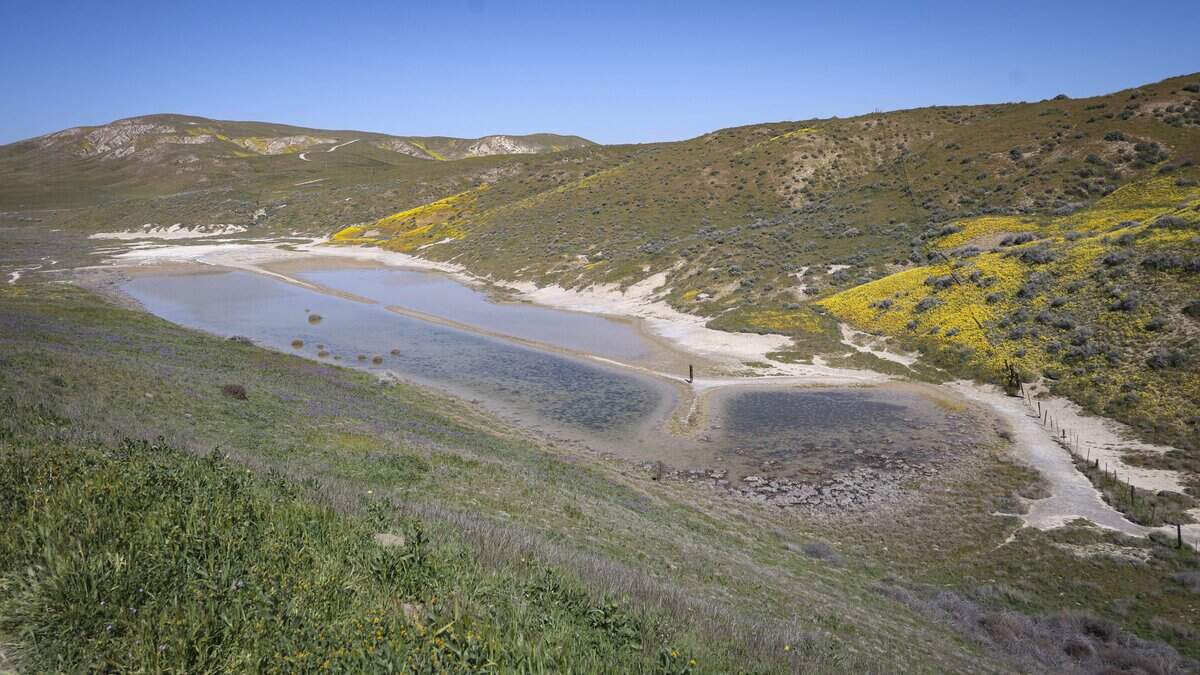
A sag pond on the south end of the Carrizo Plain National Monument is formed by a strand of the San Andreas Fault. Wildflower season is in full bloom on the Carrizo Plain seen here on March 11, 2026.
A sag pond on the south end of the Carrizo Plain National Monument is formed by a strand of the San Andreas Fault. Wildflower season is in full bloom on the Carrizo Plain, seen here on March 11, 2026. David Middlecamp dmiddlecamp@thetribunenews.com

The Carrizo Plain: A few key facts

Geology: The plain was formed 30 million years ago when movement along faults caused the area to subside, forming a basin as the Temblor and Caliente mountains were thrust upward. Over the eons, the valley filled with sediment forming the plain.

Endangered species: The plain is home to the highest concentration of rare or endangered plants and animals in the state, including the San Joaquin kit fox, blunt-nosed leopard lizard and the giant kangaroo rat.

Allowable land uses: The main uses are recreation and limited cattle grazing.
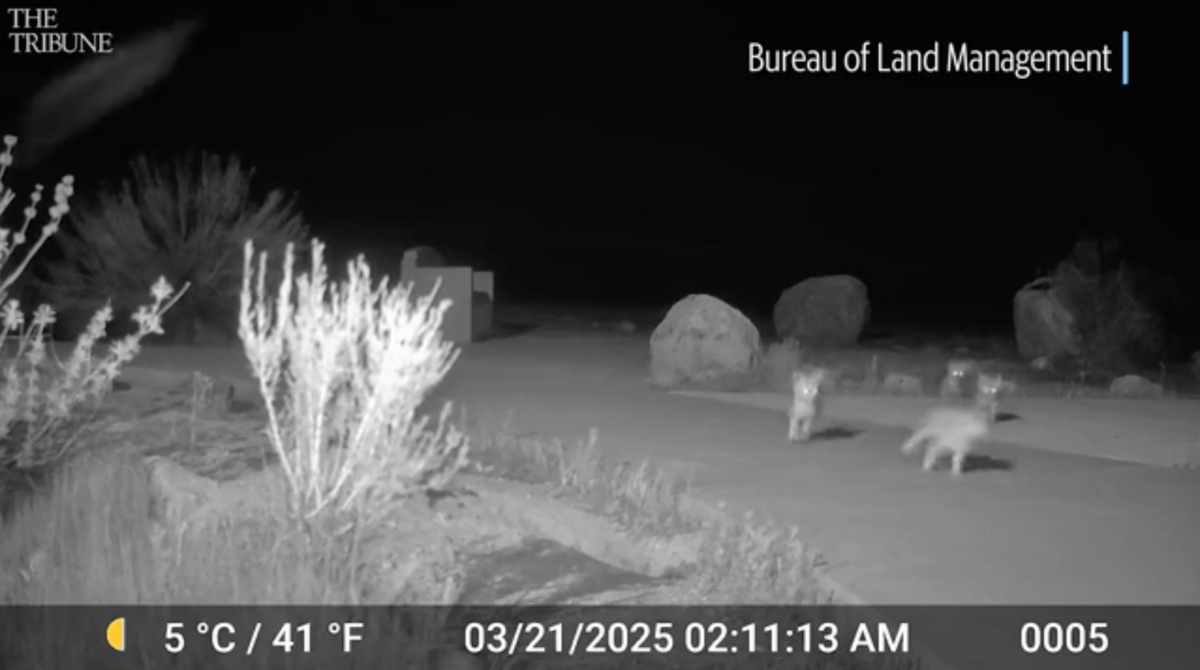
A trail camera caught a family of San Joaquin kit foxes scampering around outside the Goodwin Education Center at the Carrizo Plain National Monument on March 21, 2025.
A trail camera caught a family of San Joaquin kit foxes scampering around outside the Goodwin Education Center at the Carrizo Plain National Monument on March 21, 2025. Bureau of Land Management

This story was originally published April 9, 2026 at 5:00 AM.
Follow More of Our Reporting on Uniquely SLO County

Related Stories from San Luis Obispo Tribune
David Middlecamp
The Tribune
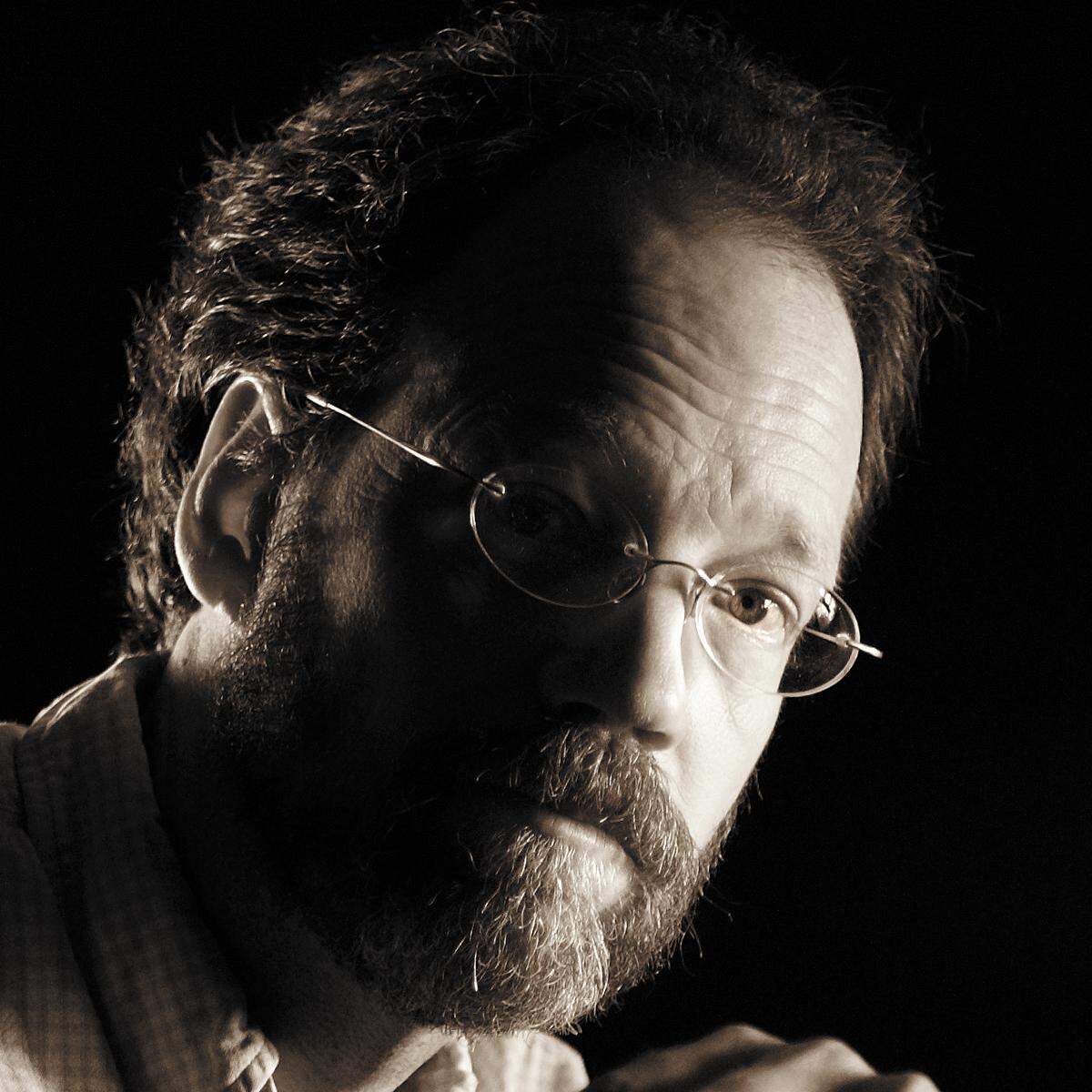
David Middlecamp is a photojournalist and third-generation Cal Poly graduate who has covered the Central Coast region since the 1980s. A career that began developing and printing black-and-white film now includes an FAA-certified drone pilot license. He also writes the history column “Photos from the Vault.”
Get unlimited digital access
#ReadLocal

Try 1 month for $1

CLAIM OFFER