How steely cop stopped a gunman’s shooting spree in Paso Robles
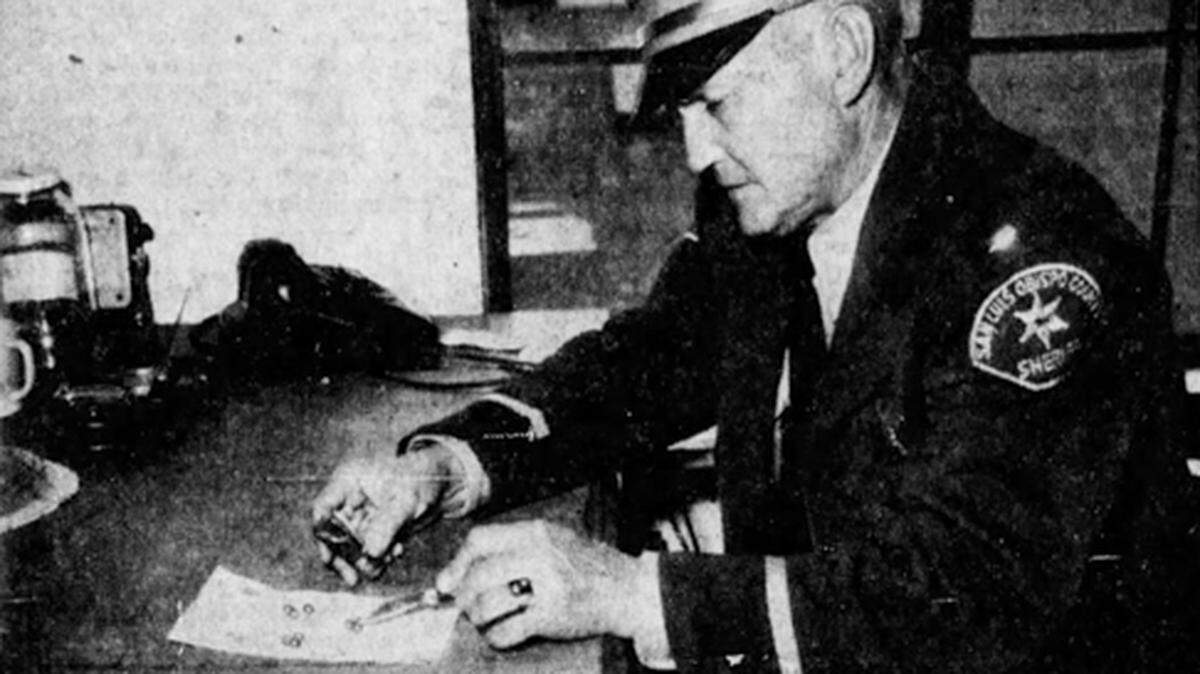
Why did J. Thomas Caldwell, 32, go on a shooting spree in Paso Robles in the early morning of June 14, 1956?
Questions lingered, but the ex-convict from Los Angeles would not leave the county alive.
This story had a number of strangely compelling turns.
First some background. The way law enforcement manages an officer-involved shooting has changed significantly since the mid-1950s.
Today, there can a layered response to a crisis, including a wide variety actions, negotiation, specially trained teams with specialized equipment including drones with infrared cameras, K-9s, tear gas, flash bangs, tasers and less-lethal munitions.
Something that hasn’t changed over the decades, though, is that firing on law enforcement draws return fire.
Today, there is training and scripted protocols to follow after an officer discharges a firearm. Usually, the incident is described through public information officers or documents and hearings. Those involved in the shooting are placed on leave while an investigation takes place.
Care is taken to offer counseling to those involved, and often information is restricted to preserve details for investigators building a case.
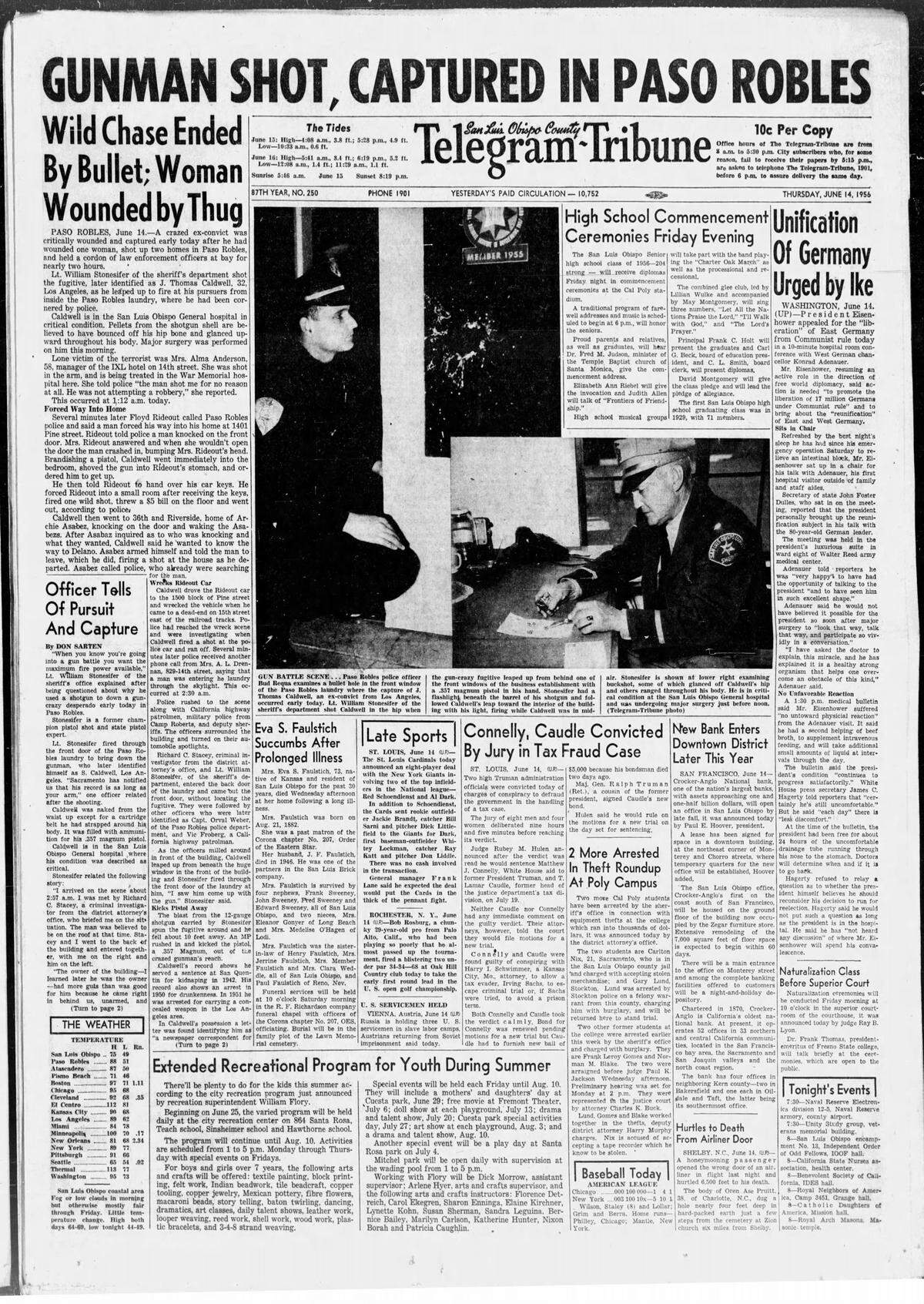
Things were different in this 70-year-old story, which has same-day interviews with officers on the scene. The accounts were vivid and full of detail.
This overview includes details from the afternoon edition of the Telegram-Tribune on June 14, 1956. Also included are details from the coroner’s inquest stories from June 29-30, 1956. At the end is the complete sidebar story featuring the interview with the officer that brought down “a crazed ex-convict.”
The manic spree began early Thursday morning.
Mrs. Alma Anderson, 58, was managing the IXL hotel on 14th street in Paso Robles at 1:12 a.m. when J. Thomas Caldwell attacked her with a wild look in his eyes.
She told police, “The man shot me for no reason at all. He was not attempting a robbery.”
She survived the arm wound to testify at the inquest.
Minutes later Caldwell broke down the front door at the Rideout home. Mrs. Rideout was struck with the butt of the gun and husband Floyd Rideout had the gun jammed into his stomach. Caldwell stole their car keys, fired a wild shot and exited tossing a $5 bill on the floor.
He then banged on the door of Archie Asabaz near 36th and Riverside. Asabez asked who was there, and Caldwell replied he wanted directions to Delano.
Asabez armed himself and told Caldwell to leave, which he did after firing a shot at the house. Police were called, having already started searching after the previous assault.
Caldwell wrecked the stolen car on 15th street near the railroad tracks, and as police investigated the scene, the fugitive fired at their car and fled.
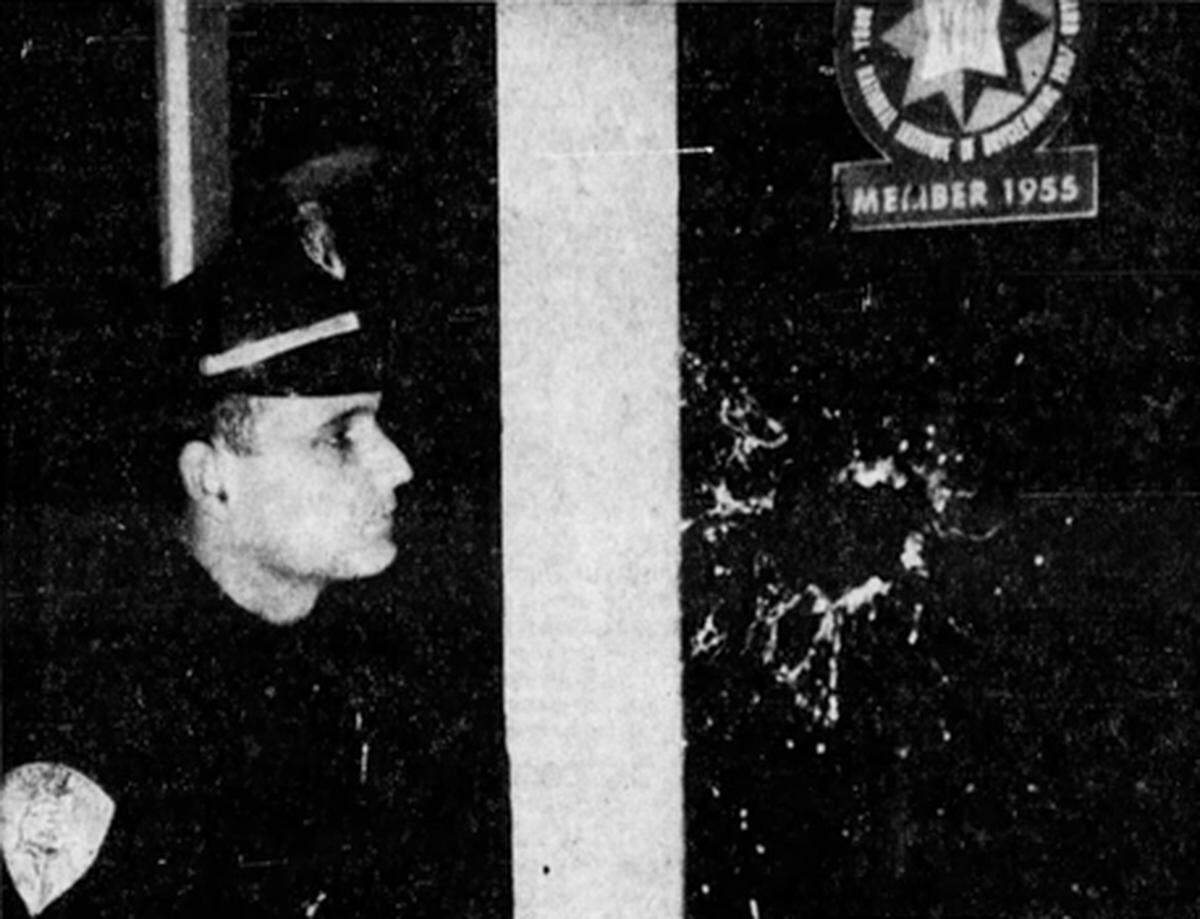
At 2:30 a.m. he was seen breaking a skylight at the Paso Robles Laundry and Cleaners.
The business was soon surrounded, spotlights from squad cars trained on the building. In addition to Paso Robles police officers, units responded from CHP, Camp Roberts military police, deputy sheriffs and a district attorney investigator.
Richard Stacey, criminal investigator with the DA’s office and Lt. William Stonesifer with the Sheriff’s Department entered the building accompanied by Paso Robles police and the owner of the laundry who knew where the light switches were.
Caldwell was hidden as they and others searched the business.
Caldwell had a history. He had been convicted of kidnapping and served time in San Quentin in 1942. And in 1951 he was arrested for carrying a concealed weapon in the Los Angeles area.
Officers were in front of the laundry when a shirtless Caldwell leaped from behind the window with a powerful .357 Magnum pistol in his hand.
Stonesifer said, “I saw him come up with the gun.”
Stonesifer had a flashlight beneath the barrel of his 12-guage shotgun as Caldwell leaped to the interior of the building.
The sheriff’s lieutenant blasted buckshot through the glass front door hitting Caldwell’s hip and spinning the fugitive around and felling him, 10 feet away.
A Camp Roberts MP rushed in and kicked the pistol out of reach.
DA’s investigator Richard Stacey would later testify that the suspect appeared to be under the influence of narcotics.
After taking a load of buckshot in his side, Caldwell insisted on walking to the ambulance then asked for a gun “so he could shoot it out with the law.”
He had a letter in his pocket claiming he was a newspaper correspondent for the 49th National Guard Division slated to train that weekend at Camp Roberts.
When he was taken to War Memorial Hospital in Paso Robles, Caldwell asked after the condition of Mrs. Anderson and said, “I was sorry I hit her.”
He also insisted on paying the $3 emergency room cost and additional $5 to the attending doctor.
He was stabilized and transported to San Luis Obispo’s General Hospital for further major surgery just before noon.
He lingered for nine days, but Caldwell died of peritonitis June 23.
The coroner’s jury came to the verdict of justifiable homicide after 17 witnesses testified in the old City Council chambers.
The most dramatic account was from Lt. Stonesifer, published only hours after the event. The ending quote is one of the most unexpected lines I have come across, in years of researching this column.
Officer Tells Of Pursuit And Capture
By Don Sarten
“When you know you’re going into a gun battle you want the maximum fire power available,” Lt. William Stonesifer of the sheriff’s office explained after being questioned about why he used a shotgun to down a gun-crazy desperado early today in Paso Robles.
Stonesifer is a former champion pistol shot and state pistol expert.
Lt. Stonesifer fired through the front door of the Paso Robles laundry to bring down the gunman, who later identified himself as S. Caldwell, Los Angeles. “Sacramento has notified us that his record is as long as your arm,” one officer related after the shooting.
Caldwell was naked from the waist up except for a cartridge belt he had strapped around his body. It was filled with ammunition for his .357 magnum pistol.
Caldwell is in the San Luis Obispo General hospital where his condition was described as critical.
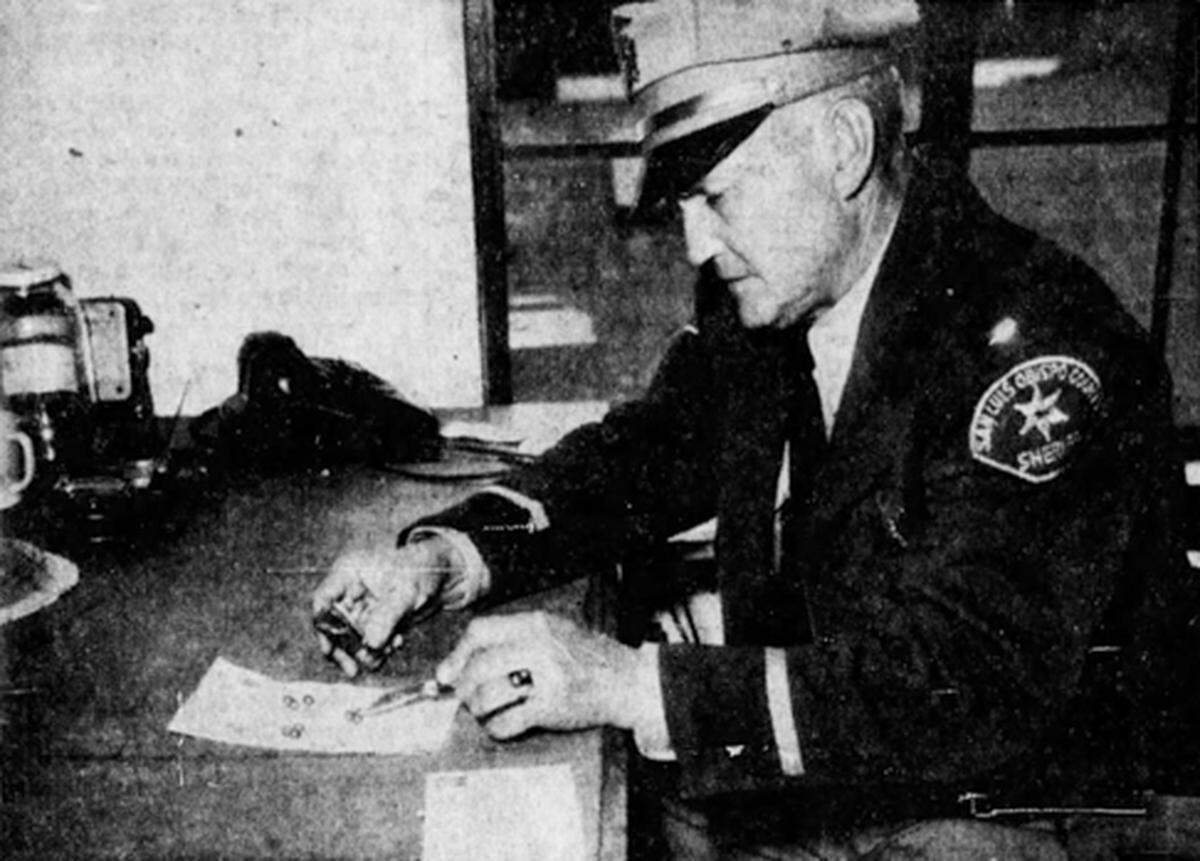
Stonesifer related the following story:
“I arrived on the scene about 2:57 a.m. I was met by Richard C. Stacey, a criminal investigator from the district attorney’s office, who briefed me on the situation. The man was believed to be on the roof at that time. Stacey and I went to the back of the building and entered together, with me on the right and him on the left.
“The owner of the building — I learned later he was the owner — had more guts than was good for him because he came right in behind us, unarmed, and flipped a light switch for us.
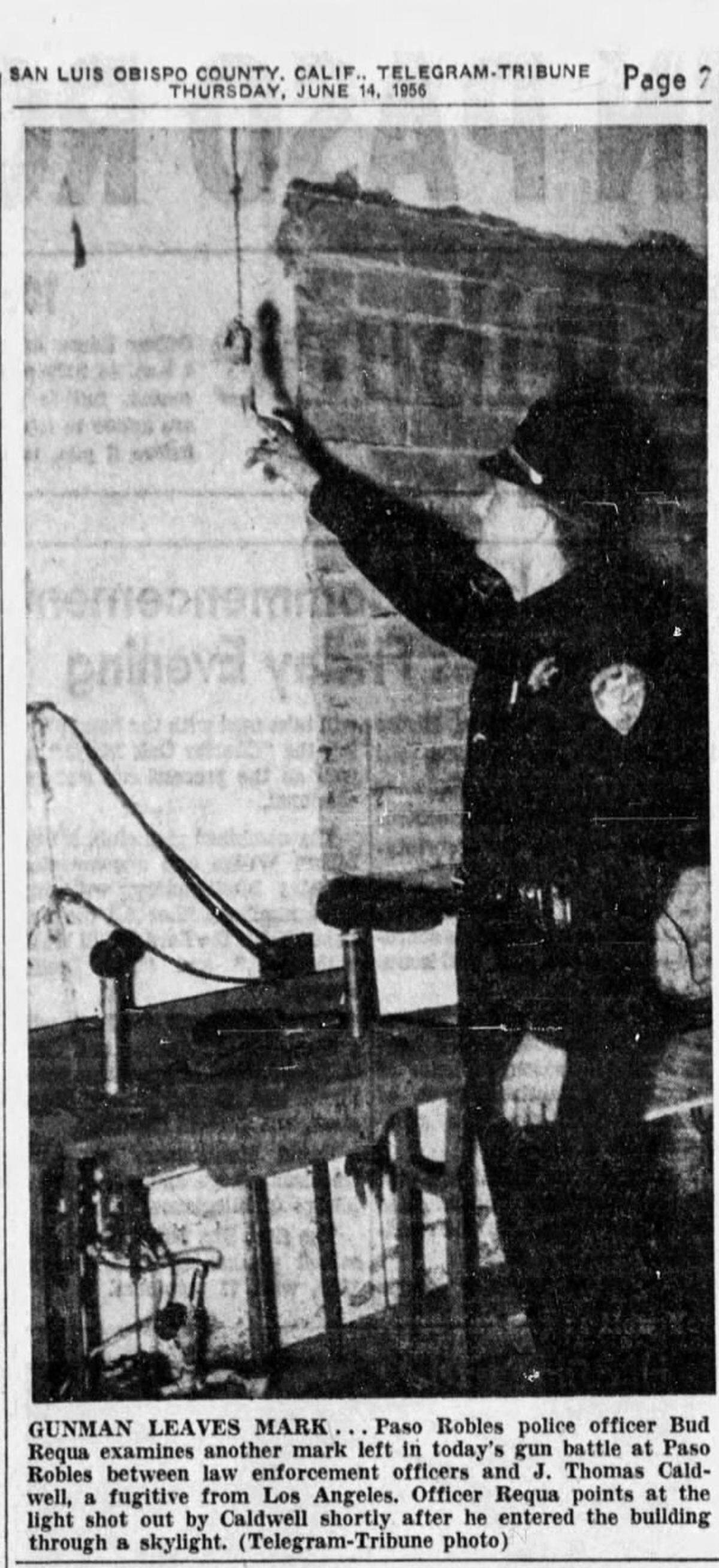
“The interior of the laundry was a fine hiding place.”
“Stacey and I and two boys from the Paso police department went through the building without finding the gunman. I passed out the front door and crossed the street to have a man put a spotlight on the roof. I had ordered a ladder placed against the building when deputy sheriff Lewis R. Tate yelled, ‘I saw him move, Stony.’”
About that time the man jumped up with a gun in his hand.
“I let fly and hit him in the hip. He spun around and lit on his pants about 10 feet away, still hanging onto the gun. Stacey yelled, ‘Look out Stony, he still has his gun.’ But I didn’t figure he was crazy enough to try to use it when he’s looking down the barrel of a 12 gauge shotgun. And he didn’t attempt to.”
Lt. Stonesifer said that when he was asked his name the man answered, “Which one do you want? I’ve got four or five of them.” Lt. Stonesifer said he suggested the man pick out his own and the man told him his name was S. Caldwell, 734 Bay street, Los Angeles.
Lt. Stonesifer said the man also thanked him for “shooting me low.” The veteran officer said that this ranked with other experiences he’s gained in his 30 years of law enforcement.
“I’ve had two men whom I had to shoot give me gifts which doctors dug out of them,” he recalled.