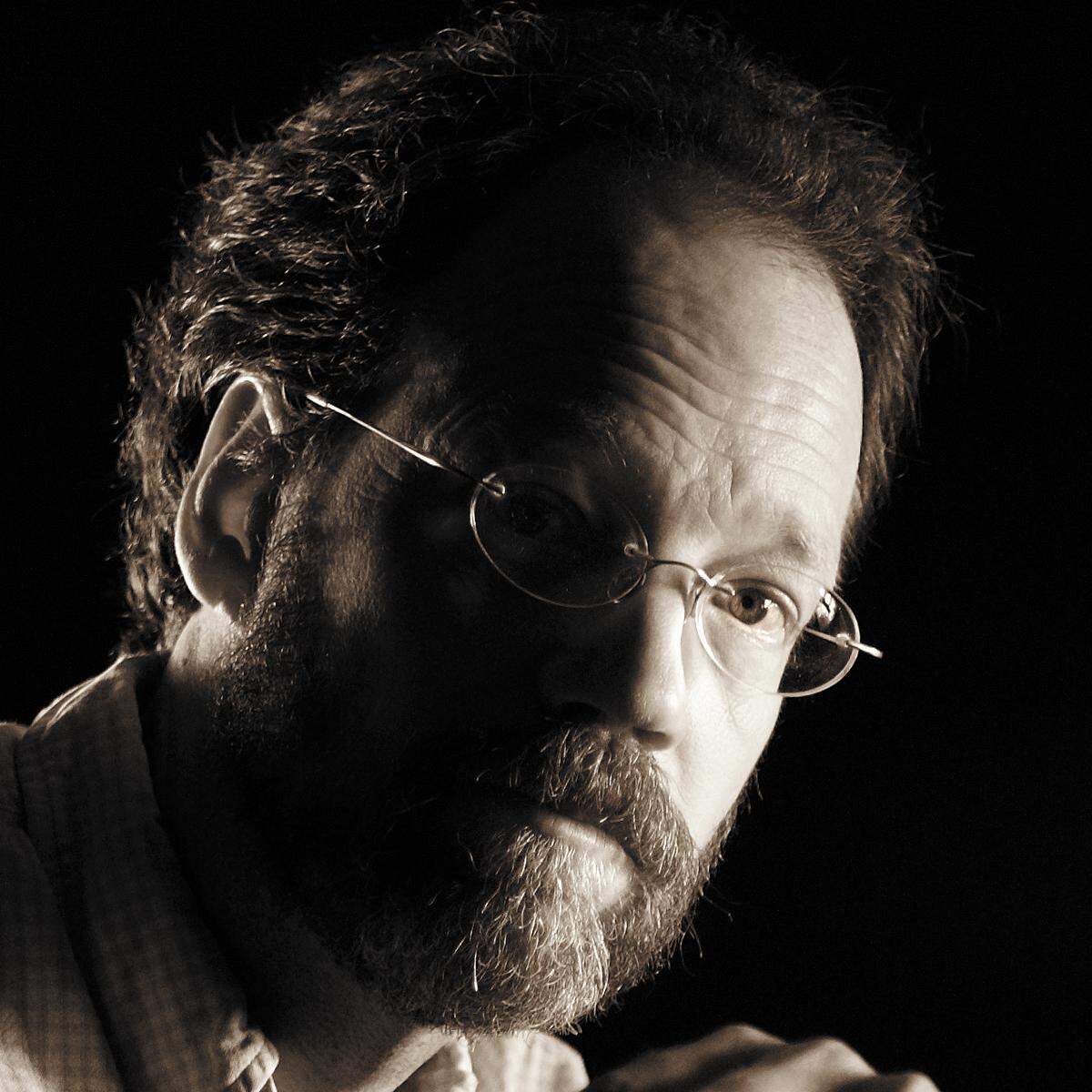
Moving day: Here are the 8 buildings The Tribune has called home since 1869
Jeff Fairbanks didn’t like it when I flipped on the lights in his office, though he was too nice to say anything.
The late editor of the Telegram-Tribune had been deeply invested in the design for the South Higuera Street office that opened 26 years ago, on April 12, 1993.
Natural light was the mantra. The main office was designed to be completely illuminated by daylight.
The executive offices were a little darker. So when using a magnifier to look at 35-millimeter contact prints, I flipped on every switch I could.
Jeff flinched a little but wasn’t critical. When he offered criticism or praise, it carried extra gravitas with his thoughtful delivery.
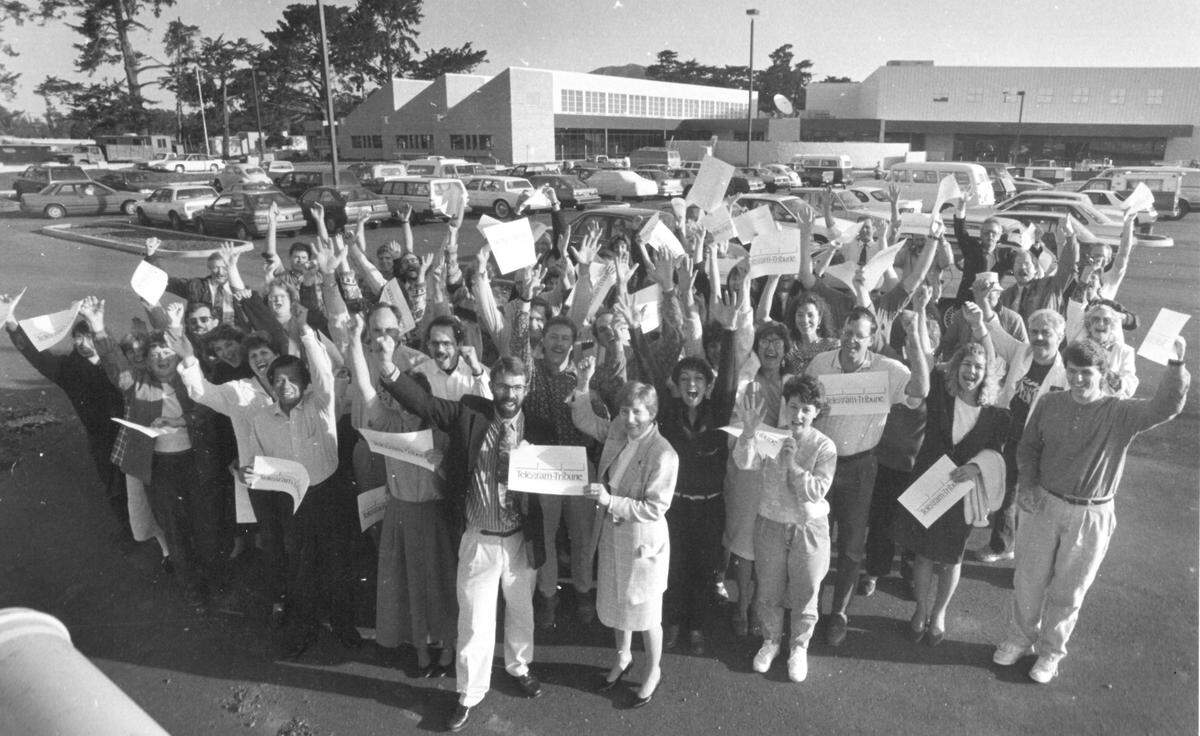
When we moved into our South Higuera Street office and took our opening day photo, I had to ask Jeff to step to the foreground to stand with then-general manager Julia Aguilar. Future Tribune editor Joe Tarica was at the right of the frame.
That photo was shot on film, processed, printed, half-toned, pasted on a page, photographed to make a page negative, contact printed to a plate and bolted to the press, then printed in about 30,000 editions in about three hours time.
It was probably the easiest deadline assignment of my career.
As personal computers became more powerful, production changed from analog to digital. Camera files were sent direct to plate-making machines, eliminating four or five steps in the craft.
In 1993, the then-Telegram-Tribune published Monday through Friday afternoon and Saturday morning.
At that time, no one had ever googled, and alerts were sent via pager.
As The Tribune prepares to move to a new office on Tank Farm Road, I’m feeling a little wistful. The South Higuera Street building is one of the last tangible connections to wonderful co-workers and an era when there was only one deadline a day.
Here is a look back at the various San Luis Obispo offices the Tribune has called home over its nearly 150-year history.
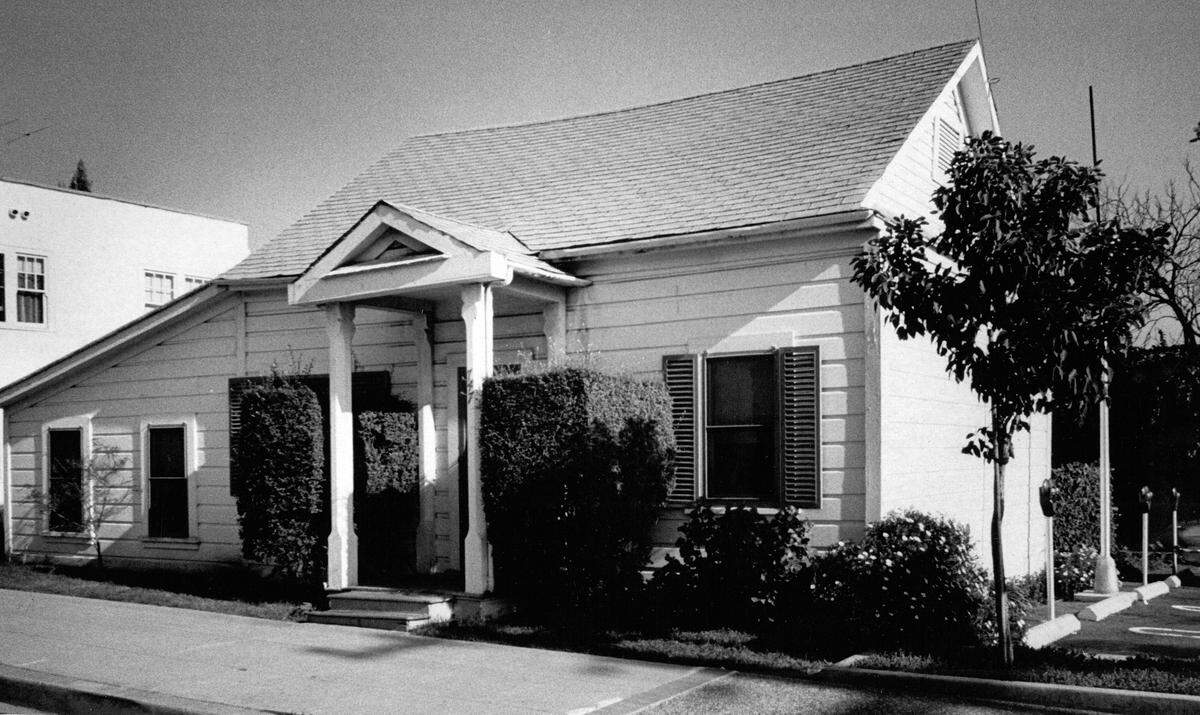
The Murray Adobe
Located in Mission Plaza, the Murray Adobe is the only commercial building that survived the creation of the plaza.
The Murray Adobe was once larger, the victim of a poorly funded restoration effort that went awry. Even though the building was reduced, a portion of it still survives.
There aren’t many newspapers that can say their founding building still stands.
The adobe was the business hub for lawyer and founding editor Walter Murray, who started publishing The Tribune on Aug. 7, 1869.
The Tribune was founded with the monetary assistance of Republican businessmen to provide an alternative to the shrill and highly partisan first newspaper, the Pioneer.
Type was set by hand, and a four-page edition published once a week.
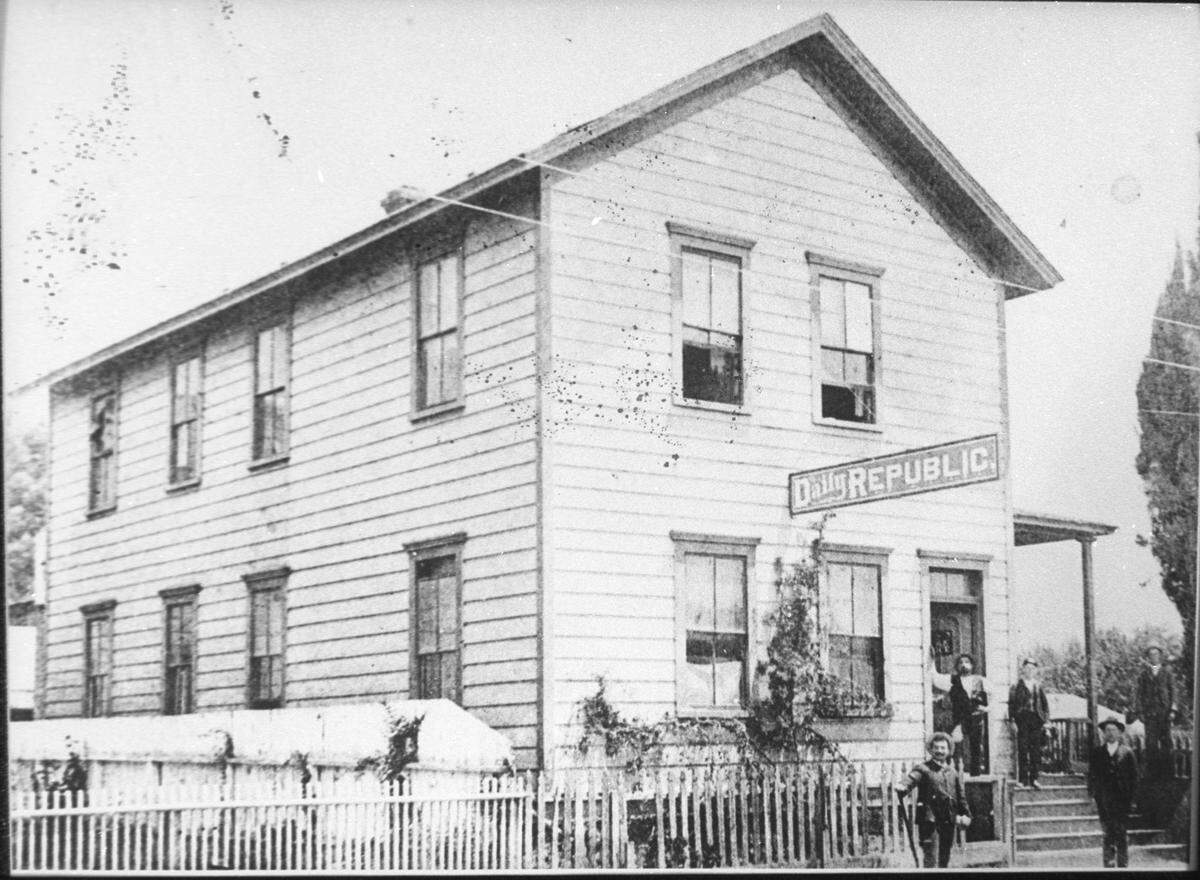
The Tribune Building, circa 1873
It is the oldest wood frame commercial building in San Luis Obispo and the first built to house a newspaper office. Originally, the Tribune building was on Morro Street near Marsh Street; it has since been moved to Santa Barbara Avenue.
By his own admission, Horatio Southgate Rembaugh wasn’t a stylish writer but he was a good businessman and able printer.
Ironically, the building would later house a competing paper, the San Luis Obispo Daily Republic. It was the first daily newspaper in the county, but it was an odd hybrid with outer pages printed in San Francisco and inner pages in San Luis Obispo.
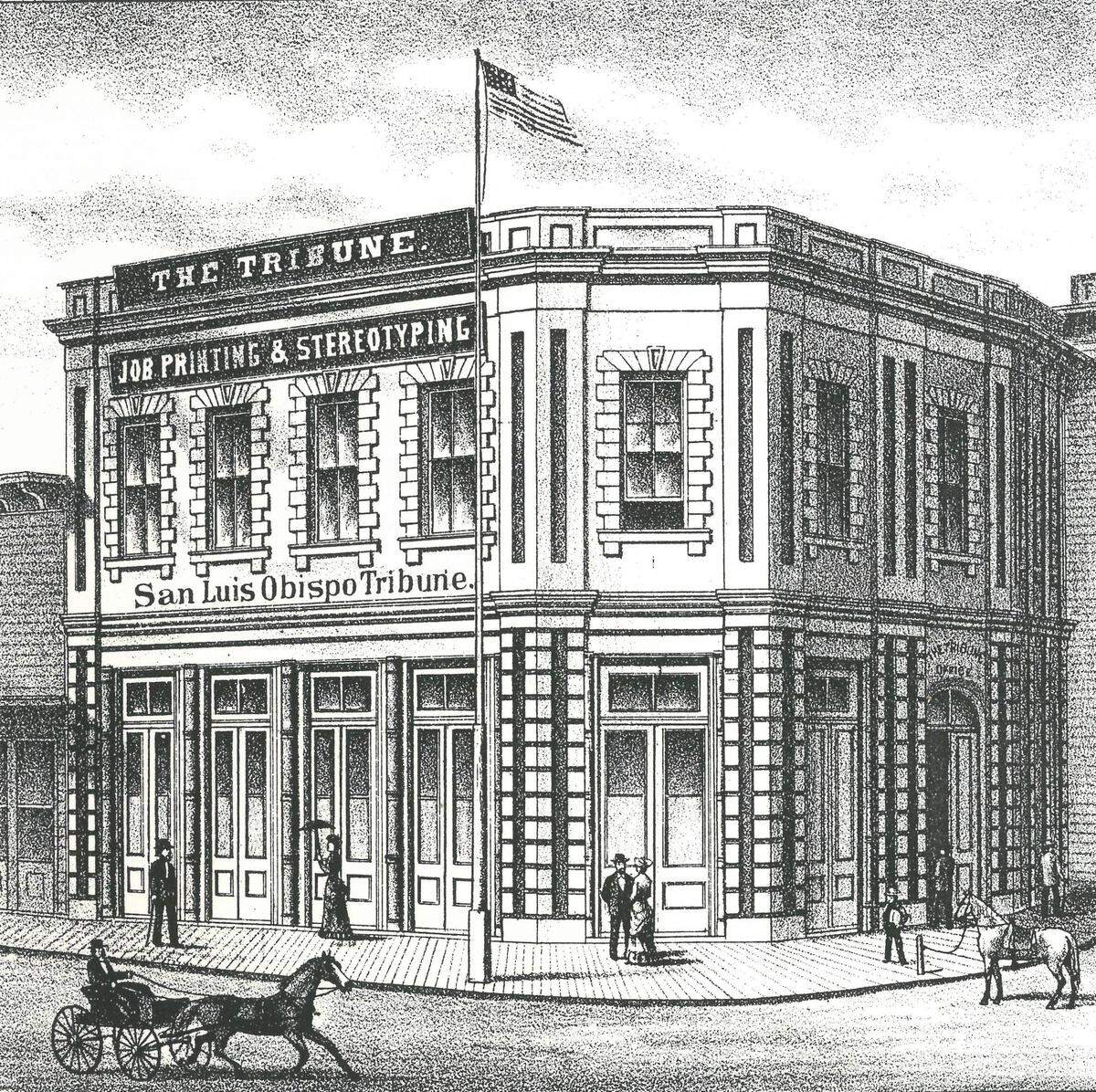
The Lasar Building
When Rembaugh sold his last share of the Tribune in 1877, the new owners couldn’t afford the building so they moved to a rental space a few blocks away on the upper floor of a two-story building at the corner of Monterey and Chorro streets.
The stone-and-brick building was stately. For a time the newspaper was above the Chicago Brewery — no doubt a fine artisan microbrew without excessive hops.
The Tribune then entered a period of instability. Six editors in various combinations would be in charge of the paper during the next nine years, until Benjamin Brooks bought full ownership of the Morning Tribune.
The paper had overextended trying to launch a daily edition without streamlining costs.
Brooks was an inventor, and one labor-saving measure was to hook up a newfangled gasoline-powered engine to drive the press.
When Brooks fired the motor up for the first time, the building shook with seismic fury and panicked bar patrons downstairs rushed into the street in terror.
Brooks began to look for a new ground-floor office down the street.
The unreinforced masonry building was demolished in August 1957 as Mission Plaza evolved into a centerpiece for the town.
Chorro Street
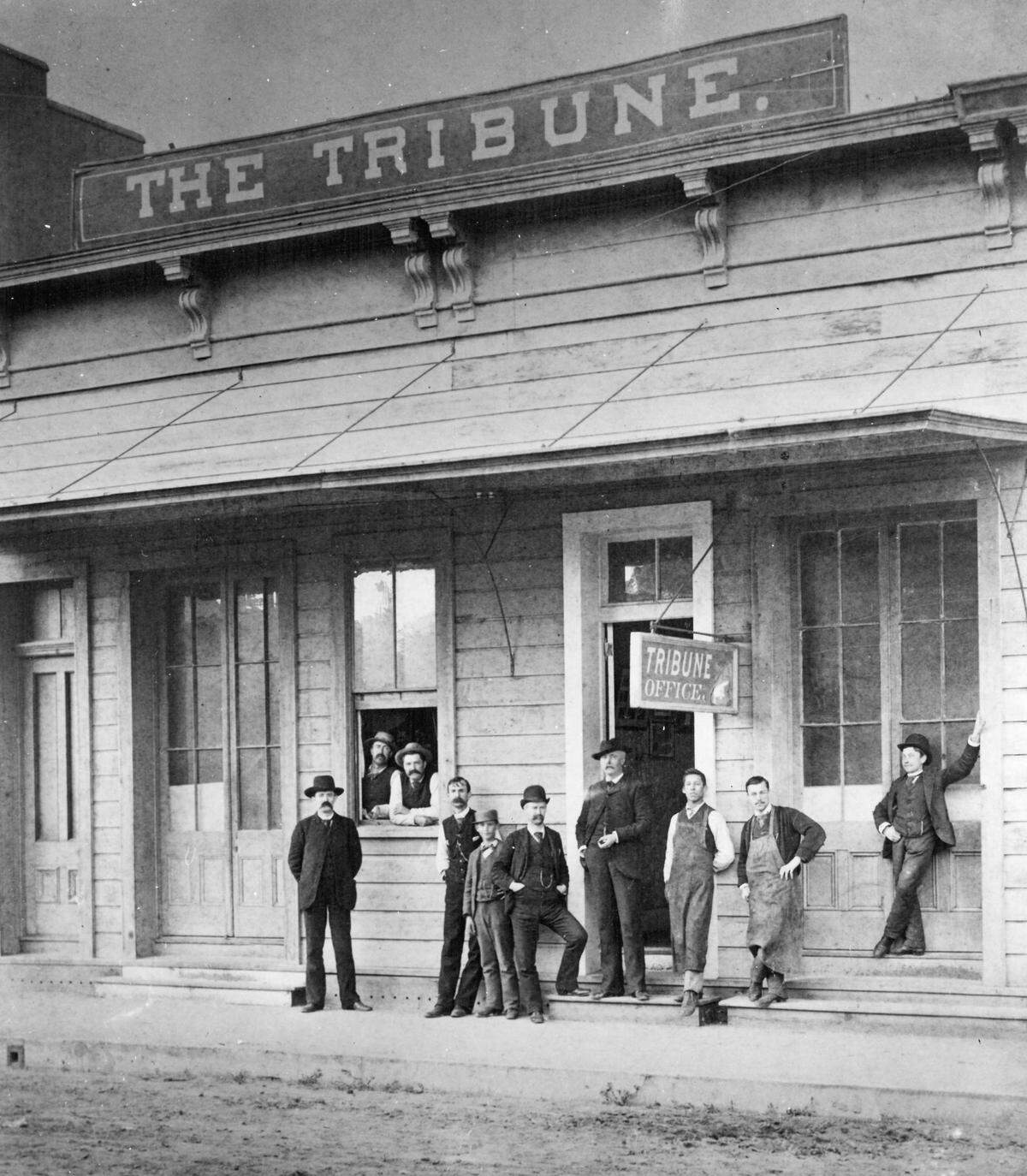
From the late 1880s until the 1920s, the Tribune was published on Chorro Street between Higuera and Marsh streets. Brooks was the editor.
Photos show a flatbed press driven by giant belts in a way that would give a safety inspector nightmares.
When Brooks arrived, it was before the Southern Pacific railroad had completed tunneling through the Cuesta Grade — before telephones, paved roads, automobiles, airplanes, reliable electric power or the founding of Cal Poly.
He and the Tribune would be witness to all these changes and more.
Once Brooks got the financial issues managed, the Morning Tribune resumed daily publishing Sunday through Friday.
1240 Morro St.
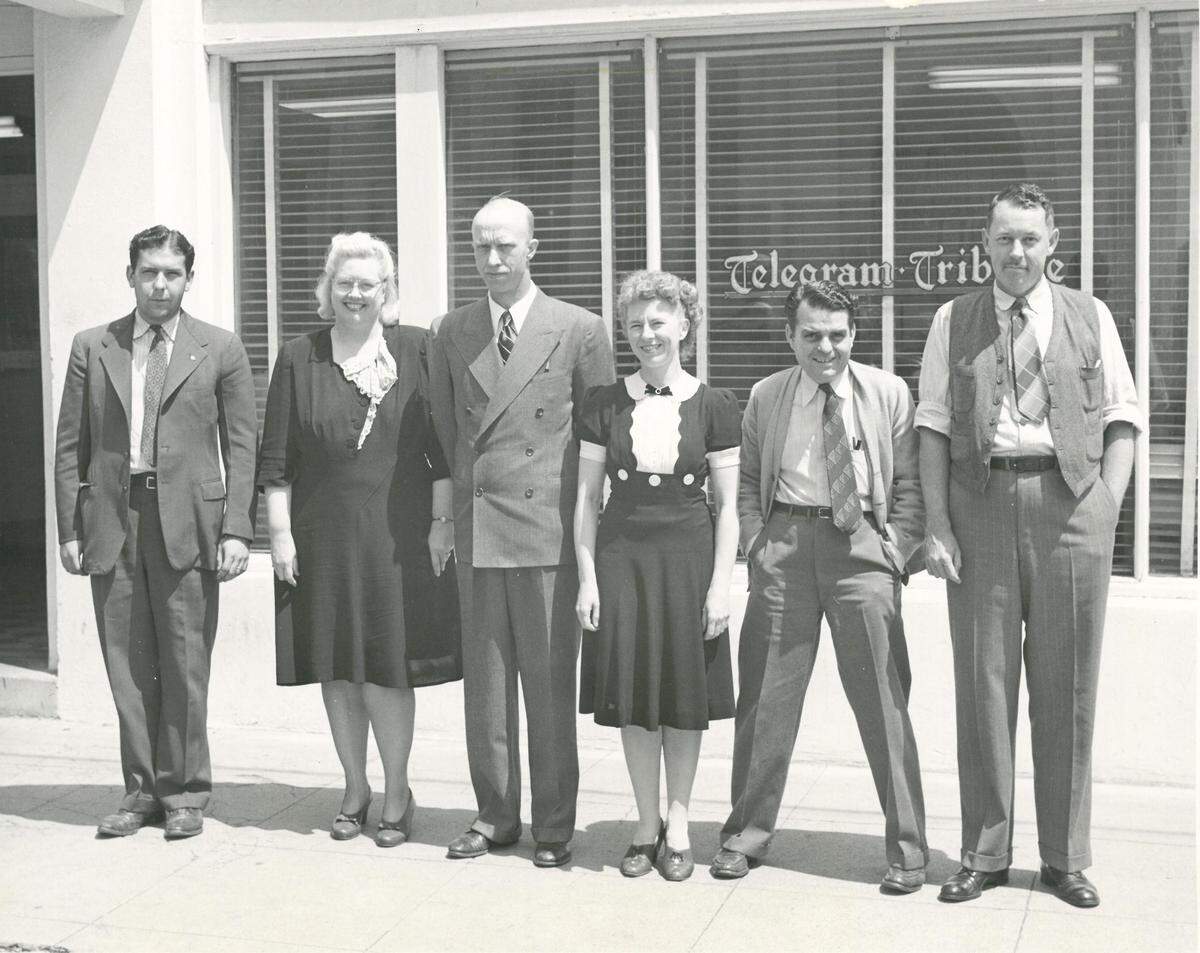
The next building was built as a Ford Model T dealership. The Telegram, Tribune and Herald would combine operations under one roof, and adopt one name: the Telegram-Tribune.
The Telegram had been founded in 1905 and at first was little more than an anti-alcohol church newsletter. It was printed in the Andrews building on Osos Street.
C.L. Day bought the nearly bankrupt paper in 1912 and within days changed to a contemporary page design and infused it with new energy, publishing in the afternoon with the tag line, “Today’s News Today.”
Prohibitionists were unhappy and founded a third newspaper, the Obispan, which quickly foundered and fell into new ownership. It was renamed the Herald.
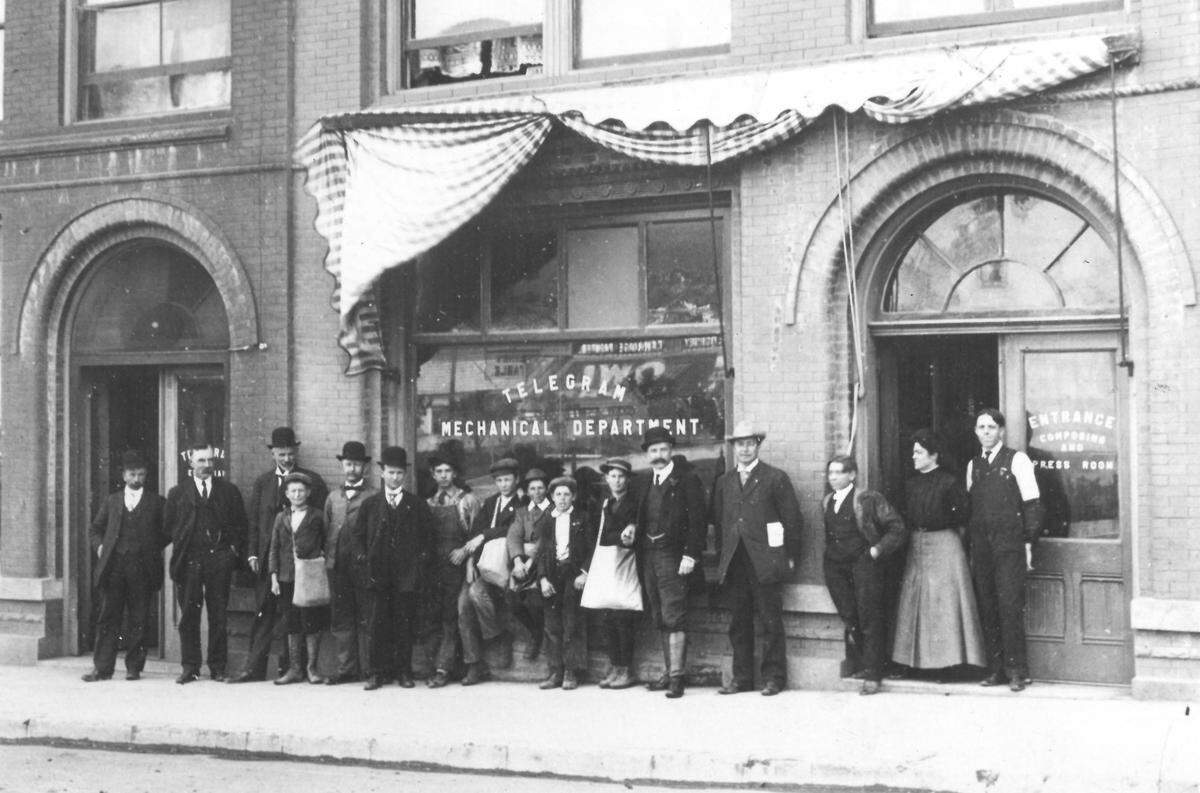
The Herald owners had a good press, but the Telegram and Tribune had the readers. They made an offer to buy out the Telegram, which Day accepted in 1923. Printing operations moved to the former auto dealership building in 1924.
Tribune editor Benjamin Brooks took longer to sell, retiring in 1925.
In 1926, the paper came under out-of-town corporate ownership as a part of the James G. Scripps organization and was under various Scripps entities until 1997. News coverage decisions then and now were made locally.
When the papers completely merged operations, the Telegram-Tribune became an afternoon paper.
During World War II, the newsroom had a staff of three: editor/publisher Bob Goodell, Cecilia Jensen and Elliot Curry.
As it was being demolished in 1967, Curry wrote wistfully about the building with the big plate-glass showroom windows that got too hot in the summer and too cold in the winter.
“Too bad,” he wrote, “it couldn’t have burned down, or blown up, or something — just for one more headline before it disappears.”
The building took the words to heart and a wall of the partially demolished Ford dealership fell and crushed an empty Dodge car parked on Pacific Street.
1321 Johnson Ave.
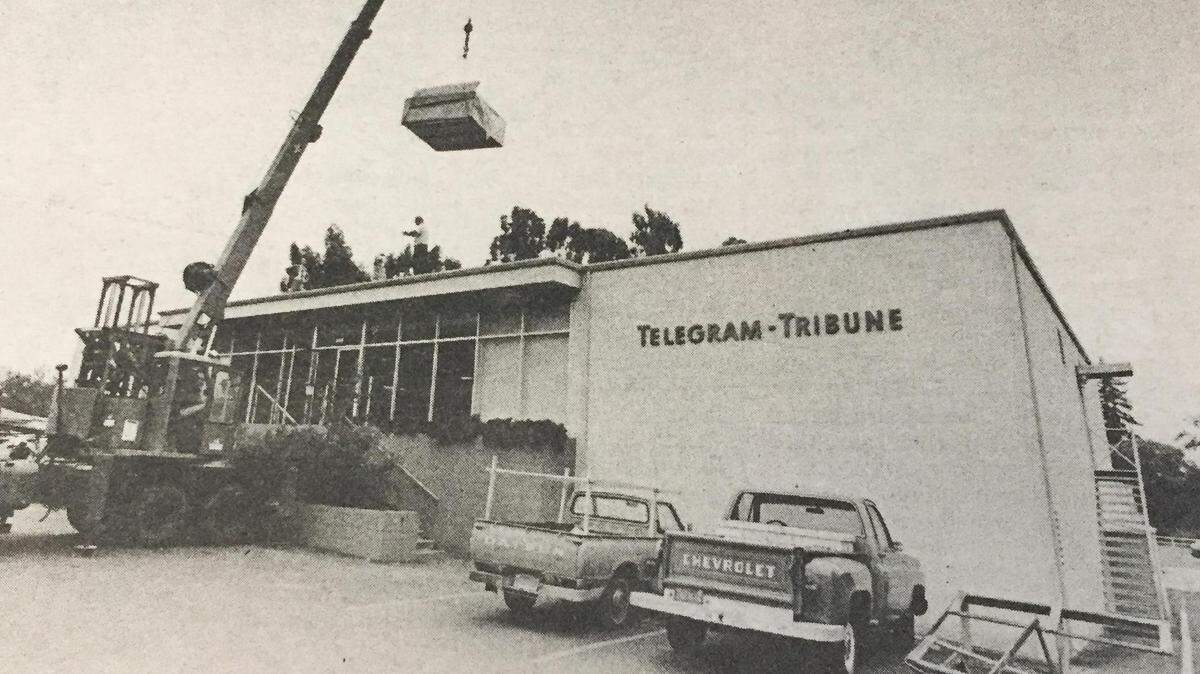
The Johnson Avenue building opened in 1958, becoming only the second Tribune building purpose-built for printing and the first outside of downtown.
The cinderblock box cost $250,000.
Reporter Dan Stephens nicknamed it “the pillbox.” What the building lacked in charm, it made up for in buzzing green fluorescent light.
Stories were written on typewriters. The double-spaced copy was literally cut and pasted together with rubber cement, then whooshed downstairs via pneumatic tube to be typeset.
It would take five more years before the paper built a darkroom and hired a full-time photographer.
The first computer system arrived in the early 1980s — a green-screen, text-only mainframe that periodically threatened to dump all your work unless the tapes were changed. Sports editor Eric Burdick often saved the day on deadline with a mad dash to the computer room.
Photo assignments were still written on the typewriter when I interned in the early 1980s.
The building didn’t have enough parking, and the low roof in the press room did not allow print units to stack, limiting options for color printing and page configurations.
At one point, the newspaper bought a site in Paso Robles to build a remote printing facility, but that plan was abandoned.
The Johnson Avenue building was demolished to make way for a grocery store, now Smart and Final.
3825 South Higuera St.
Completed in 1993 for $3 million, the building has seen four editors, even more computer systems and the transition from print foremost to digital first. The paper went to morning print publication and added a Sunday edition.
At one point, TV guides were printed here for West Coast newspapers.
We relied on a talented team in production and printing who could troubleshoot and repair broken equipment on deadline, even on weekends and holidays.
Three years after moving in, under editor John Moore, the paper launched the sanluisobispo.com website, and our deadline evolved to “now,” rather than a fixed print schedule.
Next, editor Sandra Duerr launched the Sunday edition, and for the first time the Tribune published seven days a week.
The retail and advertising worlds have also rapidly changed over the last 25 years, but one thing has remained the same: If you are trying to reach readers who care about their community, give The Tribune a call.
735 Tank Farm Road, Suite 220
The Tribune is printed in Santa Maria, so this will be the first location designed without need for a press. And as editor Joe Tarica wrote, it is configured instead for the internet age.
It will also be the first newspaper office I have worked in without a a darkroom, but we converted those into storage rooms decades ago.
The new office is across Tank Farm Road from Marigold Center.
An open house will be scheduled sometime after we unpack our boxes and set up our voicemail.
I didn’t miss the Johnson Avenue building, but I will miss South Higuera Street.
There are new deadlines to meet and ultimately it’s not the building that creates the paper, it’s the curious people who love to share the stories of our community and those that make publication possible from advertising to production. It has been my great joy to work with a talented group past and present.
Thanks to our subscribers in digital and print who support our mission to tell your story, now for almost 150 years.