Trump opened CA public lands to oil leases. What SLO County areas are available?
The Bureau of Land Management opened about 123,000 acres of public land in San Luis Obispo County to oil and gas leasing this week.
It was part of 400,000 acres the bureau’s Bakersfield Field Office opened to leasing on Tuesday. This land stretches through eastern Fresno, western Kern, Kings, Madera, San Luis Obispo, Santa Barbara, Tulare and Ventura counties.
The environmental impact statement identified Lost Hills, Buena Vista, Bakersfield and Sespe as optimal locations to expand fracking.
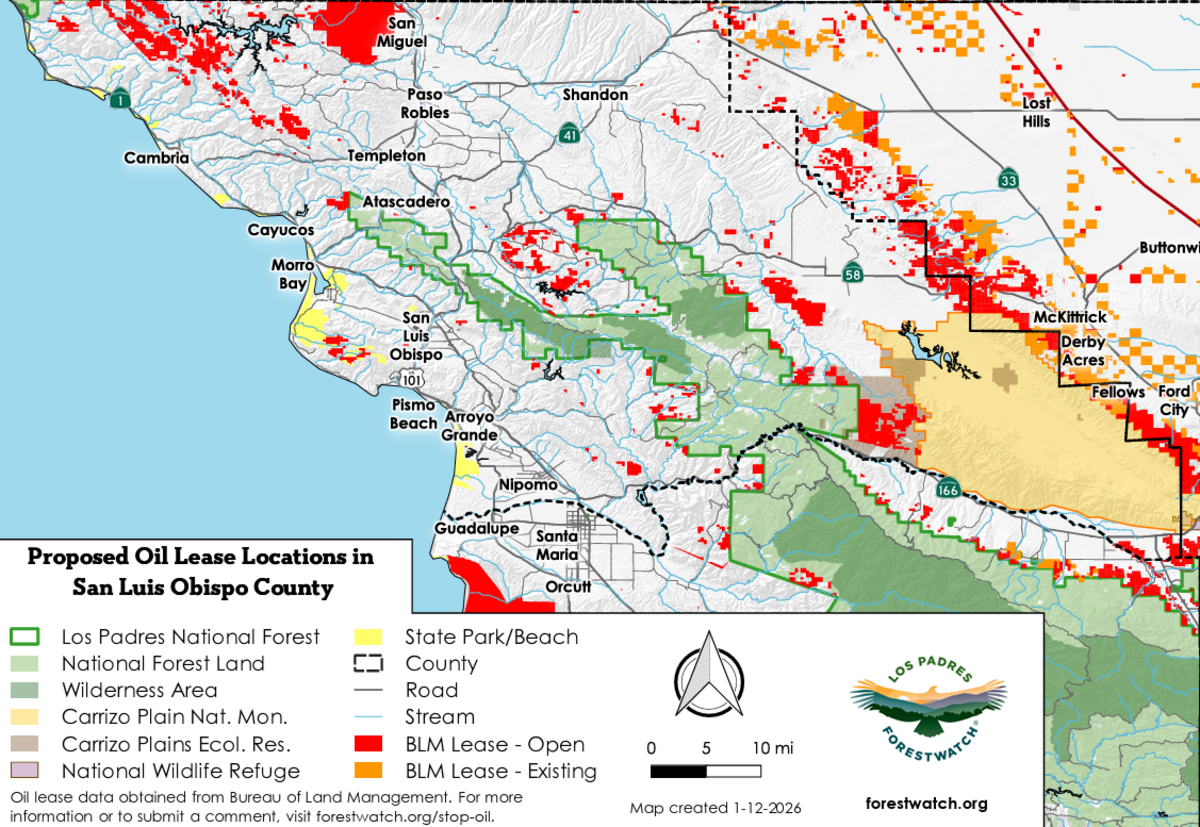
While San Luis Obispo County lands were not identified by the report as a target for new fracking operations, the proposal still would make local land available for oil and gas leasing. Those parcels are scattered around the county in varying sizes.
The largest swath of land that could open to oil and gas leasing is in the Temblor Range east of the Carrizo Plain National Monument on the border of Kern County, according to a map created by Los Padres ForestWatch.
Meanwhile, there are two large contiguous parcels that appear to be military property, one around Camp Roberts and another around Vandenberg Space Force Base.
Along the coast, the bureau identified eligible land east of the Diablo Canyon nuclear power plant. There’s also a patchwork of acreage in the hills between San Simeon and Lake Nacimiento, the map showed.
The bureau opened land on the edges of the Los Padres National Forest, with some patches on both sides of the La Panza Range and the Garcia Mountains. It also identified a handful of small parcels bordering residential areas, like near Los Osos Middle School and the top of Reservoir Canyon in San Luis Obispo.
The bureau even opened parcels that are unlikely to be developed because of their sensitive location that’s protected by a number of state laws, including Morro Rock, Morro Bay State Park, Montaña de Oro State Park and the Irish Hills Nature Reserve.
Designated wilderness areas or national monuments like the Carrizo Plain will not be available for oil and gas leases.
Resurrecting a plan for fracking
In 2014, the Bakersfield Field Office adopted a resource management plan that would have offered 1 million acres of federal land and mineral real estate to oil leasing and gas development, according to court documents.
The Center for Biological Diversity and Los Padres ForestWatch then sued the bureau in 2016, arguing that the 2012 environmental impact statement for the plan did not adequately address the impact of fracking on air quality, water and wildlife — which would violate the National Environmental Policy Act.
The court sided with the environmentalists and ordered the bureau to complete a supplemental environmental analysis before proceeding with any new oil and gas lease sales.
In 2019, the bureau published a new report, and the environmental organizations sued for the same reasons. The court blocked new oil and gas lease sales yet again until the bureau completed a more thorough analysis.

On Jan. 12, the bureau published a new draft supplemental environmental impact statement. Then, on May 22, the bureau published the final supplemental environmental impact statement.
The draft report concluded there is no noticeable increase to environmental impacts between the 2012 environmental impact statement and this one — so the bureau does not need to amend the 2014 resource management plan, it said.
The proposed oil and gas development would cause “minor” emissions that “are not expected to significantly affect regional air quality or public health,” the report said. Meanwhile, there will be a “minimal” impact to protected species like monarch butterflies and to groundwater resources, both of which would require appropriate management practices, the report said.
Local nonprofit Los Padres ForestWatch, however, thought the report relied on outdated analysis. Expanding fracking will have a negative impact on air and water quality, and burning more fossil fuels will worsen climate change, the nonprofit said.
“We are disappointed, though not surprised, to see the BLM continue moving this plan forward under a federal agenda aimed at expanding oil and gas development on public lands,” Los Padres ForestWatch Director of Advocacy Benjamin Pitterle said in a news release. “ForestWatch will be working closely with conservation partners across California to review the final analysis and evaluate our next steps to keep these public lands and our communities intact.”
Finally, on Tuesday, the bureau decided that the resource management plan was in effect — allowing the agency to resume leasing land to oil and gas development.
The Bureau of Land Management said the project supports the Trump administration’s Secretary Order 3418, which calls for the expansion of oil, gas, coal and mineral exploration on federal lands.
The Center for Biological Diversity pledged to fight the decision.
“The Trump administration is sprinting forward with its eyes closed to hand over a million acres of California’s public lands to Big Oil. We’ll fight this with everything we’ve got,” Center for Biological Diversity attorney Cooper Kass said in a news release. “It’s a reckless decision that shows who’s really calling the shots at the White House. From Ventura to the Bay Area, California’s public lands have always been a refuge for people and wildlife. We’ve got to protect these places and our communities from a government hellbent on lining this toxic industry’s pockets.”