An injured CA sea lion was spotted on a SLO County beach. Who’s trying to help?
Content warning: This article includes graphic description of animal injuries.
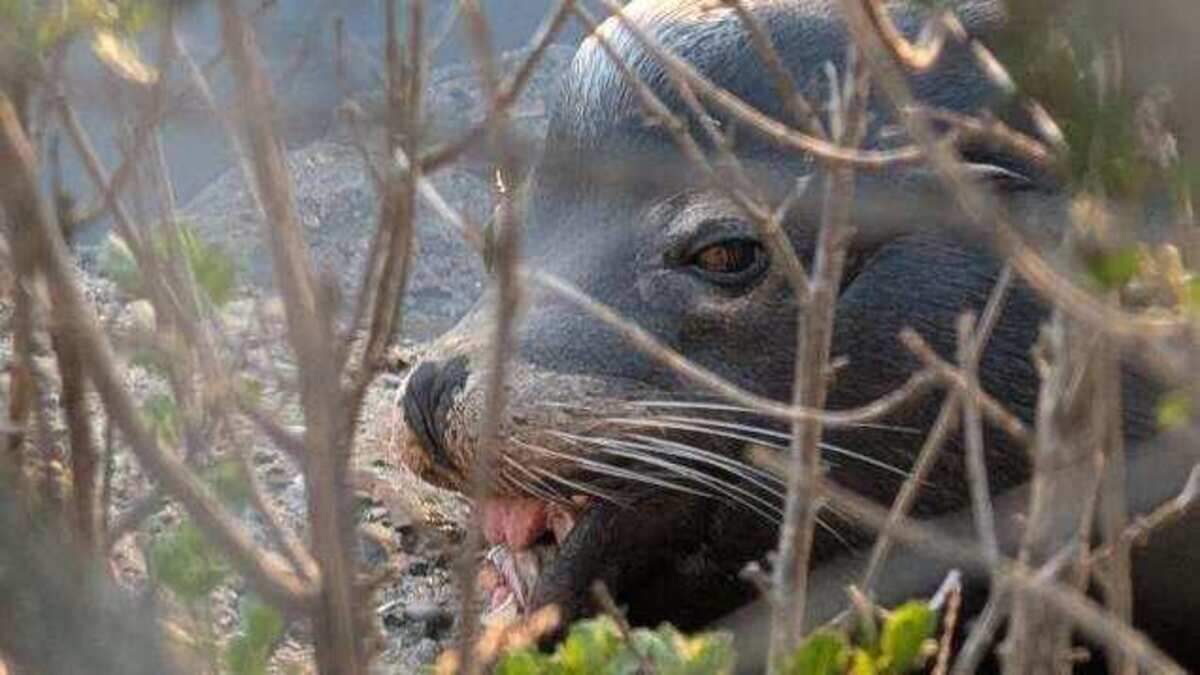
Dani Jespersen was walking along the Embarcadero on Monday evening when she saw a distressing scene: A sea lion with a crooked jaw stuck wide open, oozing with pus and saliva. The sea lion appeared to struggle to hold his head up, she said.
“(He) definitely was in pain,” Jespersen said. “It was really sad to see something that we hope could be preventable go unnoticed.”
The Santa Margarita resident first saw the sea lion at 5:30 p.m. before going to dinner. When she returned to the dock at about 6:30 p.m., the sea lion was still there, so she called multiple agencies for help — to no avail.
The Morro Bay Harbor Patrol, the California Department of Fish and Wildlife and the Morro Bay Police Department weren’t available to respond to the sea lion, she said. She left the dock at 10 p.m. after exhausting all of her options for the night, but she didn’t give up on the sea lion.
“If people can help the wildlife, especially marine wildlife that is protected, we should,” she said.
Luckily, on Tuesday morning, she got in touch with the Marine Mammal Center, a nonprofit organization that is now monitoring the injured sea lion.
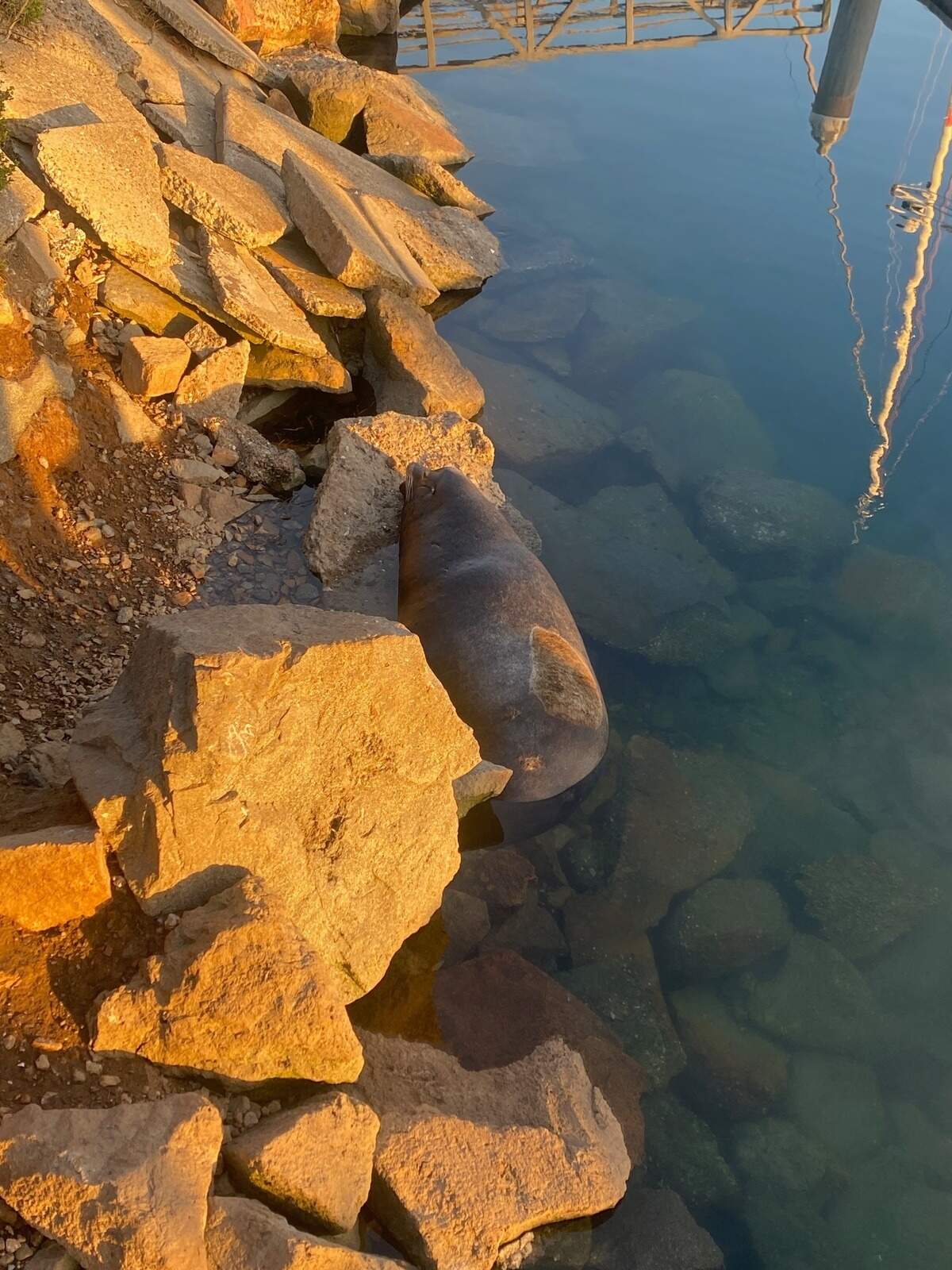
The approximately 700-pound adult sea lion suffered a significant injury to the lower jaw and is mostly hanging out on the rocks near Giovanni’s Fish Market, Marine Mammal Center spokesperson Giancarlo Rulli said.
The Center first received a report about the sea lion on Sunday at 4:30 p.m., and its team has monitored him daily ever since to evaluate his response to the injury.
If he is able to forage for food and maintains its size, the Marine Mammal Center likely won’t respond to the sea lion, Rulli said.
“Although the injury to the lower jaw looks significant, sea lions are remarkable healers,” he said.
However, if the sea lion is unable to forage and starts losing weight, the team will consider rescuing him and providing veterinary care.
Rescuing the sea lion would be challenging, Rulli said. Right now, he is sitting on rocks that aren’t safely accessible to a rescue team, and he jumps into the water when he’s approached. Because the sea lion is so large, the rescue would require a team of 10 to 12 volunteers.
The Marine Mammal Center wants to ensure that the sea lion is unable to heal in the wild before initiating a rescue — because the procedure could be stressful for the animal and dangerous to the rescue team, Rulli said.
“Every time I see a marine mammal that’s injured, it hurts, and it breaks my heart,” Rulli said. “What I know, though, is these animals are remarkable healers, and when we decide to respond, we want to make sure that when we do, we are efficient and we minimize the stress on an already stressed animal.”
People should stay at least 100 feet away from the sea lion to avoid causing him more stress.
If people see him in a new location, call the center hotline at 415-289-7325, so its team can continue to monitor him.
This story was originally published June 17, 2026 at 9:00 AM.