SLO County was home to the largest abalone farm in U.S. Can ytt Tribe revive it?
Becca Lucas Thomas looked out over the Pacific Ocean, where otters dove below white-capped waves in search of abalone on a misty May morning.
She reached into an old concrete structure to pick up an abalone shell, its iridescent inner lining appearing to ripple like the ocean when it caught the light.
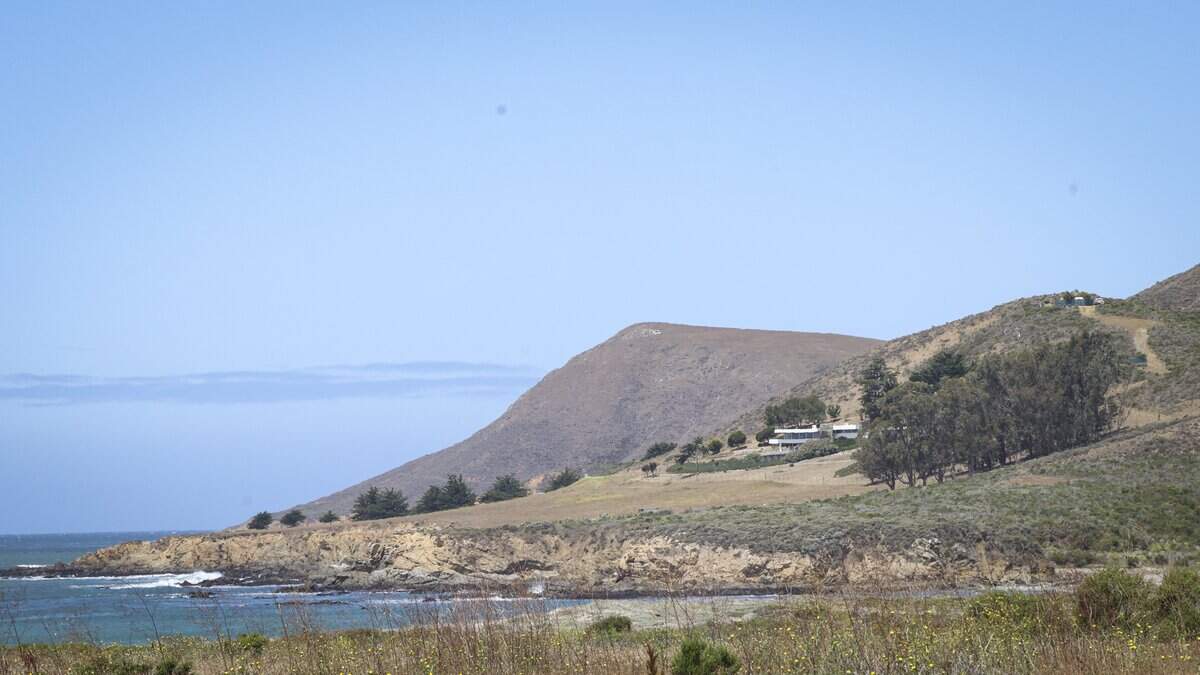
Her people once harvested the same coastline for thousands of years. Now, yak titʸu titʸu yak tiłhini Northern Chumash Tribe has an opportunity to steward this land again for the first time in generations — including what once was the largest abalone farm in the United States.
Lucas Thomas is the executive director of ytt Northern Chumash Nonprofit, which is fundraising $18 million to purchase the 350-acre Anderson Ranch in Cayucos.
Long before Cayucos engineer John Alexander used the property for aquaculture, it was home to an indigenous village called tsitxala. The hills are covered with bunch grasses ideal for basket weaving, and abalone once grew abundantly on the coast, providing food to the village.
“This property is really special. It holds a lot of history,” Lucas Thomas said. “To have the opportunity to bring this place back to our families today is really remarkable.”
The nonprofit entered into a purchase agreement for the property with John Alexander’s estate in 2024. The fundraising deadline is Oct. 15, when escrow ends.
As of Wednesday, ytt Tribe had raised almost $8.2 million — including a $7 million grant from California’s Sustainable Agricultural Lands Conservation Program, according to the GoFundMe.
“We’re closer to Land Back than we have been in two years, but we’re still working on this,” Lucas Thomas said.
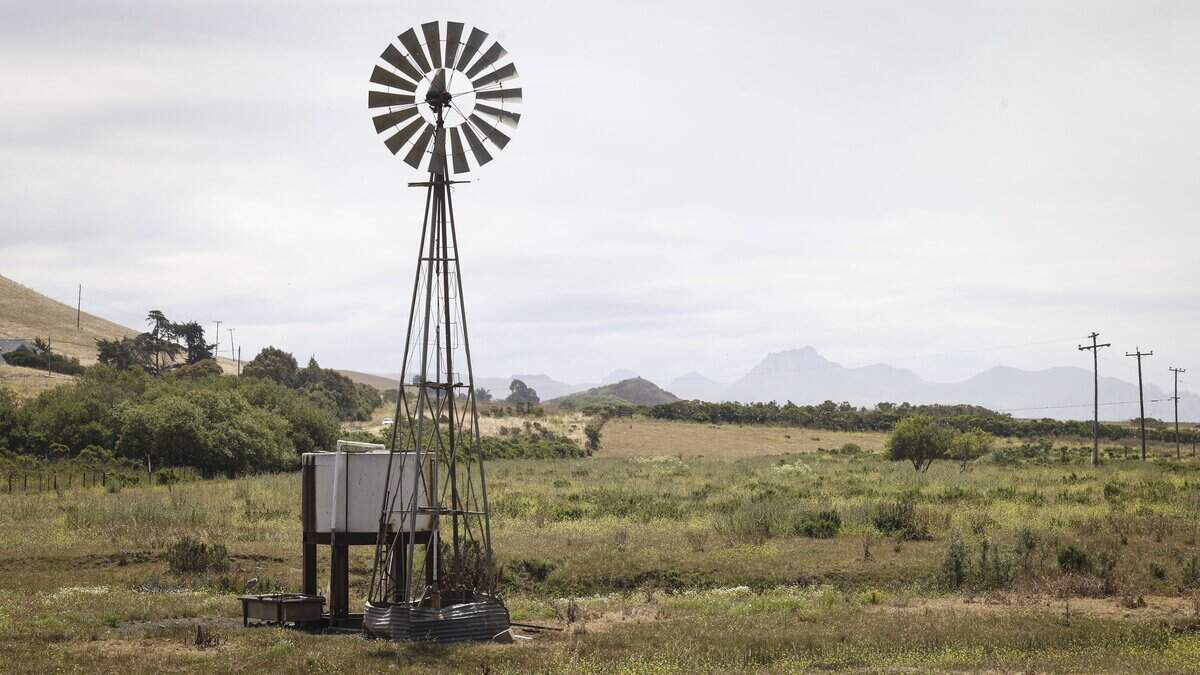
The five-parcel property includes 1 mile of coastline; a eucalyptus grove with monarch butterfly habitat; a seasonal creek that flows into the Estero Bluffs; and rolling hills of grasses, sage and willow trees.
If the purchase is successful, ytt Tribe plans to use tribal stewardship practices to lead restoration projects on the property, such as repairing habitats in the Villa Creek watershed to support the return of steelhead trout.
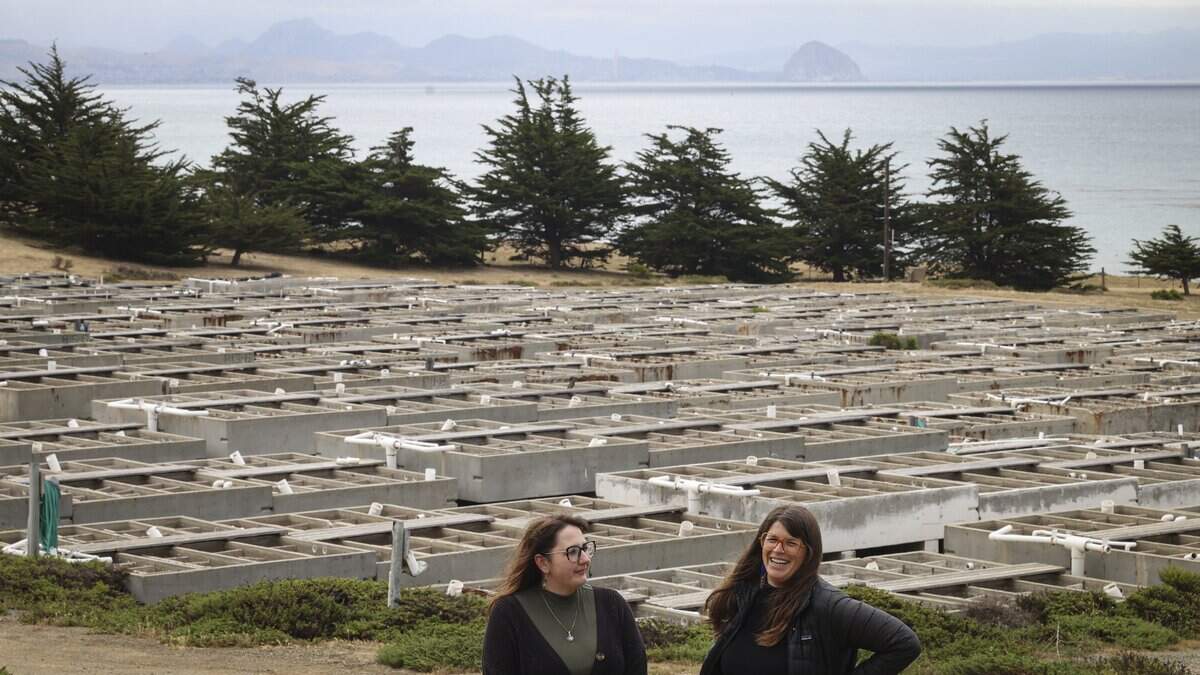
They also hope to partner with the Harmony Coast Aquaculture Institute to revitalize the abalone farm, which closed in 2020.
The project name is yatspasini wa yaktspu Conservancy, which means “Ocean to Land Conservancy.”
This land was cultivated by the careful stewardship of indigenous people before colonists forcibly removed them, Lucas Thomas said. Thousands of years ago, ytt Tribe transplanted select plant species, maintained desired waterways and intentionally burned the landscape.
“While we look at this beautiful coastline, remember that it looks this way intentionally,” she said. “It was created by our ancestors.”
A new life for the abalone farm
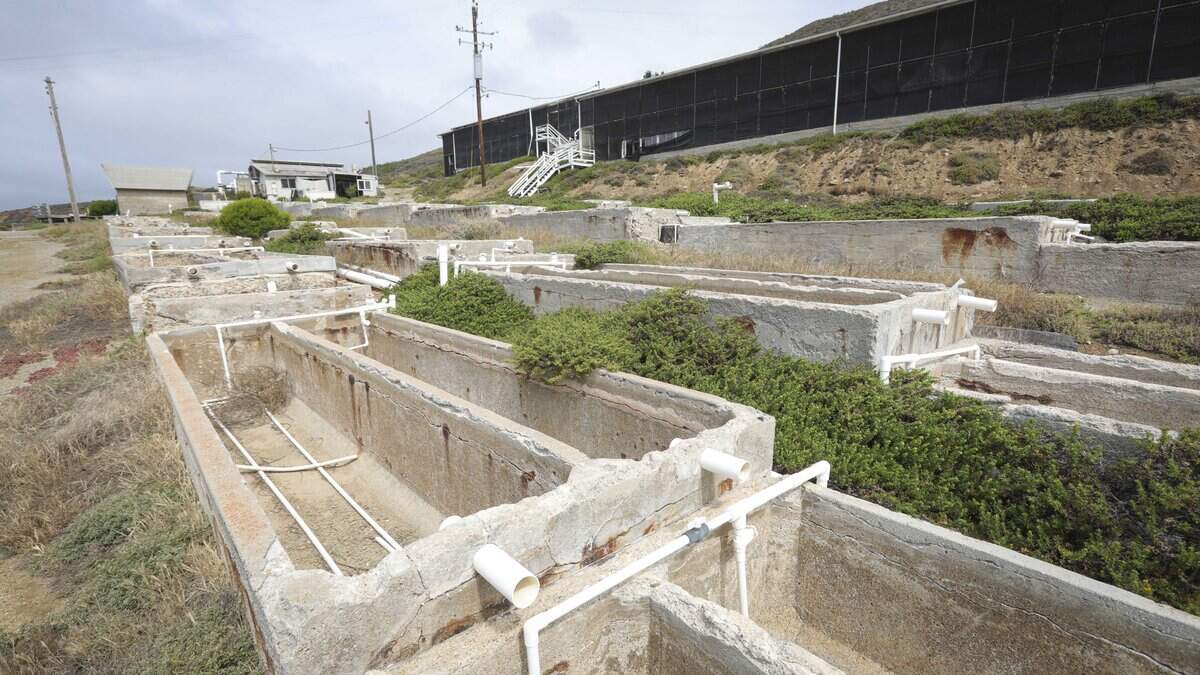
Built during the 1960s, the abalone farm raised about 1 million abalone annually that were then sold for meat. About 900 cement aquaculture tanks have sat empty on the property since it closed in 2020.
The nonprofit Harmony Coast Aquaculture Institute is currently leasing the facility, and it is excited to support ytt Tribe in revitalizing the abalone farm, said Ben Ruttenberg, the nonprofit’s co-founder and the director of Cal Poly’s Center for Coastal Marine Sciences.
“They are the perfect partner,” he said of ytt Tribe. “This was originally their land.”
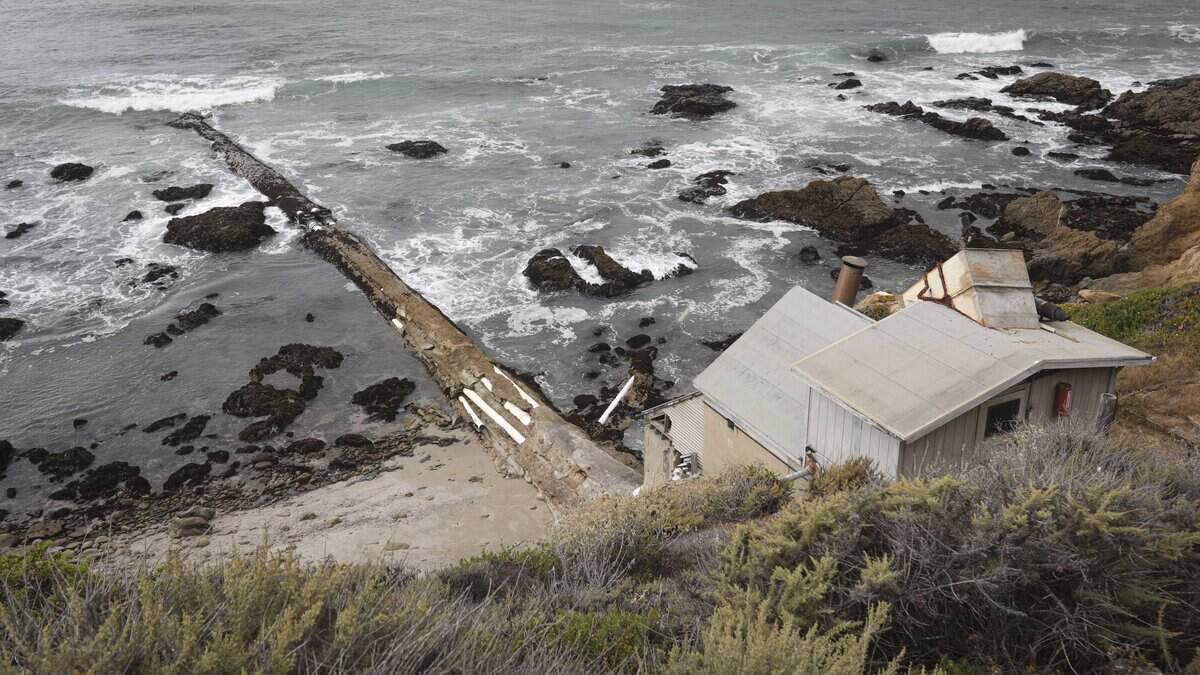
The Harmony Coast Aquaculture Institute owns a state permit for the seawater intake pipe, which can suck in about 7,000 gallons of water per minute, he said. These permits are close to impossible to get and essential for an aquaculture operation.
The dream is to set up the farm so it cleans seawater while growing abalone.
First, the farm would pump seawater into an algae tank. The algae would eat nutrients in the water, lowering its carbon content and its acidity, Ruttenberg said.
That “sweet water” would then flow into the abalone tanks, he said. Abalone create their calcium carbonate shells more effectively when the water is less acidic, so the cleaner water will support their growth.
The farm could also feed the algae to the abalone, which require tons of food to grow to market size during a five-year period.
When the abalone defecate in the water, its carbon content and acidity will increase. So, the farm would run the water through another algae tank before releasing it into the ocean.
“Our goal here is to produce excellent water that is better than the water we brought in, or at least cleaner and has less carbon dioxide than the water we pumped in,” he said.
An aquaculture setup like this would produce food with a minimal environmental impact while also supporting ytt Tribe, he said.
“There are ways for us to do this where literally everybody wins,” Ruttenberg said.
In its heyday, the farm grew red abalone for people to eat. Lucas Thomas hopes they can continue to grow red abalone along with two endangered species, white and black abalone, for restoration purposes.
Black abalone are the only species that grow in the intertidal zone, which is coastal land submerged by the ocean during high tide and exposed to the air during low tide. Other species of abalone grow in deeper waters.
Recently, ytt Tribal members surveying the property found black abalone living on the coastline — so this could be an ideal place to focus black abalone restoration efforts, Lucas Thomas said.
While the scientific community understands how to grow white abalone in captivity and transplant them into the wild, there have been few successful attempts to grow black abalone on a farm. Members of ytt Tribe could dedicate some of the farm to studying this process, she said.
Revitalizing the abalone farm is important for research and restoration purposes, and it also reconnects ytt Tribe with an essential food source.
California closed the recreational abalone fishery — and the mollusk is expensive to buy — so ytt Tribe hasn’t had consistent access to abalone for some time, she said.
“Many of our elders grew up with abalone being a fixture,” she said. “That just hasn’t been a thing for 30, 40 years.”
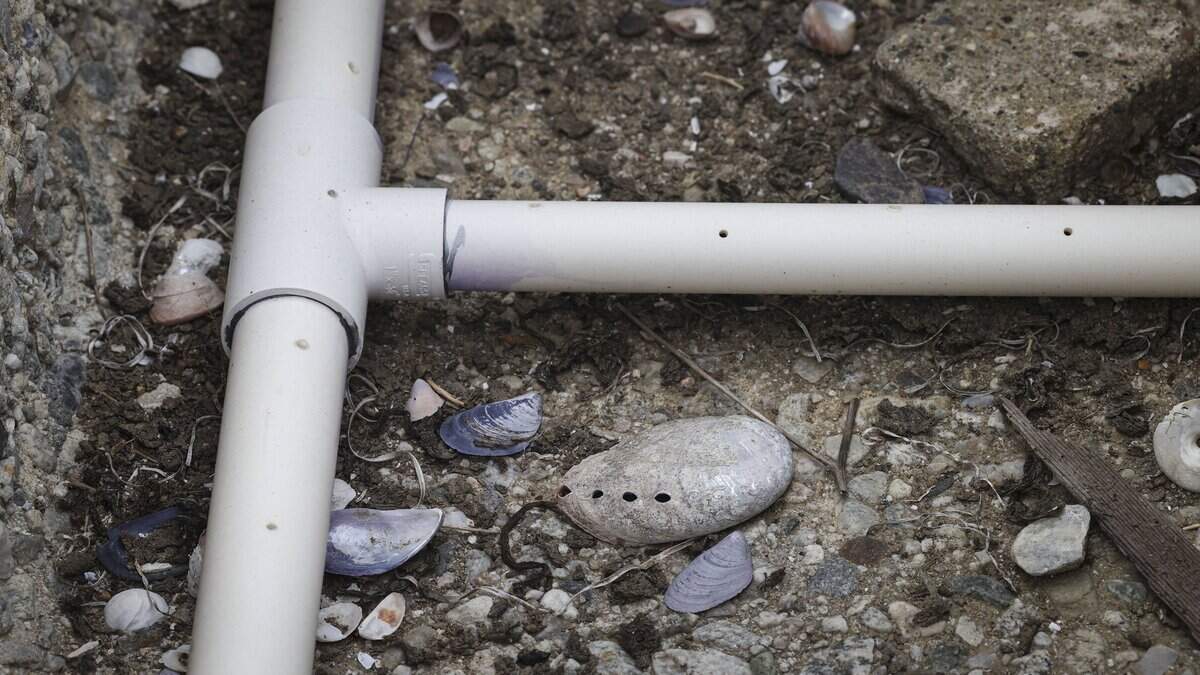
Members of ytt Tribe eat abalone and also use the shells to make jewelry and decorate regalia, she said.
“To be able to have access not only back and steady, but within our control, as something that we’d be able to provide directly for our community. ... It’s a really, really important piece of this for us,” Lucas Thomas said.
Lucas Thomas is excited about the restoration projects ytt Tribe can embark on at this property — from running the abalone farm to implementing intentional burns to promote native plant growth.
She also looks forward to establishing a place where ytt Tribe can gather on their ancestral land without the permission of another property owner or the need to rent a campsite.
“It’s just always quite an investment to be able to bring people here,” she said. “To just have a place where they can camp — we can just be here, we don’t have to ask anyone to be here, it’s just really exciting.”