Could SLO County host an offshore wind port? It depends on the location
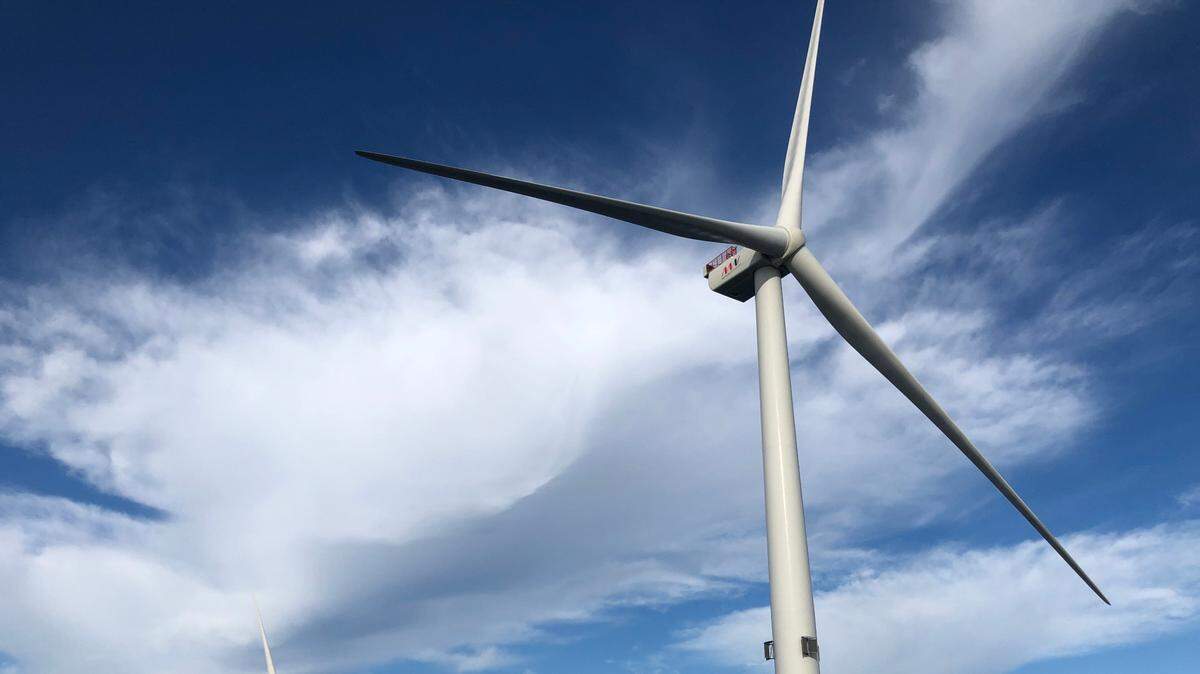
An offshore wind operations and maintenance port would be feasible in San Luis Obispo Bay, but not in Morro Bay, according to a report released this month.
The port would support the monitoring and maintenance of the offshore wind farm planned for the Morro Bay Wind Energy Area, with a dock for service vessels, warehouse and office space.
San Luis Obispo County hired the global consulting firm Mott MacDonald to complete the $1 million study with funds from the 2022 California state budget.
County representatives and Mott MacDonald consultants presented the study to community members in Avila Beach and Morro Bay on Tuesday.
The goal of the report was to provide decision-makers and the public with more information. As of Tuesday, no developers had reached out to Morro Bay or the Port San Luis Harbor District with interest in building such a facility.
What does an operations and maintenance facility do?
An operations and maintenance terminal must have a large enough dock to support 300-foot-long service operation vessels, support multi-day trips for workers performing maintenance and repairs on the turbines, according to Mott MacDonald project manager Andrew Peak. These vessels would dock every two weeks for about 12 hours at a time.
The port would also need jetties for 90-foot-long crew transfer vessels, which would transport wind farm technicians to the lease area daily.
The facility would also include onshore warehouse space for spare parts and equipment; workshops for sorting, inspecting and pre-assembling equipment; offices for the operations control center and parking.
A larger port could support all three lease areas, with space for three service operation vessels and three crew transfer vessels. A smaller port could support one of each vessel, and the lessees would each need to find their own harbor to dock in.
How could an offshore wind port look in San Luis Obispo Bay?
If a developer were to build an operations and maintenance facility in San Luis Obispo Bay, they could renovate the Cal Poly Pier, or build a hybrid option — where the Cal Poly Pier hosts larger vessels and the Harford Pier hosts smaller vessels.
The Harford Pier is 1,400-feet-long and made of timber, which isn’t strong enough to support the cranes needed to pull service operation vessels out of the water, the report said. Additionally, its channel would need to be dredged to be deep enough for those vessels.
That channel is deep enough for crew transfer vessels, though. So the study suggested that the Harford Pier be used for crew transfer vessels, while the 3,000-foot-long Cal Poly Pier is used for the larger service vessels.
If a developer selected the hybrid option, the Cal Poly Pier head would need to be widened and strengthened to hold the cranes and necessary equipment, along with the installation of mooring dolphins, buoys and a wider access road, the report said. The Harford Pier would need a finger pier for the crew transfer vessels.
The hybrid option would cost about $18.5 million to build, and it would not require any dredging.
Cal Poly’s Coastal Marine Science Center would need to relocate, which would require extensive negotiations with the university, the report said.
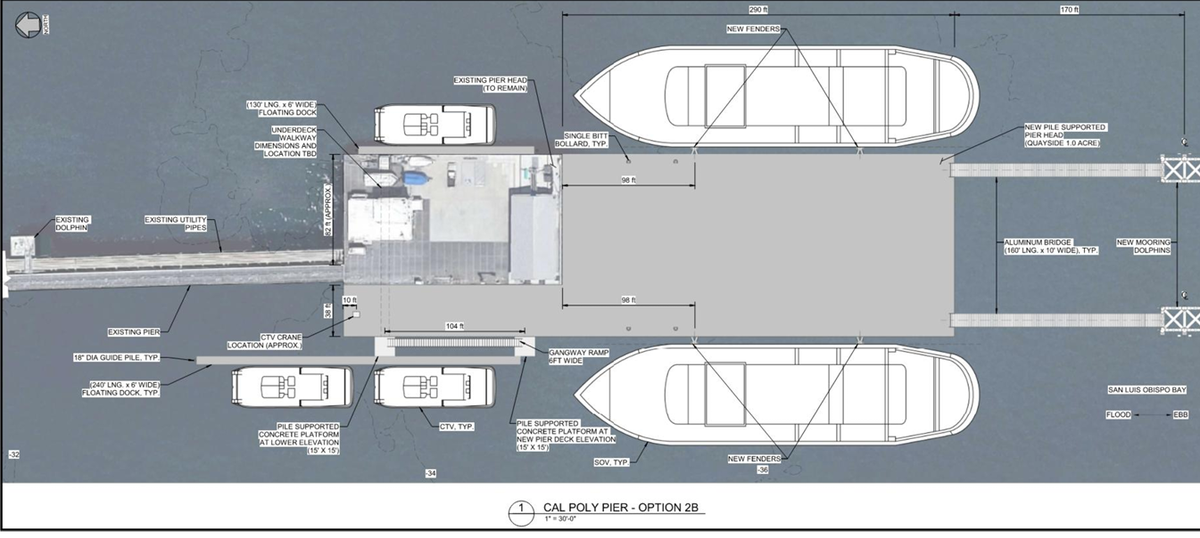
Instead of the hybrid option, a developer could pay about $75.4 million to renovate the Cal Poly Pier for both service operation vessels and crew transfer vessels. In this case, Cal Poly would continue to use the pier as a research center.
The Port San Luis Harbor District would lead the environmental review and permitting process for any development, Rincon Consultants senior environmental scientist Derek Lema said at the meeting.
Now that the study is complete, the Port San Luis Harbor Commission will decide whether to accept a $3 million grant from the California Energy Commission to “mature” the design of an operations and maintenance terminal in San Luis Obispo Bay.
A date hasn’t been set for that meeting yet, harbor director William Friedman told The Tribune.
Speakers at public comment were divided over the idea of an offshore wind port.
Speakers like REACT Alliance board member Tricia Boaz said Port San Luis shouldn’t host such a facility because it would damage the environment and the character of Avila Beach, a small town known for its beautiful beaches and tourism-based economy.
“It’s not about whether offshore wind is bad — this is not the place for an operations and maintenance facility,” she said.
Meanwhile, speakers like San Luis Obispo County resident Gary Wollner said offshore wind projects are essential for transitioning away from fossil fuels and fighting climate change.
“I believe everyone in this room has something in common: A deep love for the Central Coast, the Pacific Ocean, the whales, the seabirds, the wild and rugged beauty that defines this place,” he said. “But what we love is at risk. Climate change, fueled by our continued dependence on fossil fuels, is already reshaping our ocean, threatening marine life and jeopardizing the future of the coastline.”
He encouraged the Port San Luis Harbor District to further study what a port would look like at the Cal Poly Pier.
“Offshore wind is one of the most powerful tools we have to fight back, especially as our energy demands continue to grow,” he added.
Offshore wind port would face ‘hurdles’ in Morro Bay
Building an operations and maintenance port in Morro Bay would come with more significant environmental and social impacts than in San Luis Obispo Bay.
“I’m not saying it’s impossible. I don’t think any development is impossible with the right alignment,“ Mott MacDonald project manager Charlie Poole said. “However, it is clear it would face significant hurdles here.”
The North and South T-Piers are too small to support the size of the offshore wind vessels. Between the two locations, demolishing and rebuilding the North T-Pier was the most feasible option identified by the report.
A new steel-and-concrete pier would have a larger berthing area, new finger piers and dock space for the U.S. Coast Guard and Morro Bay Harbor Department. The pier would need cranes for the vessels and a boat lift.
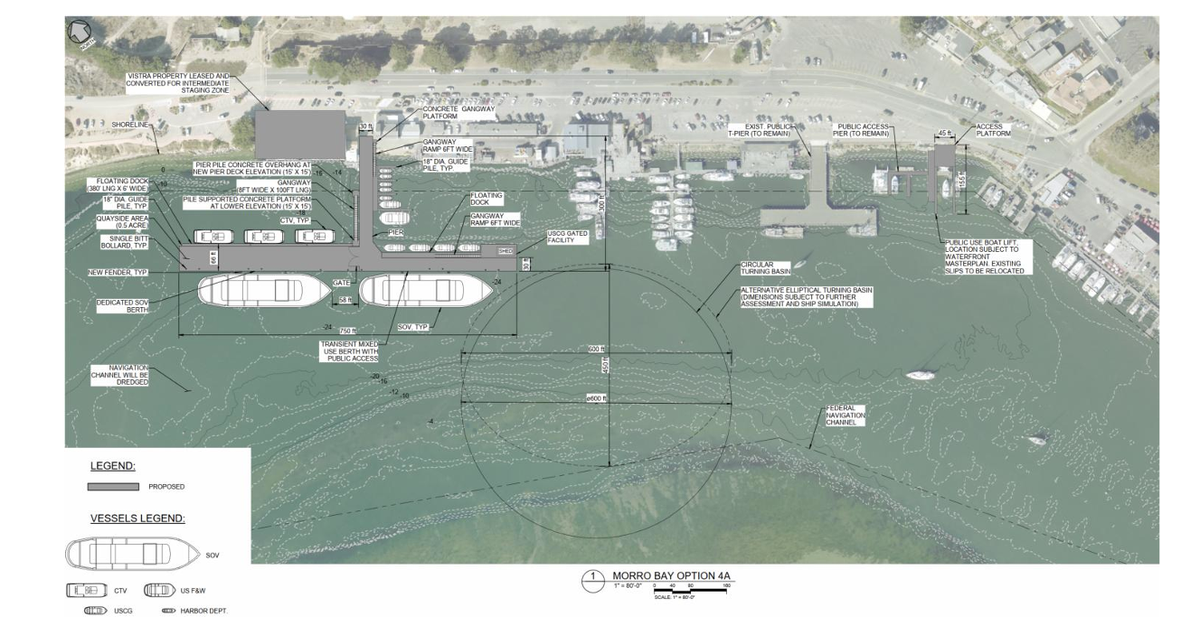
Meanwhile, a developer would need to dredge about 1.1 million cubic yards from the bay to deepen the channel for the service operation vessels. This could have significant environmental impacts.
The developer would then use the old Morro Bay Power Plant property or the Triangle Lot beside the Morro Bay Maritime Museum for a staging area. Construction could cost at least $130 million to 140 million.
Any project would require an extensive environmental analysis and permitting process, with special care taken of the protected estuary, eelgrass and sensitive species, Lema said. The Morro Bay City Council would have a final say over any development in the bay, he said.
While the design is physically possible, building an industrial port would conflict with the city’s General Plan and zoning code, which designate the waterfront for commercial fishing and visitor-serving purposes.
The port could also interfere with fishing, kayaking, boat tours and sightseeing along the waterfront from Beach Street or Coleman Park, which are important to the city’s economy and character, the report said.
Local objection to changes in the view and local character and high capital investment costs could also hinder the project.
“I think from an engineering perspective, it can be done,” Lema said. “But whether the community would embrace it, support it, and then change those zoning and then embrace reaching out to those federal representatives in order to promote it ... that’s not the case right now. But in the future, that could be the case.”
Morro Bay residents who spoke during public comment at the meeting overwhelmingly opposed the idea of an operations and maintenance port.
“Please listen to the will of Morro Bay residents who have overwhelmingly voted to rid Morro Bay of industries that threaten our way of life, sensitive ecosystem, air quality, tourist economy and natural beauty,” Morro Bay resident Judy Setting said. “For over 60 years, we have been disproportionately impacted with industrial hazards that are a detriment to our health, marine life and tourist economy. We have endured acid rain, noise pollution and unsightly, monstrous smoke stacks and industrial buildings. Morro Bay deserves environmental justice.”