Beavers can’t live in this SLO creek. So volunteers are making their own dams
On a warm spring day, mud-splattered volunteers mimicked beavers as they stacked coyote brush and soil into a dam with the goal of catching more water in San Luis Obispo’s Walters Creek.
Water only flows through the creek for about half the year, so actual beavers can’t survive there.
That’s where the local volunteers come in: They build dams where beavers can’t, with the goal of restoring the river to full health, Nature’s Engineers founder Cooper Lienhart told The Tribune.
“They have an amazing intelligence and technology that they developed,” he said of the beavers. “We can also learn from them and copy what they do.”
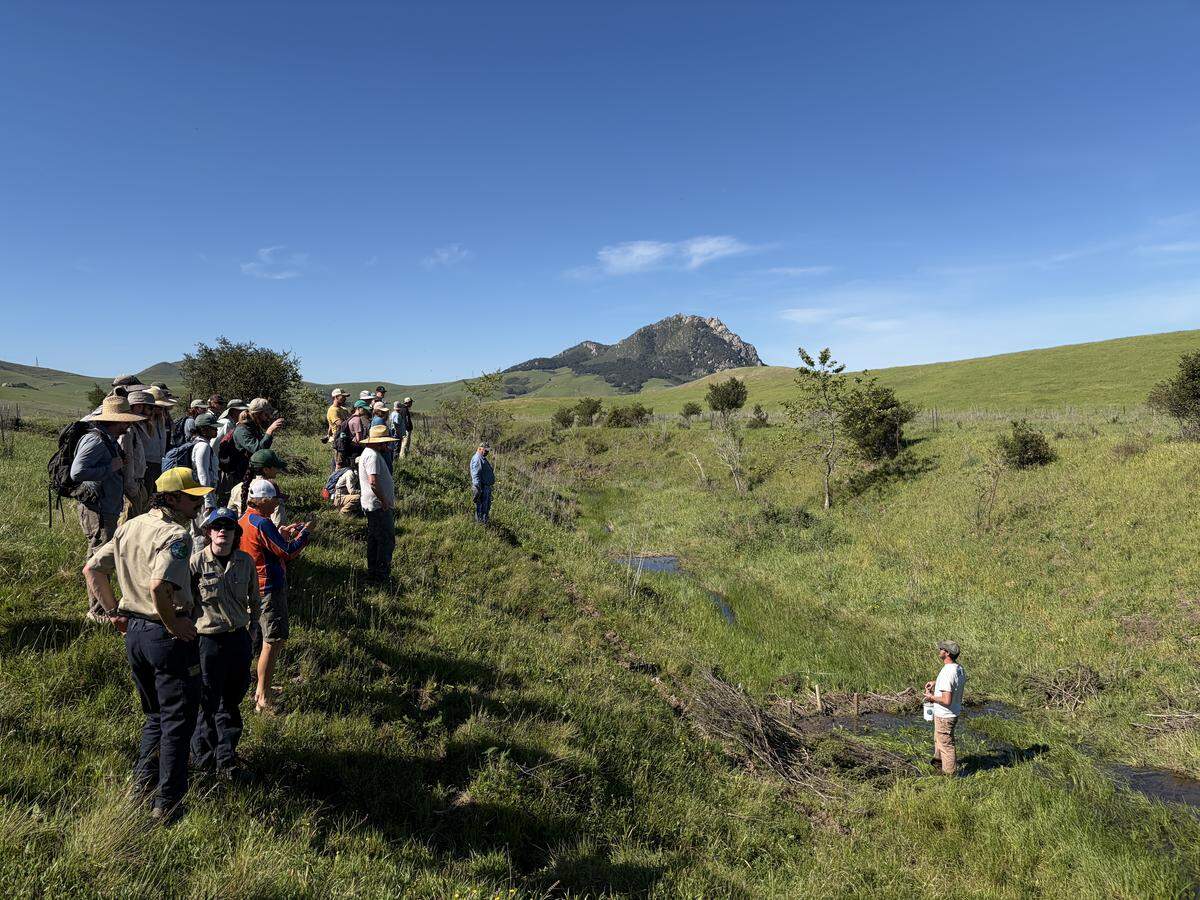
The San Luis Obispo Beaver Brigade, Nature’s Engineers and the Morro Bay National Estuary Program co-hosted a workshop on March 12 to teach people how to install these structures in Walters Creek. The California Conservation Corps provided crews to assist the workshop and dam building.
Since September, these organizations have installed 41 structures designed to slow water and catch sediment in the creek. Eventually, the creek will be able to hold more water and support more vegetation for a longer season, Lienhart said.
More than half of those structures are beaver dam analogs, which are replicas of beaver dams built by people.
“They’re acting as speed bumps,” he said. “They slow the water down.”
Mimicking beavers as a restoration tactic
When water flows through Walters Creek, it moves quickly — cutting a channel deep into the soil and washing sediment downstream into Chorro Creek, which eventually deposits into Morro Bay.
This means the soil can’t absorb as much water, and the creek dries up more easily, Lienhart said.
Eroded rivers, like Walters Creek, are prone to severe flooding during heavy rain. When a river becomes a channel, the nearby soil is too dry to absorb fast-moving water during a storm, so the water barrels through the landscape as a flood.
Beaver dams slow the water down, catch sediment and redirect water around the woody structures — which widens the creek. When the creek moves more slowly, it’s able to hold the water longer, which allows it to feed nearby vegetation and seep into the groundwater. Healthy creeks are also less likely to flood and less vulnerable to drought.
Vegetation surrounding beaver dams observed in the Salinas River from 2017 to 2021 only got greener, even as the drought worsened, according to research by Dr. Emily Fairfax.
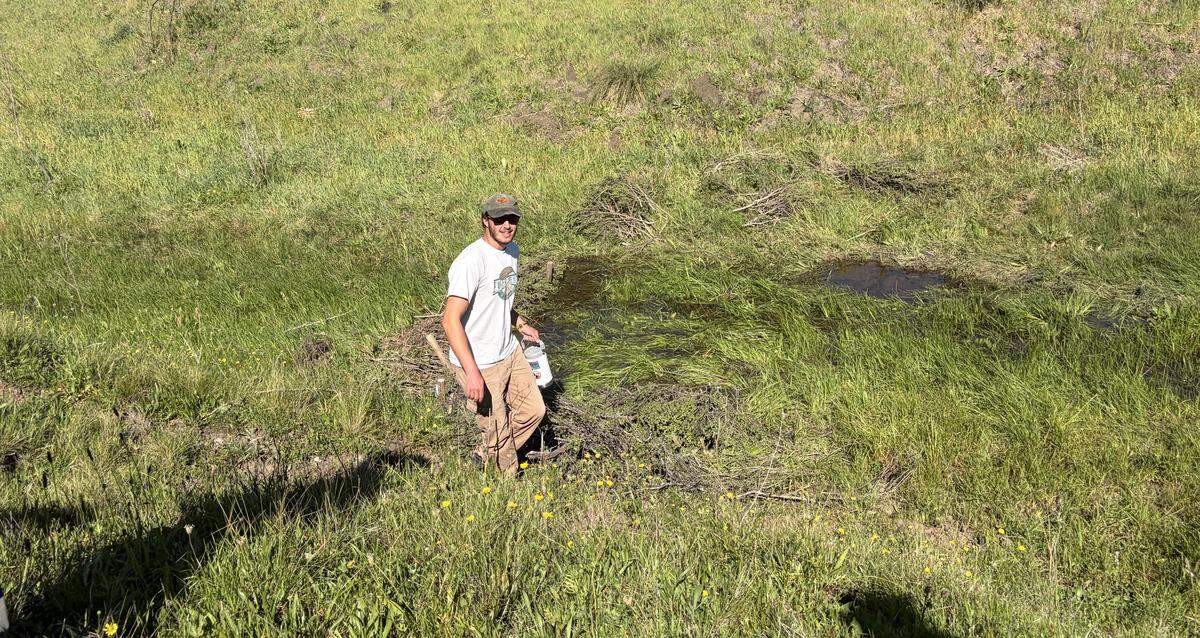
Lienhart founded the Nature’s Engineers in 2024 to build beaver dam analogs in degraded creeks.
He said it generally takes three to five years for these dams to connect a creek to its floodplain.
“It’s really not a one-and-done process,” he said. “I like to think of it as a conversation with the creek. You build something, it reacts. You learn from that, and then you continue to build more.”
Lienhart calls this technique “process-based restoration” — where ecologists return inputs to the creek that nudge the ecosystem back into place.
“We’re really revitalizing the ecosystem, improving that self sustainability, and restoring those natural processes so that the creek can function once again as it is intended to,” he said.
Since first installing dams in September, Lienhart noticed Walters Creek holds wider and deeper ponds of water behind the dams. The dams have also caught lots of sediment.
But they’re still early in the process, and he’s looking forward to continuing the project for the next few years.
Restoring Walters Creek would improve the entire watershed, Lienhart said.
If the dams can train Walters Creek to catch more sediment, cleaner water will flow into Chorro Creek, and Morro Bay won’t fill with so much sediment, he said.
Meanwhile, beaver dams support the development of wetland ecosystems, which act as a huge carbon sink. Wet soil holds 10 to 30 times more carbon than dry soil, and that soil can get buried under the dam — locking that carbon away, Lienhart said.
Finally, slowing the creek down allows more vegetation to access that water year-round, which supports wildlife, he said.
“I’m just excited for everything to be healthier and for more life to flourish,” Lienhart said.
Building the dam: ‘It’s messy work, but pretty fun’
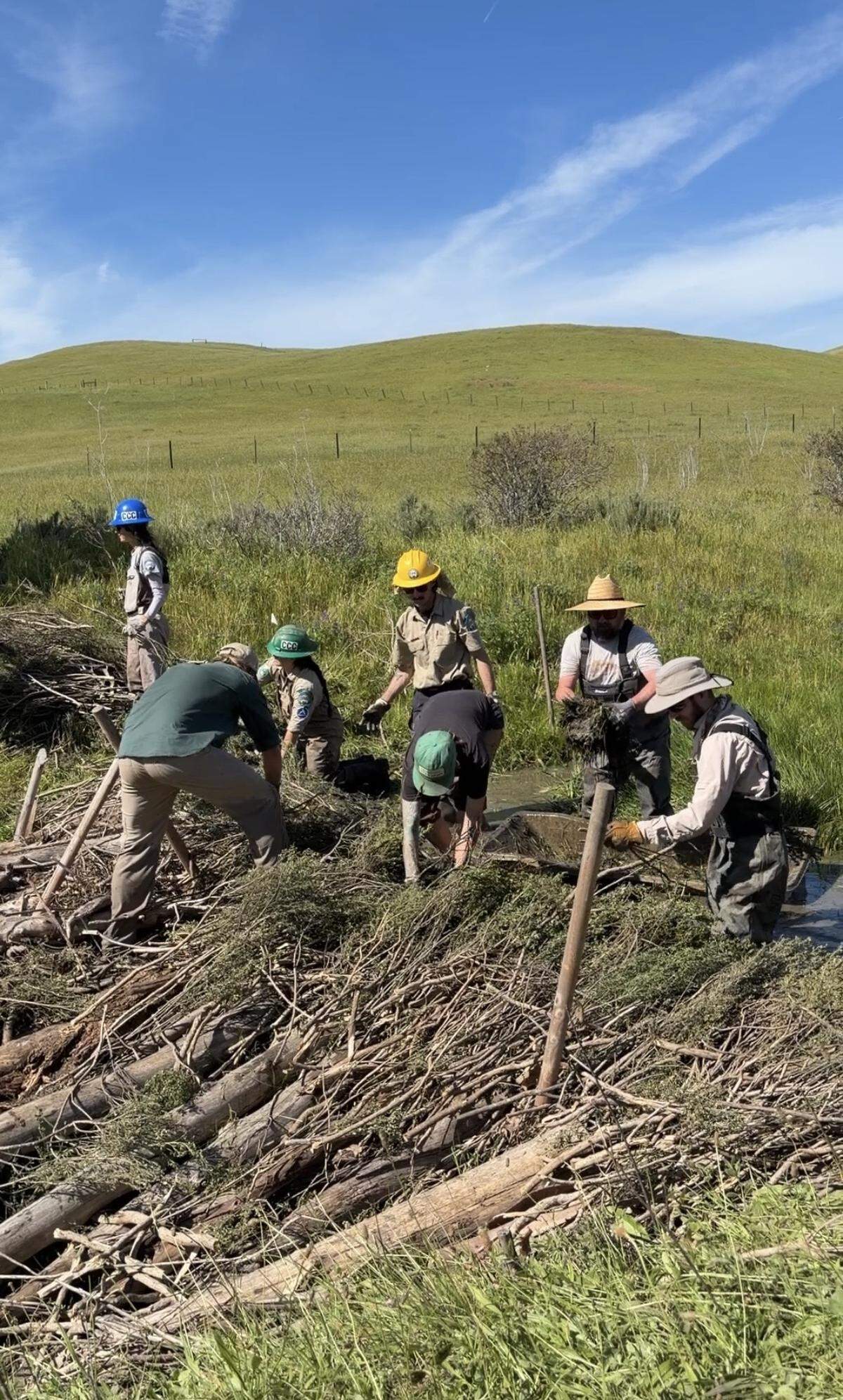
On that recent Thursday, volunteers split into two teams — each tasked with expanding an existing beaver dam analog in the creek.
Volunteers pulled on thigh-high boots and waded into the creek to reach the dam. Mud squelched with each step — and a handful of people got stuck in the mud, laughing as fellow volunteers pulled them out.
“It’s messy work, but pretty fun,” Lienhart said.
First, they pulled apart branches of coyote brush and stuffed them into cracks in the dam with the leaves facing upstream. Muddy water splashed volunteers from time to time — but they didn’t mind, it was refreshing during the heat of the day.
Meanwhile, a group of volunteers shoveled mud into a floating tub, which they periodically delivered to those working on the dam.
When the cracks in the dam were stuffed with brush, the volunteers dumped mud on the dam and stomped it down with their boots.
Then, the group started all over again, falling into a rhythm as they added layers of coyote brush and mud to the dam.
“It’s kind of like lasagna,” Lienhart said of the layers of the dam.
Water pooled behind the dam as they worked — already widening the creek.
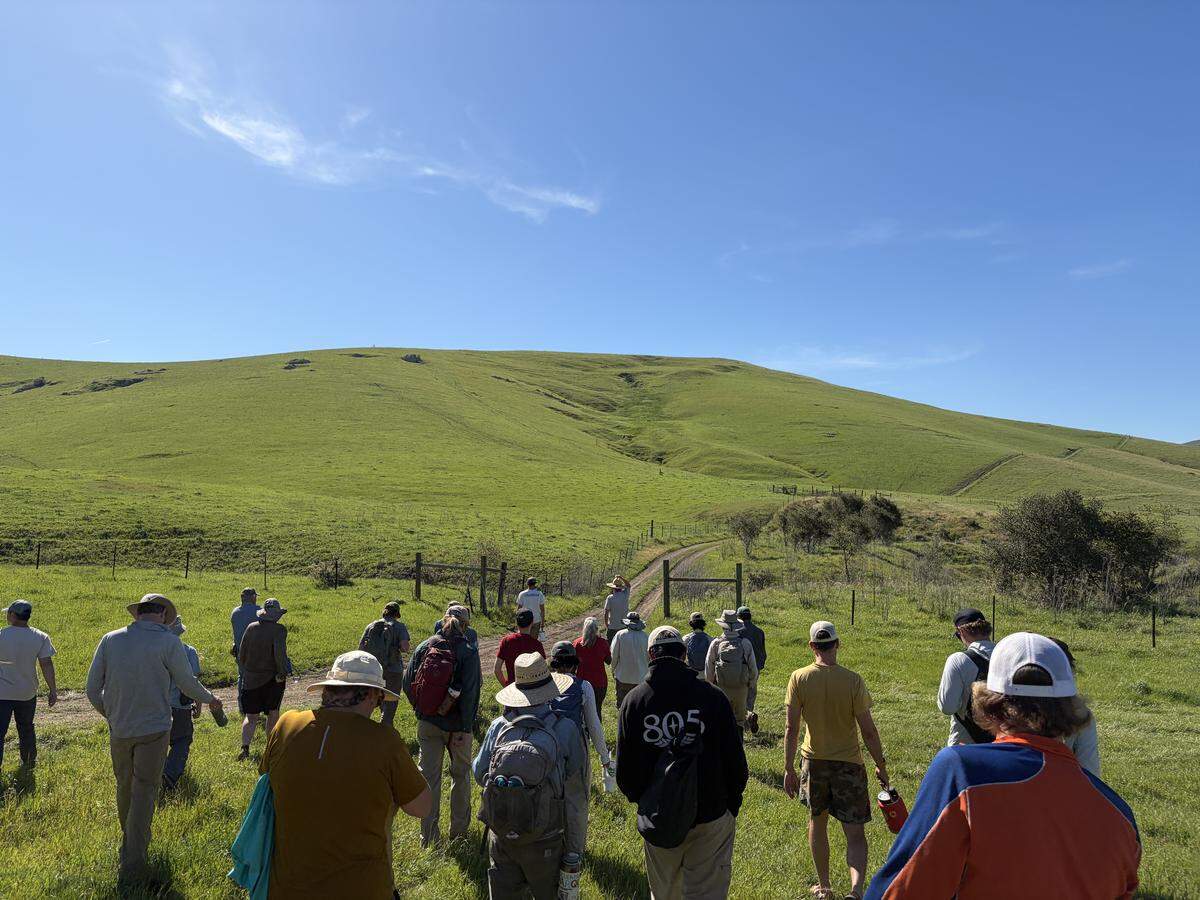
Volunteers attended the workshop for a variety of reasons — but everyone left with light sunburns and wide smiles.
San Luis Obispo resident Dillen Corlett has planned multiple process-based restoration projects through Cal Poly and Creek Lands Conservation, and she was excited to finally test her research and participate in project implementation.
Her favorite part of the day was stuffing the dam with coyote brush and watching the structure grow.
“I’m just stoked to see so many people willing to get their hands dirty,” she said with a smile.
Morro Bay National Estuary Program restoration program manager Carolyn Geraghty said she enjoyed watching jade-green damselflies flit around the creek. She hoped the workshop inspired people to implement more beaver dam analogs across the county.
“This was a good opportunity to get interested parties out here to get their hands muddy and wet and to experience what it’s like to build it,” she said.
Meanwhile, Coastal San Luis Resource Conservation District sustainable agriculture project manager Rhealynn Ravarra attended the workshop to learn more about the dams before installing them at a nearby farm.
She appreciated that the dams use natural materials and that installation has a low impact on the environment. She also enjoyed building community with other people passionate about restoration, she said.
“It’s all been really fun,” she said. “It’s nice to just be outside. It’s a perfect day.”
This story was originally published March 22, 2026 at 10:00 AM.