CA public lands could open to oil leases. What SLO County areas are at risk?
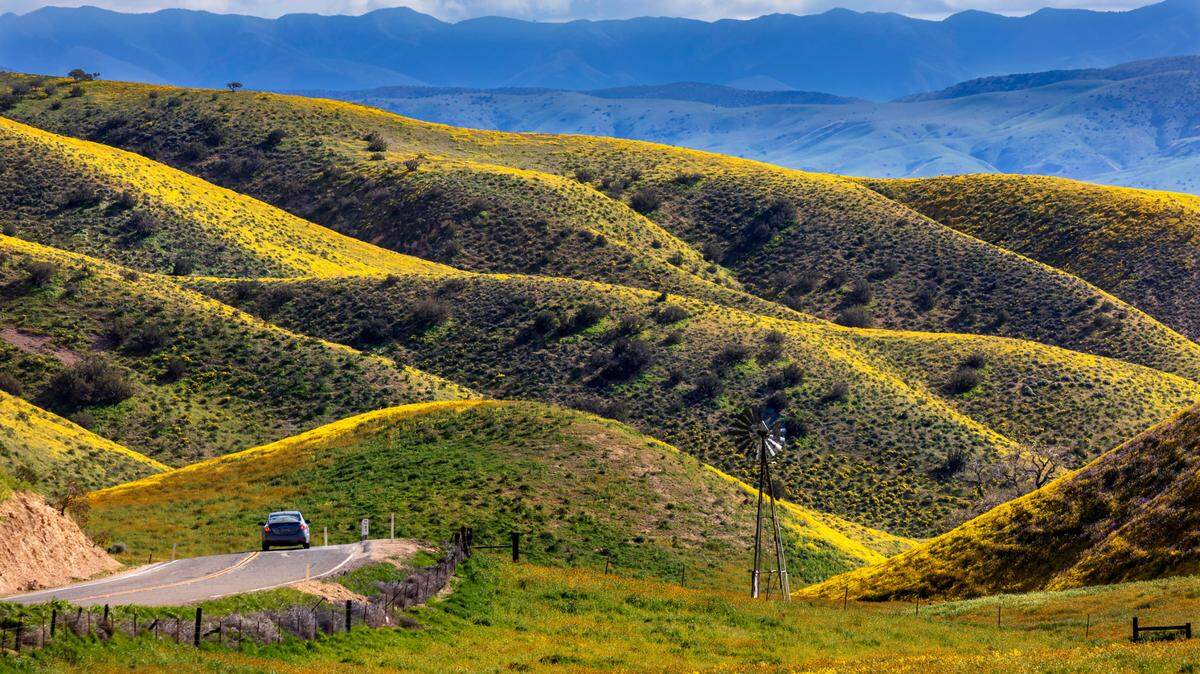
The Bureau of Land Management wants to open about 400,000 acres of public land to oil and gas leasing in Central California, with about 123,000 of those acres in San Luis Obispo County.
At a bureau meeting on Tuesday evening, dozens of California residents spoke during public comment — and most of them opposed the project.
“Our public lands are not for sale, especially when the profits are private and the consequences are public,” said Brooke Balthaser, the community organizing manager of Ventura County-based nonprofit Climate First: Replacing Oil and Gas, also known as CFROG. “California is a leader in the transition away from fossil fuels that are poisoning our communities and threatening our future. The federal government has no right to take us backwards.”
On Jan. 12, the bureau published a draft supplemental environmental impact statement in the Federal Registrar that evaluated the impact of allowing oil and gas leasing on land managed by its Bakersfield Field Office.
That land stretches through eastern Fresno, western Kern, Kings, Madera, San Luis Obispo, Santa Barbara, Tulare and Ventura counties.
The draft report identified Lost Hills, Buena Vista, Bakersfield and Sespe as optimal locations to expand fracking.
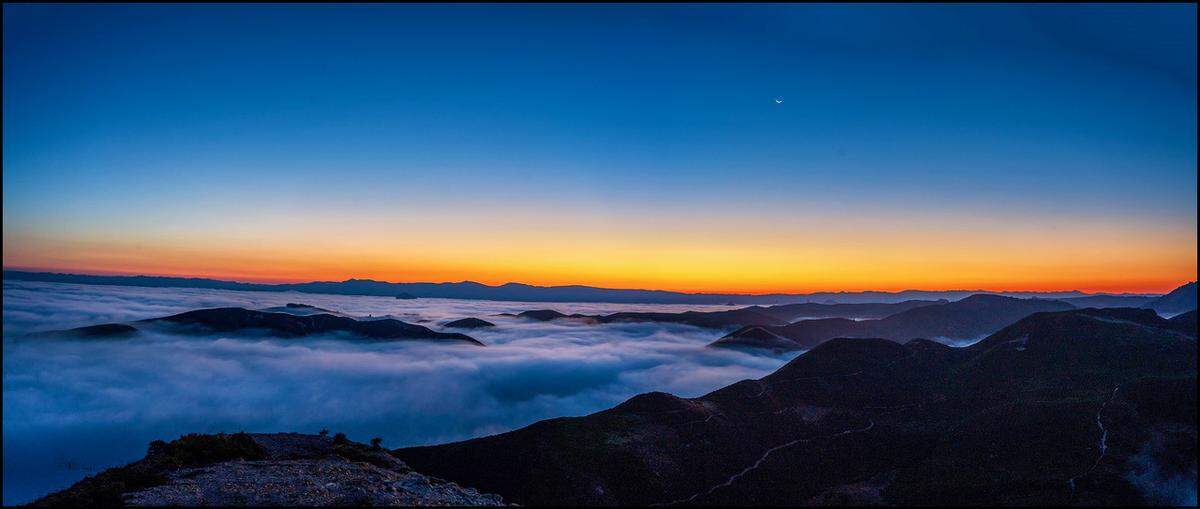
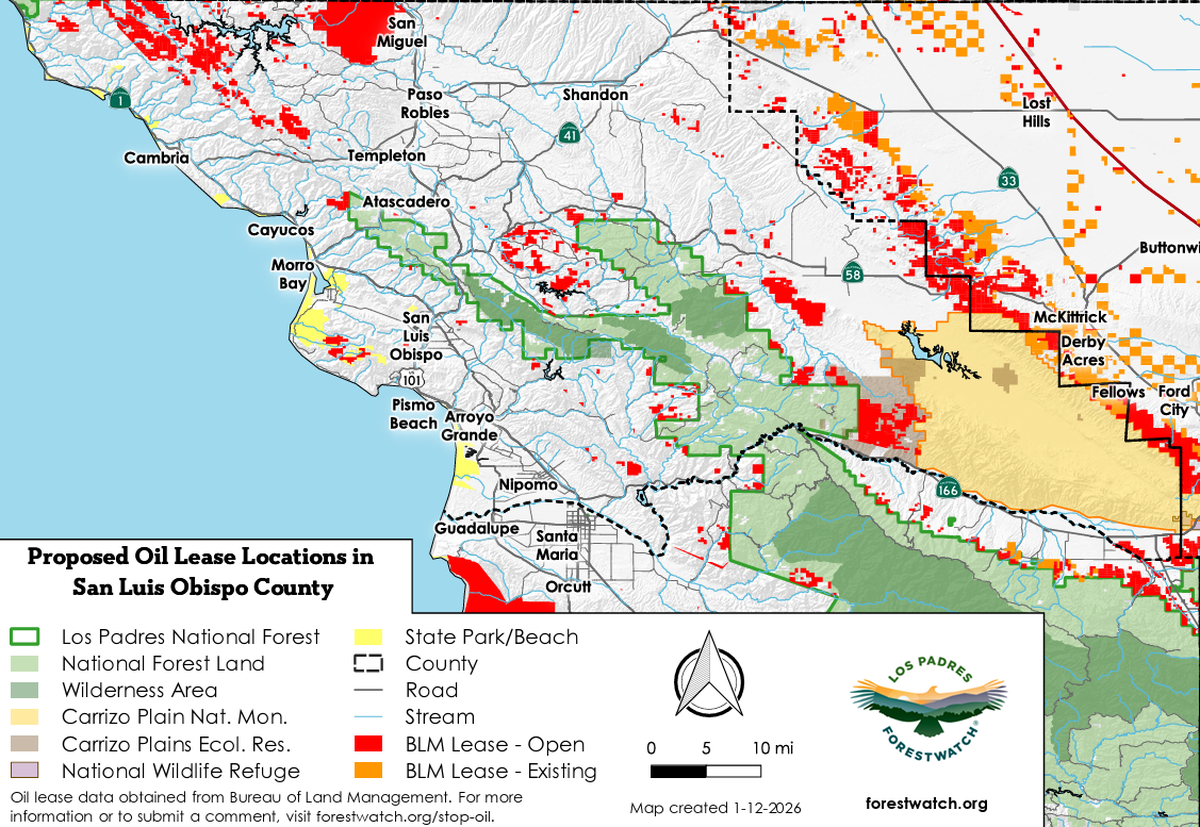
While San Luis Obispo County lands were not identified by the report as a target for new fracking operations, the proposal still would make local land available to oil and gas leasing. Those parcels are scattered around the county in varying sizes.
The largest swath of land that could open to oil and gas leasing is in the Temblor Range east of the Carrizo Plain National Monument on the border of Kern County.
Meanwhile, there are two large contiguous parcels that appear to be military property, one around Camp Roberts and another around Vandenberg Space Force Base.
Along the coast, the bureau identified eligible land east of Diablo Canyon nuclear power plant.
There’s also a patchwork of acreage in the hills between San Simeon and Lake Nacimiento.
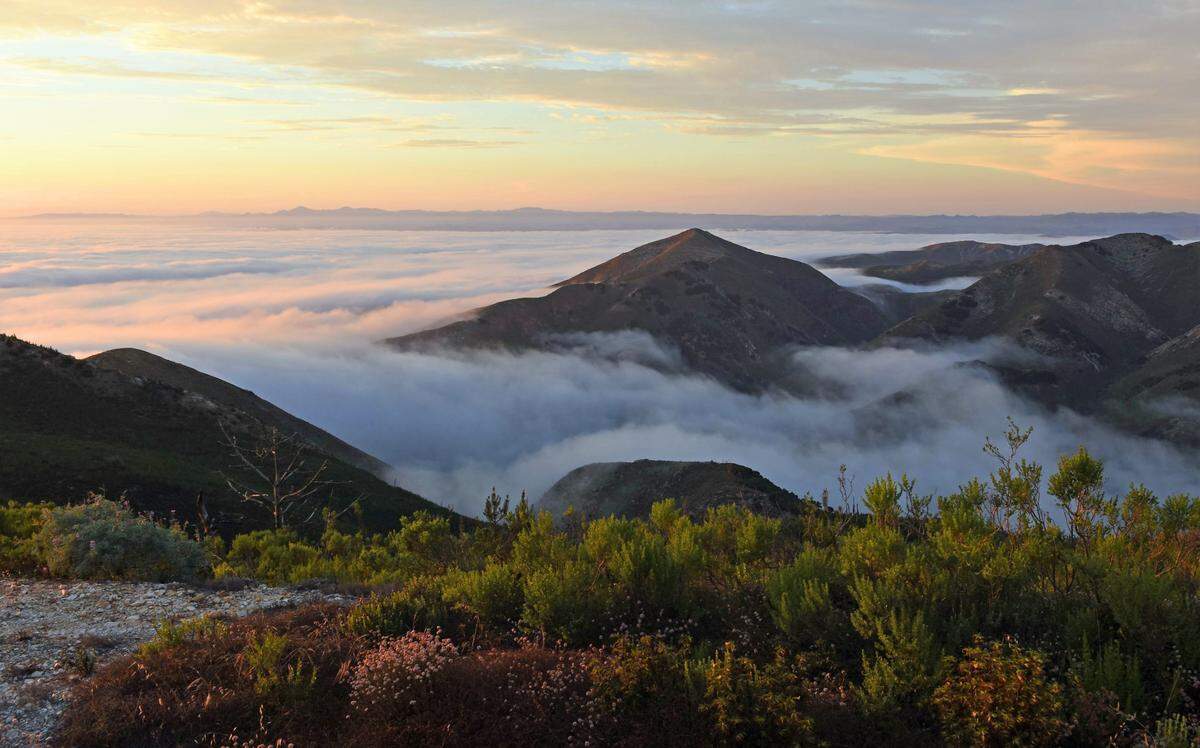
The bureau wants to open land on the edges of the Los Padres National Forest, with some patches on both sides of the La Panza Range and the Garcia Mountains. It also identified a handful of small parcels bordering residential areas, like near Los Osos Middle School and the top of Reservoir Canyon in San Luis Obispo.
The proposal even highlighted parcels that are unlikely to be developed because of their sensitive location that’s protected by a number of state laws, including Morro Rock, Morro Bay State Park, Montaña de Oro State Park and the Irish Hills Nature Reserve.
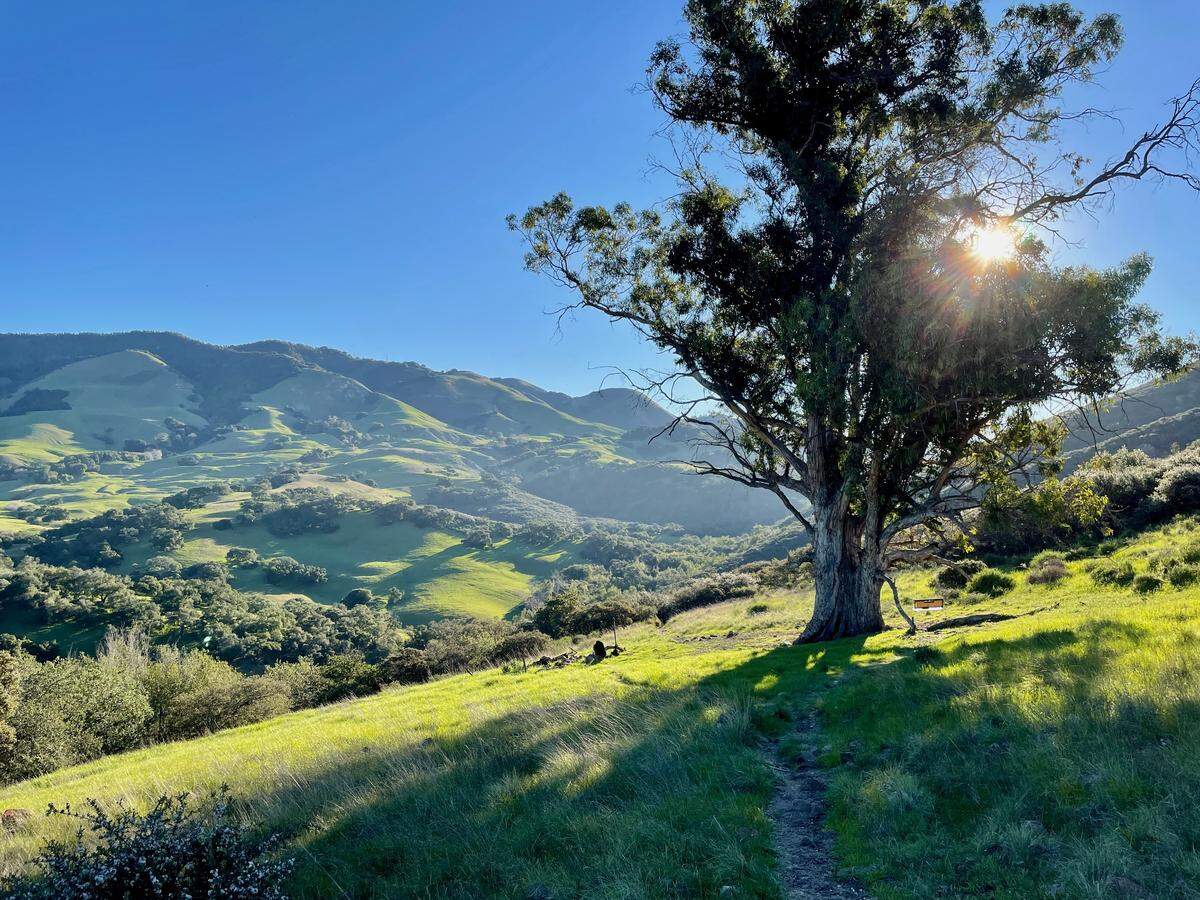
Designated wilderness areas or national monuments like the Carrizo Plain would not be available for oil and gas leases, the report said.
The report said the proposed oil and gas development would only cause minor impacts to protected wildlife, air quality and water quality — which gives the bureau a green light to proceed with the proposal.
Most speakers at public comment called the analysis outdated and inadequate.
“Most of the relevant environmental review is 15 years old, and since then, new data has emerged regarding the serious public health impacts of oil and gas extraction,” Balthaser said.
Other speakers, however, welcomed new oil and gas development.
Many of the Greater Bakersfield Chamber of Commerce’s members, including energy producers, small business and contractors, “depend on a stable and predictable energy economy,” spokesperson Joel Paramo said.
“Responsible oil and gas development on federal lands has long been a cornerstone of good paying jobs, local investment and economic stability in our region,” Paramo said.
Resurrecting a plan for fracking
In 2014, the Bakersfield Field Office adopted a resource management plan that would have offered 1 million acres of federal land and mineral real estate to oil leasing and gas development, according to court documents.
The Center for Biological Diversity and Los Padres ForestWatch then sued the Bureau of Land Management in 2016, arguing that the 2012 environmental impact statement for the plan did not adequately address the impact of fracking on air quality, water and wildlife — which would violate the National Environmental Policy Act.
The court sided with the environmentalists and ordered the bureau to complete a supplemental environmental analysis before proceeding with any new oil and gas lease sales.
In 2019, the bureau published a new supplemental environmental impact statement, and the environmental organizations sued for the same reasons. The court blocked new oil and gas lease sales yet again until the bureau completed a more thorough analysis.
On Jan. 12, the bureau published the latest draft supplemental environmental impact statement to analyze the proposal for selling new leases.
The draft report concluded there is no noticeable increase to environmental impacts between the 2012 environmental impact statement and this one — so the bureau does not need to amend the 2014 resource management plan, it said.
The proposed oil and gas development would cause “minor” emissions that “are not expected to significantly affect regional air quality or public health,” the report said.
Meanwhile, there will be a “minimal” impact to protected species like monarch butterflies and to groundwater resources, both of which would require appropriate management practices, the report said.
However, multiple speakers at public comment thought the environmental analysis excluded key information.
Ojai resident and CFROG program manager Abrah Steward said the final report ignores state law, including the 2024 law that banned fracking in California, and a separate 2024 law that banned oil and gas drilling with in 3,200 feet of homes and schools.
Meanwhile, during the last 15 years, new data emerged that shows the dangers of oil and gas drilling to public health.
She urged the bureau to end any plans to expand oil and gas leasing. But at the very least, she asked for a revised proposal that keeps fracking away from wilderness zones and honors the 3,200-foot buffer zones between oil projects and sensitive areas.
Mark Rose, the Sierra Nevada and clean air program manager with the National Parks Conservation Association, agreed.
He called the report “grossly inadequate,” as it failed to address new state laws and newly proven health impacts of oil and has production, he said.
Rose worried that the bureau would allow new fracking operations near the borders of Yosemite, Sequoia and Kings Canyon national parks. Those parks are located near the San Joaquin Valley, “an area of some of the worst air quality in the nation, partially because of the region’s long history of oil and gas production,” he said.
“Valley residents regularly face air that is unhealthy to breathe, water that is either depleted or unsafe to drink, and a climate and environment that is degraded beyond repair,” he said. “In the face of this environmental and public health crisis, (the Bureau of Land Management) is proposing to make the problem worse.”
Sensitive areas at risk in SLO County
The Los Padres ForestWatch identified sensitive areas that would be up for oil and gas leases if the proposal passes. Those spots include:
- Reservoir Canyon
- Irish Hills Natural Reserve
- Whale Rock Reservoir
- Los Osos Middle School
- Morro Bay State Park
- Montaña de Oro State Park
- Carrizo Plain Ecological Reserve
- Carrizo Plain National Monument
- Machesna Mountain Wilderness
- Huasna Valley
- Lopez Lake
- Morro Rock
- Santa Margarita Lake
- Highway 58 Corridor
- La Panza Mountain Range
- Camp Roberts
- Lake Nacimiento
How to comment on the proposal
People can submit public comments to the Bureau of Land Management on the draft supplemental environmental impact statement by March 13 through the project website at bit.ly/4te6f5f.
The bureau is then supposed use those comments to revise the draft and create the final report.
This story was originally published February 5, 2026 at 9:00 AM.