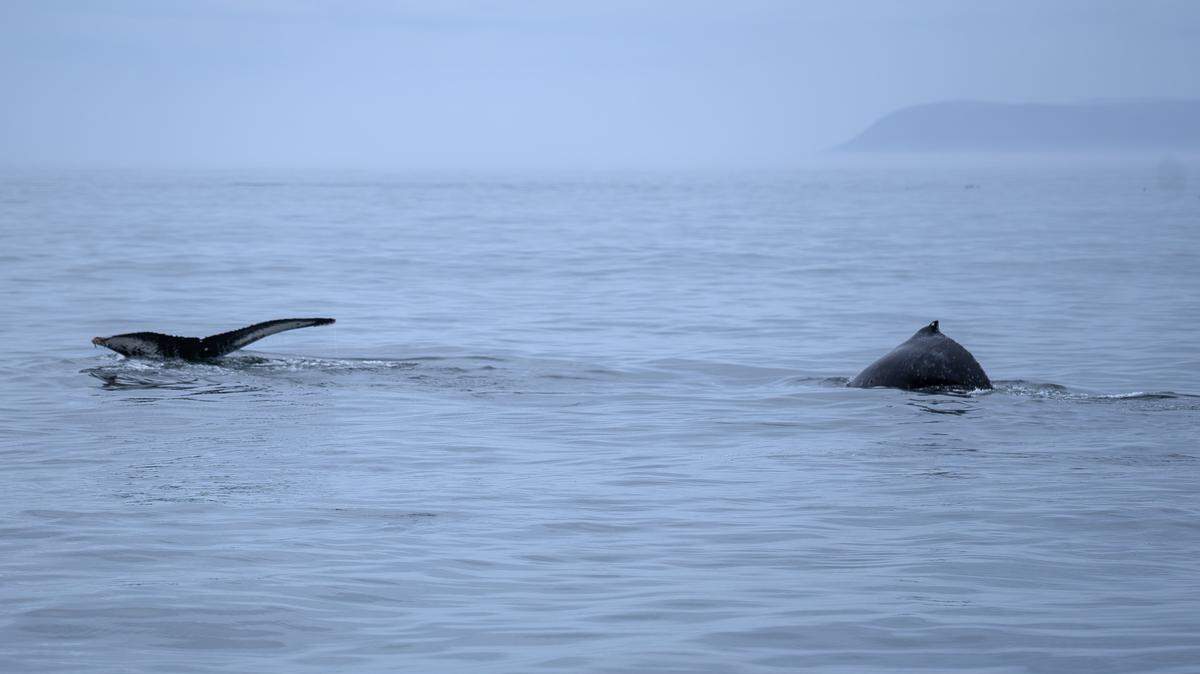
It’s whale migration season off SLO County. What we saw on a recent boat tour
A bright yellow vessel cut through the Morro Bay Harbor like a sunbeam on Monday morning as the captain consulted his radar for clusters of birds and sea lions — clues for finding humpback whales.
Whale watchers aboard a vessel called The Freedom encountered six whales that morning. First, a mother and her calf, and later, four adult whales engaged in a feeding frenzy.
Atascadero resident Pam Contreras called the whale sightings “a very special gift.”
“They’re magnificent creatures, and it’s an honor to see them,” she said.
Morro Bay Whale Watching Tours offers excursions for those who wish to catch a glimpse of the Eastern Pacific humpback whale.
One of the 14 humpback whale populations in the world, this group migrates from feeding grounds near the Aleutian Islands in Alaska, passing through the Central Coast and down the Baja California peninsula to the Pacific Coast of Mexico where they breed, according to the National Oceanic Atmospheric Administration.
Adult humpback whales can grow to be 60 feet long and weigh 40 tons. Much like humans, they live 80 to 90 years, according to NOAA.
The humpback whales spotted from the Central Coast are classified as depleted by the Marine Mammal Protection Act, which prohibits people from harassing, hunting, capturing or killing them without a permit, Cal Poly biology professor Heather Liwanag said.
“It’s a super important piece of legislation that has allowed multiple species, including these guys, also the northern elephant seal, to come back from near extinction because of us hunting them,” she said.
The humpback whales arrive in April and May to feed on fish, shrimp and squid. They’ll be here until October, leaving in November to tropical areas to mate and give birth to their young, she said.
Morro Bay Whale Watching Tours naturalist and tour guide Rouvaishyana said they spot whales on 95% of tours.
“Every year we see whales, and we have amazing shows,” he said. “This year’s great, and last year was great, and I’ve been whale watching a long time here, every year’s great.”
Whales put on a show near Morro Bay
The Freedom left the dock at 9 a.m. Monday, carrying 38 passengers on behalf of Morro Bay Whale Watching Subsea Tours.
Within 30 minutes, the boat encountered two whales about a mile offshore — a mother and a juvenile, also known as a cow and calf pair.
A hush fell over the boat when the whales appeared, their tails flashing and slipping below the silver water.
“They’re kind of a reminder that we’re not the only important things on the planet, aren’t they?” Atascadero resident Audrey Hooper said.
The mother was about the length of the 53-foot-long boat, while the calf was about 24 feet long, Rouvaishyana said.
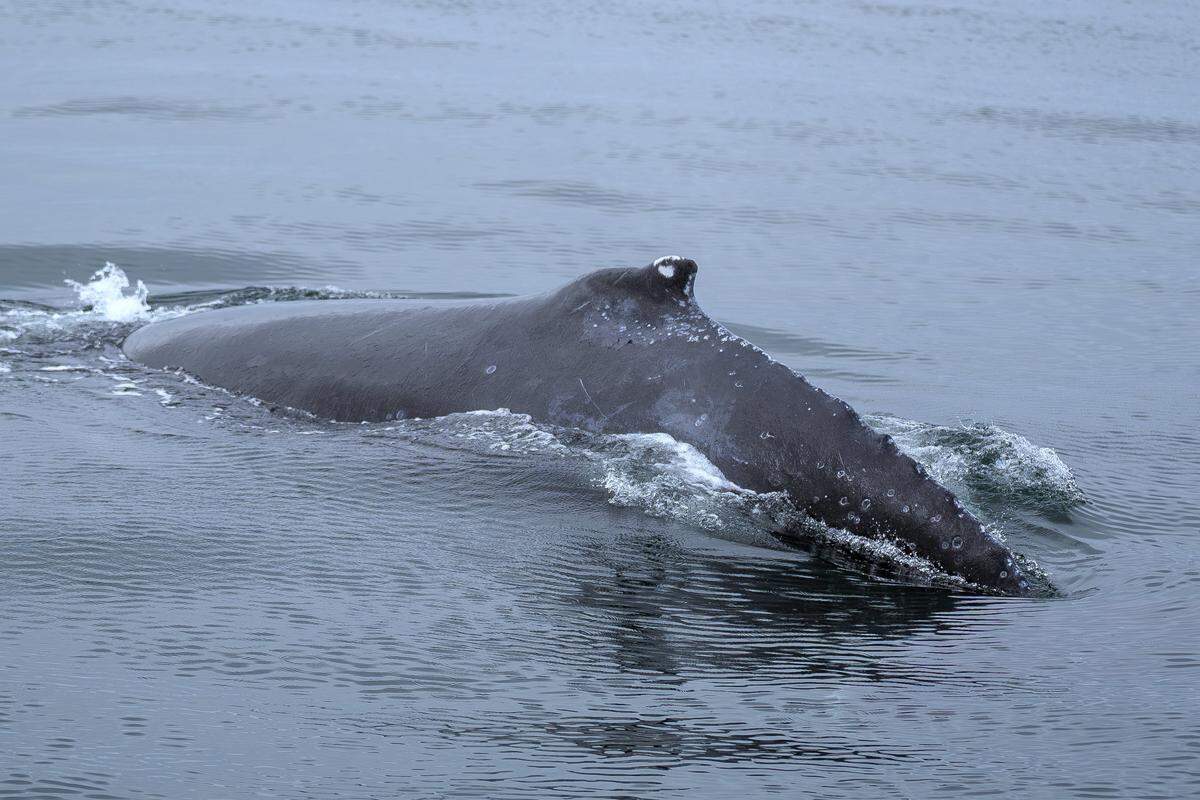
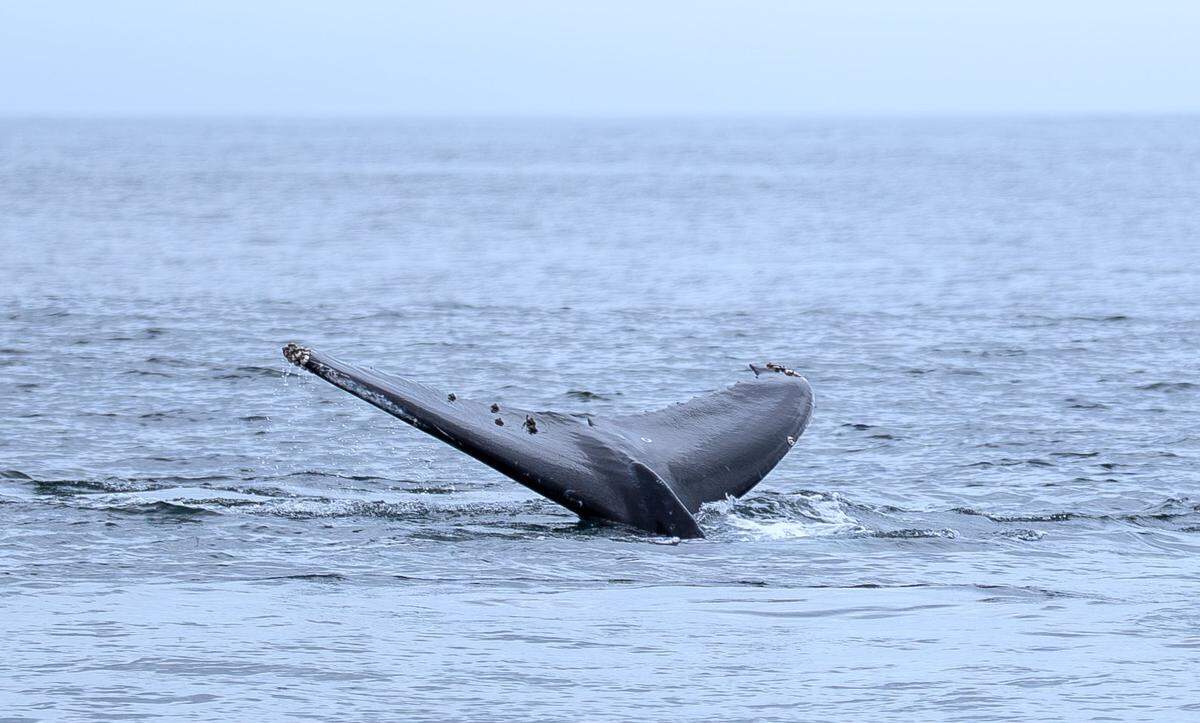
For about an hour and 15 minutes, the passengers watched the whales swim and feed, flipping their fins and tails out of the water. Occasionally, each whale blew a spout of water into the air from their blowhole.
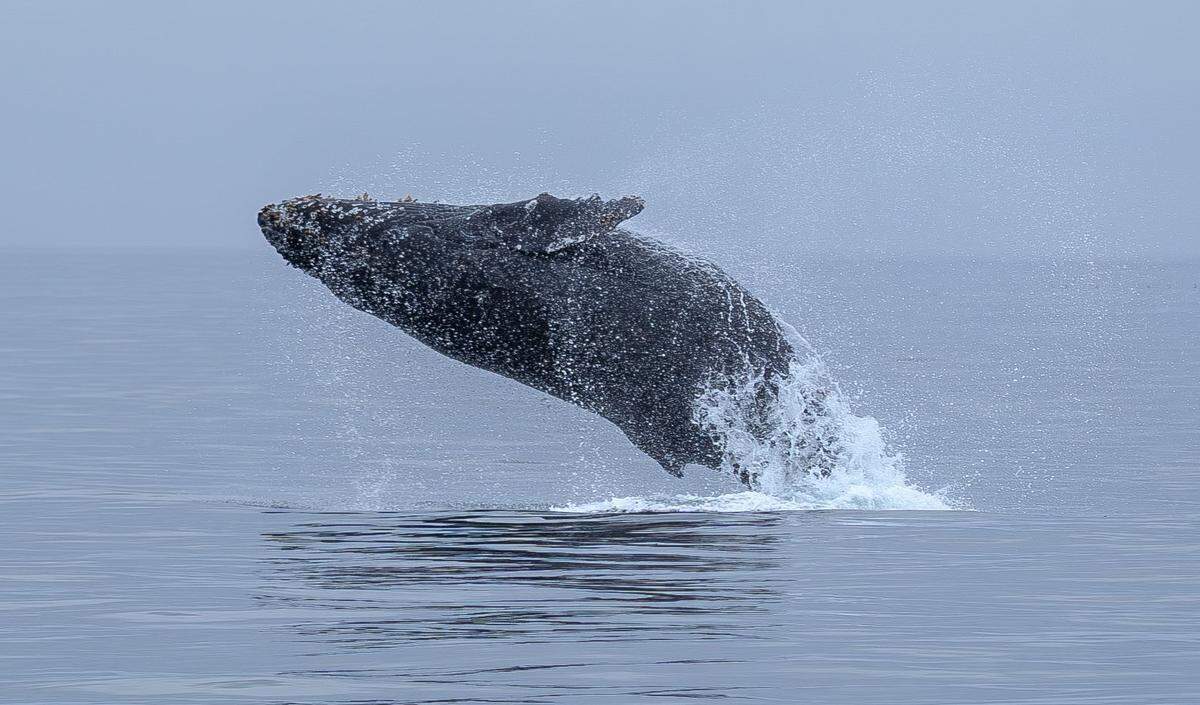
The calf lept out of the ocean multiple times, landing on its back with a mighty splash.
Grover Beach resident Kate Yarbrough said her favorite part of the morning was watching the calf breach. The whales made her feel small in a comforting way, she said.
“They’re big and powerful and beautiful,” she said.
Eventually, the mother and her calf departed, and the boat set a course farther out to sea.
About 2.5 miles offshore, the captain found four adult whales in the middle of a feeding frenzy.
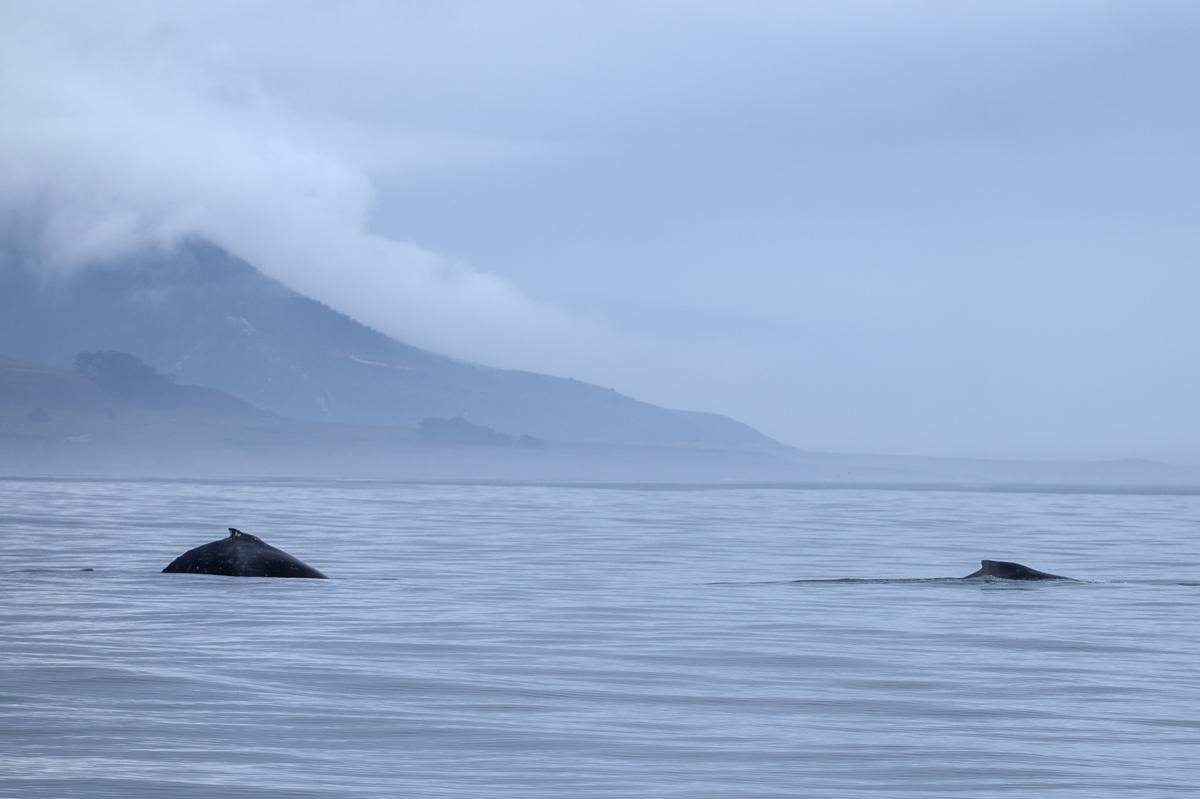
When feeding, humpback whales swim in a circle blowing bubbles to move their prey of krill and plankton into a ball. Then, the whales lunge at the prey from below, filling their throats like a water balloon, before filtering seawater out of the baleen in their mouths and swallowing their prey, Liwanag said.
The four adult humpback whales swam in circles, waving their tails and their flippers as they dove into the water. A group of sea lions and birds swooped in to catch stray fish pulled to the surface by the whales.
London residents Sophia Thetford and Ben Margetts said the whale watching tour was better than they could have hoped for.
“We lucked out big time,” Margetts said.