New fire map says SLO County home is in ‘very high’ hazard zone. Owner disagrees
AI-generated summary reviewed by our newsroom.
- Cal Fire reclassified 1,200 homes in Nipomo to high or very high fire hazard zones.
- Dispute arose after a resident said outdated vegetation data contributed to designations.
- No appeals process exists, though officials are pushing for legislative review options.
When Anthony Ansolabehere looks out his front window, he sees small trees, shrubs and the homes of his neighbors near Nipomo.
What he doesn’t see is a eucalyptus grove — as indicated by an outdated map Cal Fire recently used to determine that his property was in a “very high” fire hazard severity zone.
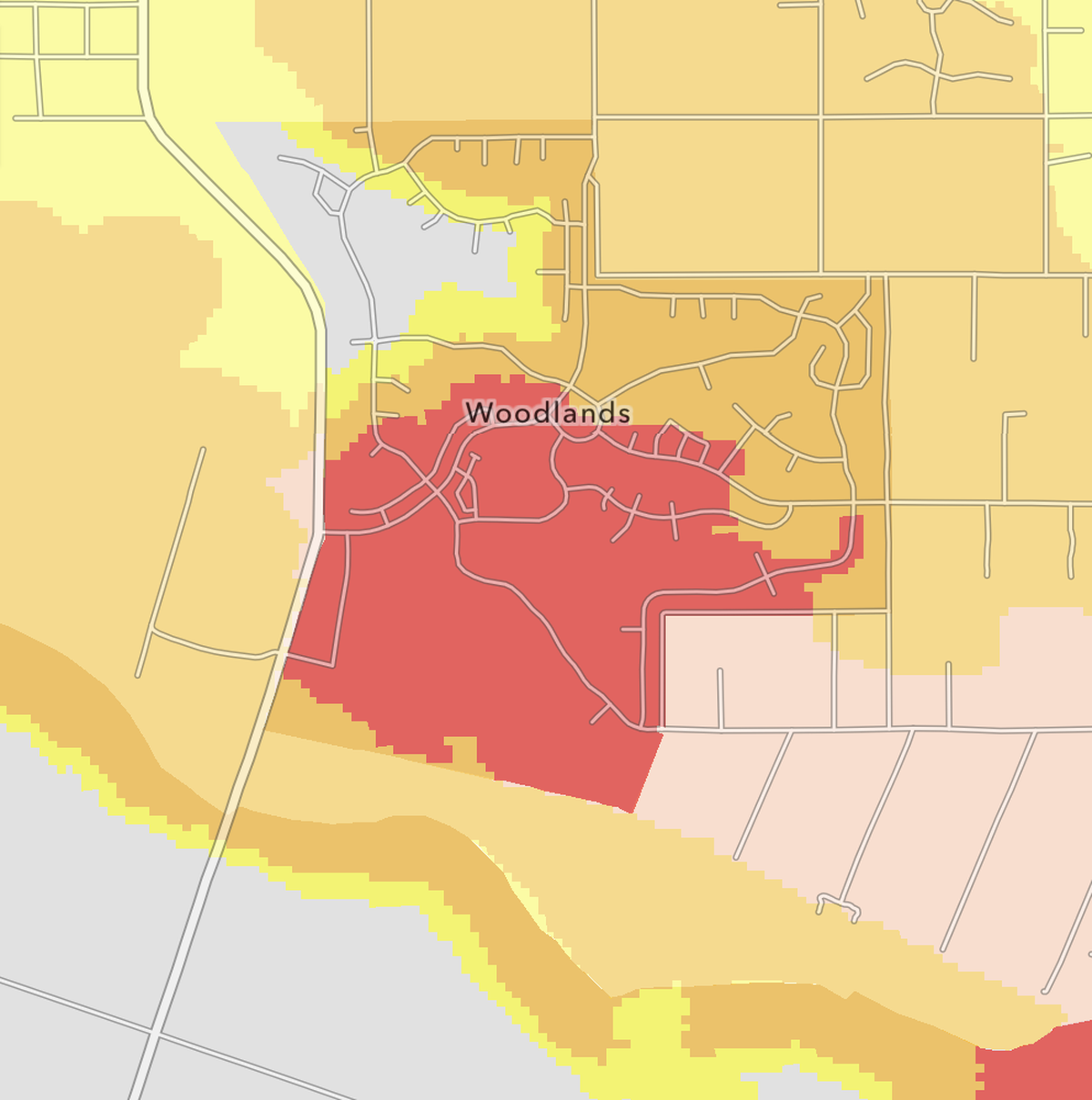
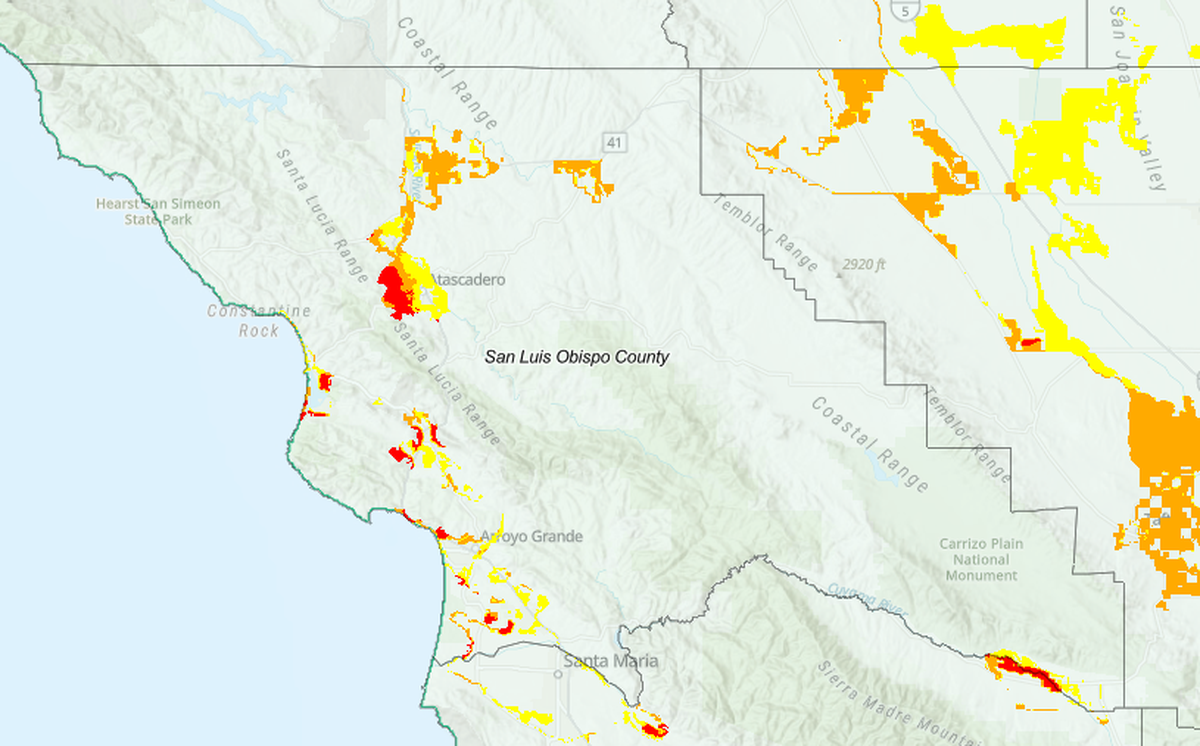
On March 10, Cal Fire released San Luis Obispo County’s Fire Hazard Severity Zone map, which identifies the likelihood of a fire in a particular area based on the vegetation type, weather conditions, fire history, terrain and how far embers could travel.
The map includes three zones for fire hazard severity: moderate, high and very high.
Ansolabehere’s home on Trail View Place was newly included in a “very high” zone, which means he must now clear 100 feet of defensible space around his property and notify potential buyers of the hazard if he sells his home.
Ansolabehere wouldn’t have a problem with the designation if he thought the maps were accurate. But he said Cal Fire “erroneously” assigned him to a “very high” fire severity zone based on outdated data.
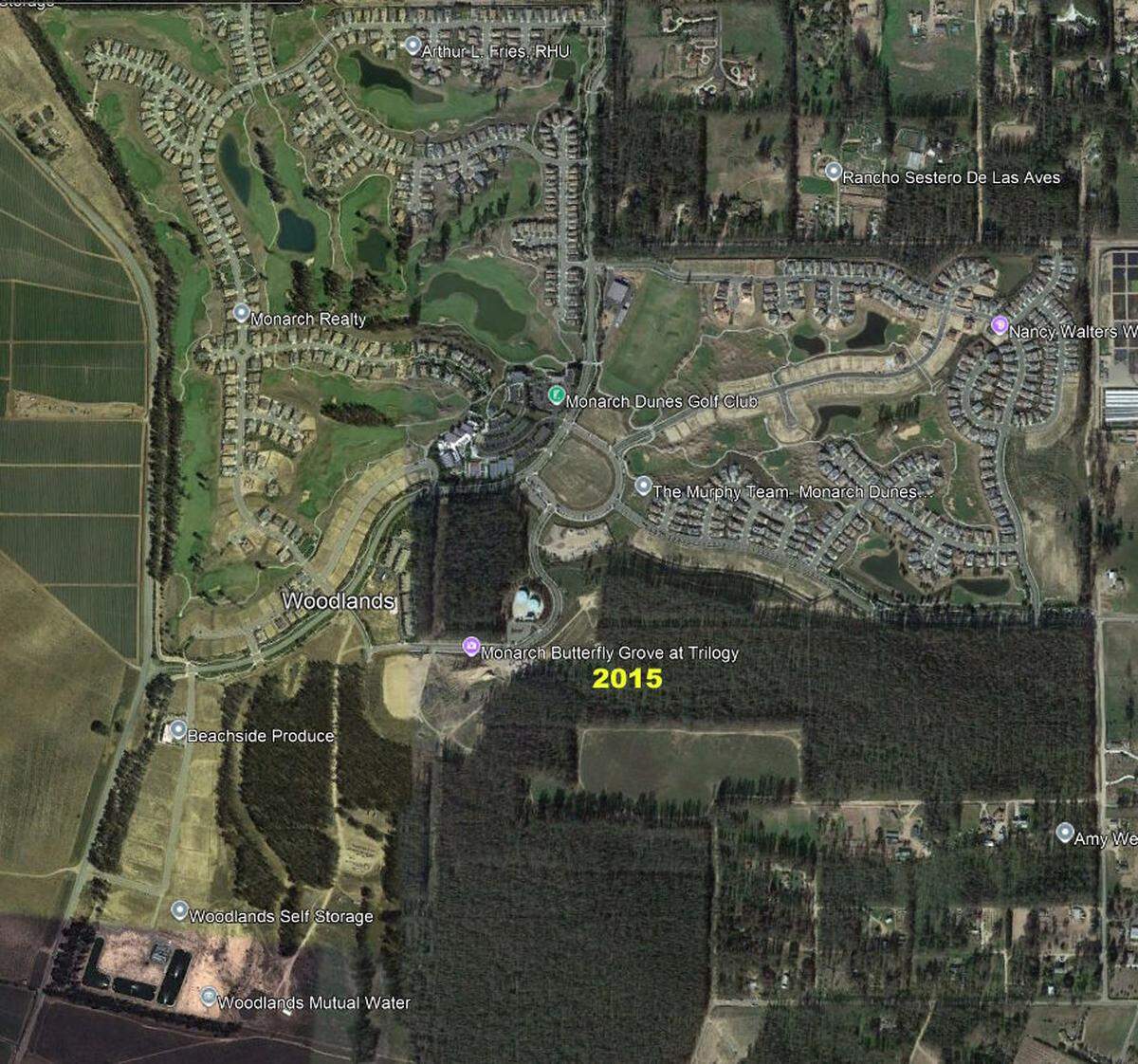
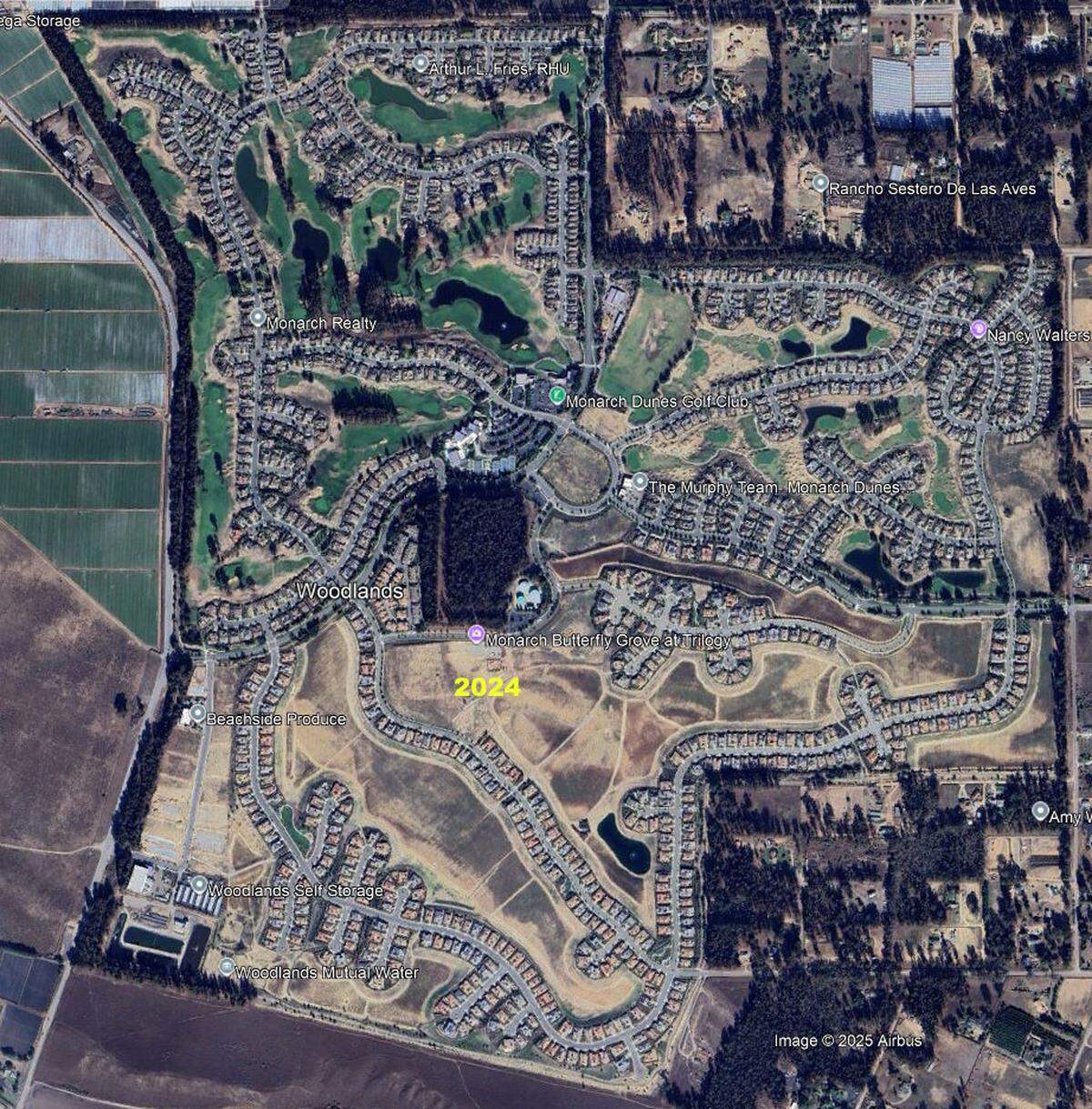
Cal Fire used a 2015 map of his subdivision among other data to determine the level of fire hazard there. That map shows that his property is covered in a eucalyptus grove, which has since been removed to make room for the Trilogy at Monarch Dunes community, where he currently lives, he said. Now, only a small grove of eucalyptus trees remains at the center of the subdivision.
“If all of the maps they used assumed that there was a forest in (the) subdivision, then the final map has to be incorrect too,” Ansolabehere told The Tribune. “I mean, lots of places have eucalyptus trees, but an actual eucalyptus forest, that’s kind of a different thing.”
But Cal Fire maintains that the fire hazard zones are correct.
Cal Fire used the 2015 map in its analysis — but fire scientists also updated the map with 2022 and 2023 parcel data for the area, which showed that most of the eucalyptus grove had been cut down, Cal Fire research manager and fire scientist David Sapsis told The Tribune.
Even with the updates, however, the map indicated that Ansolabehere’s home was still partially covered in a eucalyptus grove, Sapsis said.
Cal Fire used the “best available data” held by the state to create the fire maps, Cal Fire State Fire Marshal Daniel Berlant told The Tribune. Though some of that data was out of date, Cal Fire will not change the map, he said.
The goal of the fire hazard severity zone map isn’t “minute-to-minute” accuracy of how developed an area is, he said.
Instead, the goal of the map is to identify general areas that are susceptible to fire, and require developers to build homes that meet fire-resistant building standards in “high” and “very high” hazard zones, Berlant said.
Though the map impacts existing homeowners, the primary goal of the project is to guide new development in California so homes and neighborhoods are more resistant to wildfire.
“This is about long-term mitigation,” he said.
Cal Fire also considers more than just vegetation when determining a property’s fire hazard level.
Weather patterns, fire history, how far and what direction embers would travel and the slope of hills or valleys on the property are also taken into account.
“When you look out your back window or your front window, what you see may not tell the entire story of the level of hazard that actually exists,” Berlant told The Tribune. “Because this model, unlike the last model, is incorporating extreme weather conditions with embers. What may be a mile away from you can put you into a higher hazard level.”
The Tribune looked into the creation of Cal Fire’s fire hazard severity maps for its Reality Check series.
How does Cal Fire determine fire hazard safety zones?
About 1,200 homes in Trilogy at Monarch Dunes were placed into “high” or “very high” fire hazard zones, Ansolabehere said.
“They put millions of people into a fire zone that were never in a fire zone before,” he said.
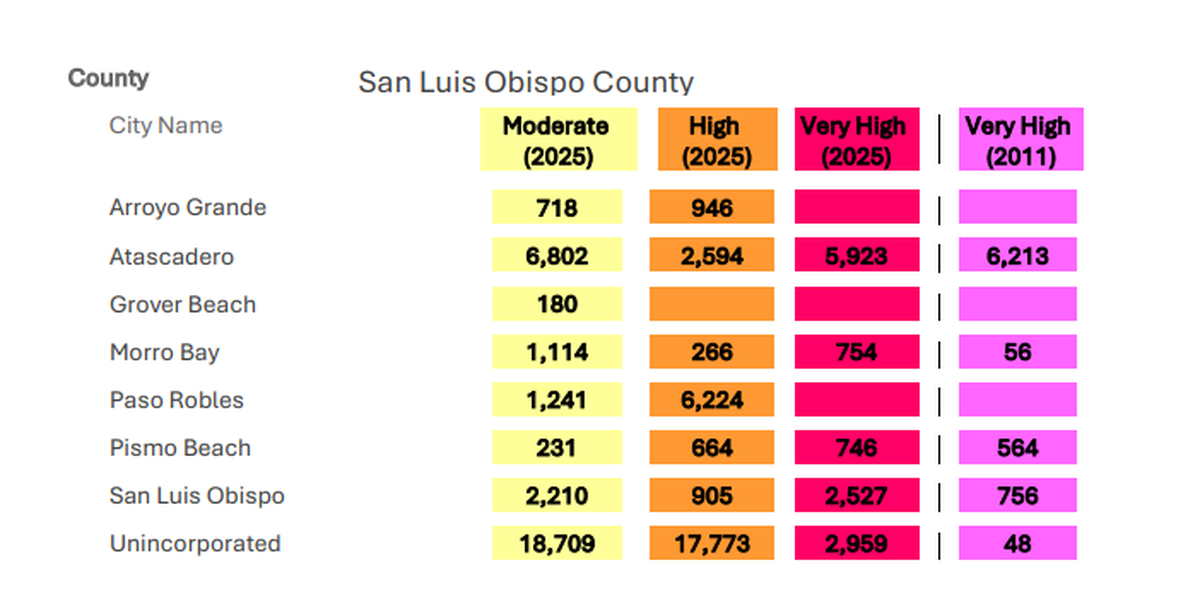
Ansolabehere’s property was part of the county’s 862% increase in the number of acres included in a fire hazard severity zone from 2011 to 2025.
Cal Fire said the expansion of fire hazard severity zones was driven by three factors: The state Legislature’s order to add “moderate” and “high” severity zones to the map, climate change-induced weather patterns that dried out vegetation and worsened fire weather, and improvements to Cal Fire’s modeling — allowing the agency to make more precise predictions about when and where extreme weather events will occur, as well as measuring ember cast, or how far an ember can travel, Berlant said.
Ansolabehere said he’s concerned that being added to the “very high” hazard zone will reduce his property value, as he now must inform prospective buyers of his property’s fire hazard level.
“That affects the marketability,” he said.
Ansolabehere is also afraid the classification, which he sees as incorrect, might affect his insurance rates.
Cal Fire said the hazard map, which measures the likelihood of a fire, isn’t used to set insurance rates. Instead, insurance rates are determined by risk maps, which measure fire severity and the potential for property damage.
But Ansolabehere is still skeptical.
“We don’t know if the insurance companies are going to look at these zones and drop people,” he said. “Cal Fire says it’s not an issue, that they’re not doing it for insurance companies, but this is public information. That doesn’t mean insurance companies won’t use it, or banks or other people won’t use it as a risk to not lending or not insuring a property. We don’t know.”
As a former assistant assessor in Kern County for nearly two decades, Ansolabehere used to work with the same GIS modeling computer program that Cal Fire uses to create its fire hazard severity maps.
From looking at the data used by Cal Fire to determine the fire hazard safety zones, Ansolabehere gathered that the agency’s primary data source were vegetation maps.
The vegetation map used for data analysis shows a eucalyptus grove covering some parts of the Trilogy at Monarch Dunes subdivision. Ansolabehere thinks this is why his property was incorrectly added to the “very high” severity zone.
“Eucalyptus trees are a fire hazard, obviously, and old eucalyptus trees are big and they send a lot of embers. So that’s a problem,” Ansolabehere said.
But the forest is no longer there, he said. That vegetation map used by Cal Fire was from 2015, but the grove that was there a decade ago was mostly removed in 2017 and replaced with a neighborhood of over 500 houses, Ansolabehere said.
“There’s no doubt the map’s wrong ... but they have no interest at all in making any changes to their map,” he said.
When Ansolabehere reached out to Cal Fire with his concerns about the map, Sapsis reviewed the data used to model the Trilogy at Monarch Dunes subdivision.
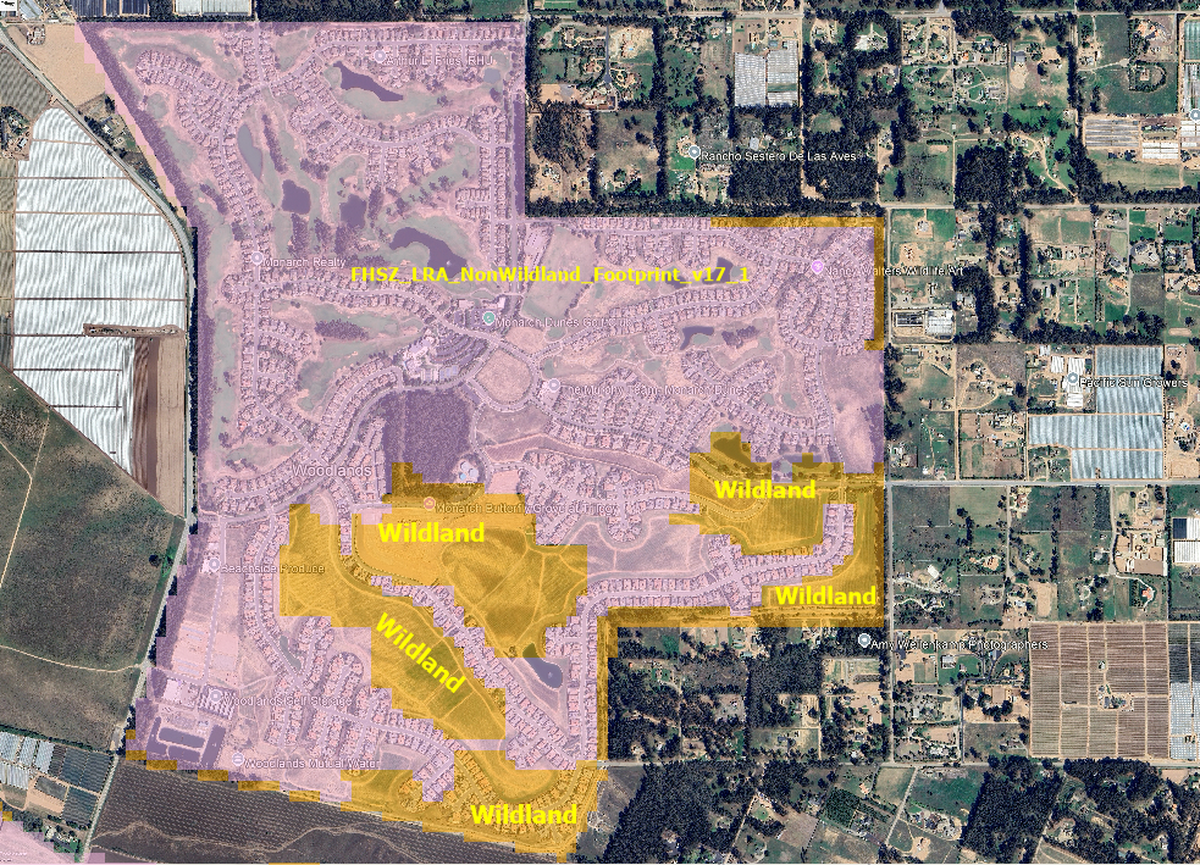
The 2015 map was updated with 2022 and 2023 parcel data — which showed that most of the eucalyptus grove had been cut down and replaced with houses — but that newer data still included part of the eucalyptus grove that was later removed, Sapsis said.
The “best available data” Cal Fire could access while making the map incorrectly designated some of the subdivision as “wildland” when it was actually developed, but the data also missed some wildland that does still exist in the subdivision, he said.
As a result, if Cal Fire were to re-run the model with the most recent data, fire hazard severity zones would expand in the subdivision, Sapsis said.
But Cal Fire won’t re-run the model and update the map, Berlant said.
The model analyzes the entire state of California at once, so Cal Fire can’t run the model to check one subdivision at a time.
Updating the data for Trilogy at Monarch Dunes wouldn’t just change the hazard designation for the subdivision — it could change the whole map, Berlant said.
“Anytime we touch one piece in one area, it can affect the neighboring acre, which could then affect the neighboring acre,” Berlant said.
Ultimately, the map isn’t designed to offer minute-by-minute accuracy of development in the state. Instead, it captures a “point in time” of an area’s fire hazard that is used to guide development for the next few decades, Berlant said.
He compared the fire map to the Federal Emergency Management Agency’s flood hazard map, which shows the likelihood of a flood in each part of the country.
Both maps are based on longstanding data — like weather patterns and geography — and are used to determine what can be safely developed in each area.
Berlant said the map must be designed to last — as Cal Fire does not yet know when it will be updated.
“This map is meant for builders and developers,” he said. “It’s really meant to, again, allow us to depict and estimate the level of hazard as we build new development.”
Meanwhile, even with a much smaller eucalyptus grove confined to the center of the subdivision, many of the properties still needed to be included in “high” or “very high” hazard zones, Berlant said.
Removing a eucalyptus grove “can, in many situations, be enough to reduce the hazard level,” Berlant said. But that wasn’t the case for this Nipomo subdivision.
“Does removing a lot of eucalyptus reduce the risk and hazard? Yes. But based on all of the other factors that compute, the formula (and) the models still made that area a ‘very high’ designation,” Berlant said. “ … Based on our review, we still stand behind that the designation was accurate.”
SLO County Board of Supervisors advocates for fire map appeal process
State law gives Cal Fire strict instructions for designing, implementing and enforcing the maps for Local Responsibility Areas within 120 days of the state fire marshal’s recommendations, which doesn’t include a public comment process.
Local Responsibility Areas designate where local governments are responsible for fire protection and prevention. Meanwhile, State Responsibility Areas are overseen directly by Cal Fire.
In other words, SLO County is required by law to adopt the fire maps, and there is no appeals process for residents.
“We cannot decrease the fire hazards. We may only increase at our discretion,” SLO County Cal Fire Battalion Chief Kevin McLain said at the April 29 Board of Supervisors meeting. “There is no appeals process.”
Berlant added to The Tribune that Cal Fire is “implementing this map based on the way the law is written.”
Last year, Cal Fire supported Senate Bill 610, which would have incorporated local review into the mapping process, Berlant said.
But this bill didn’t pass in the state Legislature.
“The best we can hope for is that they establish some sort of process to appeal,” Ansolabehere said.
The Board of Supervisors adopted the fire maps on April 29, but it also moved to take action toward asking the state to implement a local appeals process.
In Oregon, a property owners association filed a lawsuit challenging the validity of the state’s wildfire hazard map for similar reasons.
“This is a matter that we might want to take up with the state Legislature, because they’re the ones that created the law that didn’t allow for us to have an appeal process locally,” Supervisor Jimmy Paulding said at the meeting. “ … There are plenty of examples that have been entered into the record and correspondence submitted by the public to us that really question some of the methodology utilized by the state.”
Paulding called the board to include a formal way for counties to challenge or directly change the fire hazard severity zone maps in future legislative priorities.
“Even if it isn’t for another 10, 20 years, we need to make sure this doesn’t happen again — that the public has that opportunity for input, that the transparency is there,” Supervisor Heather Moreno said.
Meanwhile, Ansolabehere said he understands the county has no choice in the matter of adopting the fire maps, but that there is also potential for a lawsuit to try to correct this mistake.
“I’m sure there are other mistakes,” Ansolabehere said. “Talking to other parts of the state, (we’re) finding out what else happened.”
This story was originally published May 19, 2025 at 5:00 AM.