Equinor must halt NY offshore wind construction. What about Central Coast project?
The Trump administration this week ordered Equinor to halt construction on an offshore wind farm off the coast of New York — but the order doesn’t impact Equinor’s Central Coast project, a company spokesperson said.
On Wednesday, the Bureau of Ocean Energy Management ordered Equinor to “halt all activities on the outer continental shelf” on Empire 1, an 80,000-acre offshore wind farm southeast of Long Island designed to power 400,000 homes, a news release from Equinor said.
The project’s federal lease was signed in 2017. Equinor then secured the necessary federal and state permits before starting construction this year, the company said.
During the break in construction, U.S. Interior Secretary Doug Burgum will evaluate the project.
He plans to review “information that suggests the Biden administration rushed through its approval without sufficient analysis,” he wrote in a post on X.
President Donald Trump signed an executive order on his first day of office instructing Burgum to conduct environmental and economic reviews of existing offshore wind projects.
“We are doing our part to make sure these instructions are followed,” Burgum said in his post on X.
Equinor ceased construction on Empire 1, but the company may appeal the order, the news release said.
The order sent shock waves through the renewable energy industry — drawing criticism from industry groups like the Oceantic Network.
“Stopping work on the fully federally permitted Empire Wind 1 offshore project should send chills across all industries investing in and holding contracts with the United States Government,” Oceantic Network CEO Liz Burdock said in a statement. “Preventing a permitted and financed energy project from moving forward sends a loud and clear message to all businesses — beyond those in the offshore wind industry — that their investment in the U.S. is not safe. We urge the Department of Interior to lift this order immediately to restore a predictable and equitable environment for the build- out of critical energy resources that help secure our energy future and independence.”
Equinor to proceed with Central Coast project
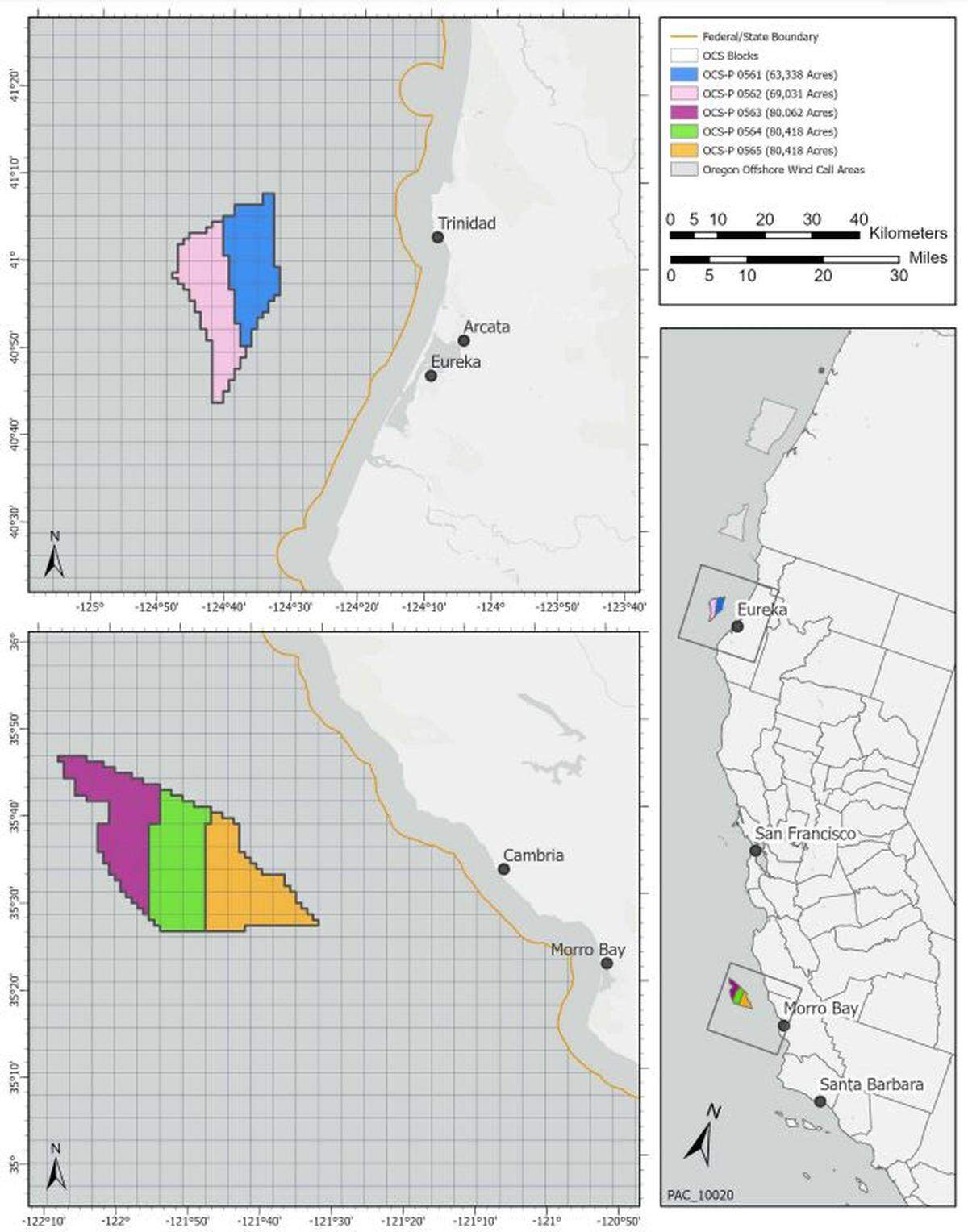
Equinor is one of three companies that holds leases to build floating wind turbines in the 376-square-mile Morro Bay Wind Energy Area about 20 miles offshore of Cambria and San Simeon.
Equinor plans to build an 80,000-acre wind farm called Atlas Wind in the lease area furthest from shore, its website said.
When completed, Atlas Wind will have the capacity to power 1.7 million homes.
The Bureau of Ocean Energy Management’s “halt work” order will not impact Atlas Wind, an Equinor spokesperson told The Tribune.
Equinor completed site surveys in the Atlas Wind lease area in July, and it has no offshore survey activity planned for the Central Coast in 2025.
In July, the California Coastal Commission awarded Equinor a two-year permit to survey state waters to decide where to place cables on the ocean floor. But Equinor will not conduct those surveys this year.
Still, Equinor will remain present in San Luis Obispo County to engage with local groups like the Morro Bay City Council and the Morro Bay Commercial Fisherman’s Organization, the company spokesperson said.
The order did not impact Invenergy’s project, Even Keel Wind, or Ocean Winds’ project, Golden State Wind.
Neither company will conduct more site surveys in their lease areas this year, but both will remain engaged in the community, spokespeople for Invenergy and Ocean Winds said.
Meanwhile, Golden State Wind will place two metocean buoys in its lease area this year to collect data including wind speed, water currents, sea surface temperatures and wave heights, which will inform the project design.
“Golden State Wind believes in the potential of our offshore wind project to provide new energy generation to meet increasing demand for electricity,” company CEO Tyler Studds said. “Just as floating offshore wind in California is a long-term energy resource, it is also a long-term development process.”
This story was originally published April 17, 2025 at 3:44 PM.