Scenic bike trail along SLO County coast is (finally) almost fully funded. When could it open?
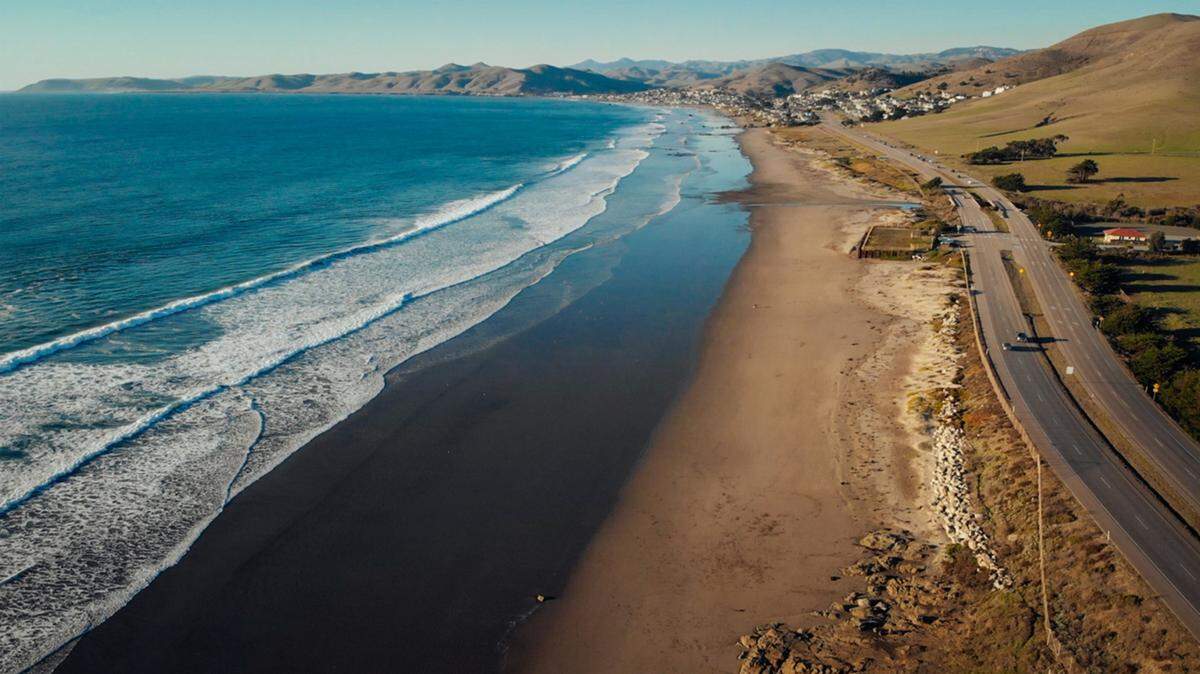
A county project to construct a coastal bike path connecting Cayucos to Morro Bay needs another $2 million to be fully funded and begin construction — but project planners are confident the funds will come through in the form of a new state grant.
The Morro Bay to Cayucos Trail Connector has been in the works for around 20 years and gained design approval from the California Coastal Commission in June 2023.
The connector trail would provide a safe bicycle and pedestrian connection between the cities were there currently is none, San Luis Obispo County planner and project manager Elizabeth Kavanaugh told The Tribune.
Currently, those without a vehicle must walk or bike along the shoulder of Highway 1 to travel between the two communities.
“In the age of e-bikes, it’s a real transportation connection, it’s a recreational amenity, it’s a tourist attraction,” SLO County District 2 Supervisor Bruce Gibson told The Tribune.
If all goes according to plan, the connector trail will finally link the two San Luis Obispo County coastal cities by 2028.
But the project — now estimated to cost $12 million, according to the staff report — faces a $2 million funding gap.
To help remedy that, the San Luis Obispo County Board of Supervisors authorized the county to apply for another $2 million state grant through the California Coastal Conservancy on Tuesday.
If the grant is approved, construction on the project will break ground in 2027 and finish one year later, Kavanaugh said.
“It’s been a long road to get this thing to reality,” Gibson said. “And we’re getting closer, and when it’s open, it’s going to be fantastic,”
He continued: “It’s going to be good for everyone, and I’m looking forward to using it while I can still ride a bike.”
What will the bike path look like?
The connector trail is a collaborative project with sections running through both county-owned and Morro Bay city-owned land.
Most of the trail will run on existing streets and bike routes, but new trail construction will take place along the ocean between the towns.
The 12-foot-wide trail will include multiple access points to the shore, public trail connections, bridges and a “natural appearing” retaining wall protecting a narrow stretch, Kavanaugh said.
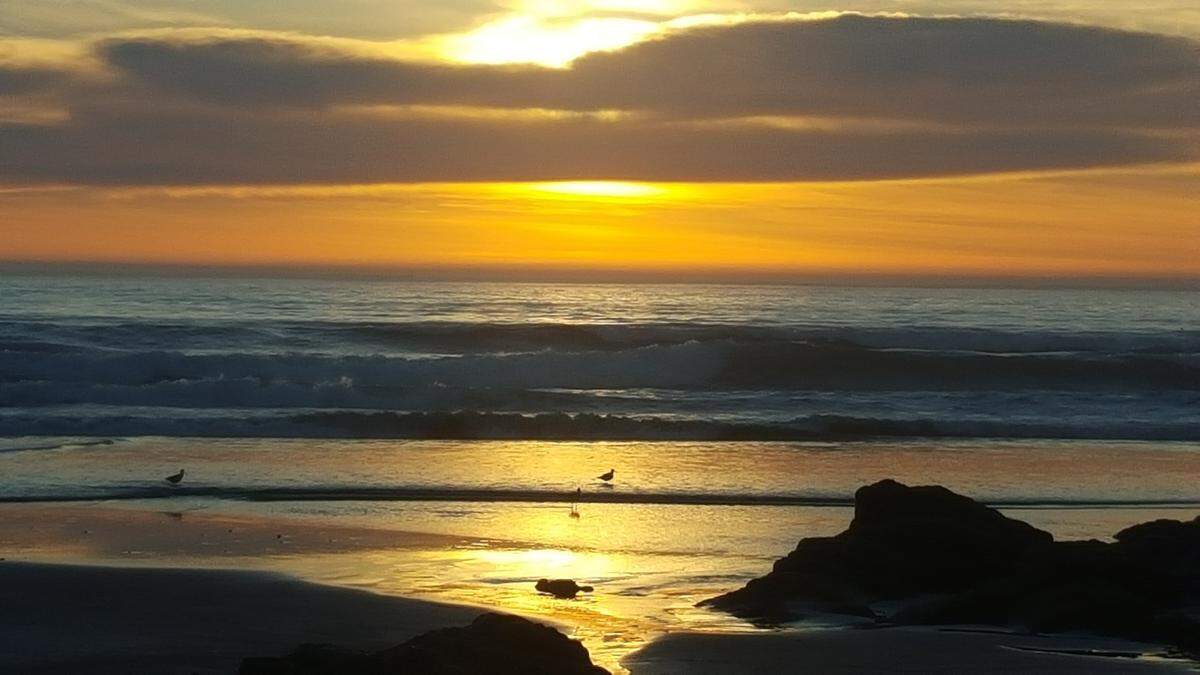
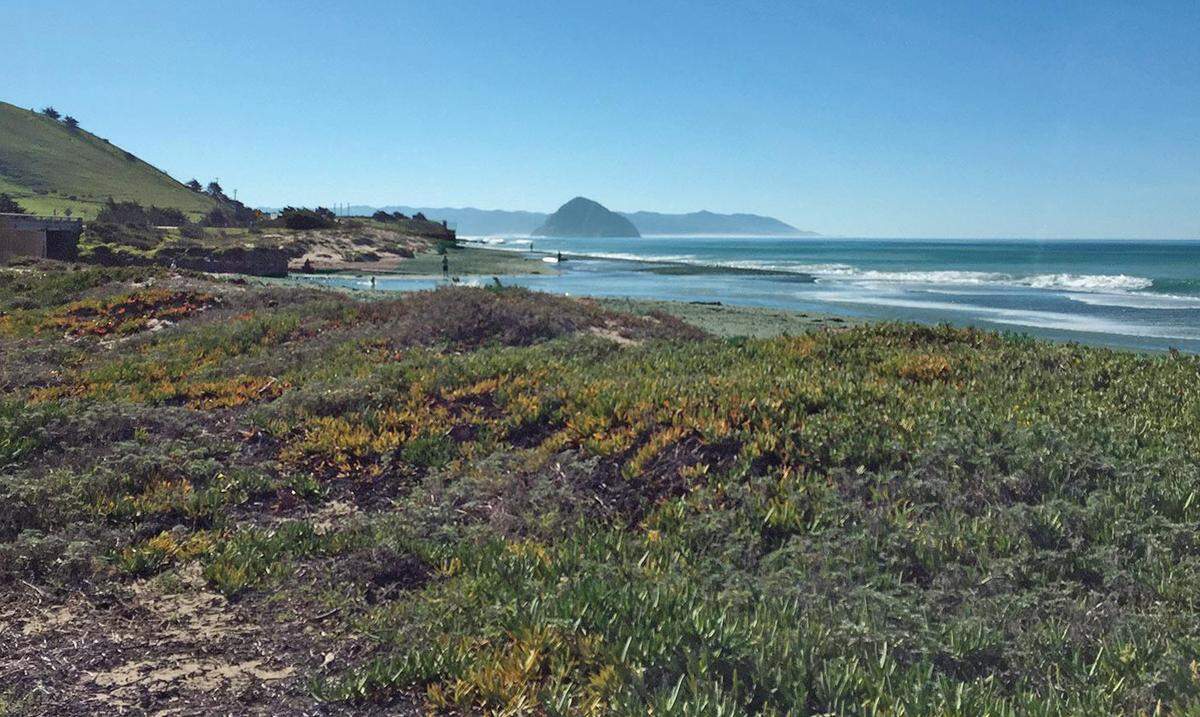
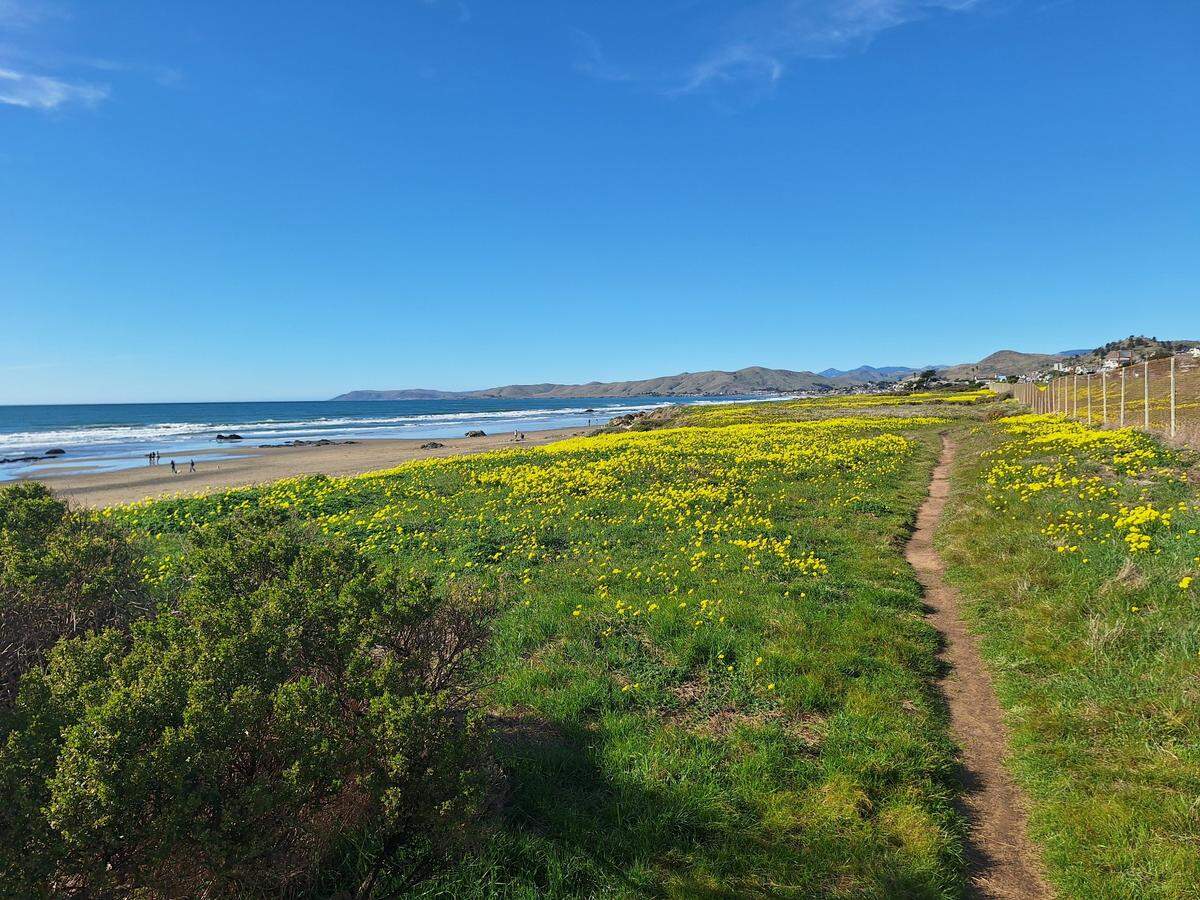
“The views of the ocean, Estero Bay, Morro Rock and the open space, across Highway 1, are stunning,” Kavanaugh said. “Trail users will be able to hear, smell and see to ocean the whole time while walking/riding on the new construction section.”
.jpg "Studio Drive pull out area looking south (1).jpg")
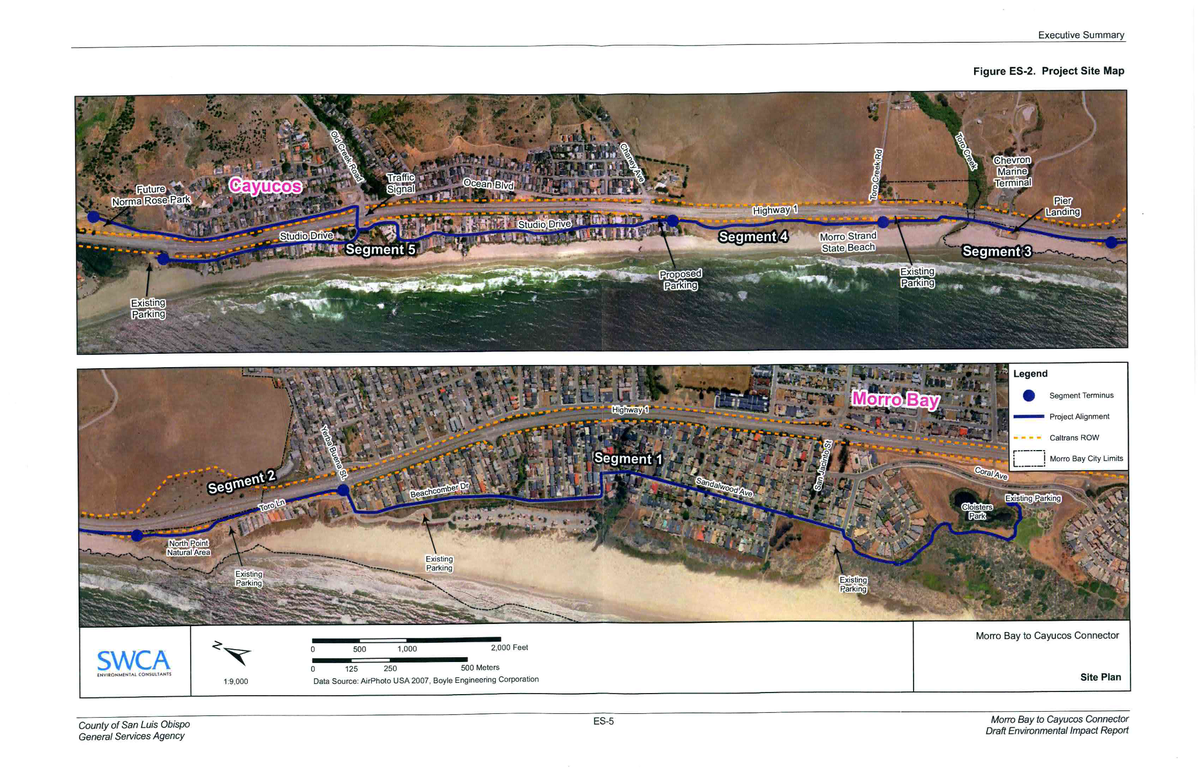
The 1.25-mile trail would start near the site of the future Norma Rose Park on the east side of Highway 1 in Cayucos and head south on Ocean Boulevard, crossing Highway 1 at Old Creek Road to the ocean side of the highway.
From there, the trail will continue south on Studio Drive through the neighborhood to the south end of Cayucos while connecting to an existing beach parking to the north.
Leaving Cayucos, the trail abandons roads for a stretch of open shoreline, skirting along the bluffs at the dog beach — land previously owned by the Chevron Marine Terminal — and passing through another pre-exisiting parking lot as the path enters the north tip of Morro Bay.
As the trail continues south over a new 180-foot bridge crossing Toro Creek and a supportive retaining wall, it will enter residential Morro Bay via Toro Lane, turning toward the ocean again on Beachcomber Street.
Some Toro Lane residents sued the county over the use of their street for the new trail, but the county holds a public easement on the private road that authorizes it to pursue projects that allow public access to the shoreline, which the project does. The case is ongoing, Kavanaugh said.
The path will continue through the neighborhood on Sandalwood Avenue until finally coming to an end at to the Cloisters Community Park parking area.
The Morro Bay to Cayucos connector trail would become part of the California Coastal Trail system, which, when completed, will “provide a multi-modal opportunity to walk and bike the length of California’s 1,230-mile-long coast from Oregon to Mexico,” according to the California Coastal Conservancy.
To mitigate the trail’s environmental impacts, the county will also be required to complete nine acres of dune habitat restoration along its intended path.
How will the bike path be paid for?
The project’s $10 million in current funding comes mostly from state funding sources.
In 2023, the county received a $7.4 million Active Transportation Grant from the state — the same source that funds part of the Bob Jones Trail connection project — and is awaiting the delivery of another $2.9 million of pending State Transportation Improvement Funds, totaling close to $10.3 million in state secured project funds.
The county has also allocated about $400,000 in Parks-Public Facilities Fees towards this project, and the San Luis Obispo Council of Government has contributed over $1 million too, most recently including $650,000 in State Transportation Improvement Program funds, Kavanaugh said.
Additionally, because the connector will be a county trail, the county will pay for its operation and maintenance, Kavanaugh said.
“It’s a county trail on city land, obviously to the benefit of the city and the county,” Gibson said. “We’ll figure something out.”
The $2 million grant from the State Coastal Conservancy application, if approved, will be the final funding needed to finish the connector trail, Kavanaugh said.
The funding gap can be traced to the project’s increased price tag from its original $7.4 million budget in 2022.
According to Kavanaugh, the price increase is due to increased labor and material costs, visual and biological changes required by the Coastal Commission permit and additional engineering and coordination with Caltrans on the Toro Creek Bridge Replacement project over Highway 1, which is scheduled for the same general construction period and location of the county’s trail project.
Kavanaugh said they are “hopeful” the county will be awarded the grant. The coastal conservancy board will make a decision on April 17, Kavanaugh said.
The next steps are to complete construction documents, secure regulatory permits, advertise the project for construction bids and then construction, she said.
This story was originally published February 25, 2025 at 1:30 PM.