Several SLO County reservoirs spilled last winter. How full are they now?
San Luis Obispo County may be in the midst of a drier-than-usual winter, but many of its reservoirs are filled to the brim thanks to the past two years of heavy rain.
But the San Luis Obispo County Public Works Department won’t waste time celebrating a plentiful water supply.
Instead, county staff are planning for a potential multi-year drought — just in case the La Niña dry weather pattern persists, San Luis Obispo County Public Works Department water resources division manager Courtney Howard said.
“Knowing that we can go into multi-year droughts, we’ll need to make sure that everyone’s continuing their best practices with conservation and water-use efficiency,” she said.
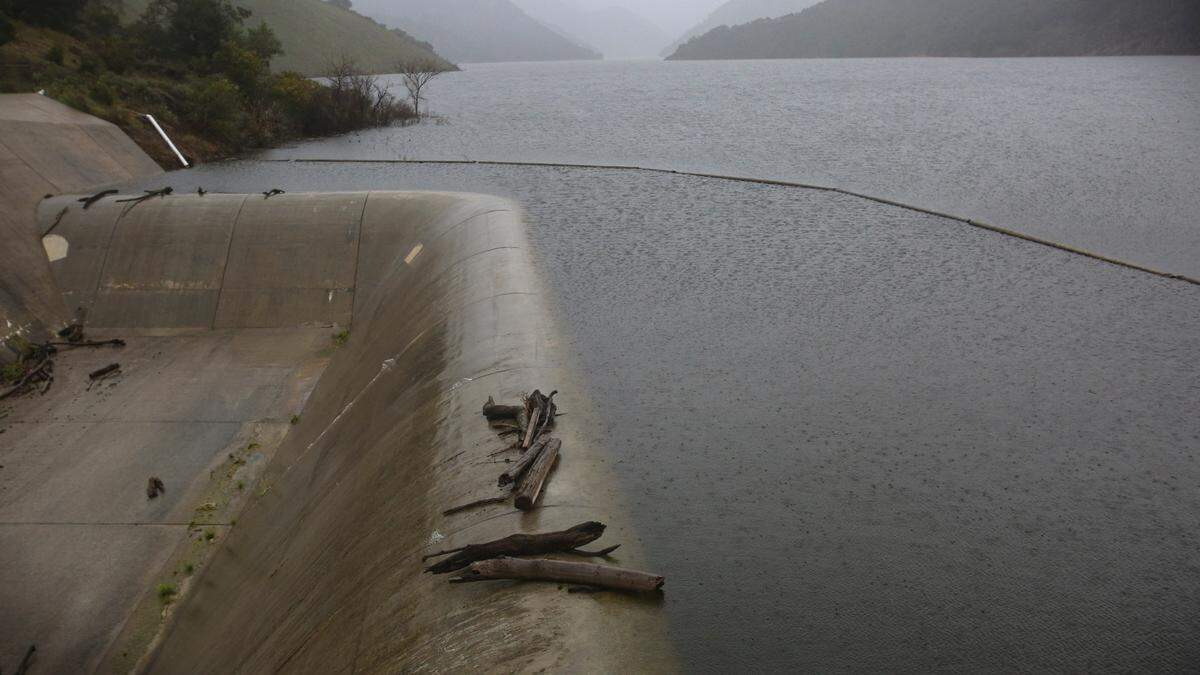
See SLO County reservoir levels
The Salinas Dam located at Santa Margarita Lake was at 88% capacity as of Monday afternoon, according to the San Luis Obispo County Public Works Department.
Lopez Dam, which formed Lopez Lake on Arroyo Grande Creek, was at almost 92% capacity on Monday.
The reservoir had received 5.1 inches of rain since July 1, which is 26% of its average rainfall amount, the Public Works Department said.
Whale Rock Reservoir was at 53.7% capacity as of Dec. 2, according to the most recent data from the city of San Luis Obispo. That reservoir is located in Cayucos, and it provides water to the city of San Luis Obispo, Cal Poly and the California Men’s Colony.
Lake Nacimiento was at 53% capacity on Monday, according to the Monterey County Water Resources Agency. Located in northern San Luis Obispo County, the reservoir supplies water to both Monterey and San Luis Obispo counties.
San Antonio Lake, located in southern Monterey County, was at 70% capacity on Monday, according to the Water Resources Agency.
How is SLO County prepping for potential drought?
“We’re kind of interested to see how the water year turns out, and if it’s an indicator of multiple years holding with the La Niña, drier pattern,” she said.
Right now, the West Coast is experiencing a La Niña weather pattern, which is when colder-than-usual ocean surface temperatures push the storm track northward, dumping rain on the Pacific Northwest while leaving California’s Central Coast drier than usual, according to the National Weather Service.
As a result, the county received less rainfall than average this December, according to meteorologist John Lindsey.
Rocky Butte only received 71% of its usual rainfall this month, while the San Luis Obispo County Regional Airport received 51% and the Paso Robles Municipal Airport got 57% of their typical totals, according to Lindsey.
Howard encouraged residents to make water-efficient choices.
Best practices include turning off the faucet while brushing teeth, taking shorter showers, installing water-efficient appliances in the home and swapping grass lawns for drought-tolerant landscaping, she said.
The county offers a Cash for Grass Program in the Nipomo Mesa Water Conservation Area and above the Paso Robles Groundwater Basin, which provides incentives to property owners who wish to remove their lawns.
Meanwhile, farmers can use the mobile irrigation lab run by the Coastal San Luis Resource Conservation District. The program will test the uniformity of a farmer’s irrigation system to inform where to make targeted repairs, she said.
Additionally, the county is looking at making its water system more resilient to extreme weather changes — especially as climate change causes swings between prolonged drought and severe flooding, she said.
Projects include studying the opportunities to “optimize the use” of existing water resources, Howard said.
For example, the county could offer some of its excess State Water allocation to recharge the severely overdraft Paso Robles Groundwater Basin, she said.
The county is also interested in acquiring new water sources, and it plans to examine the options for desalination early next year, she said.
This story was originally published December 31, 2024 at 10:00 AM.