
Happy birthday, Winter! First elephant seal pup of season born on SLO County beach
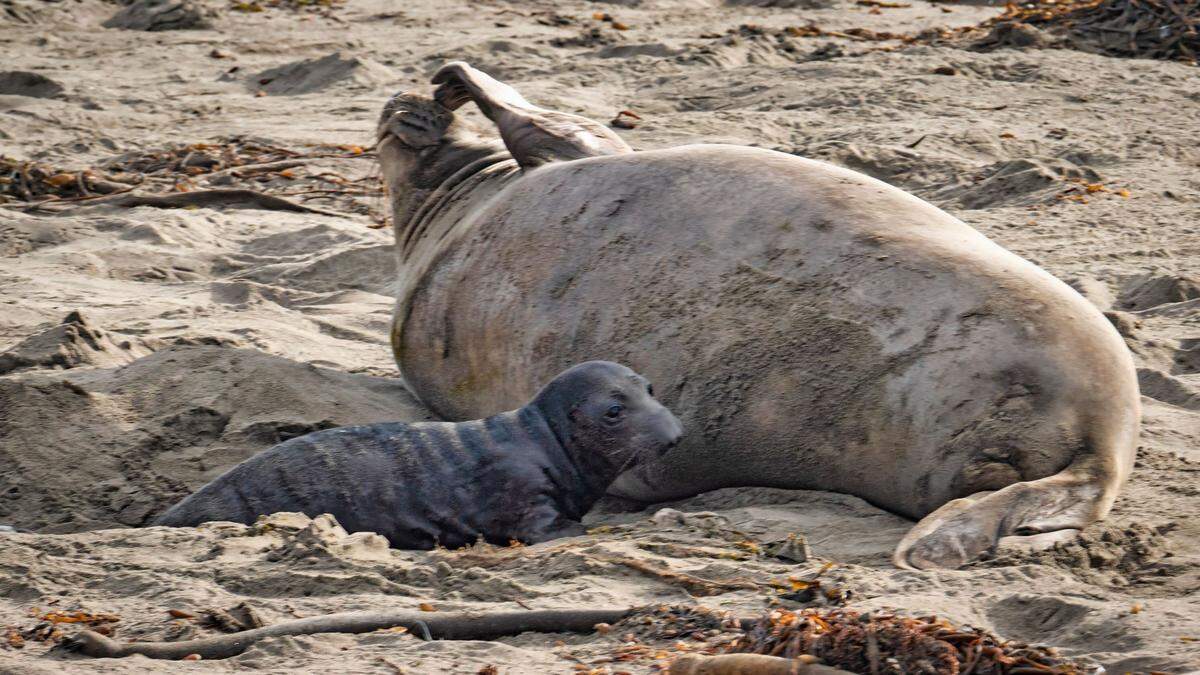
The first elephant seal pup of the breeding season appeared on the south beach of the Piedras Blancas viewpoint on Dec. 8.
Sharp-eyed Kris Clifford noticed the pup on the Friends of the Elephant Seal webcam.
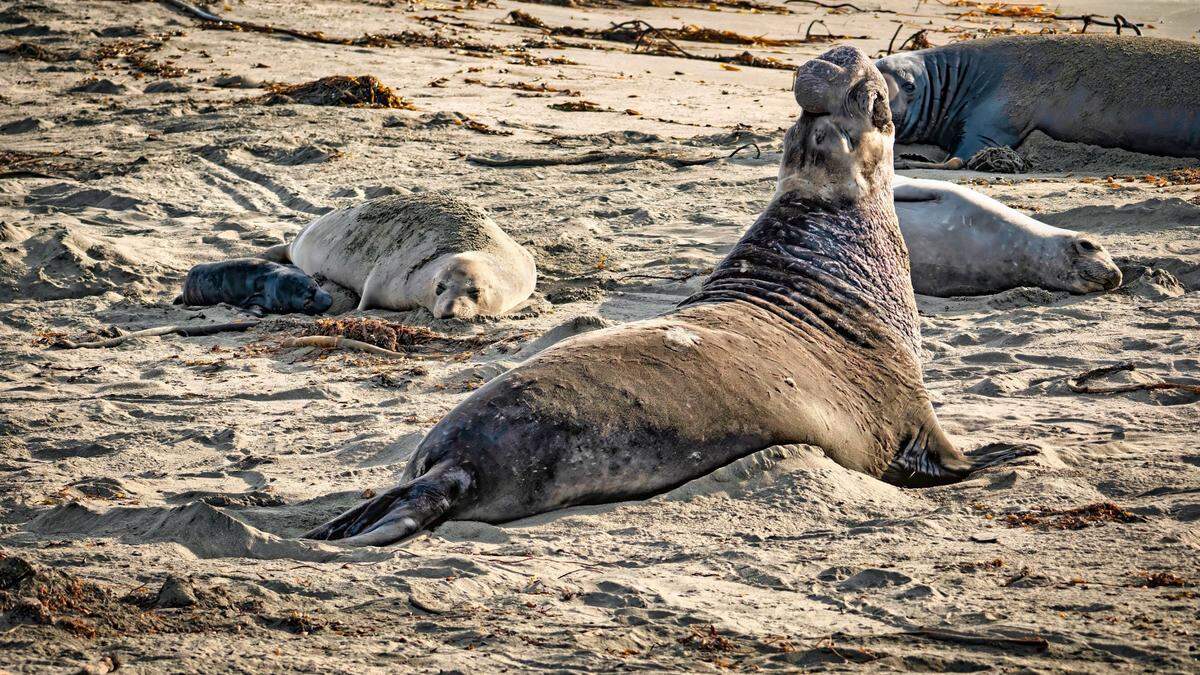
Mother and pup were resting comfortably on the beach. A substantial bull stood guard some distance away — he bellowed frequently Monday afternoon.
A few other bulls slept on the beach in the area, presumably aware of the newcomer and its mother.
Friends of the Elephant Seal docent Bill Michelson named the pup Winter. He had the privilege of naming because he won the First Pup contest.
It’s an informal lottery to guess the date when the first pup will arrive.
Michelson won, earning the naming privilege and bragging rights for the season.
How to spot expectant elephant seal moms, pups
Winter is the first of over 5,000 pups that will be born between now and February at the Piedras Blancas rookery, which extends from the light station to about a mile south of the viewpoint.
Mothers will continue to arrive, one by one. They settle on the beach for a few days and then give birth to their pups.
Seeing a pup born is exciting. Many pups are born at night — as Winter may have been — but daytime births are common.
Look for a female seal digging out a “saddle” by tossing a lot of sand on both sides. That sometimes indicates that she will soon give birth.
Nothing is certain, though. As soon as you’re paying attention to one seal, another down the beach will squirt out a pup.
As soon as a pup is born, gulls screech and swoop around to consume the afterbirth. They are the beach clean-up crew.
If you miss seeing the moment of birth, you can follow them to see the newborn and mother make their first barks and sniffs to each other.
Survival rate is high at SLO County elephant seal beach
Pups and their mothers recognize each other by their vocalizations and their scent. That gets established within the first couple of days of life.
It’s important, because a pup separated from its mother may starve and die.
Maternal separation is the most common cause of pup death. Not every pup survives, although over 90% of the pups at Piedras Blancas do.
While all pups are vulnerable, most pups nurse on more than one mother at some time. A mother whose pup dies may let other pups nurse, or may adopt another pup.
Later, when the beach is crowded with mothers and pups, some mothers may nurse more than one pup. With so many mothers and pups on the beach, any mother and pup may get confused.
Each mother has only a single pup, about 3 feet long and weighing about 75 pounds.
Mothers nurse the pups for about a month. The pup gains weight rapidly, up to about 300 pounds.
The mothers stay with the pup the entire time. They don’t leave the pup to feed in the ocean, so they lose a lot of weight, about a third of their body weight.
It’s good to see Winter’s mother looking fat. She’ll need it.
Winter was in a good position on the beach after her birth, well above high tide line. That’s an important consideration, because King Tides, the highest tides of the year, will reach up the beach this weekend.
Winter can’t swim much yet, and hasn’t nursed long enough to gain much blubber. Without blubber to stay warm, and able only to paddle a little in the water, pups can drown.
Mothers may give birth at low tide, not realizing that their pups may be at risk later.
Most of the north beach at the Piedras Blancas viewpoint is inundated with waves at high tide.
Some pups born in the few areas behind rocks are safe, but any born on the open sand may be washed away.
Share King Tide photos
You can take photos and submit them to the California King Tides Project.
Think about taking photos in areas that are subject to flooding and erosion, and of places where high water levels can be gauged against familiar landmarks such as cliffs, rocks, roads, buildings, bridge supports, sea walls, staircases and piers.
Taking and sharing photos documents the changes in ocean level and how those changes are affecting the coastline.
This story was originally published December 14, 2024 at 5:00 AM with the headline "Happy birthday, Winter! First elephant seal pup of season born on SLO County beach."