
SLO County elephant seal with plastic wrapped around neck evaded rescue. What happens next?
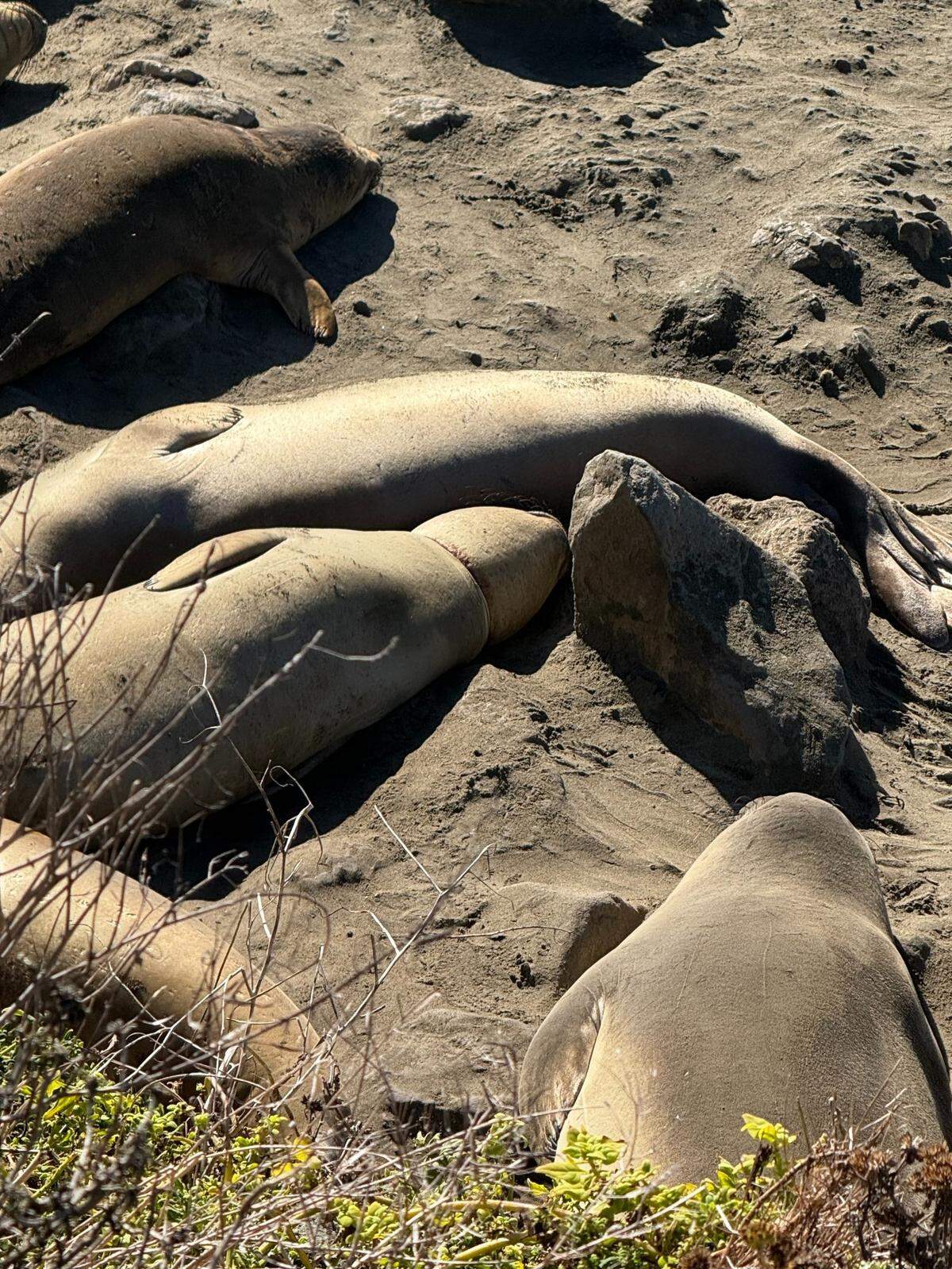
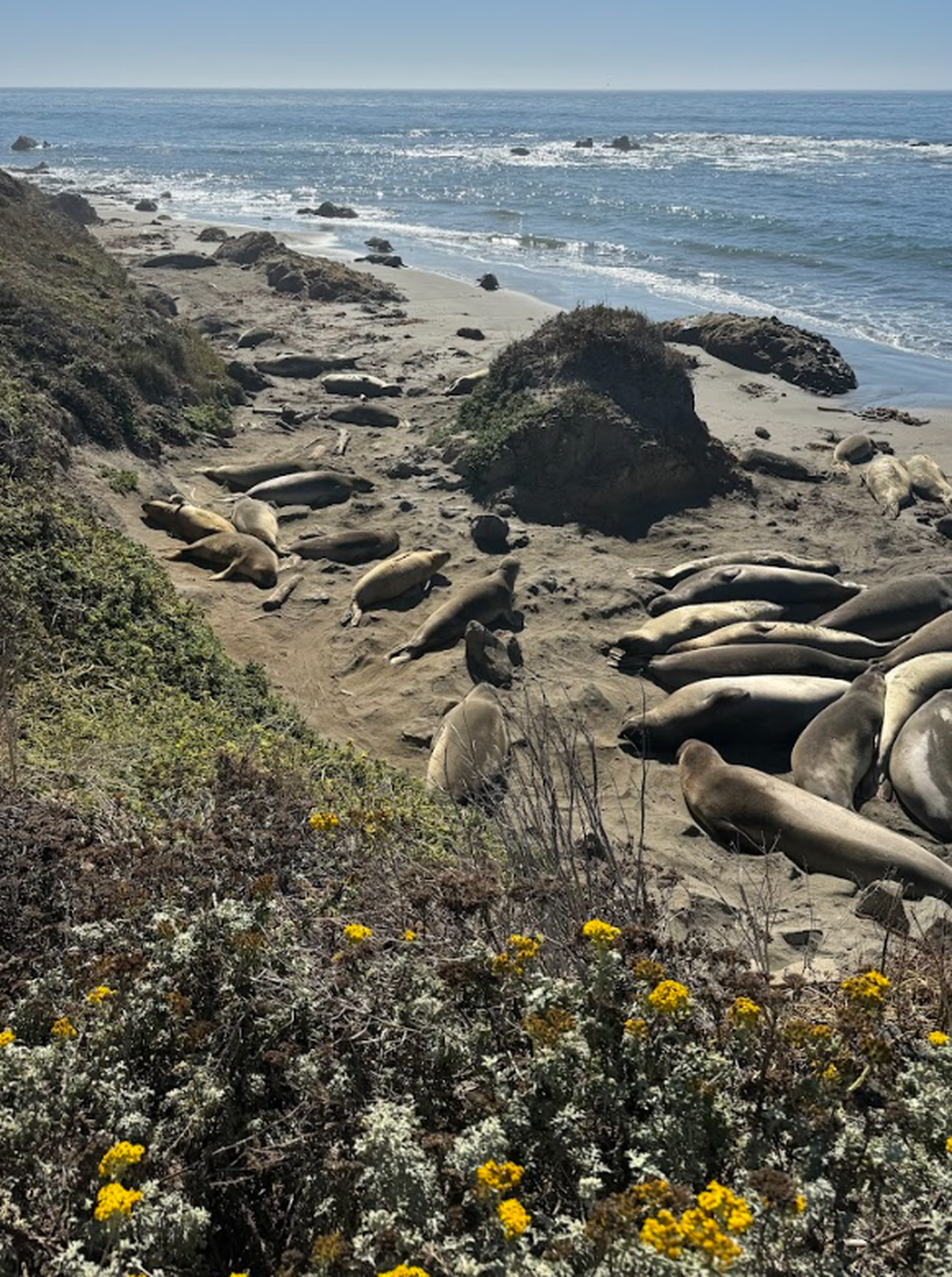
In October, Friends of the Elephant Seal docents saw a seal with an entanglement around his neck on the beach at Piedras Blancas.
He was at the far south end, difficult to observe — but that plastic was cutting into his neck.
“It’s always really tough to see these cases come up in the rookery,” said Aliah Meza, San Luis Obispo operations manager for The Marine Mammal Center.
This isn’t the first time an elephant seal has been endangered by human-made materials at the local beach.
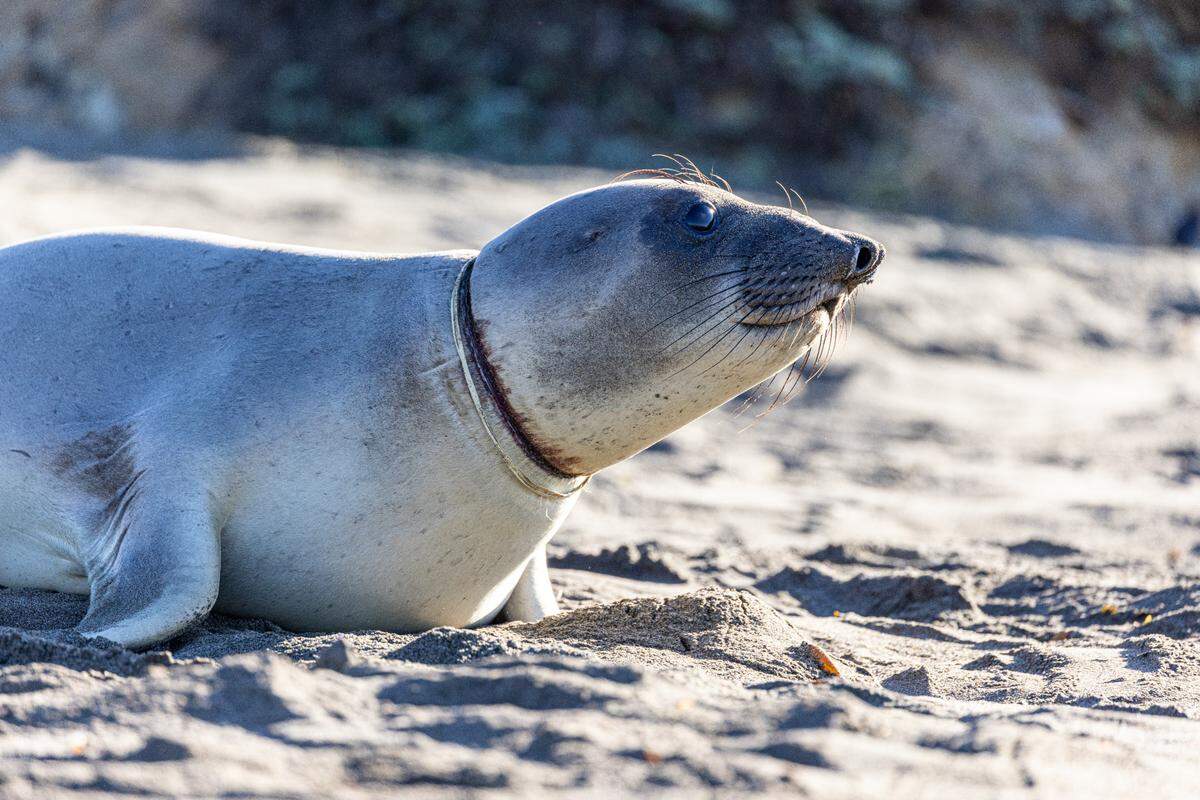
In April, a female elephant seal lovingly nicknamed “Necklace” was freed from a piece of plastic that had wrapped around her neck and was slowly strangling her.
Despite a recent effort to cut the plastic from the male elephant seal’s neck, rescue has so far been unsuccessful — but that’s not stopping concerned volunteers and workers from continuing to try.
What is wrapped around SLO County elephant seal’s neck?
When the elephant seal moved to the north beach in the first week of November, observers got a better look. It was a plastic packing strap.
On Nov. 4, the seal was still easily visible on the north beach.
A young family visiting with two young daughters were concerned abut the entanglement. The father offered to scale the fence and go down and cut it off.
He was cautioned that it’s more difficult than it looks. It’s a pretty big seal, after all. The Marine Mammal Center estimated he weighs somewhere between 260-330 pounds.
It’s also illegal to go onto the beach with the seals. Better to wait for the trained rescuers.
Rescue plan takes shape
Clearer photos of the entanglement help The Marine Mammal Center staff to make a plan that stands the best chance of success. The team went out with their own camera to assess the beach surroundings.
“Once we got those details, we wrote up our plan,” Meza said.
The plan was approved by the National Oceanic and Atmospheric Administration, giving them permission to go onto the beach and attempt the rescue from this human-caused threat.
Approaching a seal to remove an entanglement is tricky.
First, it must be safe for the team members to make an approach. It has to consider the animal’s safety as well as the people’s safety.
“You never know what a wild animal is going to do,” Meza said.
It’s also a good time for a rescue.
During fall juvenile haul-out, fewer animals are on the beach, and those that are there are smaller, younger seals. No aggressive bulls.
“That minimizes the potential risk to other animals,” she said. “We have to consider all the contingencies that can happen.”
The team was ready to go on Nov. 6. But by then, the seal had moved back to the south beach.
“Circumstances change daily, hour to hour,” Meza said. “We had a detailed plan for a different location. We had to think on our feet. Our field response team is very well trained.”
The team included three rescuers on the beach and others on the bluff, to monitor safety and take notes and photos.
They planned to confine the seal behind herding boards, then use a hook knife attached to a pole to cut the strap.
They wouldn’t have to sedate the seal to immobilize him. That gets more complicated, requiring a veterinarian to oversee the process, and monitoring until the seal is fully awake.
“The animal is so large, we can’t put it in a carrier and remove it to our hospital,” she said.
It only takes one cut. But plastic is tough, and this seal was having none of it.
“He was pretty alert,” she said. “He was too active, and returned to the ocean.”
What happens next?
Rescue attempts often don’t succeed on the first try.
The plan for this seal is in place with NOAA approval, so the team is ready to go if anyone reports him on the beach.
If you see him, call 415-289-7325 and give the reference number 3348 to identify this seal.
As soon as the seal comes back to the beach, they’ll try again to remove the strap, before it causes permanent damage to organs. As it is, this seal will have a scar from it forever.
“These entanglements show the interconnectedness of humans and oceans,” Meza said. “It’s important for us to prevent single use plastics from entering the ocean.”
The Marine Mammal Center has more information about ocean trash on its website at marinemammalcenter.org/science-conservation/conservation/ocean-trash.
This story was originally published November 15, 2024 at 12:00 PM.