
Environment

Pigeon poop was contaminating creek — so SLO put the birds on birth control. Did it work?

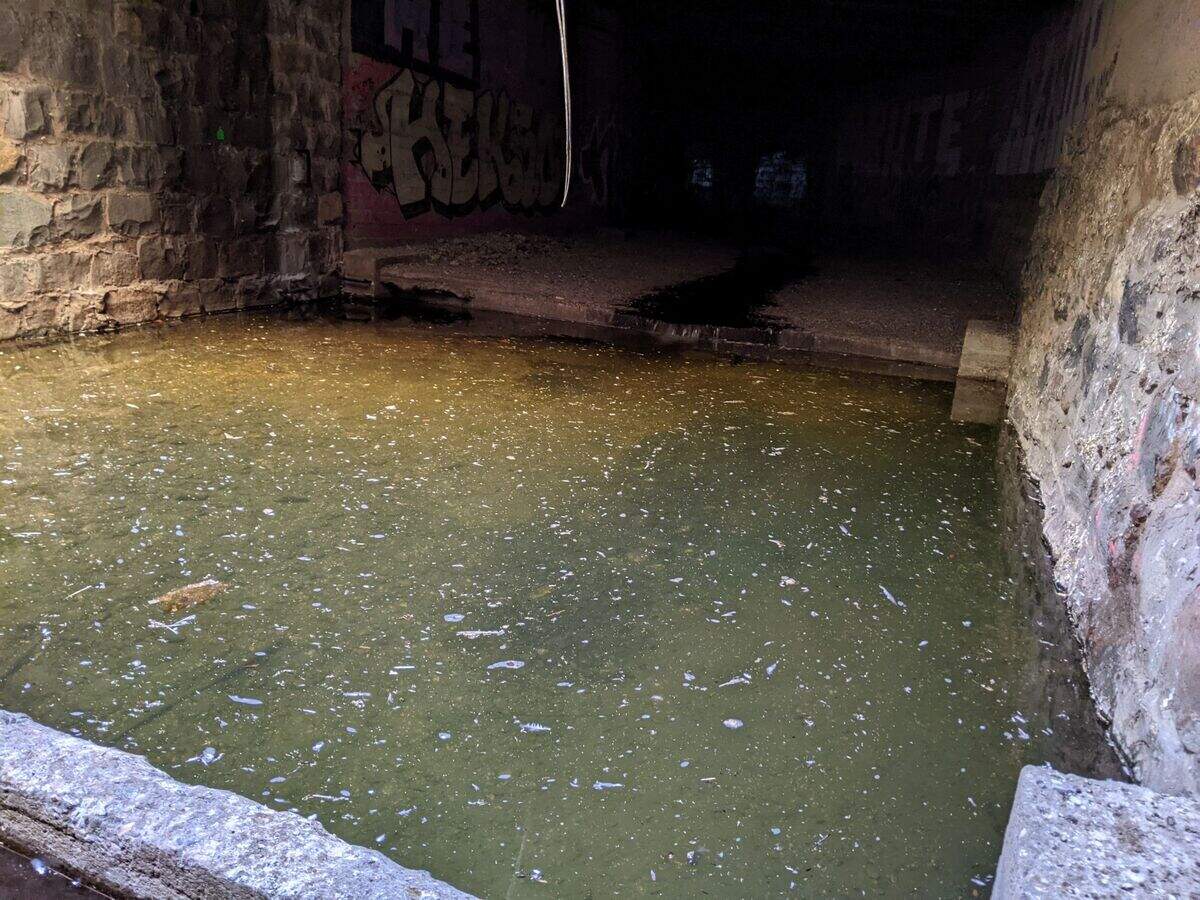
You might expect a troll to greet you at the mouth of the tunnel that channels San Luis Obispo Creek under the city, where pale sunlight cuts through shifting shadows to reveal the murky water inside.

Instead though, you’d find a flock of pigeons whose poop posed more a riddle for the city of San Luis Obispo recently than any asked by a mythical creature.

Bird droppings drip down the walls of the tunnel like candle wax — a sign of the environmental challenges the flock posed to the city.

There, pigeon feces festered into unsafe levels of E. coli bacteria in the creek, forcing the city to come up with creative options to try to reduce the number of birds in the tunnel and bring the water bacteria level back down to a safe threshold.

Finally, those efforts seem to be paying off, city biologist Freddy Otte said.

“We’re seeing improved water quality,” he told The Tribune. “It’s phenomenal.”

Pigeons living in the tunnel below downtown San Luis Obispo dropped feces in the creek, contributing to unsafe bacteria levels in the water. The city installed spike strips and netting in the tunnel to discourage the birds from nesting over the creek, seen here on Oct. 28, 2024.
Pigeons living in the tunnel below downtown San Luis Obispo dropped feces in the creek, contributing to unsafe bacteria levels in the water. The city installed spike strips and netting in the tunnel to discourage the birds from nesting over the creek, seen here on Oct. 28, 2024. David Middlecamp dmiddlecamp@thetribunenews.com

SLO City put the pigeons on birth control. Did it work?

In 2019, about 500 pigeons roosted in the tunnel, dropping a generous amount of waste into the creek, according to previous Tribune reporting.

Back then, the city detected about 100,000 bacteria colony units of E. coli in the water — much higher than the Central Coast Regional Water Quality Board’s limit of 200 bacteria colony units, Otte said.

So the city put the pigeons on birth control in 2019 with the hope of reducing the population, and in turn, the amount of bacteria in the creek.

At first, the avian birth control was planted in bird feeders on rooftops in downtown San Luis Obispo. The birth control did not harm the pigeons, Otte said. It only prevented them from fertilizing their eggs.

Pigeons flocked to the bird feeders, but hawks soon noticed a distracted food source and hunted down the birds. Eventually, the pigeons sought food elsewhere — but continued living in the tunnel, Otte said.

So, the city pursued a new strategy.

San Luis Obispo city biologist Freddy Otte leads a tour of the underground San Luis Creek on Oct. 28, 2024.
San Luis Obispo city biologist Freddy Otte leads a tour of the underground San Luis Creek on Oct. 28, 2024. David Middlecamp dmiddlecamp@thetribunenews.com

In 2021, the city hired Orkin Pest Control to install about 75 feet of spike strips on beams, window ledges and pipes in the tunnel to deter the pigeons from roosting there.

“Once they’ve learned that they can’t get in here, they go someplace else,” Otte said.

Then, in October, the city hired Archie’s Aloha Pest Management to install about 25 feet of netting across openings in the tunnel.

The new strategy seems to be working.

Now, only 50 pigeons live in the tunnel, and the E. coli level reduced to about 1,000 bacteria colony units, Otte said.
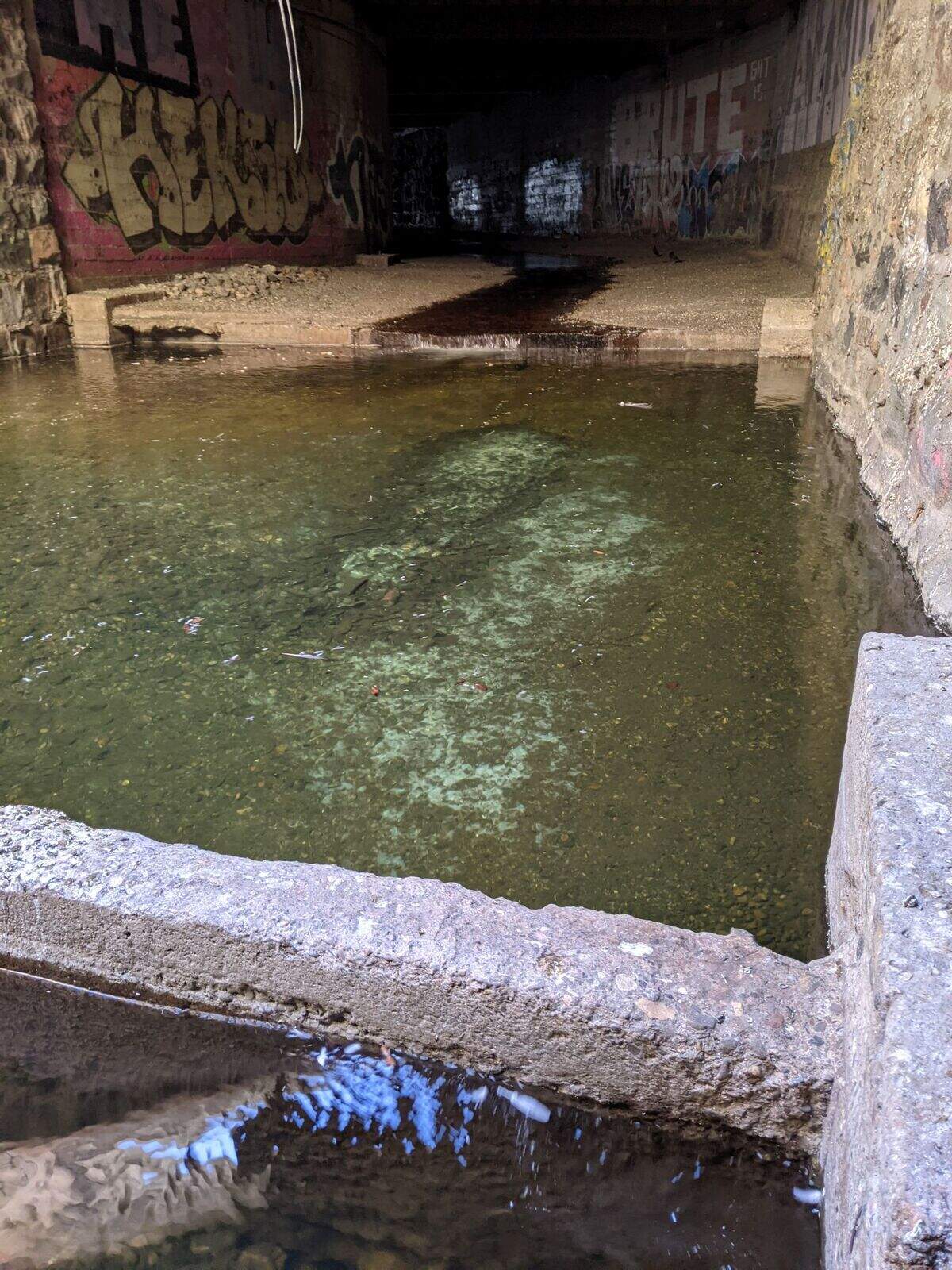
In May 2022, a strip of bacteria grew on the cement floor of the San Luis Obispo Creek tunnel under a prime pigeon roosting spot. By August 2022, that bacteria cleared up.
In May 2022, a strip of bacteria grew on the cement floor of the San Luis Obispo Creek tunnel under a prime pigeon roosting spot. By August 2022, that bacteria cleared up. Courtesy of Freddy Otte

Before the pigeon mitigation efforts, white strips of bacteria streaked across the floor of the tunnel under beams where the pigeons sat. The city has since seen a significant reduction of those bacteria strips, he said.

“It’s a huge improvement from what we’ve seen traditionally,” Otte said.

Pigeons living in the tunnel below downtown San Luis Obispo dropped feces in the creek, contributing to unsafe bacteria levels in the water. The city installed spike strips in the tunnel to discourage the birds from nesting over the creek, seen here on Oct. 28, 2024.
Pigeons living in the tunnel below downtown San Luis Obispo dropped feces in the creek, contributing to unsafe bacteria levels in the water. The city installed spike strips in the tunnel to discourage the birds from nesting over the creek, seen here on Oct. 28, 2024. David Middlecamp dmiddlecamp@thetribunenews.com

Other downtown SLO changes helped reduce pigeon population too

The COVID-19 pandemic assisted the city with pigeon management, too.

Fewer people visited downtown San Luis Obispo and fed pigeons near the tunnel, so the birds flew elsewhere in search of food — reducing the pigeon population in the tunnel, Otte said.

Then, renovations of the Anderson Hotel eliminated a primary nesting location for the pigeons on the hotel roof, which also supported the city’s efforts, he said.

Overall, Otte said he is proud of the city’s work to improve the creek’s water quality.

“At the end of the day, we want to have clean water running through the middle of downtown,” Otte said. “We want to ensure the highest water quality not only for the community, but for the aquatic inhabitants.”
Pigeons living in the San Luis Obispo Creek tunnel contributed to unsafe amounts of E. coli in the water. City biologist Freddy Otte hopes that efforts to lower bacteria levels in the water will one day allow him to remove this sign from the Mission Plaza creek walk area, seen on Oct. 28, 2024.
Pigeons living in the San Luis Obispo Creek tunnel contributed to unsafe amounts of E. coli in the water. City biologist Freddy Otte hopes that efforts to lower bacteria levels in the water will one day allow him to remove this sign from the Mission Plaza creek walk area, seen on Oct. 28, 2024. David Middlecamp dmiddlecamp@thetribunenews.com
Pigeons living in the tunnel below downtown San Luis Obispo dropped feces in the creek, contributing to unsafe bacteria levels in the water. In May 2022, a strip of bacteria grew on the cement floor of the tunnel under a prime pigeon roosting spot.
Pigeons living in the tunnel below downtown San Luis Obispo dropped feces in the creek, contributing to unsafe bacteria levels in the water. In May 2022, a strip of bacteria grew on the cement floor of the tunnel under a prime pigeon roosting spot. Courtesy of Freddy Otte
San Luis Obispo city biologist Freddy Otte leads a tour of the underground San Luis Creek on Oct. 28, 2024.
San Luis Obispo city biologist Freddy Otte leads a tour of the underground San Luis Creek on Oct. 28, 2024. David Middlecamp dmiddlecamp@thetribunenews.com
Pigeons living in the San Luis Obispo Creek tunnel contributed to unsafe bacteria levels in the water. They can enter the tunnel from air shafts seen here on Oct. 28, 2024.
Pigeons living in the San Luis Obispo Creek tunnel contributed to unsafe bacteria levels in the water. They can enter the tunnel from air shafts seen here on Oct. 28, 2024. David Middlecamp dmiddlecamp@thetribunenews.com
San Luis Obispo city biologist Freddy Otte gives a tour of the tunnel that channels San Luis Obispo Creek on Oct. 28, 2024.
San Luis Obispo city biologist Freddy Otte gives a tour of the tunnel that channels San Luis Obispo Creek on Oct. 28, 2024. David Middlecamp dmiddlecamp@thetribunenews.com

This story was originally published November 8, 2024 at 5:00 AM.

Follow More of Our Reporting on Reality Check

Stephanie Zappelli
The Tribune
Stephanie Zappelli is the environment and immigration reporter for The Tribune. Born and raised in San Diego, they graduated from Cal Poly with a journalism degree. When not writing, they enjoy playing guitar, reading and exploring the outdoors. 
Get unlimited digital access
#ReadLocal

Try 1 month for $1

CLAIM OFFER