A dead dolphin washed up on a SLO County beach. Then the rumors started. What killed it?
A dead dolphin washed up on the beach in Cayucos over the weekend — sending Nextdoor users into a frenzy as they puzzled over the cause of its death.
Some people blamed the death on offshore wind companies mapping the seafloor in federal waters off San Luis Obispo County’s North Coast. One Nextdoor user said she thought sound blasts emitted by the survey equipment were injuring porpoises.
Leading environmental scientist Brandon Southall, however, told the Tribune earlier this year that the acoustic surveys were not operating at frequencies that would physically harm marine animals.
The Tribune investigated the dolphin’s death as part of its Reality Check series.
The Marine Mammal Center said the likely cause of the dolphin’s death was not from seafloor surveys but rather domoic acid poisoning, a naturally occurring neurotoxin that attacks the mammals’ brain and heart.
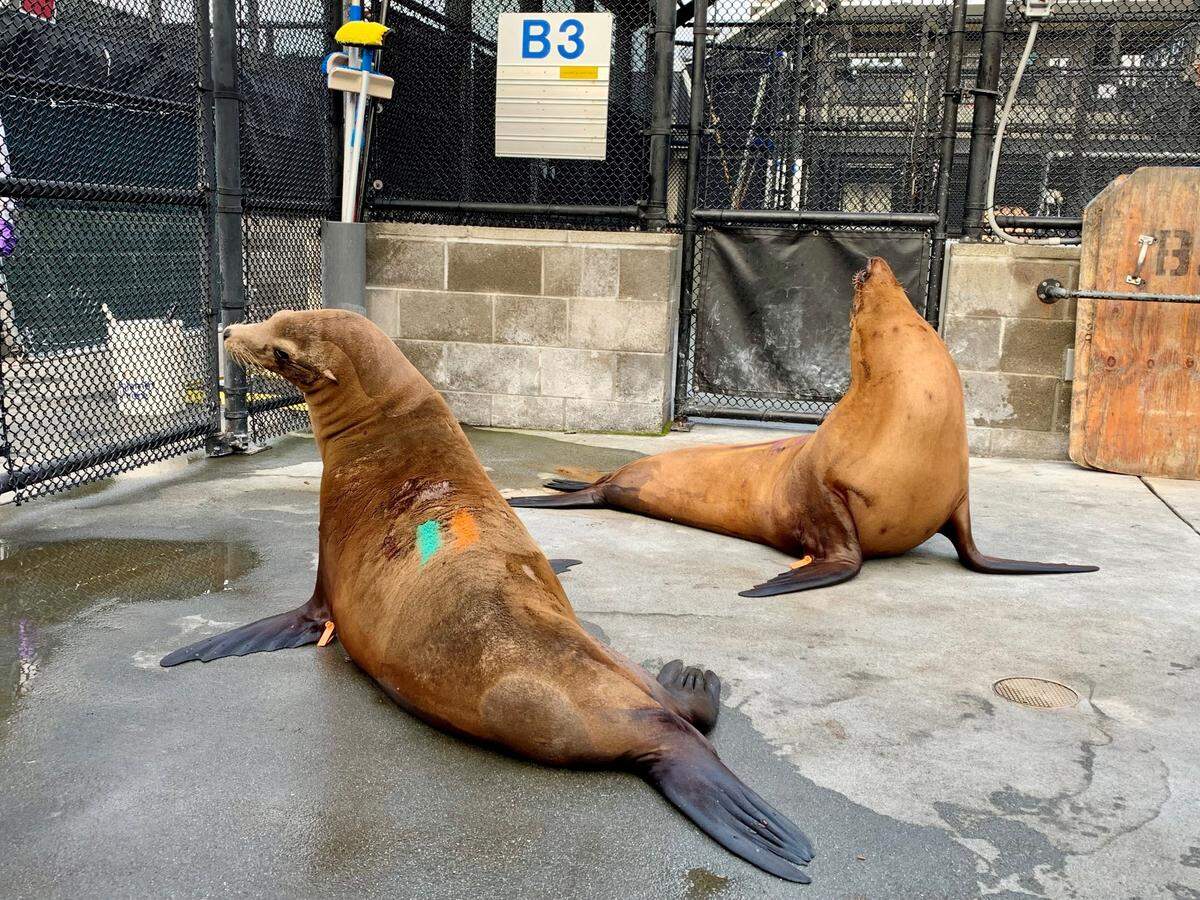
The neurotoxin has been blamed most prominently as the cause of death for a number of California sea lions on the Central Coast in recent weeks.
More than 90 sea lions and now four dolphins are suspected to have been infected with the toxin this summer in San Luis Obispo County, Marine Mammal Center spokesperson Giancarlo Rulli told The Tribune on Tuesday.
“It’s a very intense period,” he said.
Dead dolphin washes up on Cayucos beach
On Monday, Nextdoor user Gina Spalione posted about her experience finding the dolphin on the dog beach near Cayucos. She did not respond to The Tribune’s request for comment.
On Sunday night, she said, she was walking down Chaney Avenue at about 10:30 p.m.
“The minute I walked down the road, I was met with seven, count ‘em seven, sonic booms, in a very fast sequence. It startled me,” she wrote in the post. “As I walked along there was a very loud unsettling droning that was louder than the ocean waves. Matter of fact I could hardly hear the waves when I was walking along the shore line.”
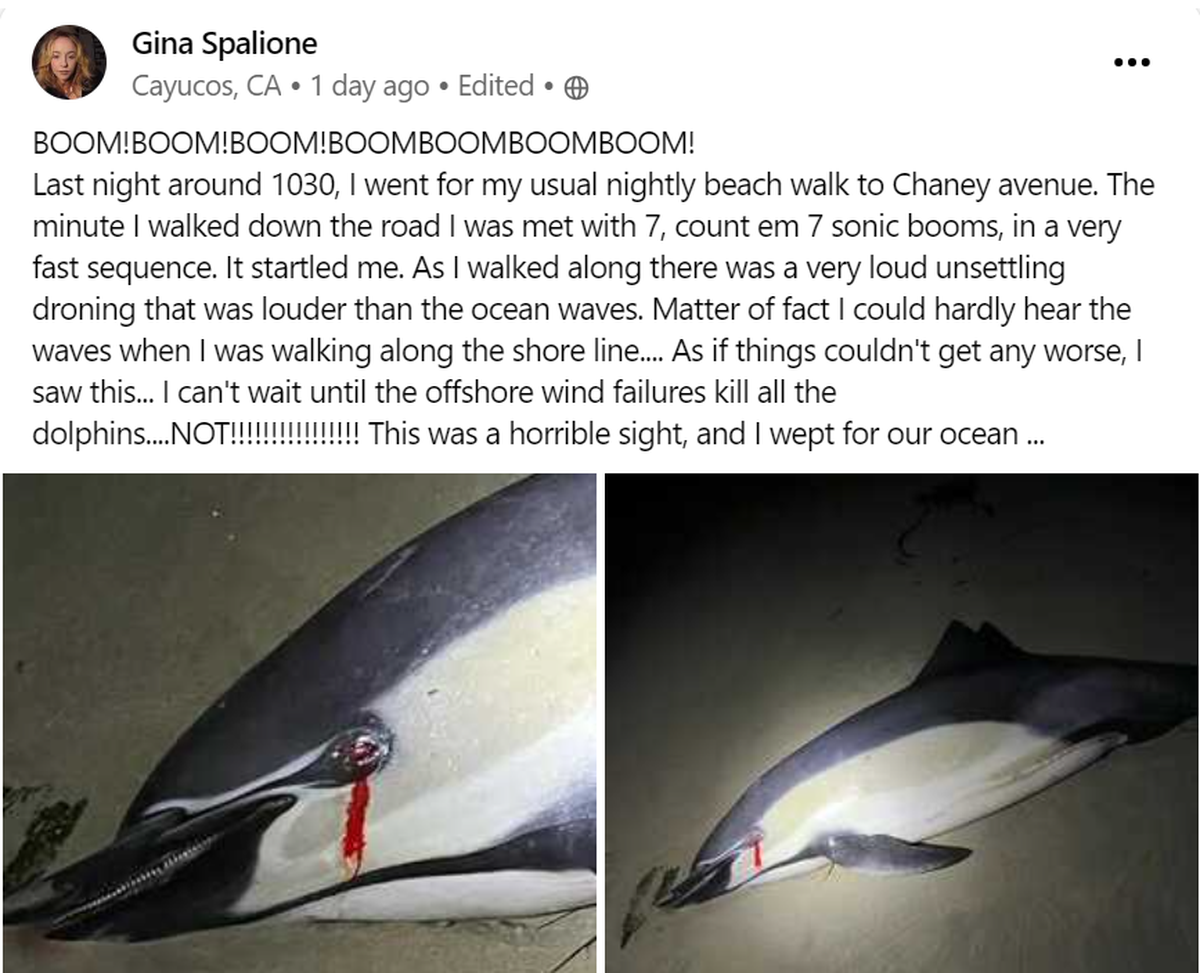
Then, she discovered the dead dolphin bleeding on the shore.
“I can’t wait until the offshore wind failures kill all the dolphins .... NOT,” she wrote. “This was a horrible sight, and I wept for our ocean.”
As of Wednesday morning, 83 people had commented on the Nextdoor post, many who speculated about the cause of the dolphin’s death.
Morro Bay resident Mary Ellen Grochau spotted the dolphin while walking her dogs at the beach on Friday around 3 p.m.
“There was definitely blood coming from its eye,” she told The Tribune on Wednesday. “There was quite a bit of blood that you could tell had come from its mouth.”
She also noticed a shallow, narrow slice on the dolphin’s side just above the tail, an injury she thought may have been caused by a boat propeller. She pointed out that there’s no way to know the cause of the dolphin’s death before someone performs an autopsy.
“People were trying to blame decibels and sonar,” Grochau said. “I just felt like saying, ‘You just don’t know.’”
Did acoustic surveys cause dolphin death?
Four Nextdoor commentators blamed the dolphin’s death on acoustic surveys underway in the 376-square-mile Morro Bay Wind Energy Area about 20 miles offshore from Cambria and San Simeon.
Atlas Wind and Golden State Wind, two of three companies that won leases to build floating wind turbines off the SLO County coast, are conducting surveys to find out what the seafloor looks like in the Morro Bay Wind Energy Area. They will use that data to decide where to anchor floating platforms for the wind turbines and where to place cables that will carry electricity to land.
The survey equipment emits blasts of sound that create images of the seafloor.
One Nextdoor user said the sound blasts from the survey equipment caused internal bleeding in the dolphins and other marine mammals.
However, the sound projected by the survey equipment does not physically harm fish or marine mammals, president and senior scientist for Southall Environmental Associates Brandon Southall told The Tribune earlier this year in a story by former Tribune reporter Mackenzie Shuman.
He is the leading expert globally on noise impacts to marine life.
The offshore wind companies are using a multi-beam echo sounder, a side scan sonar and a sub bottom profiler to map the seafloor.
Southall said the frequency of sound emitted by the multi-beam echo sounder and side scan sonar are too high for marine life to hear, so the sound won’t harm the animals or disrupt their behavior.
The sub bottom profiler, however, does create sound within the hearing range of sea life, but it won’t physically hurt fish and marine mammals, Southall said.
At most, the sub bottom profiler could cause temporary behavioral changes, such as discouraging mammals like sperm whales from diving for food at the sea floor. Animals would need to be within 100 meters of the technology to be impacted, he said.
Four dolphins likely killed by domoic acid poisoning
Instead, the dolphin was likely killed by domoic acid positioning, a neurotoxin that’s been killing Central Coast sea lions in high numbers since July, Rulli said.
The toxin accumulates in fish eaten by the marine mammals, then attacks their brain — causing seizures and heart failure.
Since July 19, the Marine Mammal Center responded to four reports of sick or dead common dolphins in San Luis Obispo County, he said.
Three of those dolphins washed up on the beach in Oceano. One had died by the time the Marine Mammal Center arrived at the beach, and the other two appeared to be experiencing seizures.
Dolphins almost never survive time spent on land, so the center euthanized one of the dolphins to limit its suffering, Rulli said. The third dolphin died before it could be euthanized.
The Marine Mammal Center found a fourth dolphin dead on the beach in Cayucos on Friday.
The organization did not conduct an autopsy of the Cayucos dolphin, but Rulli said the animal also likely died of domoic acid poisoning.
“It is quite clear, given what’s happening locally, that domoic acid poisoning is playing a role in these common dolphin strandings,” Rulli said.
Rulli urged people to remain at least 50 yards away from marine mammals on the shore. Stress can trigger seizures in sick animals, and sea lions can die if they return to the water while having a seizure.
“Its critical that while our responders are en route that people keep their distance,” he said. “People are getting really close, and unfortunately the sea lions are heading back to the water because they feel like they’re being disturbed.”
People should report sightings of sick marine mammals to the center at 415-289-SEAL (7325).
“This is one of those heightened situations where people don’t intervene and keep their distance,” Rulli said.
Former Tribune reporter Mackenzie Shuman contributed this story.
This story was originally published August 7, 2024 at 10:29 AM.