Spike in sick sea lions reported on SLO County beaches
%20Sally%20Campbell%20(R)_bagged%20fluids_7.26.24_Photo%20by%20Giancarlo%20Rulli%20%C2%A9%20The%20Marine%20Mammal%20Center.jpg "Volunteers Jennifer Weller, left, and Sally Campbell give fluids to an ailing sea lion being treated for domoic acid poisoning at The Marine Mammal Center in Sausalito.")
Sea lions are turning up sick on Central Coast beaches with a common and potentially fatal ailment, but in higher numbers and earlier in the season than usual.
The juvenile and adult animals, diagnosed with domoic acid poisoning from a naturally occurring neurotoxin, have been rescued mostly from the Oceano Dunes and Pismo Beach areas, an official from the Marine Mammal Center in Sausalito told The Tribune on Monday.
“We’ve responded to calls for about 40” sick sea lions there since July 19, Giancarlo Rulli, associate public relations director for the center said.
“Cases have also popped up in Cambria, Morro Bay and Cayucos in the last day or two,” he said Monday, but not yet in any other part of the center’s 600-mile range north to Mendocino County.
“That could change,” Rulli said, based on experience from previous years since 1998, when the center first diagnosed domoic acid poisoning in California sea lions and other marine mammals.
On Tuesday, Vandenberg Space Force Base also reported what it called “a significant uptick” of sick sea lions appearing on its beaches.
“Signs point to domoic acid poisoning as the cause,” the base said in a news release.
2024 is off to a busy start in sea lion rescues
The center averages from 60 to 80 cases a year from San Luis Obispo County to Mendocino, he said. There have been, however, peak years of with more than 200 cases from the area, such as in 2009, 2014 and 2015.
Likewise, as of the end of June 2023, the Channel Islands Marine & Wildlife Institute was receiving from 250 to 300 calls a day for sick, dying and dead sea lions (some duplicate calls for the same animal), according to a Noozhawk report. For that year as of then, the Institute already had responded to more than 300 live sea lions showing signs of domoic acid poisoning and more than 100 dead sea lions.
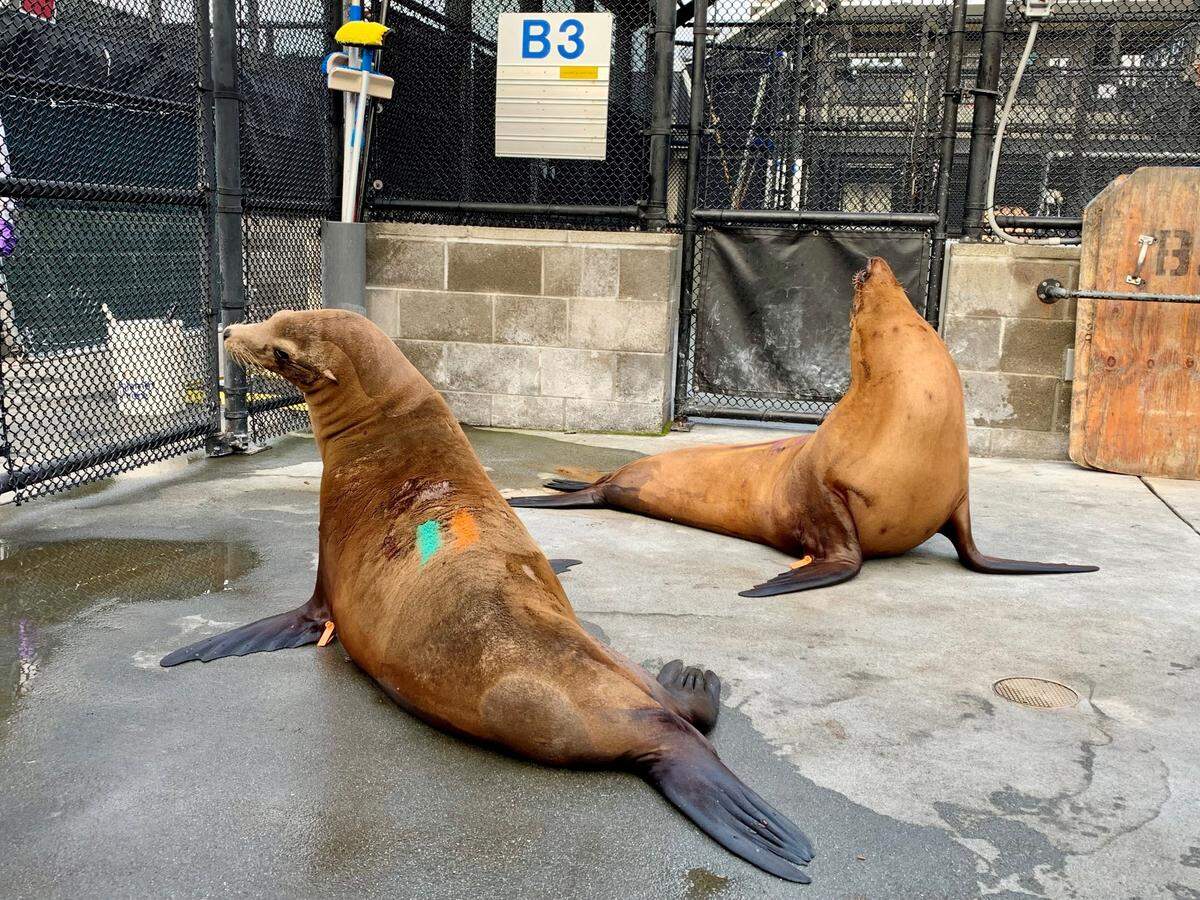
As usual this summer, the infected animals rescued in San Luis Obispo County by center volunteer teams and transported to Sausalito for treatment have exhibited such symptoms as “abnormal neurologic activity (seizures), disorientation and lethargy,” and can become aggressive if startled, challenged or crowded, he said.
One symptom often exhibited by an infected sea lion on the shore is swinging its head from side to side.
There’s plenty of food for the sea lions, but it’s ‘impacted by the neurotoxin’
This year’s rescued sea lions have been of normal weight, so far, and “have been in very good body condition,” otherwise, Rulli said, indicating that they have “sufficient food sources.”
“It’s not a lack of food, but unfortunately, the sea lions’ food source in southern part of San Luis Obispo County is impacted by the neurotoxin” now, he said. The acid “accumulates up the food chain,” accumulates in the animals’ systems, attacking their hearts and brains.
About a quarter of the infected animals brought to the center have died or been humanely euthanized, because the neurological effects of the domoic acid prevents their normal activity, he said.
Treatment includes giving the mammals “lots of fluids subcutaneously, anti-seizure medicines and food ... fish that are clear of the toxin,” Rulli said.
Domoic acid can also affect humans who eat contaminated crab, shellfish and fish, causing a life-threatening condition known as amnesiac shellfish poisoning, an information sheet from the center states.
Here’s what to do if you see a sick sea lion
Rulli said people seeing sea lions that appear ill should report the sighting to the center at 415-289-SEAL (7325). “It is important, whether a seal lion is impacted by the disease or not, for the public to keep a safe distance, at least 50 yards, and do not intervene.”
It can be very helpful if someone can stand guard from a respectful distance and warn people away until rescuers arrive.
“They’re already stressed,” he said, and off-leash dogs and too many people too close can make the situation worse in a hurry.
Because “these are large animals, 150 pounds plus each, it takes a team of at least four to six people to perform the rescues,” Rulli said. Because the Center can field simultaneous calls for several rescue requests at the same time, “it may take a while before they can get to each one,” he said, “so please be patient.
This story was originally published July 30, 2024 at 5:00 AM.