How would Morro Bay’s stacks be demolished and a new battery plant built? See the plan
Building a battery plant on the retired Morro Bay Power Plant property would have only one “significant and unavoidable impact,” according to a new report — the loss of a historical resource.
The city released a draft environmental impact report March 11 analyzing how building a 600-megawatt battery storage facility and demolishing the retired Morro Bay Power Plant and stacks would impact ecosystems surrounding it.
The project’s only “significant and unavoidable” impact is removing a historical resource — the decades-old power plant and stacks, which is recognized for its engineering and architecture, according to the EIR.
Otherwise, mitigation efforts would reduce other impacts to wildlife and cultural resources to “less than significant,” the report said.
If the Morro Bay City Council and California Coastal Commission approve the project, it will take five to eight years to prepare the site, build the battery plant and demolish the existing power plant and stacks, according to the report.
Community members have expressed strong opposition to the battery plant project.
At a Planning Commission meeting in February, speakers at public comment said they were worried about the safety of the plant and its compatibility with the community.
Meanwhile, more than 1,000 registered voters in Morro Bay signed a petition to support a ballot measure designed to block the battery plant. That measure will be on the ballot for Morro Bay voters in November.
What would Morro Bay battery plant look like?
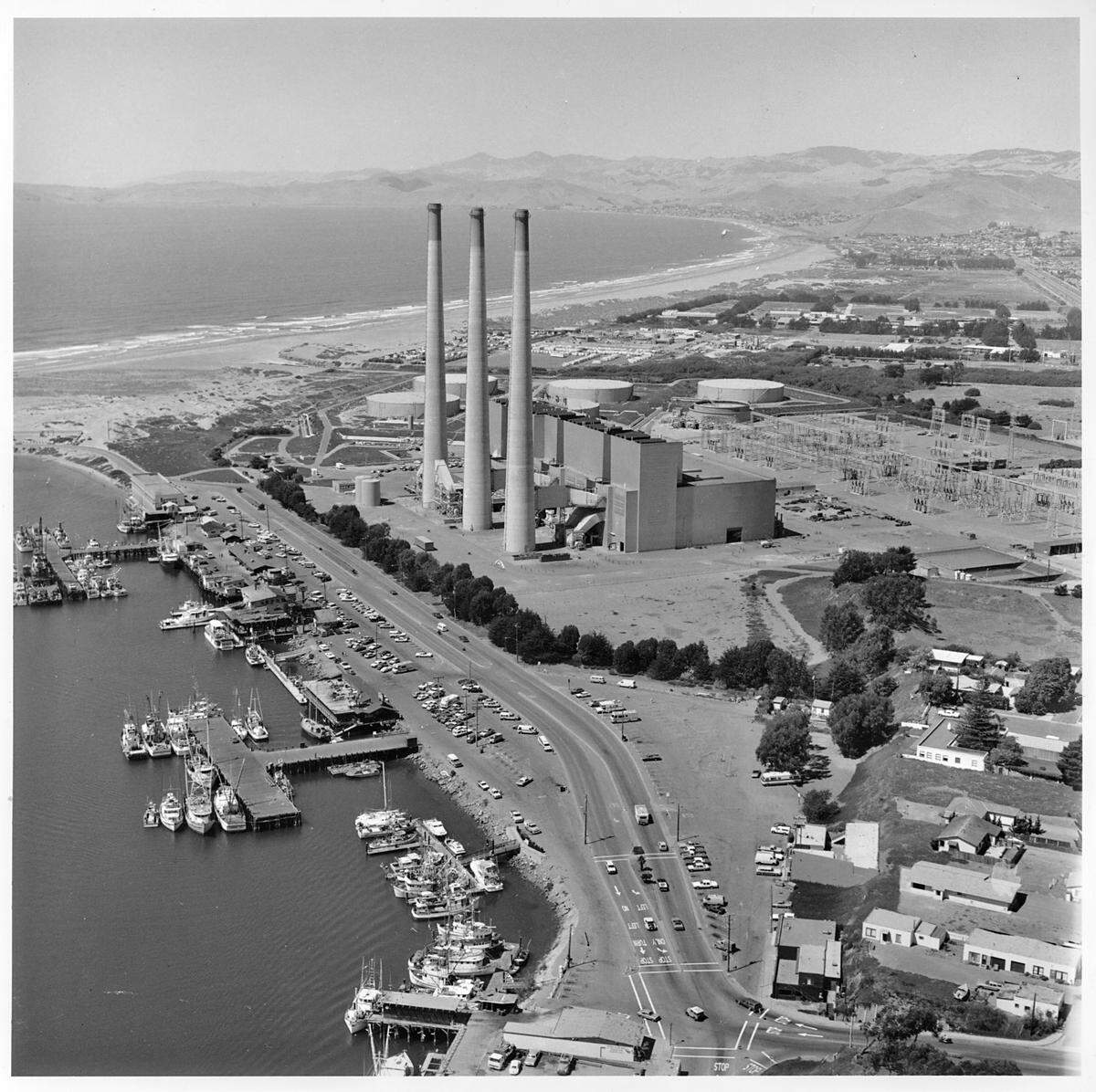
Built in the 1950s, the Morro Bay Power Plant was initially operated by PG&E until the energy company sold it to Duke Energy in 1998. Dynegy took ownership of the plant in 2007 before closing it permanently in 2014.
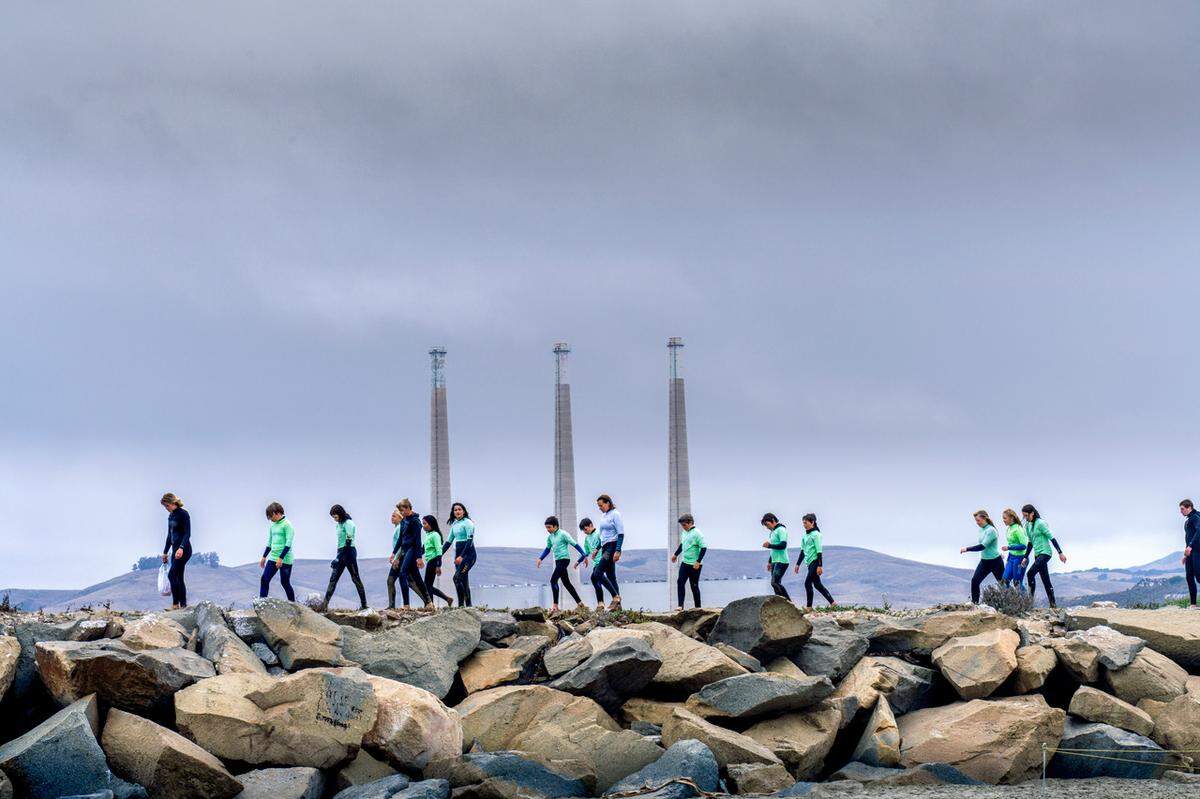
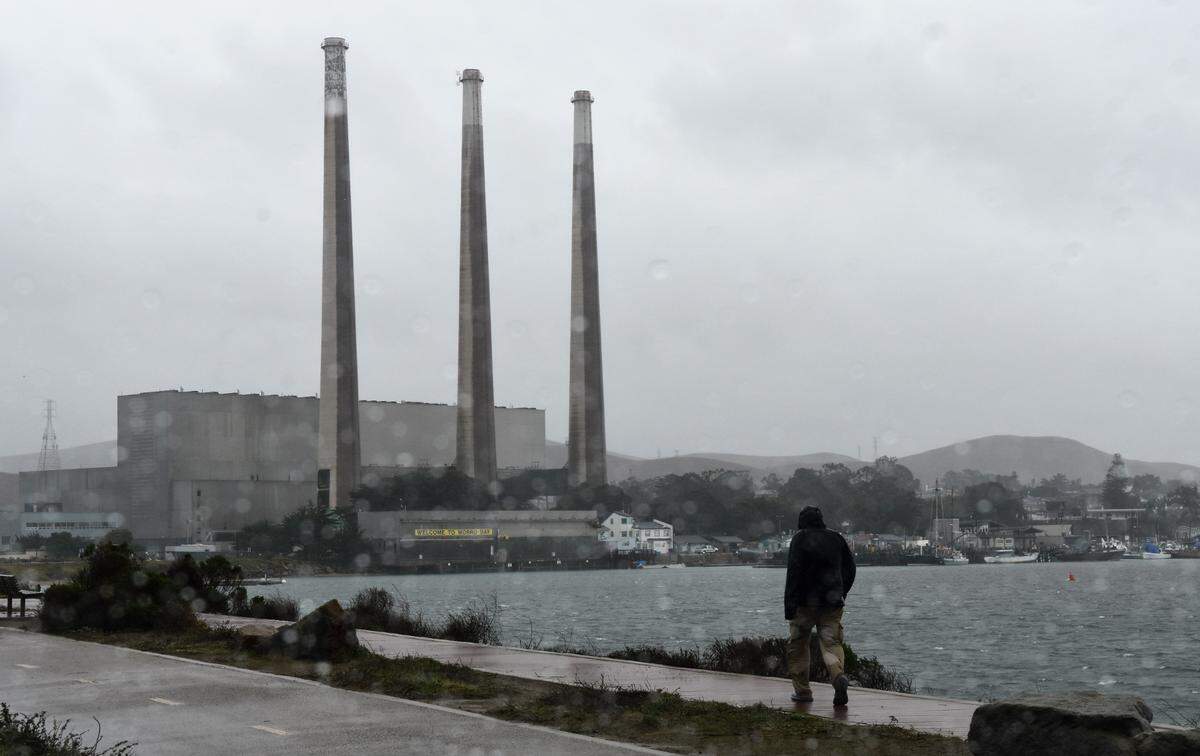
Vistra Corp. merged with Dynegy in 2018, acquiring the 107-acre power plant property and its iconic 450-foot-tall emission stacks. Vistra agreed to tear down the power plant and its stacks by 2027 or pay the city $3 million.
The battery storage project, which Vistra pitched to the community in 2021, would feature three Costco-warehouse-sized buildings housing 180,000 batteries — enough to store electricity for 450,000 homes.
The project design also includes three substations with transformers, a transmission line connecting the batteries to a nearby PG&E switch yard, water supply system improvements and internal access roads, the report said.
A 6-foot-high fence would surround the facility and be accompanied by security cameras. About 15 employees would staff the operations and maintenance building when the facility is up and running.
The plant would most likely store lithium ion batteries, but the type of battery could change as technology evolves, the report said.
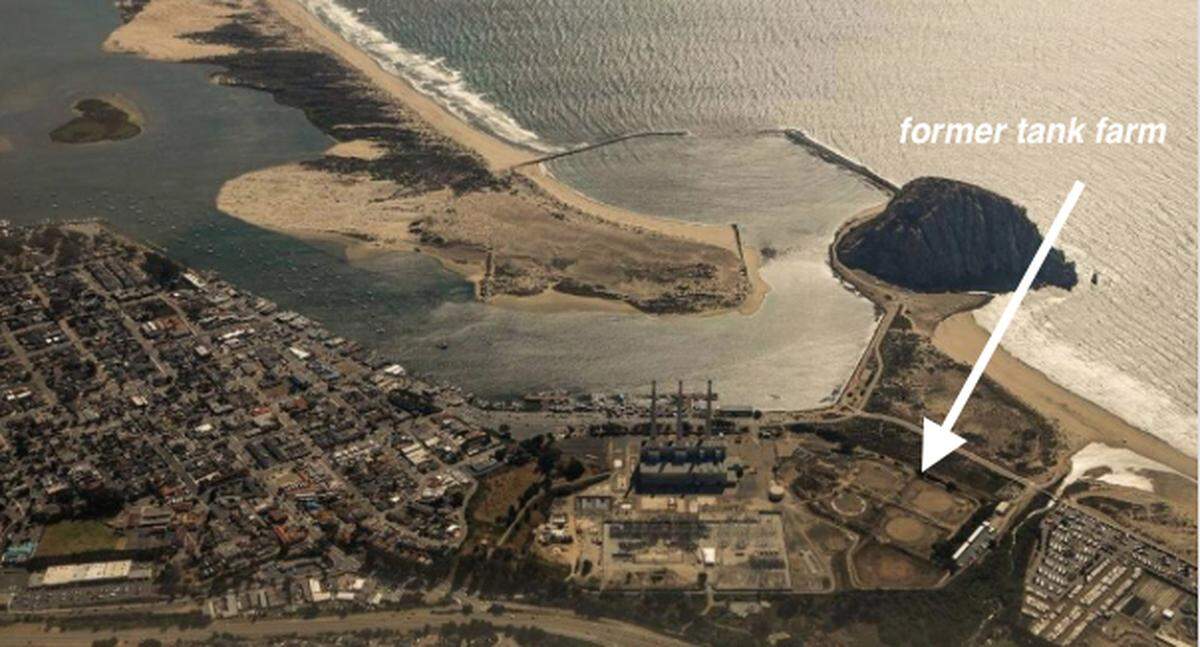
The 24-acre parcel where Vistra plans to actually build its battery storage facility used to be an oil tank farm.
The former tank farm site is contaminated with total petroleum hydrocarbons (TPHs), which are fuel oils burned to generate electricity, as well as polycyclic aromatic hydrocarbons, which are found in TPHs, according to a 2022 report from the California Department of Toxic Substances Control.
That portion of land also contains pollution from metals, pesticides and volatile organic compounds, the Department of Toxic Substances Control found.
Unless the pollution is cleaned up, the former tank farm site can only be safely used for industrial or commercial purposes like the proposed battery plant, the state agency said.
Scientists couldn’t test soil under the power plant building at the center of the property, so they do not know if that portion of land is contaminated. However, the agency did not detect harmful levels of pollution on other parts of the property.
What would construction look like?
From preparing the battery plant site to demolishing the Morro Bay Power Plant and stacks, Vistra would take five to eight years to complete the project, according to the EIR.
First, Vistra will prepare the site for construction — a 12- to 18-month process that would involve no more than 100 workers.
Then, about 300 construction workers would build the plant over 18 to 36 months, the report said.
To start, workers would drive steel piles into the soil and pour a 36-inch concrete foundation for the buildings. Then, they would construct the buildings out of a steel frame and pre-cast concrete side panels. When the buildings were complete, workers would install the batteries, wiring and fire protection systems.
Cables buried 2 to 3 feet underground would connect the batteries to power conversion systems.
Once the battery plant was installed, start-up and testing of the facility would take another year to 18 months.
When the facility was up and running, Vistra would occasionally test and replace the batteries, the report said. Batteries have about a 20-year lifespan, but they would be repaired and replaced sooner if needed.
Within six months of finishing construction, Vistra agreed to demolish the power plant and stacks — a process that could in itself last up to two years.
Before demolition, Vistra would remove all oil, flammable materials, mercury switches and asbestos from the structures. Construction workers would divide the building into segments and erect “negative pressure containment tents” to contain the asbestos while it was being removed.
Removing the asbestos would take between nine months to a year, and then demolition could begin, the report said.
The power plant building is separated into four separate boilers, turbines, a warehouse and office space. First, workers would remove the interior equipment, then demolish the rest of the structure using cranes, shearing machines, man lifts and cutting torches.
Meanwhile, the three stacks “would be removed one at a time by using concrete saws to remove portions of each stack piece by piece, from top to bottom,” the report said. “No explosives would be used.”
Demolition would produce about 64,000 tons of concrete, asphalt and soil that would be recycled, the report said.
Additionally, Vistra expected to salvage 8,000 tons of building materials and equipment, recycle or reuse 40,000 tons and then dispose of 22,000 tons, according to the report.
All construction would occur between 7 a.m. and 7 p.m. on weekdays, with rare night-time work.
The battery plant has a 40-year life span, according to the report. When the technology expires, Vistra could replace it or decommission the facility.
If Vistra eventually decided to decommission the plant, the company and the city would collaborate to create a plan that guides the process.
The plan would likely require Vistra to remove all buildings and concrete foundations from the site, then recycle any oils and batteries left over from the facility, according to the report.
How would project impact environment?
The report divides impacts from the project into four categories: “significant and unavoidable,” “less than significant with mitigation,” “less than significant” and “no impact.”
The only “significant and unavoidable” impact of the project results from demolishing the power plant and its stacks — as this would remove a historical resource.
The Morro Bay Power Plant has been considered for the National Registrar of Historic Places and the California Registrar of Historical Resources for its “engineering and architectural merit,” the report said.
To mitigate the loss, Vistra would need to submit high resolution digital photos, a historical report and compilation of historic research on the power plant to the Historic American Engineering Record, the Historical Society of Morro Bay, the History Center of San Luis Obispo County, the city of Morro Bay and the Morro Bay Library.
After demolition, Vistra would also have to add a display to the property explaining its history and significance, the report said.
All other impacts to the environment were “less than significant,” according to the report, and largely effected wildlife living on the property.
Noise from heavy equipment could temporarily disrupt wildlife behavior, including the black-crowned night heron, which may roost in eucalyptus and Monterey cypress trees between the Embarcadero and the southeastern property boundary.
To mitigate potential impacts to wildlife, Vistra said it would pay a city-approved biologist to survey the project site and relocate sensitive species, train construction workers and prepare a habitat mitigation and monitoring plan, the report said.
Additionally, a biologist would oversee construction with the authority to halt or redirect work to relocate sensitive species.
Vistra would also be required to halt noisy activities within 100 to 500 feet of bird nests during nesting season from February to August.
Finally, the stacks would have to be surveyed for bats before roosting season in May. If no bats were found, the stacks would be sealed to prevent their entry. If bats were found outside of roosting season, Vistra would install one-way door systems so the bats could leave but not re-enter. If bats were found during roosting season, Vistra would have to wait until the bats were done raising their young before proceeding with demolition, according to the report.
The report also identified potential “less than significant” impacts to cultural resources.
According to the report, Native American artifacts belonging to the Chumash or Salinan people could be buried on the property. To mitigate any impacts to these resources, Vistra must train their construction workers and hire an archaeologist and Native American observer to oversee construction, according to the report.
There are no known human burials on the project site, but burials were found just southeast of the property — so there is potential to find more during construction, according to the report.
If human remains were found during construction, work would stop and the county coroner would inspect them. If the remains were identified as prehistoric, the California Native American Heritage Commission would notify a most likely descendant who would then be responsible for the remains, according to the report.
How do battery plant plans address fire, flood safety?
Additionally, the batteries selected by Vistra would include explosion prevention measures as mandated by the National Fire Protection Association and International Fire Code, according to the report.
Meanwhile, the report also discussed flood risks for the project.
The battery plant would be located in an area with a Federal Emergency Management Agency-designated “minimal flood risk,” which means there’s a 0.2% annual chance of flooding.
Other portions of the project are located in FEMA-designated 100-year flood zones, but Vistra did not apply to build structures on those parts of the property, according to the report.
The west, north and northeast sides of the 24-acre site for the battery plant are surrounded by 33-foot tall berms, which would also protect the facility from potential flooding, the report said.
The batteries are designed to shut off during a flood event, according to the report.
The project is located in a state-designated Tsunami Hazard Area. However, the sand spit, Morro Rock and the narrow harbor would absorb much of a tsunami’s impact, the report said.
Additionally, Vistra would design emergency response and evacuation plans for the facility, which must be approved by Morro Bay’s police chief, fire chief and community development director.
According to the report, Vistra would train the Morro Bay Fire Department to respond to potential incidents.
How to weigh in on environmental report for battery plant
People can submit comments on the environmental impact report to the city until May 28 at 5 p.m., according to the city’s website.
Email comments can be sent to BESScomments@morrobayca.gov and letters to 955 Shasta Ave., Morro Bay, California 93442.
The city will answer the community’s questions in the final environmental impact report, which will be released later this year.
This story was originally published March 28, 2024 at 5:00 AM.