Morro Bay neighborhood was built in a floodplain. Can city help prevent future disasters?
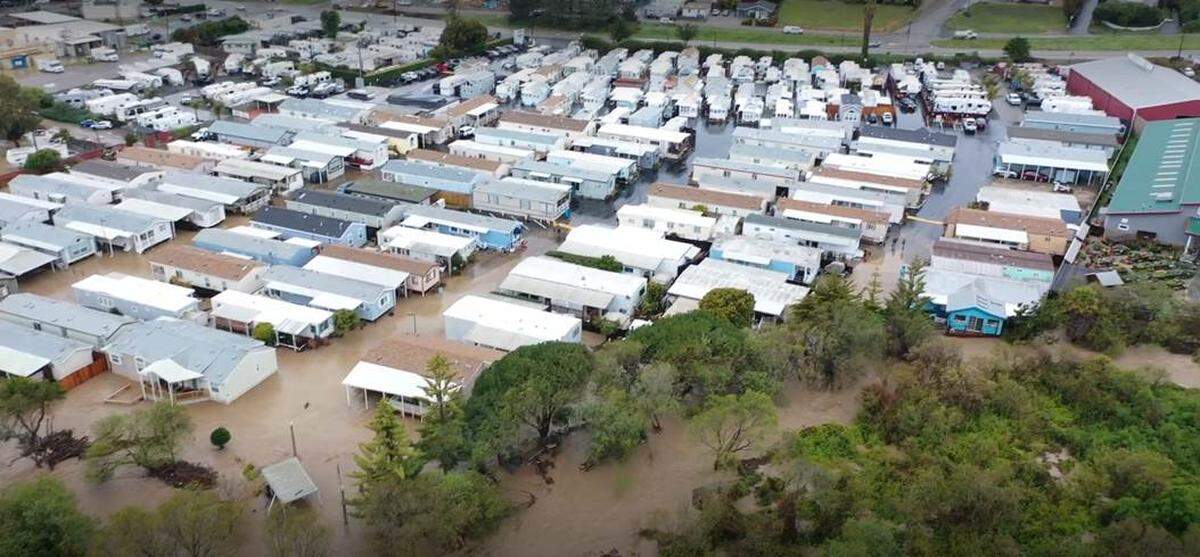
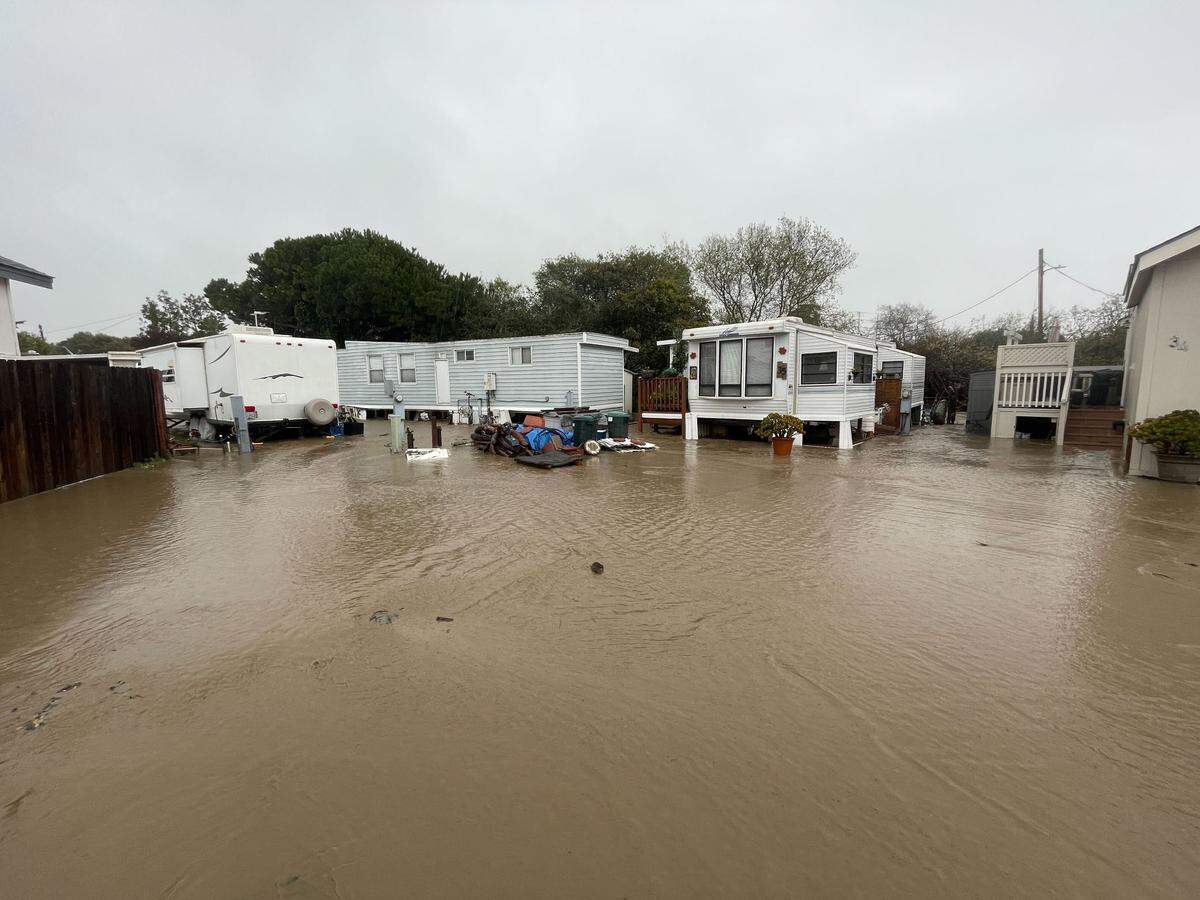
Linda Winters watched a tide of orange water barrel down her street in January, carrying mud and debris to the bottom of her porch steps.
The flood damaged a handful of neighboring homes at Silver City West, a mobile home community in Morro Bay, but the water receded before it could spill into Winters’ home.
This wasn’t her first flood.
A March 1995 flood filled her Airstream trailer with 26 inches of water — leaving it uninhabitable, she said.
“It caused a tremendous amount of damage,” Winters said.
At the time, the mobile home park was called Tratel, and the management invited Winters and her husband to move to a spot further from the creek. They stayed at the park, even with the flood risk, because it was the only affordable housing they could find in Morro Bay.
“Even back then, prices were high,” Winters said.
They purchased a travel trailer and raised it 6 inches above the high water line of the flood, an effort that kept her home dry during this year’s round of flooding.
“It’s the price you pay for living in a floodplain,” Winters said. “You virtually can’t get flood insurance. I mean, you can, but it costs an arm and a leg and it doesn’t take care of the reason why it’s flooding.”
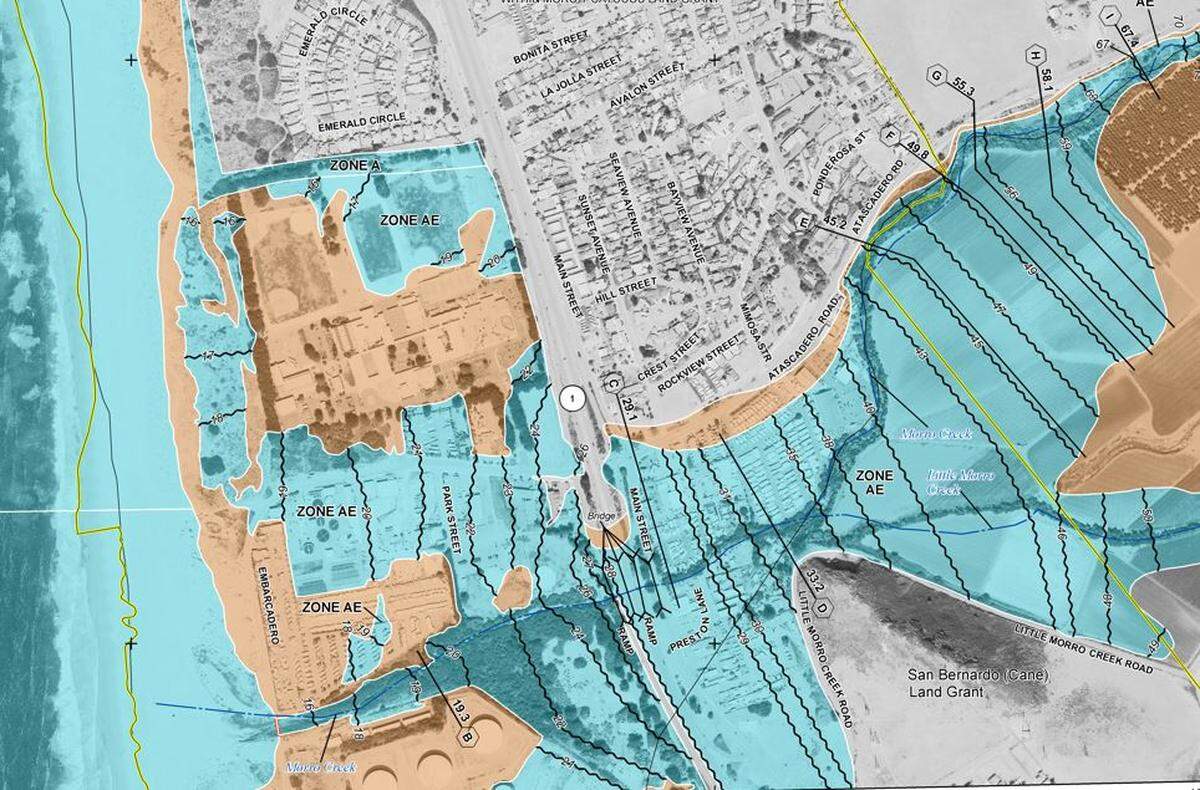
The Silver City West mobile home community and a handful of businesses on Main Street in Morro Bay are located in a “special flood hazard area,” according to a San Luis Obispo County flood map from the Federal Emergency Management Agency. The area appears to encompass Morro Creek’s floodplain and surrounds the creek from the eastern hills down into the city, spreading around Highway 1 near Main Street and Atascadero Road, the map shows.
Aside from emergency measures such as piling up sandbags and raising houses off the ground, little has been done to save those homes and businesses from the floodplain they’re built in.
Flooding has historically been an inconsistent issue for those along Morro Creek. But intense storms that cause creek overflows, such as those that hit San Luis Obispo County in January and March, could begin to happen more frequently as the world’s climate changes.
And the city is trying to better understand the threat and whether anything can be done about it.
“We’re challenging nature by building developments right up on a creek that is in a known floodplain,” said Morro Bay’s Public Works Director Greg Kwolek.
What happens naturally in a floodplain?
Floodplains play an important function for drainage from rivers and streams.
When an “infrequent event” or large storm happens, water typically kept within the bounds of a river or creek channel can overflow its banks, explained Chris Surfleet, a forest hydrologist and professor in Cal Poly’s natural resources management and environmental sciences department.
After the water overflows from the creek’s banks, it slows down and spreads out.
That overflowing water is usually full of sediment and debris collected from upstream, Surfleet added. As the water slows, the material is left behind and settles to the ground, Surfleet said.
The area where the water has jumped the banks, spread and slowed to deposit the carried debris is called a floodplain.
“Floodplains are typically where your riparian ecosystems are,” Surfleet said, adding that depressions in floodplains can create wetlands.
Riparian ecosystems are oftentimes rich with plants and animals that rely on the wet conditions that come from residing next to creeks and rivers that can flood.
Surfleet noted that oftentimes creeks and rivers within cities will be channelized to prevent natural flooding and protect homes and businesses. This is done by dredging or lining creekbeds with concrete, he said.
However, this process disconnects creeks from the riparian and wetland ecosystems, Surfleet added.
Just a few miles away from Morro Creek, the Morro Bay National Estuary Program worked with the state in 2019 to essentially increase the size of Chorro Creek’s floodplain. By giving the creek more room to overflow during flood events, less dirt makes its way into the estuary — leading to better water quality in the creek and bay, said the program’s restoration program manager, Carolyn Geraghty.
So when the big January and March storms hit, the creek overflowed and the floodplain filled with water, forcing the closure of South Bay Boulevard, which crosses the creek, but otherwise dispersing the water as designed.
“That water had a longer time to recharge the groundwater,” and it provided habitat for local fish species, Geraghty said.
Homes, businesses built in Morro Creek floodplain
The Chorro Creek project was different from Morro Creek because it didn’t have any development in the way. The estuary program had several acres of land around the creek to work with to expand the floodplain, unimpeded by homes or businesses.
That’s not the case at Morro Creek.
There, the land on the north side of the creek located just 3,000 feet before it reaches the ocean was approved for trailers after the then-owner bought the property from Morro Garden Farms in 1957, according to San Luis Obispo County Assistant Assessor Lesa Gofourth.
Most of the businesses around the creek were built before the city was incorporated in 1964, according to county records.
Rewind to 1952, after several devastating floods happened around the United States, and President Harry Truman called for legislation to establish a federal flood insurance program to help protect those who had developed in floodplains. By the late 1950s, communities slowly began catching onto the novel idea of regulating development in floodplains to prevent disasters.
At that time, however, communities didn’t have much technical knowledge to base their regulations on — there wasn’t an established system of determining flood zones until the U.S. Army Corps of Engineers began mapping flood-prone areas in 1962. And it wasn’t until the late 1970s that national guidelines were established to prevent many developments in floodplains.
In other words, the Morro Creek floodplain had homes and businesses on it before the government had figured out that such development likely wasn’t a good idea.
“None of that development seems to have been planned for the fact that it’s (in a) floodplain and the fact that, periodically, the area will flood just naturally,” Kwolek said.
Living and working in a floodplain: ‘We’re all screwed when the water comes down’
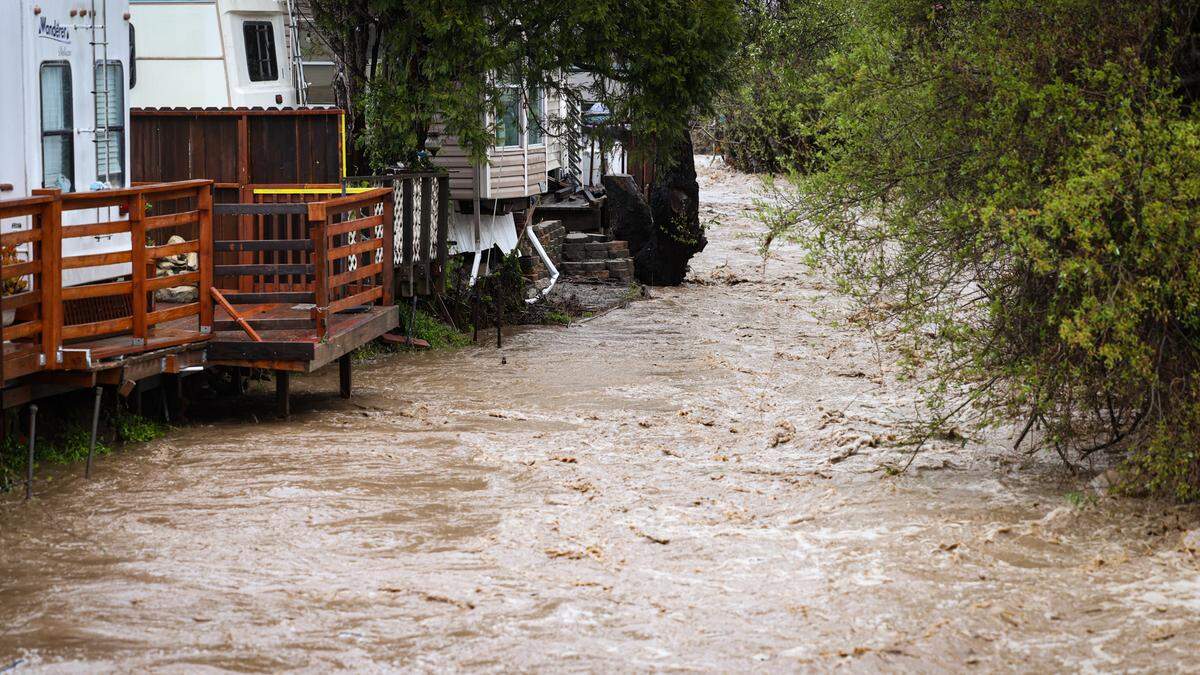
Morro Creek’s watershed starts in the mountains at the top of Highway 41. When it rains in the hills, that water flows down into the creek.
“It’s a pretty narrow creek. When you have all of this water converging ... it just doesn’t have anywhere else to go,” Kwolek said. “There’s not enough width of the creek to hold all that water, so the water starts jumping the creek.”
The January deluge flooded Central Coast Cart Rentals on Main Street and wrecked at least $250,000 worth of golf carts, electric bikes and scooters, owner Jeff Babb told The Tribune.
Babb applied to the Small Businesses Administration for loans, but interest rates landed between 4% and 8% and came with heaps of paperwork.
“You’re just getting in bed with the devil,” Babb said of taking out a loan from the Small Business Administration. Babb decided not to accept a loan from the Small Business Administration, he said.
Businesses don’t qualify for individual assistance funding from the Federal Emergency Management Agency, either, so Babb paid for the shop’s damages out of pocket, he said.
When another flood struck Main Street in March, Babb was prepared. He piled sandbags around the shop and moved his inventory to another location.
“We had good reason to know it was coming,” Babb said.
Babb considered purchasing flood insurance for his business, but because it’s located in a floodplain, it would cost about $8,500 per year — a cost he said isn’t worth it.
All he can do now is prepare for future flooding, he said.
“If we know it’s coming, we can mitigate pretty good,” Babb said. “It’s pretty clear for everybody down here that we’re all screwed when the water comes down.”
Sara Hubbard moved to Silver City West 26 years ago. She experienced her first round of serious flooding this year when a deluge of water and mud filled her mobile home in January.
In March, however, she lined her home with sandbags, and she avoided a repeat disaster.
Now, she stores sandbags in her yard to prepare for the next flood.
“With the way the weather’s going — with more extremes, I’m willing to bet we’ll have more,” Hubbard said.
Still, the threat of flooding won’t chase Hubbard out of the neighborhood.
“Sometimes you just have to roll with the punches,” Hubbard said. “I love living here. It’s my home, and I’ll be here probably the rest of my life.”
City to look for answers, solutions to flooding
Some residents of the Silver City West mobile home community blame the flooding on creek debris caught under the Main Street bridge, but Kwolek asserted it’s not that simple.
Clearing debris from the creek as it flows under the Main Street bridge may help manage potential flooding, but it won’t stop the area from flooding entirely, Kwolek said.
During the March 10 storm, the creek flooded the mobile home park even without debris blocking the mouth of the bridge. The creek spilled despite there being at least a foot of room for water to flow under the bridge, Kwolek said.
So the problem isn’t the bridge, he said. It’s that the creek is simply too narrow to hold rainwater from both the city and the surrounding hills during a severe storm.
“The flooding is happening upstream and then coming through the mobile home park and going down Preston Lane to all the businesses,” Kwolek said.
The city is looking into funding a hydrologic study to further understand what causes flooding in the area and what might prevent future incidents, Kwolek said.
The city only owns a piece of the creek under the Main Street bridge. The rest of the creek runs through private property, so the city would need to coordinate with property owners when exploring solutions for the flooding.
“We want to figure it out,” Kwolek said. “We’re still doing our research, and when we have enough we’ll be ready to go out to those communities and talk to them.”
.JPG "Morro Bay flooding13861 (1).JPG")
This story was originally published April 13, 2023 at 9:00 AM.