
Welcome back, bulls! Male elephant seals return to SLO County rookery
The first mature bull elephant seal arrived at the Piedras Blancas rookery north of San Simeon on Nov. 15.
“He came in with a whisper,” said Cynthia Coulter, a Friends of the Elephant Seal docent who watched him.
The bull was the harbinger of the breeding season.
Who are the toughest elephant seals on the beach?
You can identify male elephant seals by their long noses — technically, proboscises — and chest shields.
Fully mature bulls have long noses that have a notch across near the top.
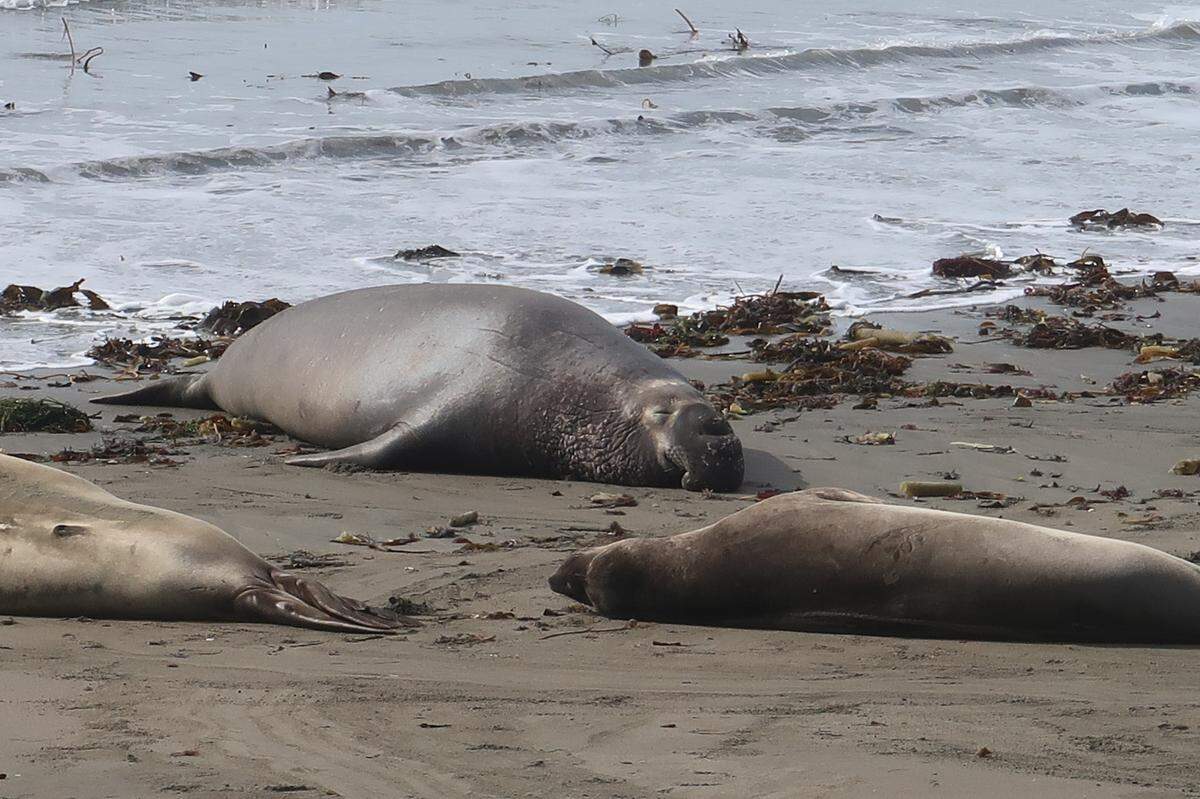
When the seal is lying down, the chest shield wraps around the neck to the level of the eyes or further.
Like its proboscis, a seal’s chest shield starts to develop at puberty and continues to expand throughout the rest of its life.
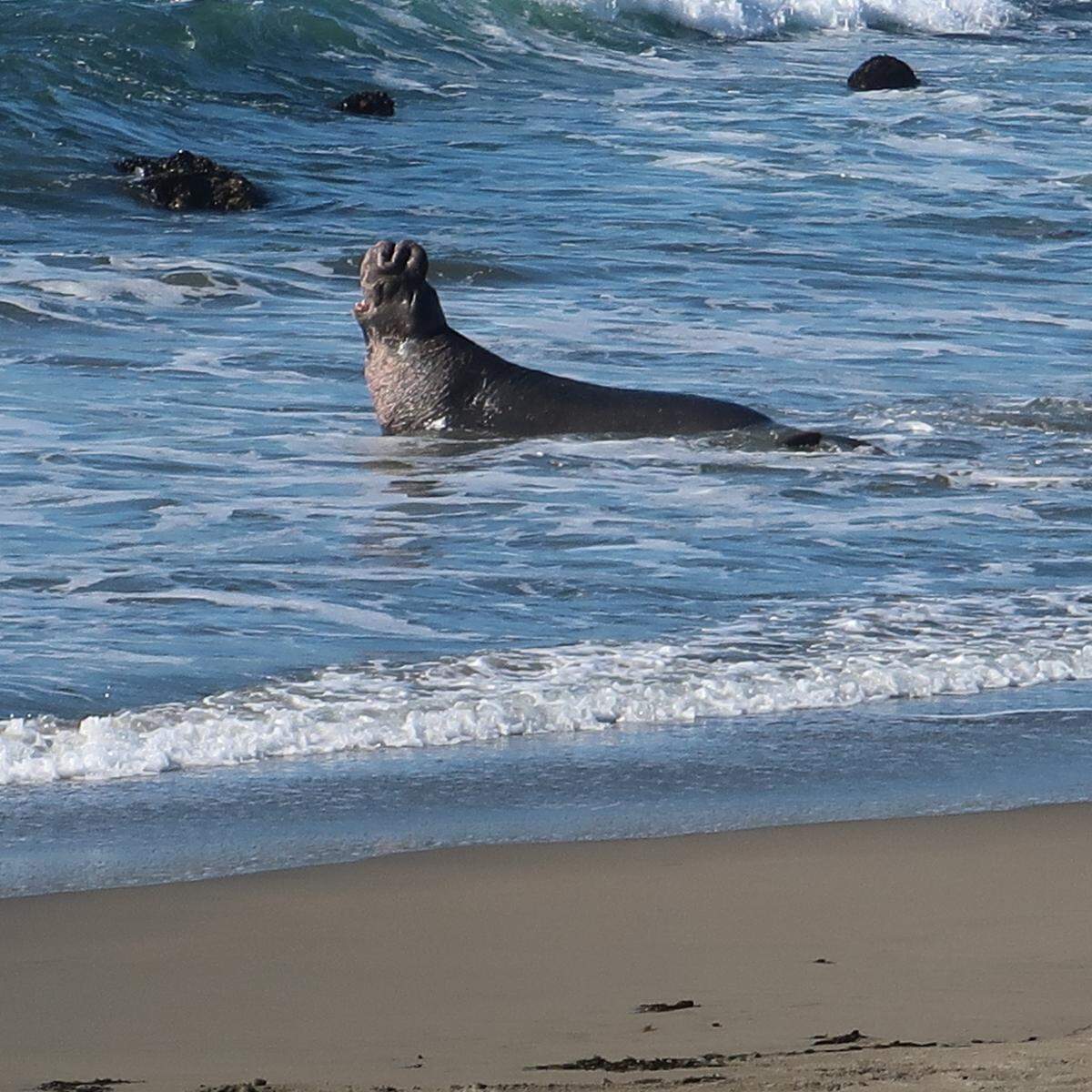
Although males often attack each other’s necks, their chest shields develop whether or not they fight.
Compare noses and chest shields with other seals on the beach. Some are large individuals, but their shorter, smooth noses and less developed chest shields betray their junior status.
Smaller seals are juveniles, still enjoying their fall haul-out rest.
They will soon return to the ocean and leave the beach to the breeding seals. They will be at sea, eating and growing, until April and May.
Bulls establish dominance hierarchy
The first bull to arrive on the beach must be ready to take on other bulls to establish the dominance hierarchy.
Those relationships govern the beach during the breeding season.
The bulls have settled who bests who by the time the pregnant females begin arriving in December, although their status may change as bulls fight through March.
The most dominant bulls, at the top of the hierarchy, are most likely to get to breed, so there’s a lot at stake when bulls fight.
It’s not just who won, but who gets the prize.
Rivals can recognize each other
Bulls learn which ones they have beaten and which have beaten them.
“It is clear that they have the mental capacity to remember scores of competitors,” elephant seal researcher Burney Le Boeuf explained.
The seals may look a lot alike to us, but each one is an individual in the eyes of his competitors.
A bull who loses a fight, even if he has been dominant to others, falls way down the hierarchy.
He may be so demoralized that he drops out of the competition for breeding for the rest of the season.
Females arrive in December
The female elephant seals have been feeding and gestating their offspring since May.
The first female usually arrives in early December.
The first pup of the season was born at Piedras Blancas on Dec. 10, at the far south end of the boardwalk. Follow the crowd to see the baby seal.
Located off Highway 1 north of San Simeon, the Piedras Blancas elephant seal viewing area is free, open all day and has plenty of space to accommodate holiday visitors.
For more information, visit elephantseal.org.