Eelgrass almost died off in the Morro Bay estuary. Now, it’s made a record rebound
The Morro Bay estuary has seen a massive resurgence of eelgrass in recent years due in part to targeted restoration efforts.
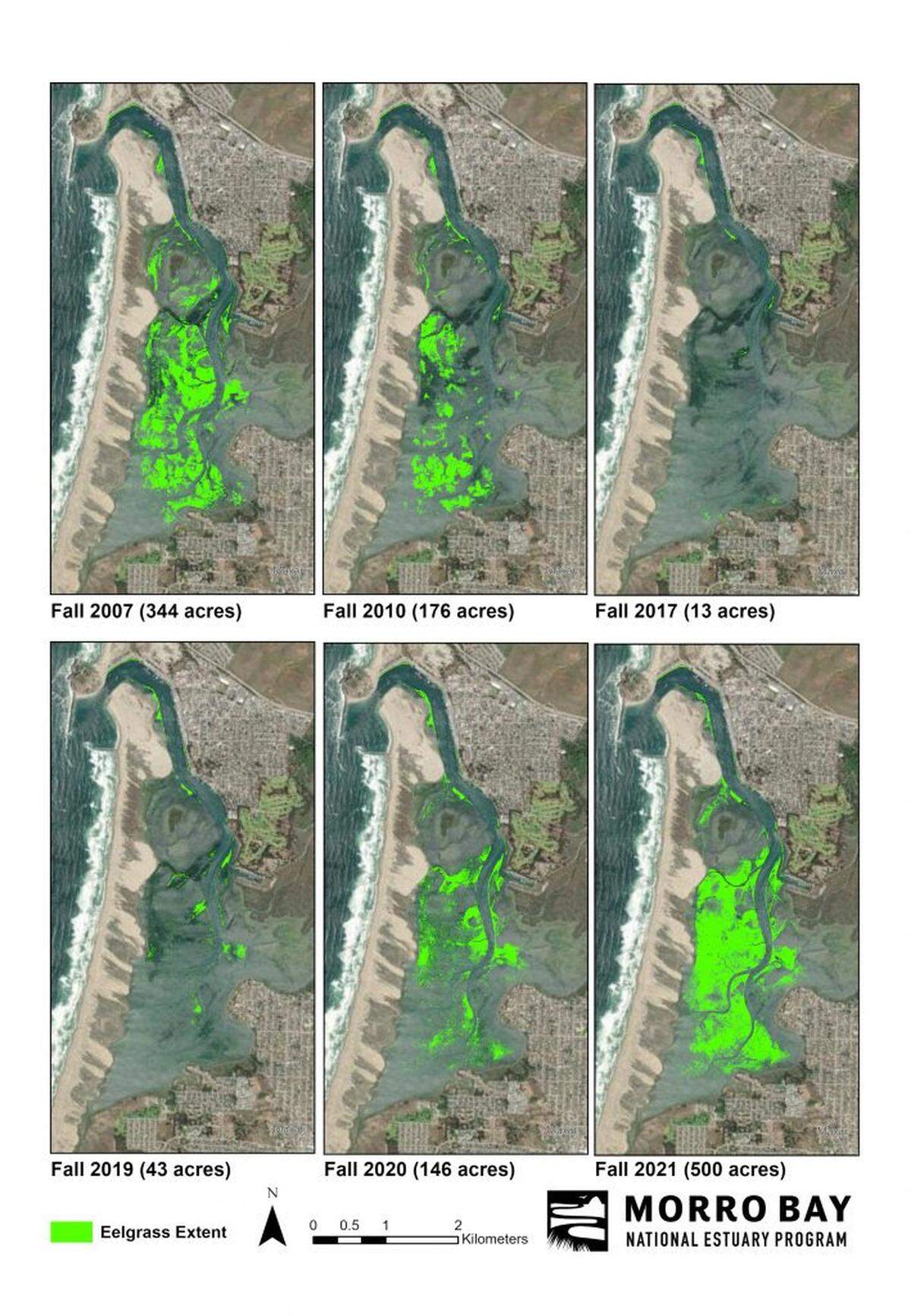
New research by the Morro Bay National Estuary Program and Cal Poly show that the important marine plant now covers about 500 acres of the estuary — up from just 13 acres mapped in 2017.
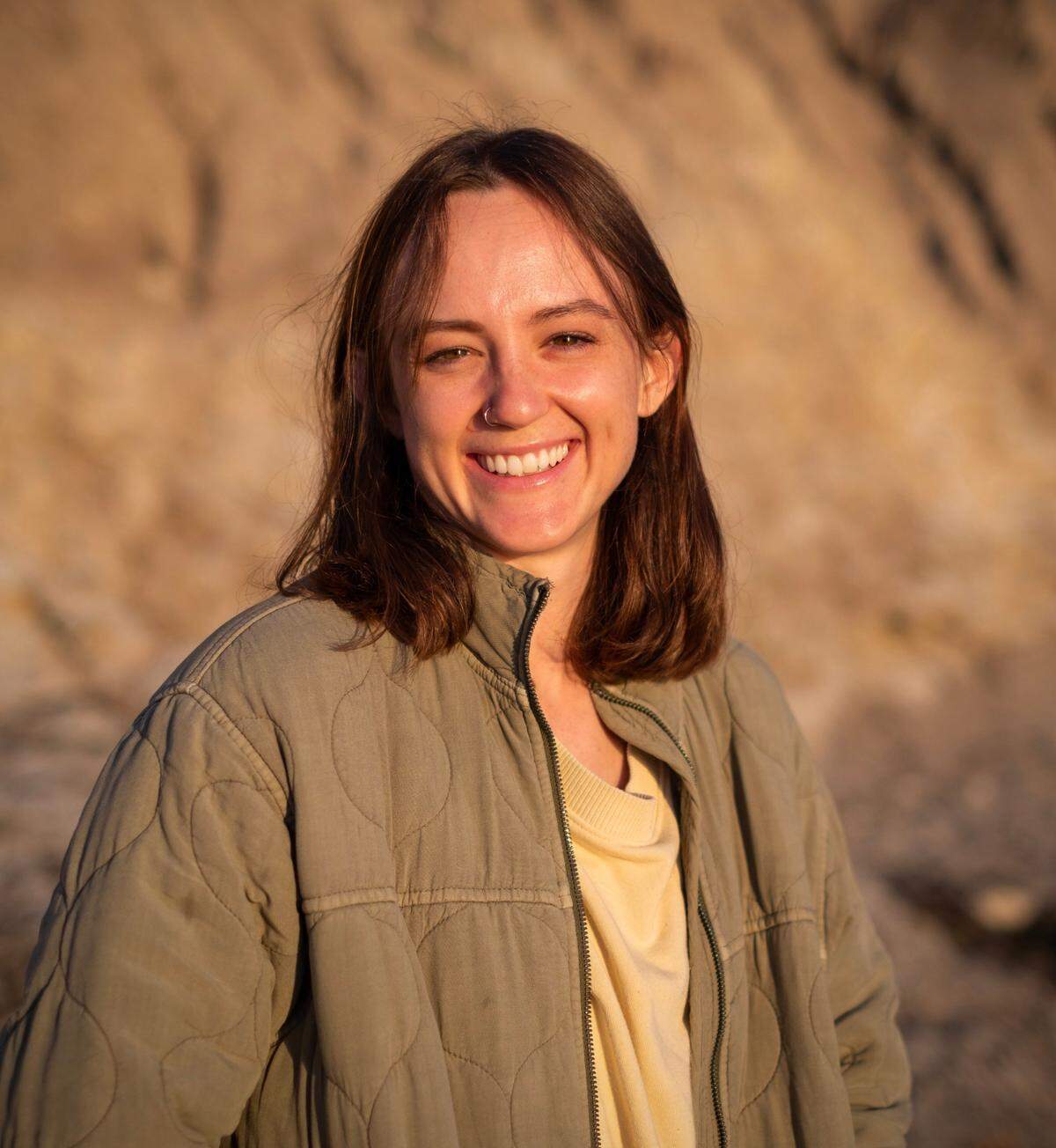
“It’s really exciting,” said Carolyn Geraghty, the national estuary program’s restoration program manager. “This is the most eelgrass we’ve ever recorded in the bay.”
Eelgrass, a type of seagrass, is an important part of the marine ecosystem within the estuary, which is where the Pacific Ocean’s salty water mixes with fresh water from creeks. The eelgrass provides habitat for fish and invertebrates, and therefore supplies important feeding grounds for various species of birds.
Plus, it stores greenhouse gases such as carbon dioxide, filters the water and protects the estuary from excess erosion.
So when the plant began to die off in the estuary in 2007, there was due concern. The plant’s cover in the estuary declined by about 90% from 2007 to 2016, according to the national estuary program.
As a result, the bay saw increased erosion, fewer migratory birds, decreased water clarity and a shift in fish populations, according to research by the national estuary program and Cal Poly.
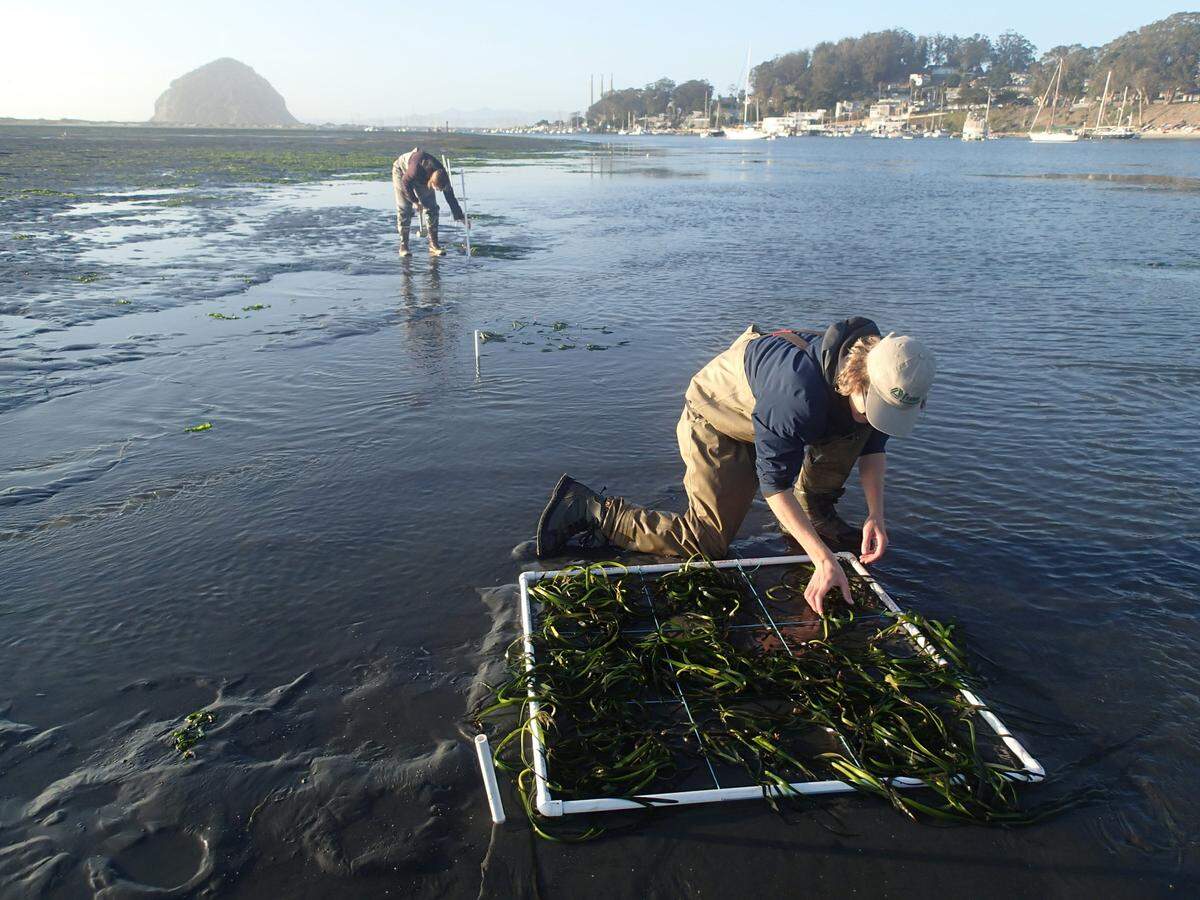
The die-off sparked a concentrated effort by the national estuary program, which partnered with Cal Poly, Tenera Environmental Inc. and many community volunteers to restore eelgrass in the bay. The national estuary program received grants for the restoration work from the state and federal government, environmental organizations and community donations.
By trial and error, the program eventually found that harvesting the eelgrass from near the mouth of the estuary and then replanting it near the back in the springtime was most successful in boosting the rebound of the plant.
“We’d been seeing small little patches of eelgrass grow since 2016, and then we had about 146 acres in 2020,” Geraghty said.
In fall 2021, Cal Poly researchers mapped about 500 acres in the estuary.
“That jump was somewhat unexpected,” Geraghty said. “We saw that our restoration sites were successful, but clearly it was also naturally reestablishing and producing seeds.”
As a result of more eelgrass in the bay, visitors may notice clearer water, more fish, invertebrates and birds, and even a fresher smelling estuary.
Additionally, the increase of the plant means that there is more dead eelgrass washed up onto the beaches and under the piers and boat docks. This is natural, Geraghty said, and only provides a minor inconvenience to boat goers who now need to navigate the dead plant detritus along the shoreline.
The regrowth of the eelgrass has seemingly coincided with a regrowth of macro algae, also sometimes known as seaweed or kelp, in the estuary as well, Geraghty added.
“We have seen, in some isolated areas, macro algae out-compete eelgrass,” she said. “So that’s something that we’re going to be monitoring more closely.”
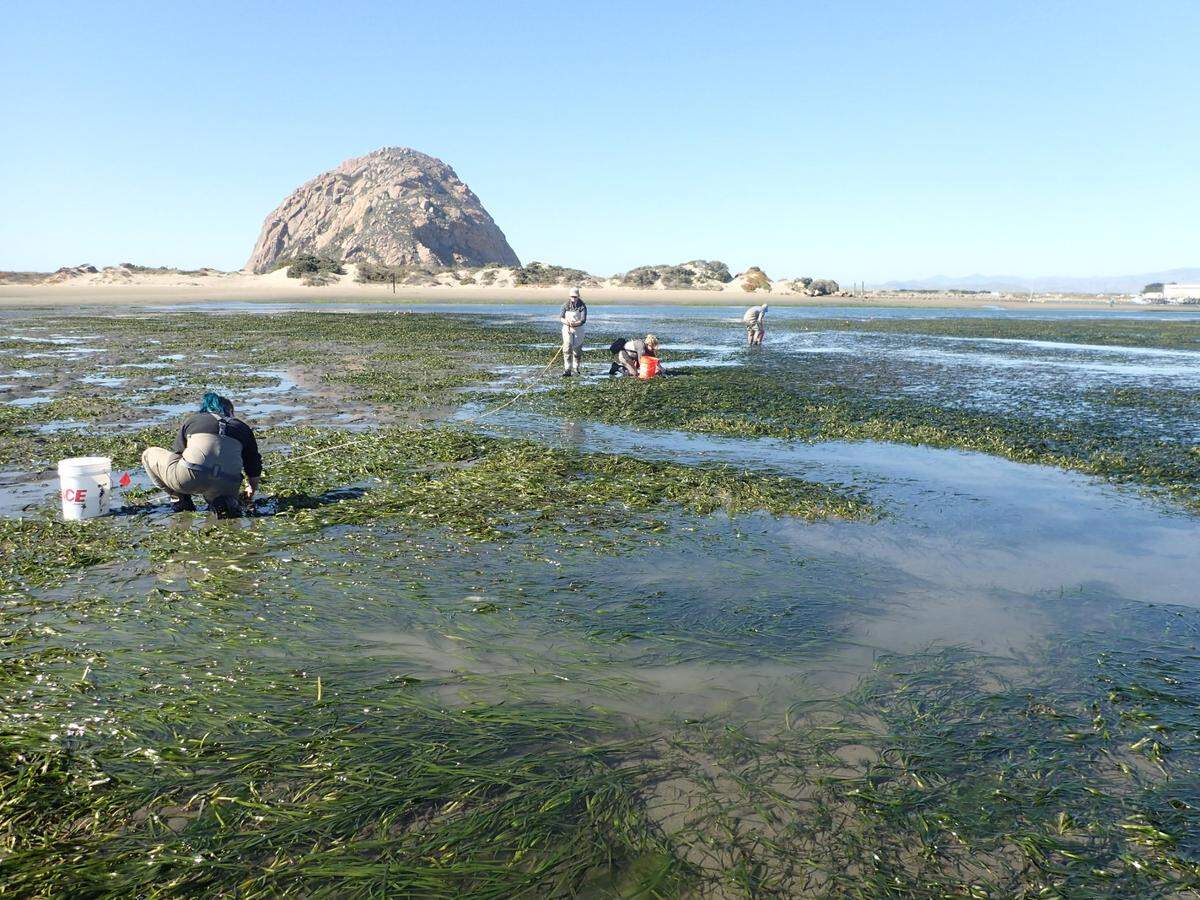
While the eelgrass restoration efforts in the estuary are now paused, the national estuary program and its partners will continue to closely monitor various conditions in the ecosystem, Geraghty said.
For example, Emily Bockmon, an assistant professor of chemical oceanography at Cal Poly, and Ryan Walter, an associate professor of physics at the university, are working with teams of students to consistently measure variables such as temperature, oxygen levels, salinity, pH, turbidity and circulation throughout the estuary.
Each of those variables will likely be impacted by the regrowth of the eelgrass, and means they may see new developments and findings within their research.
“The reemergence of the eelgrass is so new that we’re just starting to get at all of these questions,” Bockmon said of her research looking at how pH levels have changed over the years in various areas of the estuary.
“It’s a complex, multifaceted environment that requires long-term monitoring efforts to be able to capture these changes,” Walter said.
This story was originally published October 31, 2022 at 10:17 AM.