Morro Bay estuary program gets $4.5 million from EPA. How will the money be used?
The Morro Bay National Estuary Program will receive an extra $4.5 million from the federal government, helping bolster community outreach and research that could protect sensitive ecosystems in and around the bay.
The boost in money comes at an important time for the estuary, as its eelgrass population recovers from dramatic die-offs amid drought and climate change.
The new funding is coming from the bipartisan Infrastructure Investment and Jobs Act of 2021, which was signed into law by President Joe Biden last November.
In total, the federal government is providing an unprecedented $132 million to support the Environmental Protection Agency’s national estuary programs. The programs were created to protect critically important estuaries along the coastlines of the United States and its territories.
The Environmental Protection Agency decided to distribute the money evenly, thus each of the 28 existing estuary programs, including Morro Bay, will receive $900,000 per year over the next five years.
For context, total annual operating costs for the Morro Bay estuary program were about $1.37 million in 2021 and $1.4 million in 2022, according to its budgets.
The EPA provided guidelines so that each program can use the resources in ways that match the needs of their specific estuaries and surrounding watersheds — with a few rules, though.
In a memorandum released on July 26, the EPA explained that it expects estuary programs to use the funding to develop projects that help ecosystems and communities be more adaptive, and leverage additional resources for protecting and restoring critical habitats.
Eligible projects should support water quality protection and implement climate change adaptation strategies, according to the memorandum.
“We’re currently working on our plan, which is going to be informed by a lot of different stakeholders,” said Melodie Grubbs, executive director of the Morro Bay National Estuary Program.
Morro Bay’s unique ecosystem
Morro Bay is the smallest of the three national estuary programs in California — the other two being the San Francisco Bay and Santa Monica Bay.
Because the areas surrounding Morro Bay are not as heavily developed as other estuaries in the state, it has been possible for managers to control and minimize disturbances to the natural structure and ecological processes it harbors.
The Morro Bay estuary still faces its share of problems — including mass erosion, sediment inundation and a dramatic decline in seagrass. As climate change impacts get worse, this ecosystem’s capacity to recover from disturbances diminishes.
“Morro Bay, the estuary environment, is a place of change,” Lexie Bell, former executive director of the Morro Bay National Estuary Program, said in 2021. “However, the issue with climate change is that we may be forcing some of those habitats to change and conditions to change more quickly than the plants and animals can adapt.”
What happened to the eelgrass?
One of the key areas of concern in Morro Bay is the state of the estuary’s eelgrass, a type of seagrass that’s important for carbon sequestration and provides habitats for key species.
According to associate professor Ryan Walter of Cal Poly’s Center for Coastal Marine Sciences, there were about 350 acres of eelgrass meadows in the Morro Bay estuary in 2007, but that number dropped dramatically over the next decade.
Less than 15 acres of eelgrass were growing in the estuary in 2017, he said. Since then, efforts to replant eelgrass throughout the estuary have contributed to a rebound.
“We’ve seen a jump up above 100 acres again over the last couple of years,” Walter said. “So, it’s a partial recovery, but it hasn’t gone all the way (to pre-decline numbers).”
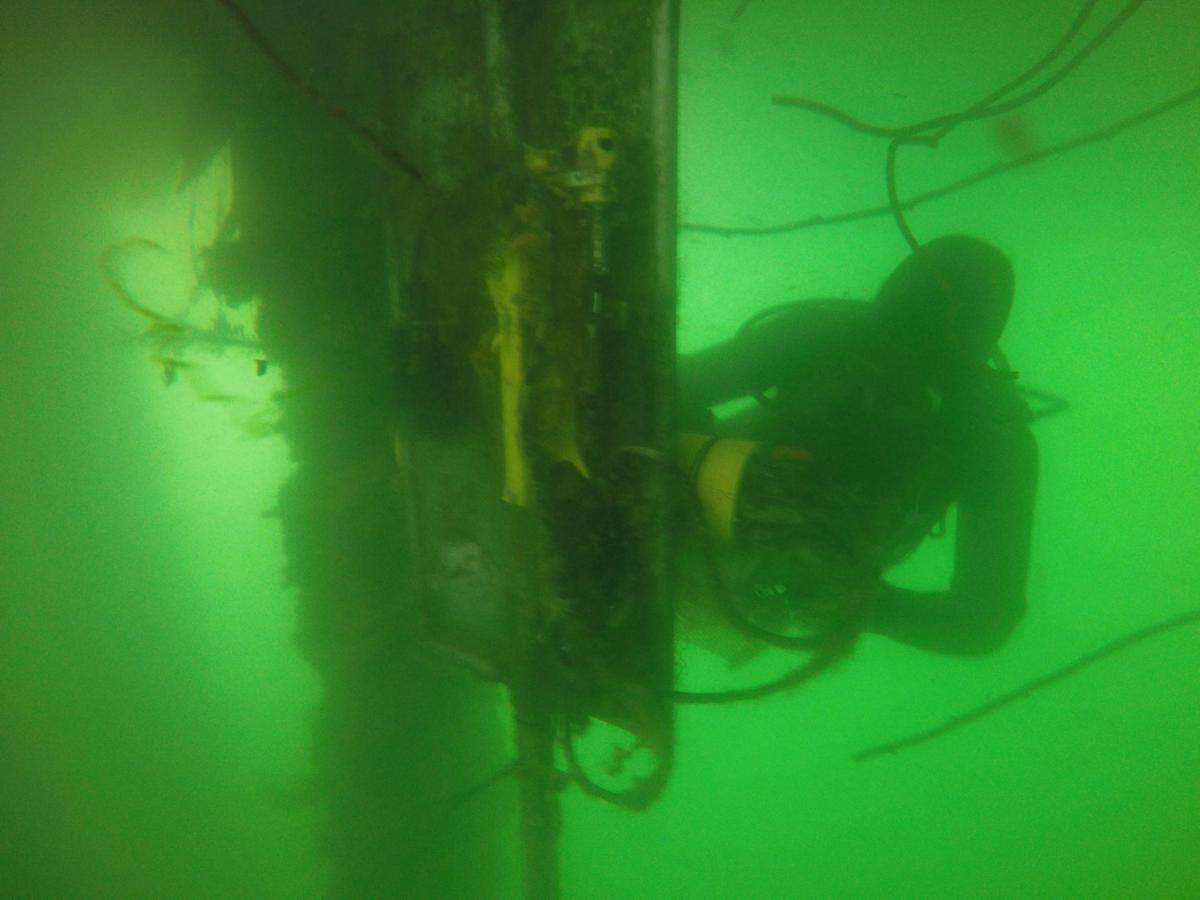
With sensors installed in various areas of the bay, Walter and his collaborator, Cal Poly assistant chemical oceanography Emily Bockmon, monitor changes in water conditions by measuring variables such as temperature, oxygen levels, salinity and pH.
They use the data to map how water conditions change over time in different parts of the estuary.
Those condition changes can be influenced by short-term factors such as the sun rising and warming up the water, or tides rising and falling. Longer-term impacts that create changing conditions in the estuary can include erosion, sea level rise and dought.
These changes may be making the water too hot, too salty or too acidic for the plants’ comfort zone.
The collapse of eelgrass in Morro Bay has impacted the estuary’s aquatic life, including fish such as bay pipefish, whose long, thin bodies make them great at hiding among the eelgrass blades. The fish don’t fare well in bare habitats.
How oyster farming can help eelgrass
Additional help for Morro Bay’s eelgrass habitat may come from a species in the estuary.
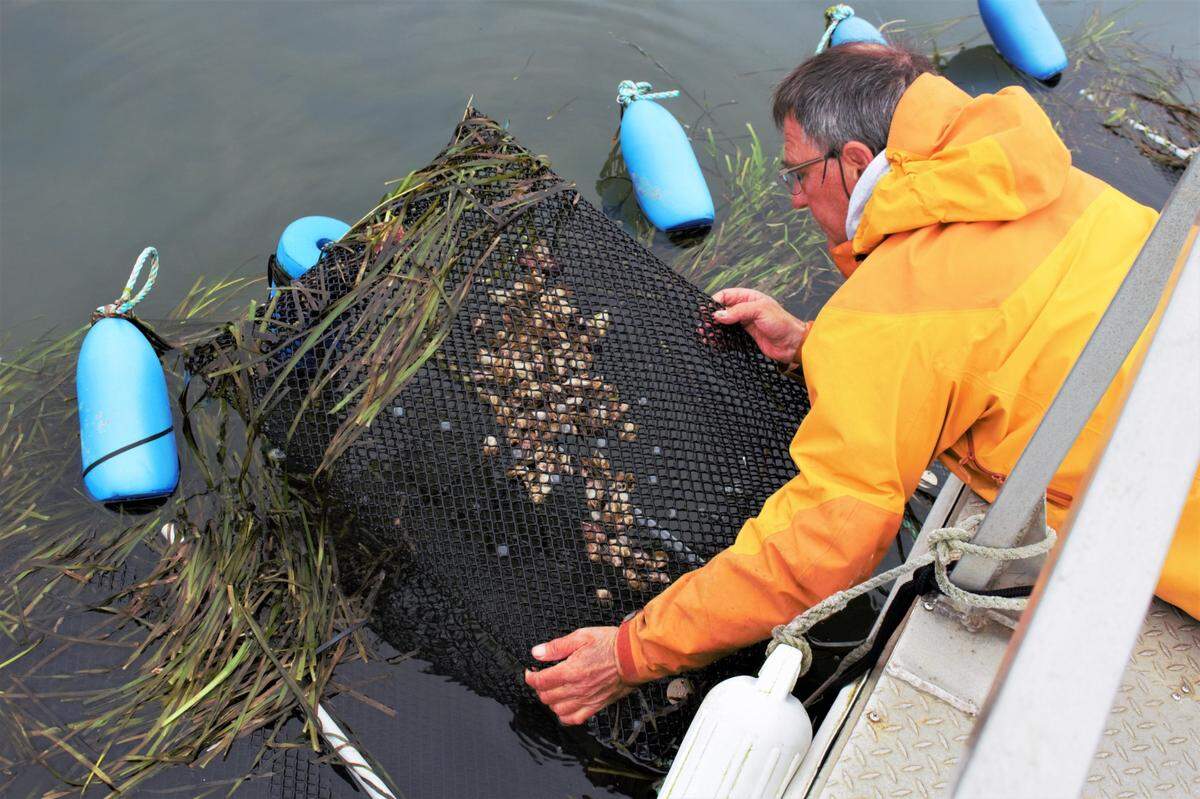
Kevin Johnson, aquaculture extension specialist with the California Sea Grant extension program based out of Cal Poly, is helping local oyster farmers boost their production while improving the bay’s water quality. That ends up supporting eelgrass restoration as well.
“An adult Pacific oyster can filter about 50 gallons of seawater per day,” Johnson said.
“As the oysters are helping filter that water to increase water clarity, that then provides more sunlight penetration for the eelgrass to photosynthesize with,” Johnson explained. “There’s a lot of potential benefits between those two groups.”
Johnson and his team are working on diversifying oyster production In collaboration with the two commercial oyster growers in Morro Bay: the Morro Bay Oyster Co. and Grassy Bar Oyster Co.
Currently, those growers are only farming Pacific oysters, which aren’t native to the Central Coast.
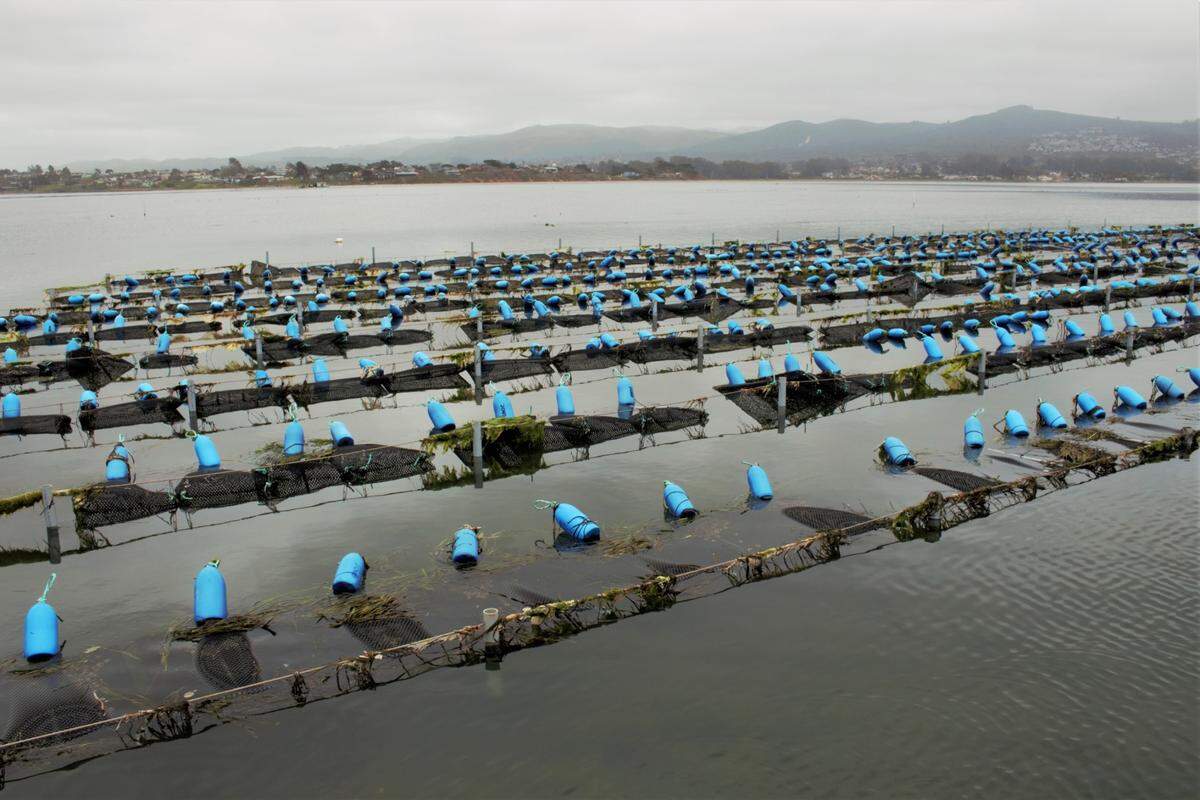
Johnson’s goal is to create the means for farmers to also grow Olympia oysters, smaller shellfish that are native to the area.
“While (the Olympia oyster) might not grow as quickly or as large as the Pacific oysters, farmers up and down our coast have become more and more interested in it,” Johnson said. “It diversifies what they’re growing on their farm, so there’s a little bit of a buffer if they have a big mortality event. Maybe some of this diversity can help them (farmers) alleviate some of those pressures.”
Like Walter, Johnson believes that acquiring more data and monitoring environmental conditions in different parts of the Morro Bay estuary is crucial for restoration success.
“If we do see mortality events, what’s driving those? Can we identify what’s driving the mortality?” he asked.
How could extra federal funding be used?
Alongside funding monitoring efforts and research initiatives, the Morro Bay National Estuary Program will have many things to consider when deciding how to allocate the extra $4.5 million coming from the federal government.
Grubbs explained that the use of these federal funds will be guided by the Morro Bay estuary program’s Comprehensive Conservation and Management Plan.
“Basically, it will accelerate things that we’ve been wanting to do in this area, particularly with a focus on building climate resilience and engaging communities, especially underserved communities,” Grubbs added.
In the July 26 memorandum, the EPA emphasized the need to “increase opportunities for disadvantaged communities to access, enjoy, and benefit from surface waters and waterways, participate in ecosystem restoration, and engage in capacity-building or educational activities.”
To meet this requirement, Grubbs explained, program staff are planning to develop an equity strategy.
“One of the ways we can do that is figuring out the impacts of our projects to different neighboring communities: Is the storm drain we’re helping improve going to serve this community?” she asked. “Is it going to make the water cleaner if we help support some of the monitoring for water supply in the region? How is that going to impact the water supply that goes to homes and help people?”
Grubbs said there are plans to upgrade the Morro Bay Estuary Nature Center, located as a way to better communicate the work that the estuary program is doing.
The center, which is on the Embarcadero in Morro Bay, free to the public. It features aquariums with live steelhead trout and eelgrass as well as information about the estuary and its watershed.
“We have a lot of tourists that come from all over, sometimes from inland communities in the Central Valley,” she said. “Figuring out ways we can connect with tourists is also an a facet of our organization.”
Another facet of the program “is protecting land and habitats,” Grubbs said “ We do this through things like preserving open space and the kind of rural nature of the Morro Bay watershed. And this can be done through land acquisition land conservation easements.”
Part of this work includes working with landowners upstream of the Morro Bay estuary to prevent erosion and stop pollution from trickling downstream.
It’s worth the work, Grubbs noted, to ensure the estuary remains a clean, beautiful and productive enclave along the coast for both wildlife and tourists.
“There are lots of things that are special about this estuary,” she said, “the vast eelgrass habitats, the nursery for fisheries, sensitive species like steelhead, and also a lot of really beautiful buffering habitats in freshwater marsh and mudflats and riparian creek systems, all throughout the watershed.”
How to get involved
Want to get involved in conservation efforts at Morro Bay?
You can find community service opportunities with the Morro Bay National Estuary Program and its partner organizations on its website mbnep.org/volunteer/#partner_opportunities.