Supervisors deny plan that would have dozens of oil trucks driving through SLO County
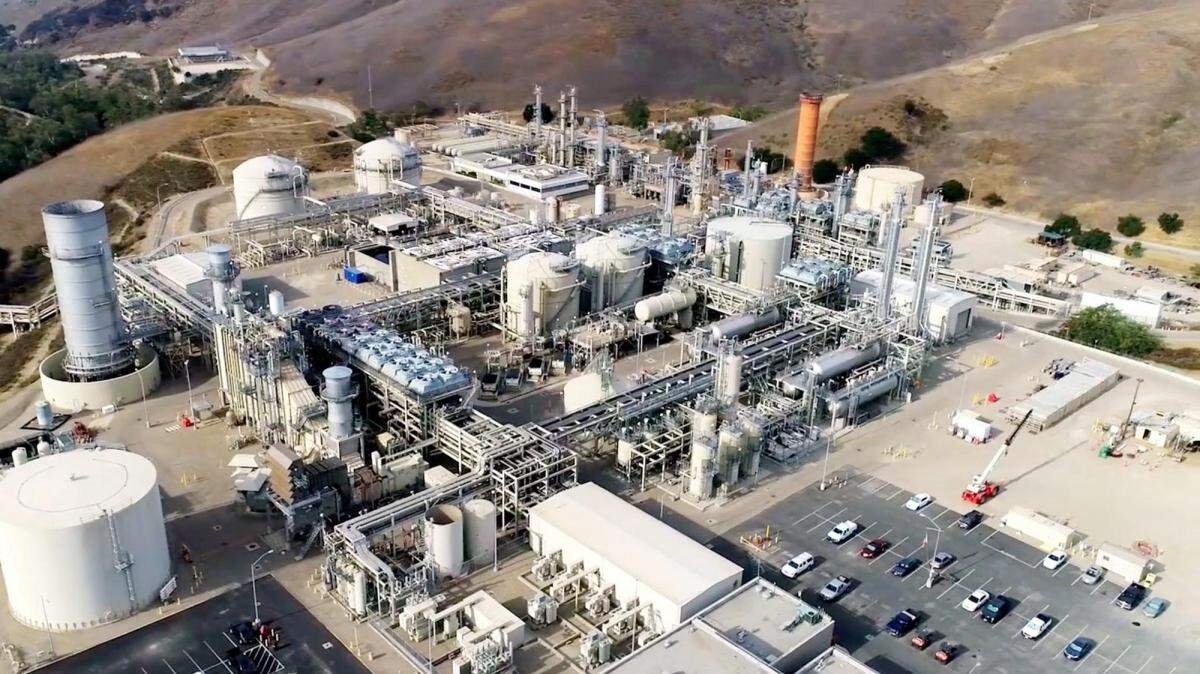
ExxonMobil’s plan to restart its offshore oil and gas operations on three platforms in the Pacific Ocean along California’s Central Coast has been stopped — for the time being.
The Santa Barbara County Board of Supervisors vetoed the oil company’s plan in a 3-2 vote Tuesday afternoon.
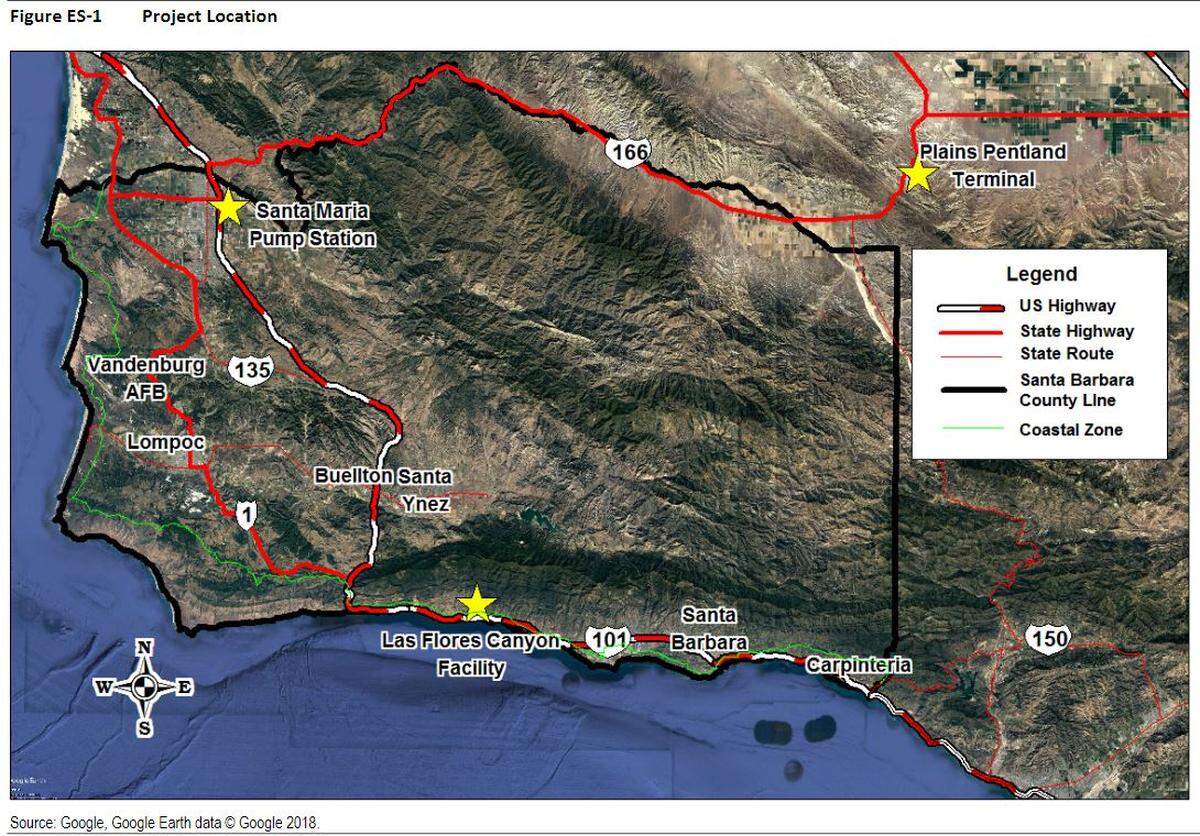
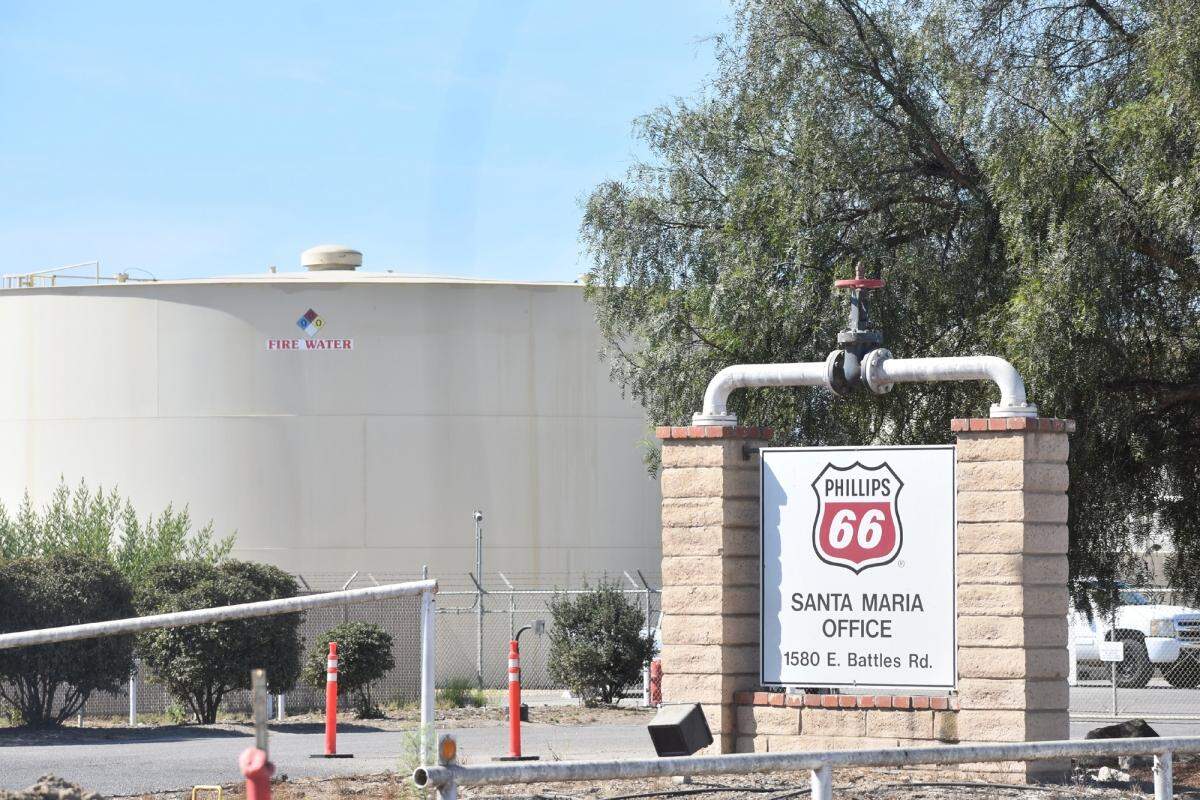
The vote nixed the energy giant’s proposal to temporarily truck oil from its Las Flores Canyon processing facility along Highway 101 to the Phillips 66 Santa Maria Pump Station in northern Santa Barbara County and Highway 166 to the Plains Pentland Terminal in southwestern Kern County.
That route would have trucks winding in and out of southern San Luis Obispo County along Highway 166, which stretches from Santa Maria, through the Los Padres National Forest, south of the Carrizo Plain National Monument and into the town of Maricopa.
Had the plan been approved, it would have allowed ExxonMobil to begin a phased restart of its oil and gas production at Hondo, Harmony and Heritage — three offshore oil and gas platforms about 12 miles west of Goleta.
Those platforms were shut down in 2015 following a devastating oil spill where 142,800 gallons of crude oil were dumped onto Refugio State Beach, causing a 10-mile-long oil slick in the Pacific Ocean, due to an onshore pipeline rupture.
Because its temporary trucking plan was denied, ExxonMobil now must wait to see if a proposed replacement pipeline system will be approved by Santa Barbara and U.S. Bureau of Land Management officials before it can restart its offshore oil production operations at the three platforms. Part of that pipeline system is proposed to be built in southern San Luis Obispo County along the Cuyama River.
Supervisors Joan Hartmann, Das Williams and Gregg Hart voted to deny ExxonMobil’s trucking plan, while Bob Nelson and Steve Lavagnino voted to approve it.
Supporters say oil company’s plan would benefit Central Coast economy
The vote came after half a day of Santa Barbara County and ExxonMobil staff reports on the plan, and hours of public testimony.
Those in favor of the project spoke about the economic benefits the project would have on the local economy as well as the expected global environmental benefits.
The project, if approved, would have potentially created about 250 jobs and generated $4.5 million annually for Santa Barbara County.
Many speakers during public comment asserted that the California-produced oil would be under much stricter environmental regulations than foreign-produced oil, purporting that the homemade oil would have a less detrimental environmental impact.
“All of us have (to stop) talking about getting rid of oil, because there’s new green energy coming,” said Supervisor Lavagnino during Tuesday’s meeting. “The reality is that — as much as we want that to happen, as much as I’ve voted for it to happen — it’s not there yet. And we have to continue to produce fossil fuels as we transition.”
Many who showed up to the meeting in Santa Maria in person or virtually via Zoom said the proposed trucking project would provide valuable economic impact to the local economy.
“This is an industry that you could take somebody without a high school education and he could make up to $90,000-$100,000 a year,” said Dennis Zermeno of Ost Trucks and Cranes. “People out there are looking for jobs — they need jobs — and these are well-paying jobs.”
Opponents say trucking plan comes with serious risks
Supervisor Hart said the jobs promised by ExxonMobil were not enough to sway his vote in favor of the trucking plan.
“The economic benefit and tax revenue that could be generated by this project pales in comparison to the economic benefits generated by our coastal hospitality industry — an industry threatened by the risk of oil spills,” he said during Tuesday’s meeting. “As pointed out by the Sierra Club, the revenue generated by the Ritz-Carlton Bacara hotel alone, a hotel that was impacted by the 2015 spill, is more than three times the county tax revenue that could be generated by this proposed project.”
Beyond the economics of the proposed project, supervisors noted the potential environmental impacts the trucking could have. Supervisor Hartmann said Highway 166 — which would have up to 68 trucks each carrying up to 6,720 gallons of oil driving on it every day had the plan been approved — is dangerous.
“In Santa Barbara County, we had 14 trucking accidents in 15 years,” she said. “So trucking is inherently risky, and on the 166 it is absolutely, tremendously risky.”
In an analysis of California Highway Patrol data, the Center for Biological Diversity found that there were 258 trucking accidents along the proposed interim oil trucking route between 2015 and 2020. Those crashes resulted in 10 deaths and 110 injuries, according to the Center for Biological Diversity.
In March 2020, a tanker truck carrying approximately 6,678 gallons of crude oil crashed on Highway 166 and spilled two-thirds of its load into the Cuyama River above the Twitchell Reservoir.
Supervisor Hartmann was also worried about the increase in greenhouse gas emissions the project could produce, despite the promise that the emissions would be offset by ExxonMobil.
“Is this really the direction to go when we are facing a climate crisis?” she asked.
ExxonMobil senior counsel Sherry Scott told the board before its vote that the oil company “respectfully disagrees” with the county’s reasons to deny the project and asserted that the decision will deny its “vested right” to operate the three offshore oil platforms.
The proposal for replacement pipelines that would allow ExxonMobil to restart such operations is currently under environmental review.
This story was originally published March 9, 2022 at 10:00 AM.