ExxonMobil revises plan to truck offshore oil on Highways 101 and 166. What changed?
The Santa Barbara County Planning Department has released a revised environmental impact report for a proposed ExxonMobil trucking plan that would effectively restart its offshore oil drilling activities near Santa Barbara.
The report needed to be revised after Phillips 66 announced in August 2020 that it would close down its Santa Maria refinery on the Nipomo Mesa and pump station in 2023.
ExxonMobil’s plan proposes allowing up to 70 trucks per day to transport thousands of gallons of crude oil from the company’s facilities near Refugio State Beach to two oil facilities.
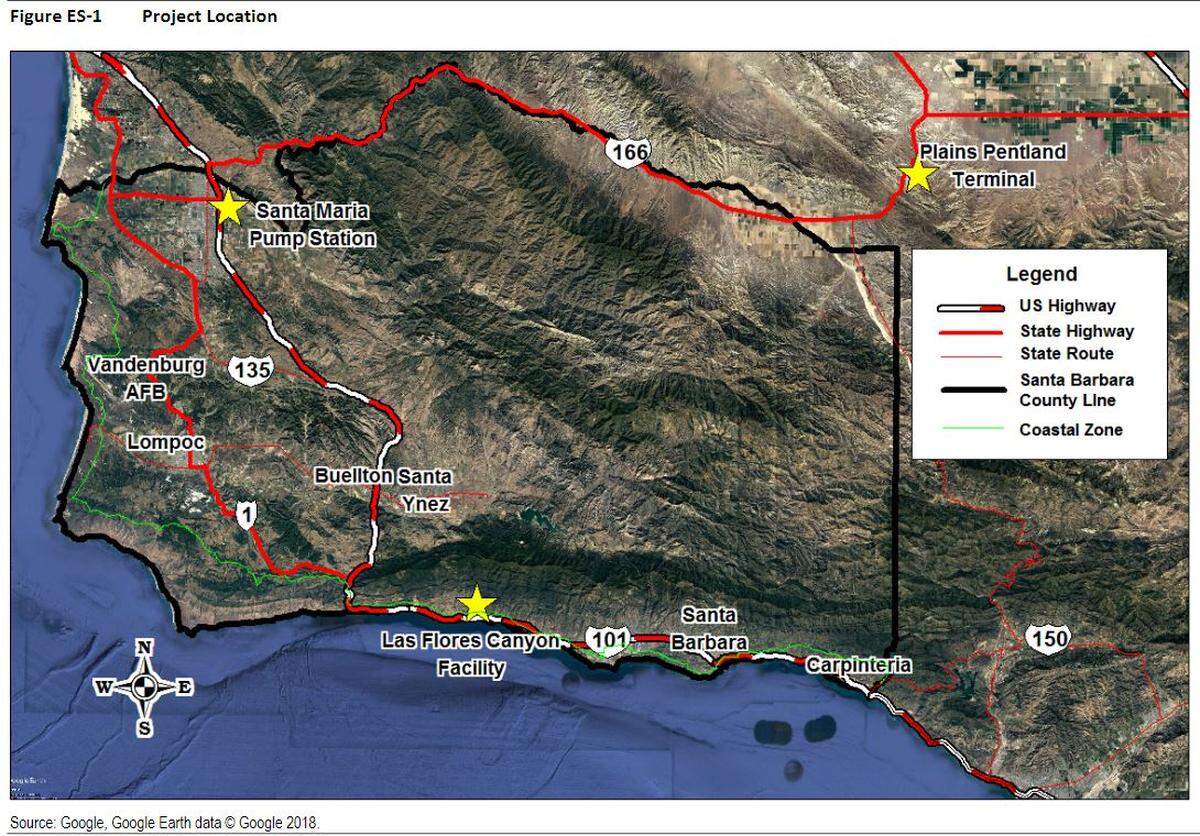
Specifically, that oil would go to the Santa Maria pump station in southeastern Santa Maria and northern Santa Barbara County, or the Plains Pentland Terminal in eastern Kern County.
Once the Santa Maria facilities are closed in 2023, ExxonMobil proposes sending all its oil trucks to the Kern County facility.
In the meantime, the trucks would take Highway 101 north from the oil company’s La Flores Canyon facility to the Santa Maria facility, and then travel east on Highway 166 to the Kern County facility.
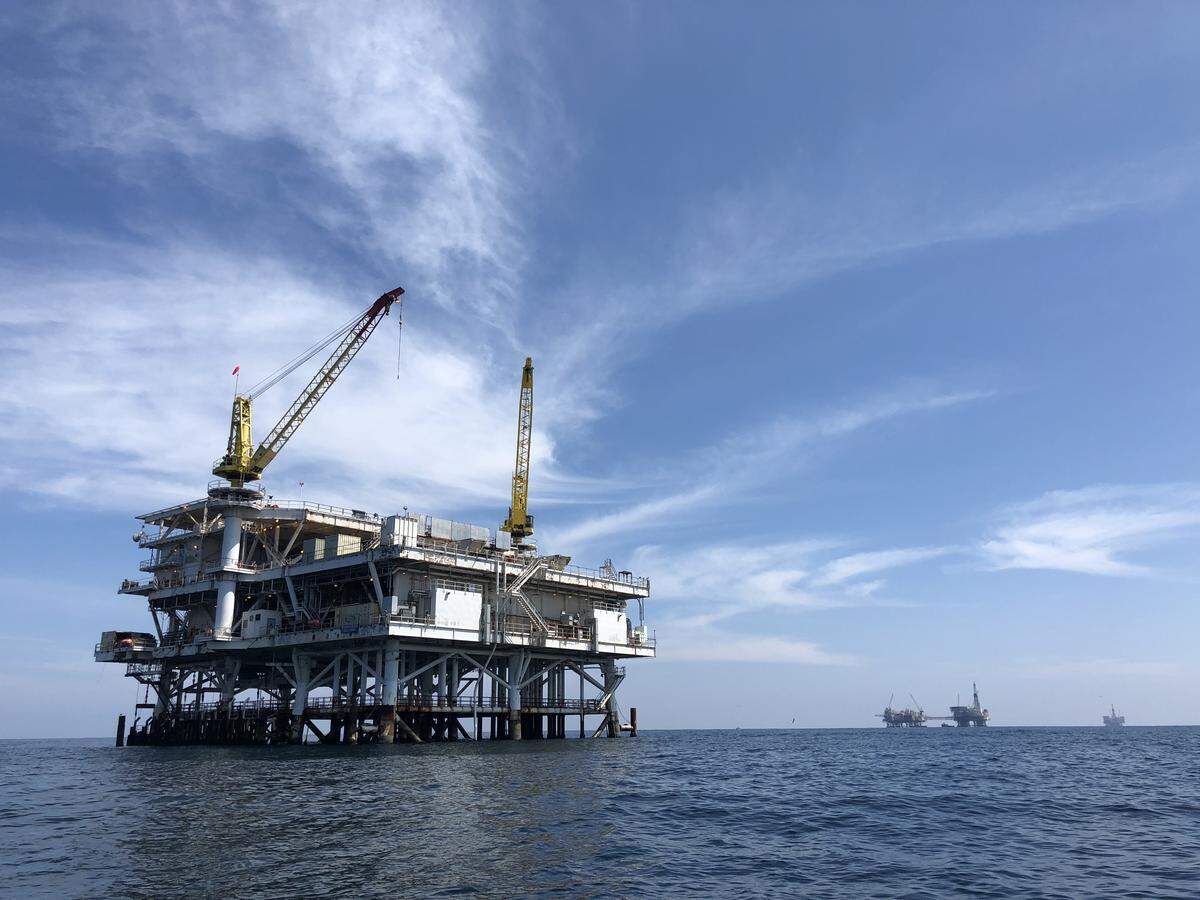
The La Flores Canyon facility, located near Refugio State Beach up the coast from Santa Barbara, would receive crude oil from ExxonMobil’s three offshore oil platforms.
Those platforms are currently not in operation after an oil pipeline carrying oil from the platforms ruptured and caused the Refugio State Beach oil spill disaster in 2015.
If ExxonMobil’s interim trucking plan is approved, a total of 25,550 trucks per year would leave the La Flores Canyon facility, each carrying up to 6,720 gallons of oil, according to the company’s plans.
ExxonMobil’s interim trucking plan is valid only for up to seven years, or until a new oil pipeline is in operation — whichever is sooner.
During that time, Plains All American Pipeline aims to get approval for a 124-mile long replacement pipeline starting near Refugio State Beach that would transport the crude oil through Santa Barbara and San Luis Obispo counties to the Kern County facility instead of the trucks.
The pipeline proposal is undergoing environmental review, and a report on those findings is set to be released this fall or winter, according to Santa Barbara County planning staff.
Already, Santa Maria and Buellton city councils have passed resolutions in favor of the interim trucking plan, while Santa Barbara, Goleta and San Luis Obispo city councils passed resolutions in opposition.
Environmental groups strongly oppose the plan.
The revised environmental impact report is up for hearings in front of the Santa Barbara County Planning Commission on Sept. 29 and Oct. 1.
What did ExxonMobil’s environmental impact report find?
In the environmental impact report released Aug. 16, ExxonMobil found no additional environmental impacts would occur due to the shutdown of the Santa Maria facilities in 2023, compared to its original environmental impact report released in July 2020.
However, ExxonMobil found in its latest environmental review that “one significant and unavoidable impact” is an “offsite accidental spill of crude oil from a truck accident that has the potential to impact sensitive resources including biological, cultural and water resources.”
The maximum crude oil spill from a truck would be about 6,720 gallons of oil extending about 0.25 acres and “would be confined to the road surface and habitat within an area of about 500 feet of the roadway where the spill occurred,” according to the report.
ExxonMobil predicts a spill of five gallons or more could occur once every 52 years for trucks traveling to the Santa Maria facility, or once every 17 years for trucks traveling to the Kern County facility.
Other environmental impacts the oil company found in its review were significant air quality, climate change and traffic impacts.
Santa Barbara County staff, environmental groups react
In its original staff report on the proposed interim trucking plan, Santa Barbara County staff indicated it would prefer a maximum of 34 oil trucks per day travel to the Kern County facility to stay within the county’s nitrogen oxides emissions limits.
ExxonMobil wishes to send a maximum of 68 oil trucks per day to the facility, according to its plan.
County staff also discussed the dangers of having the oil trucks travel on Highway 166 extensively, which would increase the likelihood an oil spill occurs.
In March 2020, a tanker truck carrying approximately 6,678 gallons of crude oil crashed on Highway 166 and spilled two-thirds of its load into the Cuyama River above the Twitchell Reservoir. The driver is now facing misdemeanor charges in Santa Maria Superior Court.
ExxonMobil’s interim trucking plan plan has faced opposition from numerous environmental groups and local organizations, including the Center for Biological Diversity, the Sierra Club’s Los Padres chapter, the Santa Barbara County Action Network, the UC Santa Barbara Environmental Affairs Board and Wishtoyo Chumash Foundation.
All say that restarting ExxonMobil’s offshore oil drilling platforms and trucking crude oil up the coast will likely have devastating impacts in the event of an oil spill.
“ExxonMobil wants to put California communities and motorists in harm’s way, just to restart its dirty and dangerous offshore platforms,” Kristen Monsell, ocean legal director at the Center for Biological Diversity, said in a news release. “It’s unbelievable they still want to use hazardous Highway 166 over the strong objections of county planning staff. These decrepit offshore platforms should be decommissioned instead of brought back to life to threaten our lives and climate.”
By analyzing California Highway Patrol data, the Center for Biological Diversity found that there were 258 trucking accidents along the proposed interim oil trucking route. Those crashes resulted in 10 deaths and 110 injuries, according to the Center for Biological Diversity.
Along with concerns over the immediate environmental impacts an oil spill would have on the land, groups opposed to ExxonMobil’s interim trucking plan say restarting offshore oil drilling at the three platforms off the Santa Barbara coast would produce enormous greenhouse gas emissions and contribute to climate change.
“As an organization representing the younger generation, we are concerned for the health and safety of our local community as well as the implications that a seven-year trucking program will have in the fight against climate change,” Soham Ray of the UC Santa Barbara Environmental Affairs Board wrote in a news release about the plan. “ExxonMobil knows that it is a significant contributor to climate change yet continues to exacerbate the problem by pushing projects like this unsafe and unjust trucking plan.”
The interim trucking plan would undermine Santa Barbara County’s Energy and Climate Action Plan adopted in May 2015, the Center for Biological Diversity said in its release.
ExxonMobil says restarted offshore oil drilling will benefit area
Julie King, operations media manager for ExxonMobil, wrote in an email to The Tribune that restarting oil drilling at the offshore platforms “would bring a number of benefits to Santa Barbara, including local jobs and millions in vital tax revenues for county schools, public safety and healthcare services.”
In the 10 years before its offshore oil drilling operations were shut down due to the Refugio State Beach oil spill in 2015, ExxonMobil paid more than $45 million in taxes to Santa Barbara County.
Lawsuits settled after the oil spill cost Plains All American — the company managing the pipeline that spilled the oil — a total of $60 million for restorative projects and cleanup costs.
King noted in her email that ExxonMobil’s proposed plan is undergoing extensive environmental review to ensure the oil trucking is done safely.
ExxonMobil said it aims to simultaneously provide the energy the world needs while reducing its emissions, helping consumers reduce theirs and advancing low-emissions technologies.
When asked how restarting offshore oil drilling fits into these goals, King wrote that the plan is necessary to meet energy demands.
“California currently uses all of the oil it produces and must import nearly 70 percent from foreign countries that don’t employ nearly as stringent environmental regulations,” King wrote in the email. “Restarting the operation will provide energy and products demanded by the California market where it is heavily regulated under strict environmental standards of the county, state and federal governments.”
King did not answer a question about whether ExxonMobil is advancing any low-emissions technologies in Santa Barbara, San Luis Obispo or Kern counties.
To submit written comments to the Santa Barbara County Planning Commission, or to pre-register to participate in the hearings, please email project planner Jacquelynn Ybarra at jybarra@co.santa-barbara.ca.us by Sept. 24, 2021.
This story was originally published August 20, 2021 at 5:00 AM.
CORRECTION: This article was corrected to accurately reflect that the Santa Barbara County Planning Department released the revised environmental impact review, and that Plains All American Pipeline is the company seeking approval for the new pipeline.