Nearly 15,000 cubic yards of oily soil to be removed from Phillips 66 refinery in Nipomo
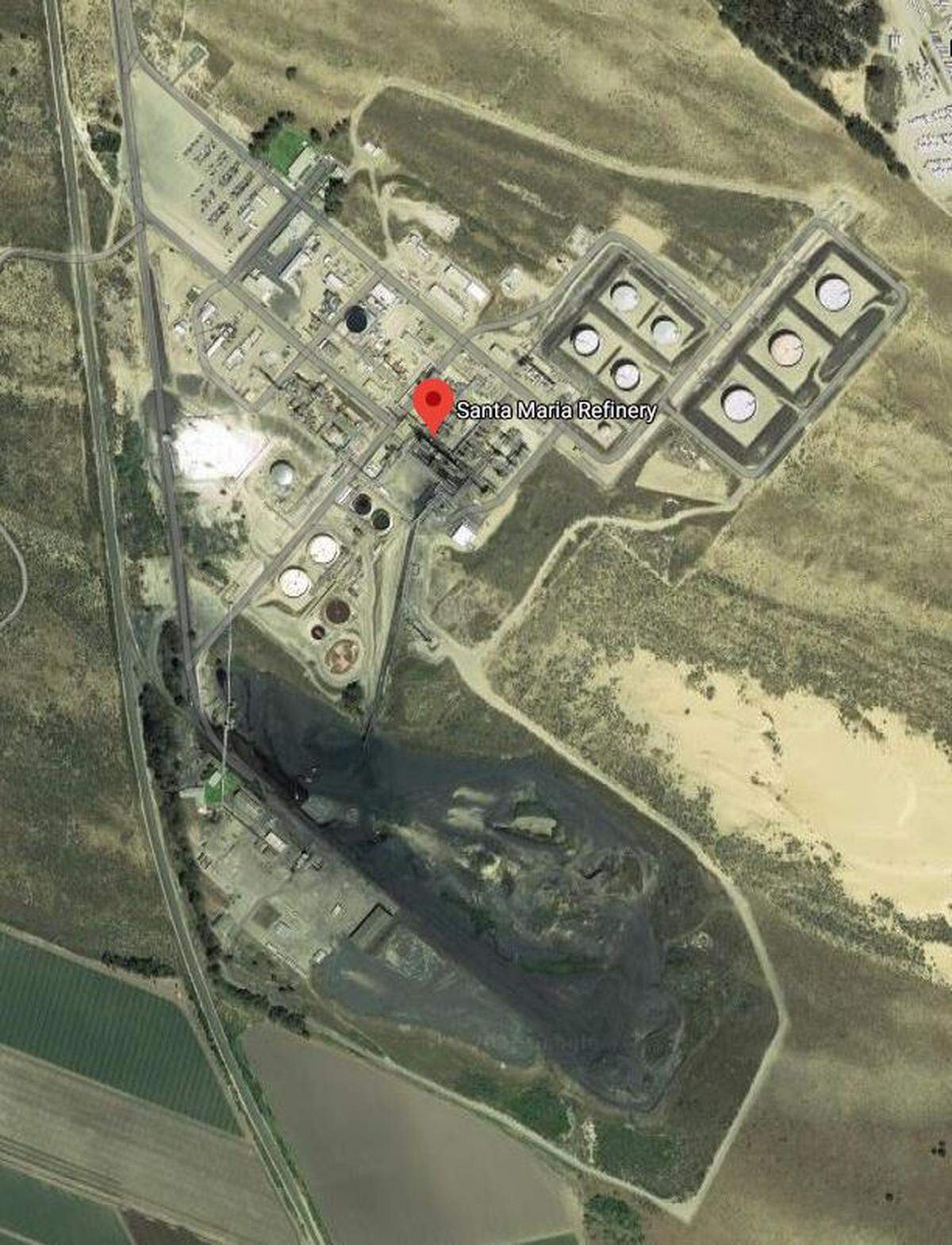
A large area at the 560-acre Phillips 66 Santa Maria refinery that’s contaminated with petroleum oil and asbestos will be excavated beginning next week, according to the Central Coast Regional Water Quality Control Board.
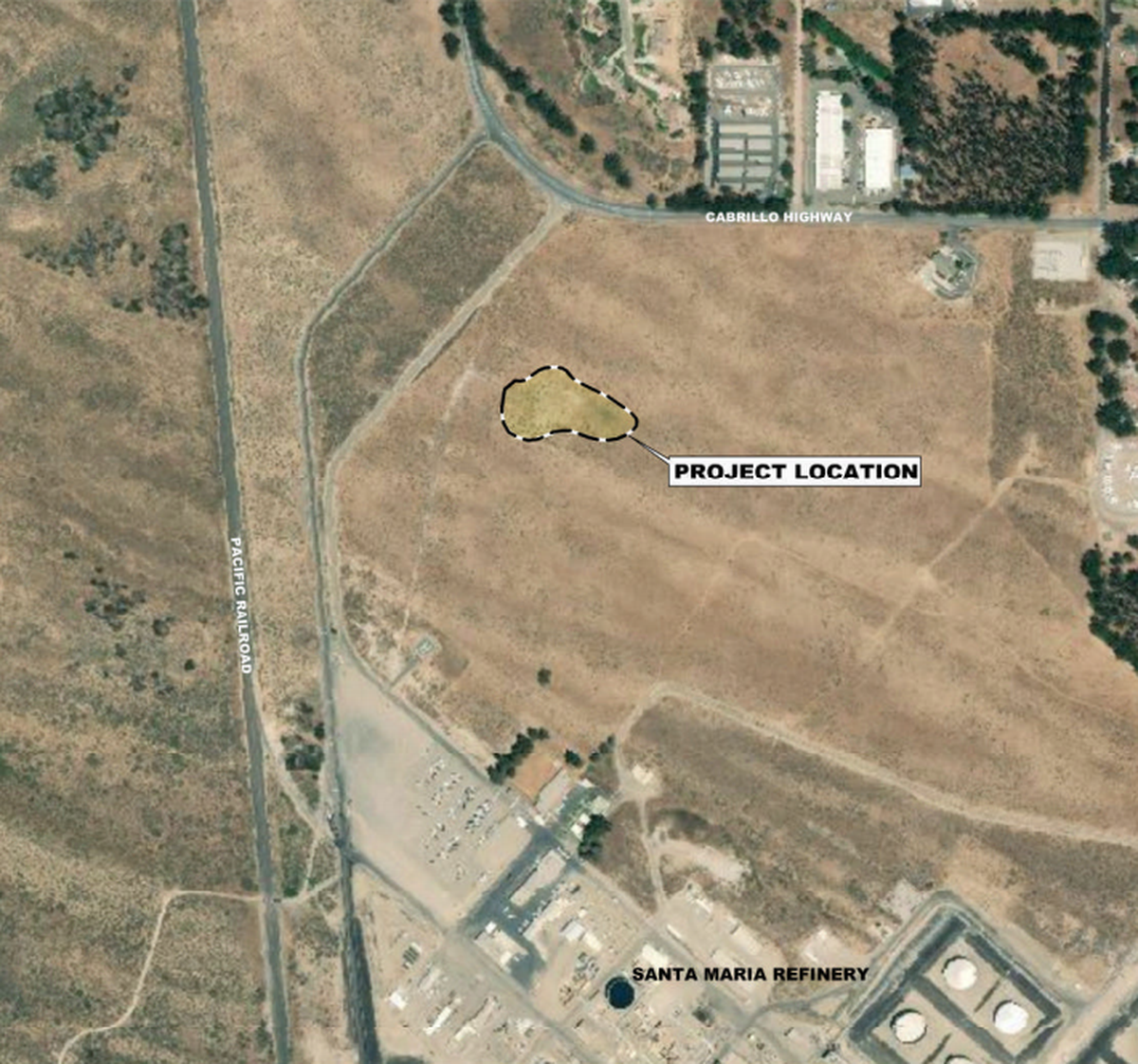
The 1.38-acre area on the northwest end of the refinery property near Arroyo Grande contains 14,520 cubic yards of “black stained sand, cohesive chunks of black tar binding the sand and fragments of asphaltic material” plus “metal debris, wood debris and fibrous materials,” according to a April report by Stantec Consulting Services for Phillips 66.
The “contaminants of potential concern” include petroleum hydrocarbons in the motor oil range, petroleum hydrocarbons in the diesel range, polyaromatic hydryocarbons, dioxins, furans and two types of asbestos: amosite and chrysotile.
All of those pollutants are toxic to humans and the environment.
The site, called the Northern Impacted Waste Site, was used for dumping waste between 1955 and 1974 when Unocal Corp. owned the property, according to the report. In 1990, an assessment of the area found the pollution was extensive, estimated to encompass more than an acre of land and reach depths of at least 15 feet below the surface, the report says.
However, not much was done to the site over the past three decades aside from more precise monitoring and analyses of the contamination.
“It is my understanding we became aware of the Northern Impacted Waste Site when the Conceptual Closure Plan was submitted” in 2019, according to Matthew Keeling, executive officer at the Central Coast water board.
The cleanup, which will begin on July 6 and is expected to be completed around November, will be closely monitored by the water board and the Air Pollution Control District.
No more than 500 cubic yards of petroleum-contaminated soil can be excavated per day, although additional contaminated soil containing other pollutants — such as asbestos — can be removed daily, according to the Air Pollution Control District.
Should wind speeds measure over 20 mph, the cleanup operations are to stop due to the risk of the contaminants becoming airborne and spreading into the nearby neighborhoods, according to the Air Pollution Control District.
A neighborhood across Highway 1 from the refinery has homes that are about 730 feet away from the cleanup site, according to an environmental study report by the San Luis Obispo County Department of Planning and Building. Those homes may be impacted by the “construction-related” particulate matter emissions that would exceed the Air Pollution Control District’s “threshold of significance,” the report says.
“The project is located in an area that has historically been subject to poor air quality conditions due to high northwesterly winds and off-road vehicle use blowing sand and dust across the dunes,” the Department of Planning & Building wrote in its report.
The contaminated soil will be transported in 26 round trips via rail car to the Republic Services ECDC Environmental Landfill in East Carbon, Utah, according to the water board.
When the soil is not being excavated, it will be covered by a tarps to ensure it does not blow into the surrounding areas, according to the Air Pollution Control District.
Once the polluted soil is completely removed, the area will be revegetated with native plants.
Members of the public can submit questions and comments to Amber Sellinger at the water board by email or letter on or before July 2 to be considered. She can be reached at 895 Aerovista Place, Suite 101 San Luis Obispo, CA 93401, via phone at 805-549-3866 or email at Amber.Sellinger@waterboards.ca.gov.
Other cleanup work at the Phillips 66 Santa Maria refinery
The cleanup work at the old waste site is just one of a few remediation efforts previously conducted and currently underway at the Phillips 66 Santa Maria refinery.
The groundwater under the Santa Maria Refinery is contaminated with a light non-aqueous phase liquid, or LNAPL, which can be a liquid such as petroleum oil. The contaminated groundwater plume extends about 3.7 acres, at a depth of 50 to 70 feet underground, according to the water board.
It is unknown when the LNAPL leak began, but a line carrying the fluid was last “visually inspected in 2006” and the leak was stopped when the line was replaced in April 2016, according to a letter sent to Phillips 66 by the water board in 2019.
Though the leak does not pose any immediate human health threats, it could have significant impacts on development in the area.
“Chemicals could travel upwards through the soil and volatilize inside new buildings, which could result in an indoor human health hazard,” according to a plan by California State Parks to develop the entire Phillips 66 refinery property into an off-roading playground.
If groundwater is withdrawn from the area under the Phillips 66 site, “such withdrawal could either directly encounter contaminants or indirectly cause contaminants in the plume to migrate, thereby expanding the size of the plume and potentially resulting in additional contaminated groundwater,” according to the plan.
Remediation efforts by Phillips 66 are currently underway, and the company had extracted nearly 3,000 gallons of the LNAPL as of January, according to Stantec Consulting Services.
There is also a large area contaminated by piles of petroleum coke — a solid material that is a byproduct of petroleum refining.
One portion of the property with 10,320 cubic yards of petroleum coke had elevated levels of nickel and vanadium that exceeded the California Environmental Protection Agency limits, according to Stantec. Both substances can have negative health impacts to humans and the environment.
Some of the petroleum coke piles were removed from the site, according to Keeling, but others remain on site.
This story was originally published July 2, 2021 at 8:00 AM.