The Central Coast has a new California Coastal Commissioner. What are her priorities?
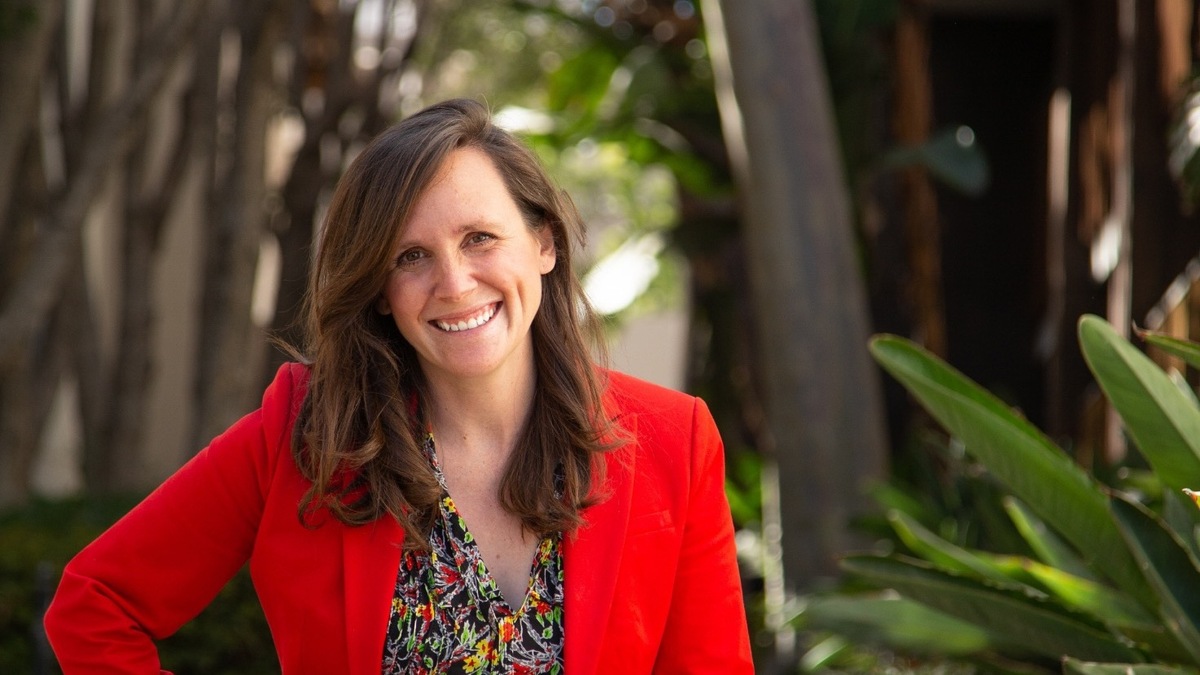
The Central Coast has a new representative on the California Coastal Commission, the state agency tasked with protecting coastal resources and access.
Meagan Harmon, a Santa Barbara City Council member, was appointed to the South Central Coast representative seat — which serves San Luis Obispo, Santa Barbara and Ventura counties — by Gov. Gavin Newsom on May 4.
The seat had been vacant since Pismo Beach councilman Erik Howell lost reelection in November.
Harmon, a 34-year-old Lompoc native and real estate finance attorney, was appointed to her seat on the Santa Barbara City Council in 2019 and is currently running for reelection in the November 2021 election.
After graduating Cabrillo High School in Lompoc in 2004, Harmon moved across the country to earn degrees at Wellesley College and Harvard University.
Before attending New York University School of Law, Harmon spent time in the Middle East and North Africa as an aid worker. Once she graduated with her law degree, she was a research and teaching fellow for a year in the Islamic Legal Studies Program at Harvard.
Upon completion of that fellowship, Harmon and her husband moved to Los Angeles in 2015 and then to Santa Barbara about two years later.
Harmon said she serves on the Coastal Commission “at the pleasure” of the governor, meaning her term does not end until she either loses reelection to the Santa Barbara City Council, leaves the council, decides she does not want to serve on the Coastal Commission or the governor removes her.
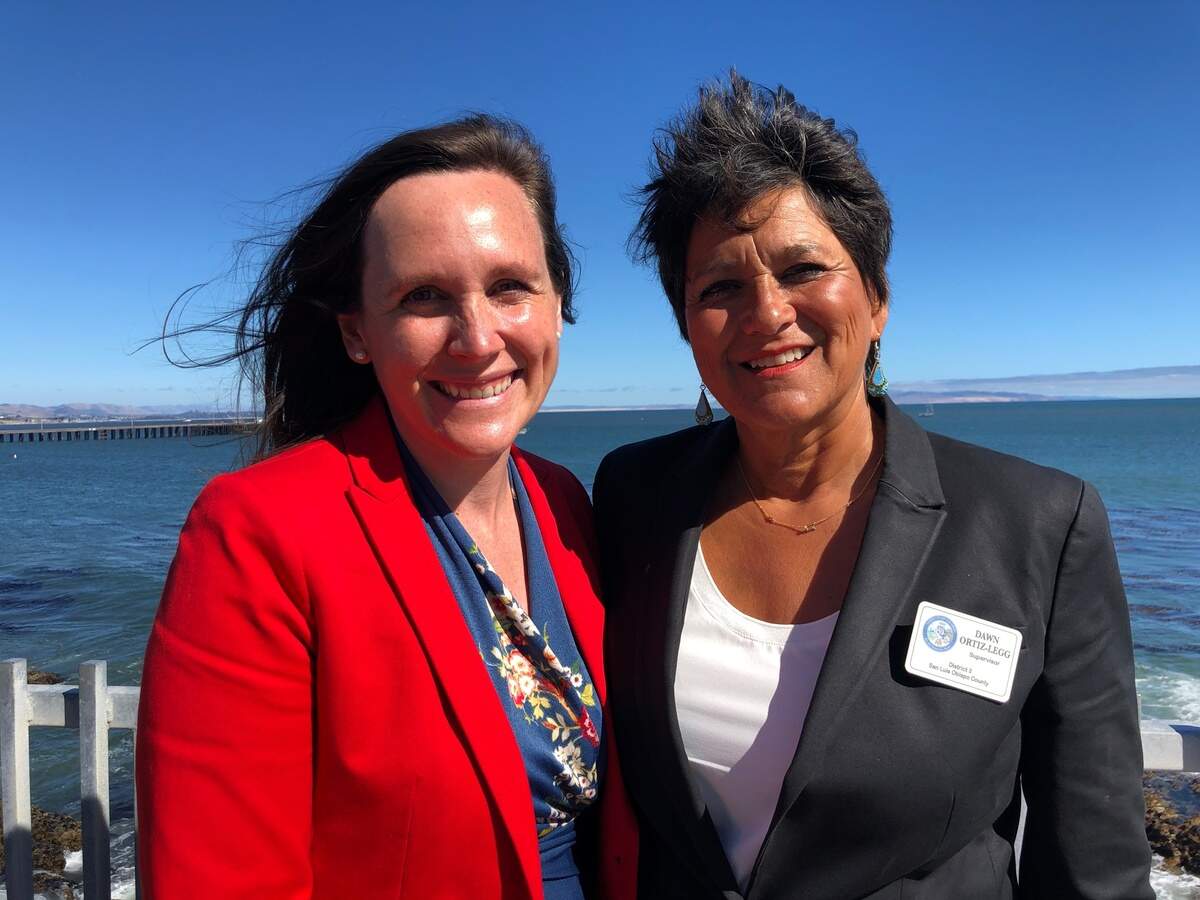
Harmon recently took a tour of San Luis Obispo County coastal sights, including Cave Landing and the Cal Poly Pier in Avila Beach, with San Luis Obispo County Supervisor Dawn Ortiz-Legg.
The Tribune tagged along for part of that tour and asked Harmon about her stance on key local issues, and her role and priorities as a coastal commissioner.
The following interview has been edited for clarity and length.
Q: Since you are a Santa Barbara resident, how are you going to approach San Luis Obispo County issues?
A: I actually was born and raised in Lompoc, which is in (northern) Santa Barbara County. And we spent a ton of time in San Luis Obispo County growing up. So I would say this feels as much to me like home as Lompoc does ... and I really love it here.
I really resonate with San Luis Obispo County in a very deep way because ... I grew up going to Pismo Beach during the summer with friends.
So while I live in Santa Barbara, this is my home. It’s just as much a part of who I am as Santa Barbara.
I love the opportunity to be back here and to work with folks that are trying to move this county forward in a meaningful way and to support their good work. It just feels like coming full circle — and it’s super exciting.
Q: How do you see your role as a Coastal Commission member?
A: I’ve spent so much time, especially during the nomination process, really thinking about who I would want to be as a commissioner (and) why I want to do it.
Really, it comes down to two things. First and foremost, my job is to uphold the Coastal Act and to give it life. I love this law, as a lawyer. ... It’s the most protective law that I think has maybe ever been written, certainly at the time that it came into being.
The other role I need to fulfill is to be the eyes, ears and voice of our regional, local governments on that body.
I think there’s, frankly, nothing more important that the elected official role on the Coastal Commission can do than to speak to the real challenges that local governments face when trying to uphold the Coastal Act.
You know how to get to “yes” in local government. You know how to be pragmatic, to make a project work. And that’s what I want to see on the Coastal Commission. That’s the voice I’m committed to bringing.
Q: The Coastal Commission recently issued a massive decision pertaining to off-highway vehicle use at Oceano Dunes State Vehicular Recreation Area, a vote that came before your tenure. How do you see the future of the Oceano Dunes?
A: This is a little bit complicated in terms of the answer I can give because the Coastal Commission is involved in litigation.
I do understand in a visceral way how important that space is to many communities here, and I understand how vital it is.
At all levels of government ... our job, really, is to make sure that all the perspectives have space to be heard and valued. ... I think so much strife can be avoided if all the parties have access to the conversation.
So that would have been my priority had I been involved in the vote. But I wasn’t and that’s behind us.
Moving forward, however this pans out in the litigation and the process that ensues, there’s obviously so much work to be done.
There’s no conversation I’m unwilling to have.
So people may feel some discomfort with why I may be talking to one person or another, but my job is to have all the conversations. And that, to me, is how we get to the best decision.
With the dunes in particular, we’ve seen there are so many parties involved that it’s clearly going to take a commitment to communication, honestly, and a willingness to compromise. I think we all have to go in with the purpose of solving the problem or sort of coming to some resolution, and that’s going to require a willingness to talk and to engage.
Q: As a real estate lawyer, are you interested in the Oceano Dunes-related lawsuits currently facing the Coastal Commission, especially the quiet title lawsuit?
A: Oh yes. It’s a really fascinating issue. And it’s not just an Oceano Dunes thing; it’s actually one of the things that drew me originally to the Coastal Commission — this exact conflict you’re talking about.
Where does the jurisdiction of the California Coastal Commission end and a private property owner’s right begin? How do we balance that?
(We are) trying to navigate that and balance sometimes conflicting priorities and figure out how we can still move forward — enacting and enlivening the law while also respecting private property rights.
As a lawyer, I’m just like, “This is an unsolvable challenge. Give it to me. I love it.”
If you look to the next 10 years in the state of California, (we’re going to repeatedly face) this question of coastal erosion and sea level rise and managed retreats. How do we balance that with private property rights on the coast? The Oceano Dunes is obviously tangential to that, but it’s the same kind of problem (that is) going to be determinative, in my view, of our state’s future.
The way that we can manage this challenge, and manage our way out of this challenge, will be essential to our state having success and thriving in the future and all of our residents thriving. Not just the few, but all Californians.
Q: How do you see offshore wind energy’s role in California’s future, given its potential impacts on communities including the fishing industry, harbor communities and Native American tribes?
A: If it’s done well, if it’s done thoughtfully, if it’s done responsibly, (offshore wind) can be an opportunity for us to really move forward and to have great success.
We want this new technology, we want this to work, we want it to work for everybody and we want it to work in the best, most sustainable way. (As a) coastal commissioner, that’s what I’m going to strive for.
I think as long as we can maintain open lines of communication and have some pragmatism thrown in there, too, I think what we’re really going to do is serve future generations of residents.
Getting the best projects is only good for the communities that are home to those projects. So it’s all to the good for us to do that.
I’m excited, we’re in a real transitional moment in our state. I just suddenly am just so thrilled about the possibilities whether we’re talking about renewable energy, whether we’re talking about affordable housing, whether we’re talking about just transition for communities who’ve been left behind economically, we are at a moment when there’s so much potential to do so much good. If only we commit ourselves to getting that “yes.”
Q: Some people are concerned that agencies including the Coastal Commission will solely look at offshore wind farming from a statewide perspective, but not from the perspective of communities such as Morro Bay, San Simeon, Cambria and Avila Beach that are going to be impacted by it. How do you find that hyperlocal focus?
A: A lot of folks have concerns about this ....
As with any new technology, we have to make sure that we also center, along with the environmental impacts, along with the economic impacts of development, the impacts to community.
That’s going to look like making sure that folks who need to be transitioned economically are at the center of the conversation, and that they’re also leading the conversation so that it’s not someone coming in necessarily and saying “Look, you’re going to do this now.” Instead, (let’s say) “Where do you want to go? And where do you want the community to go?”
That’s where we’ve failed in the past, (with) a lot of these big idea moments having a real top-down approach. I think if we reverse that model, we could have great success.
If we wait until a project is before the Coastal Commission to address how the project will impact our commercial fishermen, well, that’s a big problem. But if we’re having that conversation from the beginning, we’re far more likely to come up with a sustainable solution that everyone’s going to at least feel comfortable with, if not thrilled about.
Q: Another issue that is important to San Luis Obispo County is coastal water basin management, especially in Los Osos, San Simeon and Cambria. How do you see the Coastal Commission tackling something like this?
A: I don’t know. I’m not trying to be glib; I actually don’t know. And I don’t think anyone you will talk to will have the answer.
In the state of California ... we’re constantly battling with trying to reconcile the need to develop — the tangible needs that our residents have, whether it’s for housing, whether it’s for infrastructure — with ... what can the system bear.
I don’t know that the Coastal Commission is going to be the one to solve that. I think part of the problem for the Coastal Commission is that we’re faced with saying, “Well, this isn’t safe, or it’s truly unsustainable, or it’s not protective of the coast.”
I think (there) really does have to be an inter-jurisdictional response to this question. ...
I’m really committed to trying whenever and wherever I can to bring municipalities, jurisdictions into the fold of the Coastal Commission’s work as early as possible so that we don’t find ourselves two years after a project’s been proposed with a vote of “yes” or “no” at the Coastal Commission. That’s what frustrates people.
I’m the representative of these communities at the Coastal Commission, and I’m trying to bring the community perspective to the Coastal Commission. My No. 1 job is to uphold the law, but then to also make sure that the concerns of our local communities are heard.
This story was originally published June 29, 2021 at 5:00 AM.