
Was Cal Poly guide pulled for being antisemitic? Researcher calls it censorship
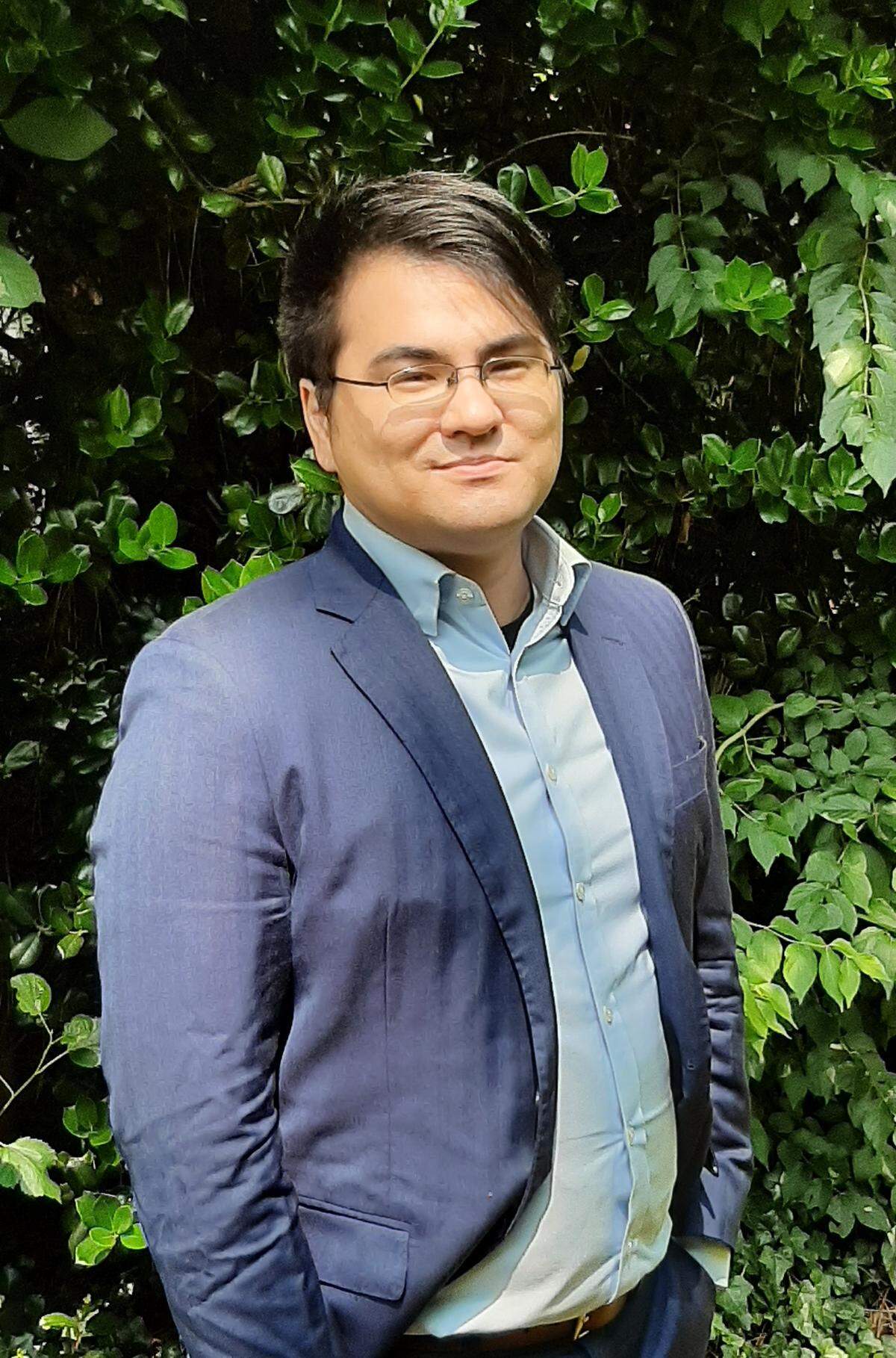
Kyle Tanaka, student success and outcomes librarian at Cal Poly, published research in late January cataloguing the history of student protests and political activism at the university.
Around a month later, however, the publication was abruptly removed from the library’s website — along with 18 others.
Tanaka received little explanation as to why the guide was removed, other than a memo sent by the dean of library services, which said that a “formal policy” for research guides was being developed as the university worked to align digital resources amid the acquisition of Cal Maritime.
“Because these guides are published on the university’s website, they are considered official university content and require appropriate institutional oversight,” according to the memo, which was obtained by The Tribune.
It wasn’t until March — when the Anti-Defamation League published a report card that criticized Cal Poly for a library research guide it said contained antisemitic materials — that Tanaka found out that there may have been another motivation behind the removal of his research.
But Tanaka denies that anything in the guide was antisemitic — and he’s concerned that its abrupt removal, apparently at the behest of the ADL, signals bad news for academic freedom.
“It creates a very strong disincentive for me, or I think, for any other faculty, to undertake this kind of work and undertake this kind of research,” he said. “Because if, without warning, your research can be pulled from you and deleted, why would you undertake those projects in the first place?”
Cal Poly spokesperson Matt Lazier told The Tribune that the publications were removed because they were “incorrectly labeled” as research guides, which are subject to institutional review.
“These publications were removed from the LibGuides platform because they were not true research guides,” Lazier wrote via email. “The university was pleased that this was brought to its attention. This has prompted the university to initiate development of a clear policy around research guides, and consultation with library personnel is planned.”
The university declined to clarify what constitutes an official research guide compared to the publications that were pulled.
What did controversial research guide contain?
After it was removed, Tanaka republished his research guide online and linked the guide in an opinion piece he wrote for Mustang News decrying the allegation that his work was antisemitic.
The guide was created in partnership with BEACoN, a research program run by the Center for Institutional Excellence that funds research projects for Cal Poly students, with a focus on underrepresented communities.
According to Tanaka, the guide aimed to collect oral history interviews with Cal Poly students about activism and political protests held on campus during the 2023-24 academic year.
The document kicked off with an introduction into the history of protests across the United States, emphasizing how opinions about political activism often change over time, before launching into a more specific history of student activism across the nation.
The guide also outlined Cal Poly’s policies around free speech and political expression, before launching into a history of what student activism has looked like at Cal Poly, and examining institutional neutrality.
The 30-page guide did not begin zeroing in on pro-Palestine protests or Zionism at Cal Poly until page 20. That section takes up approximately seven pages.
It starts by discussing a “crackdown” on campus protests between 2023 and 2025 — specifically, pro-Palestine activism.
At Cal Poly, which did not experience encampments during the period following the Oct. 7, 2023, Hamas attack on Israel, student activism manifested in other ways, the guide said, with new student groups, like Students for Justice in Palestine and Jewish Voice for Peace, forming on campus.
The guide also provided a short explainer of Zionism at Cal Poly.
“Zionism is a nationalist ideology that, broadly, maintains that Jewish peoples have the right to establish a homeland for Jewish individuals in Palestine,” the section began. “It is not a belief held by all Jews, nor is it synonymous with Jewish faith, religion, culture or ethnicity.
“In many of its forms, Zionism relies upon religious justification for its claims, i.e. that the land of Israel was promised to the Jewish people by God in the Torah (Old Testament), making it the only country in the world basing a claim to land upon divine right,” the guide continued. “Modern political Zionism is a notion attributed to Theodor Herzl, who saw the establishment of a Jewish state as the only solution to the historical and ongoing antisemitism in Europe (and around the world).”
The guide then highlighted Cal Poly’s Hillel chapter, which it labeled a “U.S.-based, pro-Israel national student organization.”
It went on to provide a short history of several pro-Palestinian demonstrations at Cal Poly, starting with a career fair protest in January 2024, a die-in protest in May 2024, and another May 2024 protest at the intersection of California and Foothill boulevards.
It did not include an incident in which pro-Palestine protesters stormed the Administration Building and vandalized the financial aid office with graffiti because that occurred in June 2025.
The section detailed short student accounts of each incident, in addition to news article citations.
“The long-term plans were to periodically update both the guide and the oral history and so would have included that event eventually, but since the guide was censored, that is no longer on the table,” Tanaka said.
In the section about the career fair protest, which it said resulted in arrests and injuries following a clash with police, the guide suggested that breaking the law can sometimes be “generally understood as the moral thing to do,” referring to historical events like the Boston Tea Party, illegal activity during the Civil Rights Movement and more.
“It is worth noting, additionally, that numerous philosophers have argued that it is both morally correct and even a responsibility (or virtue!) to engage in civil disobedience when the political state of affairs is itself unjust,” the guide said.
The section concluded with a documentation of the CSU system changing its “Time, Place and Manner” policy, including the specifics of Cal Poly’s policies around chalking, posters, flyers and temporary signage.
That marked the conclusion of the section on the Israel-Palestine conflict and its impact at Cal Poly. The guide subsequently dove into a short section on student opposition to Turning Point USA, a conservative student organization founded by Charlie Kirk.
When asked if he believed the guide contained antisemitic materials, Tanaka responded to The Tribune, in part: “I would say that what is in there is not antisemitic, insofar as what is commonly being portrayed at present is that any critique of either the nation of Israel or its actions or the idea of Zionism is inherently antisemitic.”
He continued: “As the guide itself mentions, and numerous other sources mentioned these days, I take it that neither is inherently antisemitic.”
ADL says research guide was antisemitic
Tanaka staunchly denies that his research guide contained antisemitic materials — so why did the ADL, and recently, a student who responded to Tanaka’s Mustang News opinion with one of her own, say it did?
In its campus antisemitism report card, the ADL accused the research guide of spreading “false information about Zionism” and criticizing Cal Poly’s Hillel organization.
The ADL also said the guide suggested that readers should view student organizations like Cal Poly Students for Justice in Palestine, Cal Poly Jewish Voice for Peace, the Young Democratic Socialists of America, Cal Poly Social Justice Coalition, and Cal Poly Students for Quality Education — several of which the ADL has criticized publicly — “in a positive light.”
While the report card itself did not get into the specifics of what information was false or how the guide criticized Hillel, ADL regional director Joshua Burt expanded upon those claims in a later interview with The Tribune.
According to Burt, the ADL first heard about the guide from a leader with SLO Hillel after concerns were brought forward by a Jewish student.
“This was incredibly concerning the moment I started reading it,” Burt said. “There were immediate problems with the piece.”
Primarily, Burt said, the ADL took issue with the research guide’s definition of Zionism — specifically a portion of the definition that said many forms of Zionism are rooted in religious justification, meaning the land of Israel was promised to the Jewish people by God in the Torah, making it the “only country in the world basing a claim to land upon divine right.”
Burt said that definition is not accurate, and by boiling Zionism down to religious ties, the guide ignores culture, ethnicity and ancestry.
Burt believed the guide intentionally defined Zionism in a way that would “delegitimize and malign” the Jewish community on campus.
He offered an alternative definition of Zionism as: “The movement for the self-determination and statehood for the Jewish people in their ancestral homeland.”
“That’s the land of Israel,” he continued.
As for the reported criticism of campus Hillel, the ADL was concerned that the guide defined Hillel as a pro-Israel organization, rather than a cultural hub and Jewish life organization, which Burt said played into attempts to delegitimize Hillel on campuses across the nation.
“If they can somehow kick Hillel off campus or ostracize it in some way, Jews will have less of a voice on campus,” Burt said.
Additionally, Burt said the student clubs mentioned for their activism in the research guide are also proponents of antisemitism.
All of the organizations mentioned in the guide engage in pro-Palestine activism, according to their various websites and social media platforms.
According to the ADL report card, Cal Poly removed the research from the website “only after complaints from the community and ADL,” after first offering to relocate the publication to another publicly available section of the website.
Burt maintained that the ADL cannot force Cal Poly to remove any research — that decision is made by administrators.
Cal Poly student responds to librarian’s letter
Cal Poly student Adira Fogelman, who has previously vocalized her concerns about antisemitism at the university, also spoke up about the guide, publishing a response to Tanaka’s opinion in Mustang News on Monday.
She said the concerns about the research guide did not originate with the ADL, but first came from within the Jewish community on campus.
Fogelman did not clarify to The Tribune upon request if she was one of the people who brought the concerns forward.
“Amid a global rise of antisemitism since the attacks on Israel by Hamas on October 7, 2023, Jewish students are rightfully alarmed by Mr. Tanaka’s research guide,” Fogelman wrote. “Criticism of Israel is not antisemitism — and on that point, Mr. Tanaka is undoubtedly correct.”
“However,” she continued, “the concern is not criticism of Israel alone; it is the pattern of framing, omission and representation that, taken together, contributes to an environment where Jewish students feel targeted or excluded.”
Fogelman’s opinion largely centered on the claim that Jewish community members were not consulted in the creation of the guide.
Because of that, she wrote, the definition of Zionism included in the guide was “surface-level” and resulted in “a portrayal that is incomplete at best and misleading at worst.” She cited similar concerns about the guide’s definition of Hillel.
“Given that Mr. Tanaka’s project proposal claimed that his research would ‘include representatives from relevant communities,’ it is difficult to reconcile the fact that he failed to integrate any perspectives from the Cal Poly Jewish community,” Fogelman wrote.
She also took issue with the fact that pro-Israel demonstrations held on campus received no mention in the guide, while pro-Palestine protests were included.
“One of the most concerning elements of the guide is how it appears to justify violent protests in relation to Zionism,” Fogelman wrote, nodding to the section of the guide that discussed the morality of civil disobedience against unjust political systems.
“On its own, this is a broad philosophical claim,” Fogelman continued. “But placed in the context of describing recent campus protests — including those that disrupted events and became violent — this language does not read as neutral background information of an unbiased research guide. It reads as a moral framing that justifies such behavior.”
Author concerned about censorship, academic freedom
Aside from the impact on his own work, Tanaka told The Tribune that his research being pulled from the library website raised red flags more broadly for censorship and academic freedom at Cal Poly.
Tanaka said normally, research done at Cal Poly and stored on the LibGuides platform would be protected by academic freedom.
The library memo said the university removed the research because it was publicly available, and therefore needed institutional review — but Tanaka argues that other departments at Cal Poly host content that is understood not to be university property, and is protected by academic freedom.
“So, why that didn’t apply here?” he asked. “I’m not sure.”
Additionally, Tanaka said he’s received questions from other faculty and students about what the decision means for the library’s ability to support research and classroom instruction in the future.
If a policy is created that limits the development of research guides on certain topics, Tanaka worries that would create an inequitable learning environment.
“That creates this sort of inherent imbalance where we’re supporting some faculty as long as they’re teaching on certain topics, but not other faculty as long as they’re teaching on these, you know, sort of forbidden topics,” he said.
Additionally, the library is known to host student research conducted for senior projects — and Tanaka said he’s heard from students who are worried that the university’s decision to pull his research could extend to student research in the future.
“I’ve told them, ‘I wish I had an answer for you, and I wish I could provide you with some assurance that this is not going to be censored,’” he said. “... I’m not able to give that assurance at this particular time.”
And the removal of the research guide isn’t Tanaka’s only concern.
Last week, more research Tanaka was relying on for his grant-funded research was completely deleted from the library system from its previously unpublished state, he said. The deleted materials included student research.
“All of that content was deleted by our library administration, as far as I can tell,” he told The Tribune.
This story was originally published May 15, 2026 at 12:19 PM.
.JPG)