
ADL raised Cal Poly’s failing antisemitism grade. Jewish students say it’s still unfair
Over the last year, the Anti-Defamation League has raised Cal Poly’s grade on its antisemitism report card from an F to a C — but does the critical assessment fairly reflect what’s like to be Jewish on campus?
Some Jewish students and campus community members think no, saying the score was far off to start, still too low today and not representative of true experiences at the university.
The ADL has published the annual report card since 2024, grading colleges and universities based on levels of antisemitic incidents and attitudes reported on campus after Israel was attacked by Hamas on Oct. 7, 2023.
Cal Poly originally received a failing grade in 2025, before the ADL raised the grade to a D. This year, the grade at first stayed stagnant, with the ADL assigning Cal Poly another D, before the organization raised it to a C in mid-April.
Cal Poly’s grade was raised on April 13 after the university took steps to improve the campus climate for Jewish students, ADL regional director Joshua Burt told The Tribune through a spokesperson.
While opinions about the severity of antisemitism at Cal Poly are mixed, several Jewish students and campus community members told The Tribune that they feel the grade doesn’t align with the typical lived experience.
“Last year, I didn’t agree with the D,” Cal Poly student Benjamin Broudy told The Tribune when the initial 2026 grade was released. “This year, I for sure don’t agree with the D.”
Some even worried that the history of low grades could actually erode the future of Jewish life at Cal Poly by discouraging enrollment from Jewish students in the future.
Why did Cal Poly receive low scores on ADL report card?
The ADL identified a few reports of antisemitism on campus in Cal Poly’s 2026 report card.
One incident called out by the ADL occurred in June 2025, when two pro-Palestine protesters were arrested after the university’s administration building was vandalized with messages like “Free Palestine,” “Free Gaza,” “Cal Poly Divest,” and “Let Gaza Live,” The Tribune previously reported.
“That was antisemitic for a couple of reasons,” Burt told The Tribune. “The BDS (boycott, divestment and sanctions) movement, which talked about divest, is holding Israel to a different standard, and we believe that that’s an antisemitic standard.”
“Beyond that,” he added, “it also attacks the financial aid office, which plays into an antisemitic trope of Jewish control of money. You put the two together, and it bolsters the argument that it is antisemitic.”
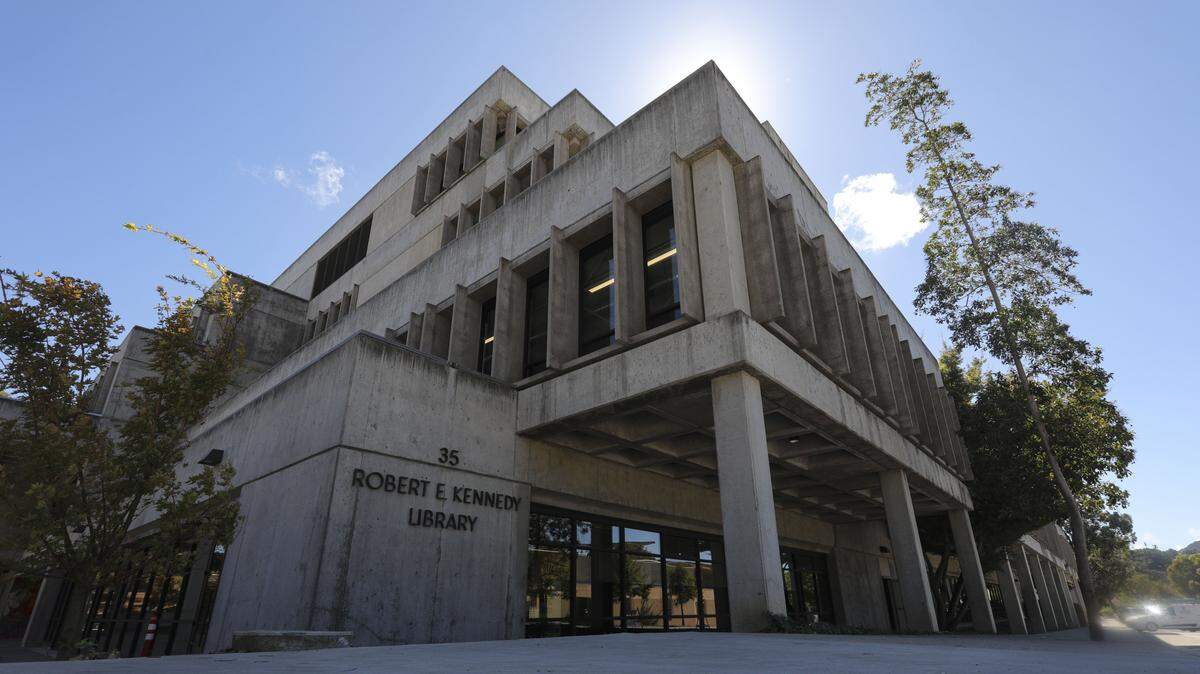
The report card also called out what it labeled an Israel-Palestine research guide, which it claimed “spread false information about Zionism and criticized the campus Hillel,” and a Robert E. Kennedy Library display it said included materials that demonized Israel and Zionism.
However, Kyle Tanaka, student success and outcomes librarian at Cal Poly, has since disputed the ADL’s take in a letter to the editor published by Mustang News on May 4 and in a later interview with The Tribune.
Tanaka said the research guide — which he authored — aimed to capture an oral history of protests and activism at Cal Poly. The guide covered events dating back to the Vietnam War, he told The Tribune. It also covered the Black Lives Matter movement and pro-Palestine activism.
“The guide, in short, offered a way for the Cal Poly community to contextualize and pursue further learning on student political activism at Cal Poly,” Tanaka wrote.
But the guide was abruptly removed from the library website in mid-February at the behest of the ADL, along with “over a dozen others,” Tanaka wrote.
Tanaka told The Tribune he was not contacted by the ADL or the Cal Poly administration with any concerns about the content of his guide.
He denied that the information included in the guide was antisemitic in nature.
“I would say that what is in there is not antisemitic,” he told The Tribune, “Insofar as what is commonly being portrayed at present is that any critique of either the nation of Israel or its actions or the idea of Zionism is inherently antisemitic. As the guide itself mentions, and numerous other sources mentioned these days, I take it that neither is inherently antisemitic.”
Tanaka added that he believes antisemitism is a real problem that affects students at both Cal Poly and elsewhere in the nation.
By mid-April, Cal Poly’s grade had been raised to a C after the university created a Jewish alumni group and signaled strong condemnation of recent antisemitic incidents.
In its grade for Cal Poly, the ADL did not specify details about the recent events or what actions were taken by the administration.
Overall, the Central Coast actually saw a decrease in antisemitic incidents this year, according to the ADL’s most recent audit, which was published May 6, SLO County saw a total of five antisemitic incidents in 2025 compared to the 18 recorded by the organization in 2024, The Tribune reported.
“The most important takeaway from ADL’s Audit data for the Tri-Counties is that incidents continue to increase significantly in towns without a major four-year university, while the cities surrounding University of California Santa Barbara and Cal Poly San Luis Obispo saw a decline in incidents,” Burt said in a news release.
While Cal Poly did not directly address its grade change, university spokesperson Keegan Koberl told The Tribune via email that the university supports its Jewish students and aims to foster an inclusive environment for all.
The university has received positive feedback from Jewish leaders following antisemitic incidents, which are investigated thoroughly, and appropriate action is taken whenever possible, he said.
“President (Jeffrey) Armstrong and university leadership maintain close and consistent engagement with Jewish students and Jewish campus and community leaders,” Koberl continued. “The feedback received from our Jewish community continues to be overwhelmingly positive.”
Some say ADL score doesn’t reflect their experiences
Benjamin Broudy and Avi Shapiro are both Cal Poly students who are actively involved in Jewish life and leadership on campus.
On campus, the two regularly wear kippot — also known as yarmulkes — and have been involved with the university’s efforts to combat antisemitism — Shapiro through direct talks with Cal Poly President Jeffrey Armstrong and Broudy by serving as a student member of the university’s new antisemitism taskforce, which was launched last year after the university received a failing grade on the ADL report card.
When Armstrong was called to testify in front of a congressional committee last year about Cal Poly’s response to antisemitism, the pair of students not only submitted a letter to the committee, but also Shapiro traveled to Washington, D.C., and sat behind Armstrong as he testified.
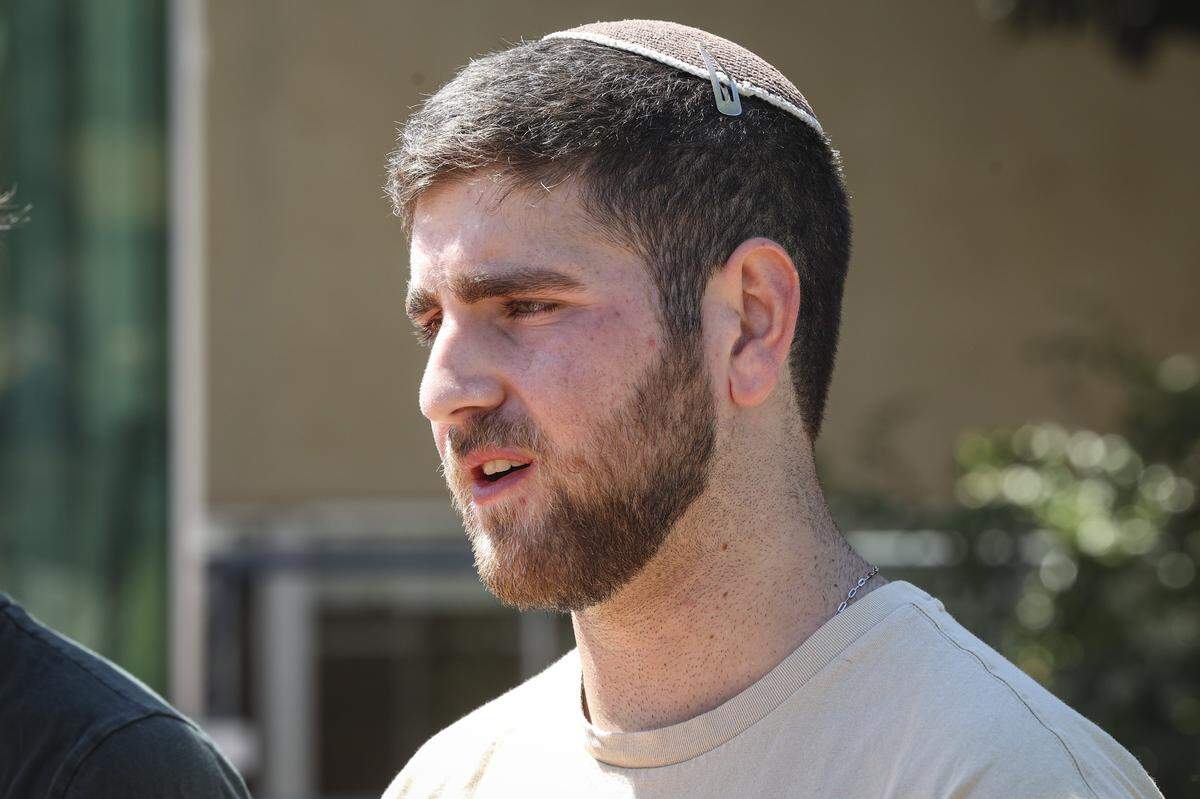
The Tribune spoke with both students in March after the 2026 report card was first published — and neither student agreed with Cal Poly’s initial grade.
On the contrary, the students pointed to Cal Poly’s thriving Jewish community.
From weekly Shabbat dinners to Jewish heritage celebrations to the kosher food truck on campus that Shapiro said serves some of the best food on campus, there are plenty of resources and community spaces available to Jewish students at Cal Poly.
Student clubs and organizations like Chabad and Hillel also provide support and gathering places for Jewish students.
“I’ve personally never felt unsafe on campus,” Shapiro told The Tribune. “I think Jewish life at Cal Poly is actually amazing.”
Broudy, a third-year microbiology major, echoed Shapiro’s comments.
Though he did experience a conflict with a professor soon after the Oct. 7, 2023, attack on Israel, Broudy said the administration’s response to incidents has improved over the last two-and-a-half years.
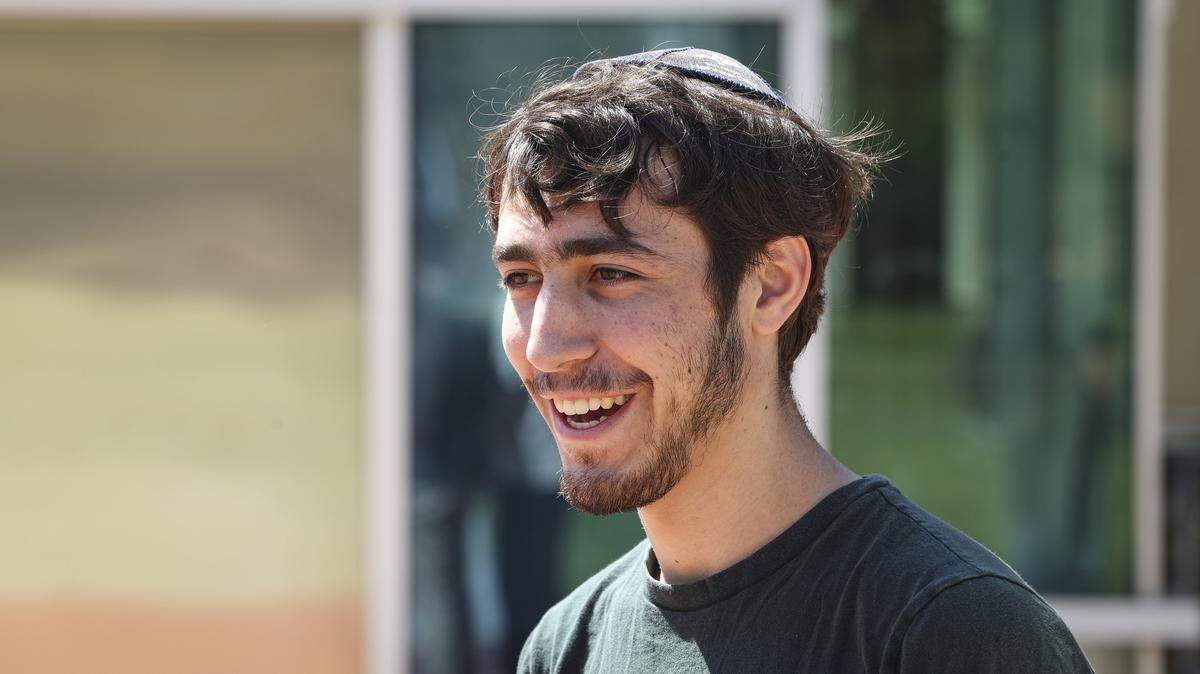
Shapiro, a fifth-year materials engineering student who’s also getting a master’s degree, added that he communicates back and forth with Armstrong about how circumstances can be improved on campus and has felt generally heard and supported in those efforts.
“It’s not just a talk,” he said. “There is action taken also.”
Both said the university could still take steps to improve the overall experience of Jewish students, including changes to the academic calendar with leeway for holidays. In addition, Shapiro said he’s been working with campus dining to create a “permanent home” for kosher dining in the future.
He also mentioned Cal Poly’s lack of an interfaith center — but said he didn’t necessarily feel that’s something the university should be docked for.
“I feel like the university does a relatively good job,” he said, adding: “There’s always work to be done.”
Could low grade damage Jewish life on campus?
Both students expressed concerns that Cal Poly’s history with negative grades could dissuade prospective students from attending the university — potentially thinning the Jewish community on campus.
The students both believed that the ADL’s criteria should be weighted more heavily on student experience to create what they believed would be a more accurate depiction of what attending Cal Poly is like.
“A negative grade like that is only going to discourage students from coming to Cal Poly, not encourage students to come to Cal Poly,” Shapiro said. “And discouraging students from coming to Cal Poly will reduce our Jewish population, reduce the proactiveness and thriving experience at Cal Poly, and it will be a negative loop.”
Broudy added: “I’m a little bit frustrated by the fact that we’re getting such a low grade — not (only) because of the work that campus administration has put in, that students have put in, such as myself and Avi — but also because I feel like it deters students from coming.”
When the grade was raised to a C, The Tribune contacted both students again.
“I’m happy the grade was raised and is more reflective,” Shapiro told The Tribune. “After speaking with the administration and the ADL, I’m confident the grade will be raised again in the future.”
Broudy, meanwhile, said the grade was still too low.
“I still believe the grade should be raised higher,” Broudy said over email. “It’s surprising to me that our campus would get a C.”
Not all Jewish students have had a positive experience in SLO
Not everyone is of the same mindset.
Third-year business administration and law student Adira Fogelman is one of the students who has documented her negative experiences as a Jewish student at Cal Poly.
In March 2025, Fogelman published an article in the Jewish Journal detailing her experiences with “anti-Israel bias” on campus, claiming that “a significant number of professors appear to be more interested in indoctrination than education.”
Fogelman wrote that the history department at Cal Poly hosted speakers who had “the same radically one-sided view of the Israel-Palestine conflict.”
When Fogelman asked that those speeches be balanced with Israeli perspectives on the conflict, she was “met with hostility,” the article said.
“The chair’s responses appeared to compare my request for a balanced discussion on this conflict to asking for a ‘balanced’ discussion on racist housing policies or the Holocaust — which I understood as implying that the Israeli perspective was morally reprehensible and therefore unworthy of consideration,” Fogelman wrote.
Fogelman said in the article that she and friends were also told by a Cal Poly faculty member: “You are Zionist, you are part of the KKK.”
In February, Fogelman spoke before the U.S. Commission on Civil Rights about her campus experiences, advocating for a review of university nondiscrimination policies — specifically within the CSU, which she argued labels some discriminatory conduct as political speech.
“As it stands, CSU appears to rely on broad free expression policies in ways that conflict with its obligations under Title VI to address severe, pervasive and objectively offensive conduct,” she told the commission.
In an emailed statement to The Tribune, Fogelman said she wasn’t familiar with the ADL’s methodology for crafting the report card — adding that “the lived experience for many Jewish students has not meaningfully improved.”
“Students continue to encounter bias and antisemitism in academic settings, and the processes for addressing these incidents remain unclear and ineffective,” she wrote. “Until there are clearer policies and stronger accountability, the underlying issues contributing to campus antisemitism will persist and resurface at a moment’s notice as we saw after the attacks on Israel by Hamas on October 7, 2023.”
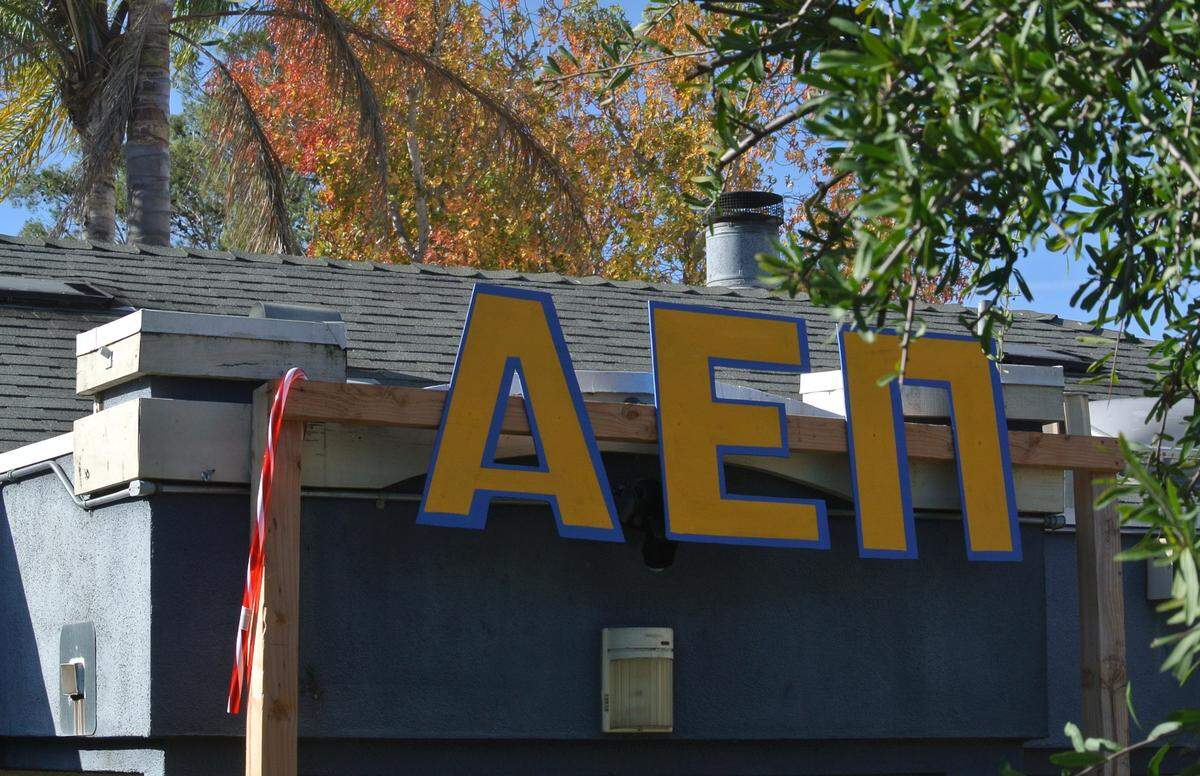
Additionally, Alpha Epsilon Pi — Cal Poly’s Jewish fraternity — was recently the target of a reported antisemitic hate crime, in which a group of men allegedly hurled slurs at the fraternity before punching a fraternity member in the head.
Lev Grezemkovsky, a first-year Cal Poly student and member of Alpha Epsilon Pi, spoke with The Tribune about his experience as a Jewish student.
While he wasn’t directly involved in the attack on the fraternity, he said the university administration responded promptly to the incident.
Still, he shared concerns about the safety of Jewish students in SLO.
“I don’t trust that, like, local authorities understand the problems that Jewish people face,” he said. “And I don’t really know if they know how to respond to them when they happen.”
Generally, Grezemkovsky said he doesn’t believe that people at Cal Poly are antisemitic, but he said he’s aware of anti-Israel sentiments among faculty — especially when it comes to the Israel-Palestine conflict.
“Certain professors definitely have an agenda,” he said. “I don’t think they do the best job at talking about Israel in a way that creates dialogue. I think it’s talked about in a way that’s very command-order, like the professor says it and the students listen.”
He added that he does think there’s a way for professors to criticize the Israeli government without being antisemitic.
“If you’re exerting effort, into delegitimizing Israeli sovereignty, that’s antisemitic,” he said. “… There’s definitely a disproportionate effort towards criticizing Israel compared to a lot of other countries. And that’s not to say … Israel doesn’t do anything wrong. It’s just kind of, it’s kind of absurd.”
Grezemkovsky said he has been involved with Jewish life on campus, serving as a fraternity liaison with Hillel and as a board member for Mustangs United for Israel.
Like other students, he’s found a supportive community of Jewish leaders and students at Cal Poly.
Grezemkovsky wasn’t previously aware of the ADL’s report card or its grading system, but he told The Tribune that he didn’t necessarily think the school deserved a D grade, though he supports the ADL and its definition of antisemitism.
He said the current C, or a B might be more accurate.
Nathaniel Carter, also a first-year student and a member of Alpha Epsilon Pi, is originally from Arkansas and said he encounters fewer instances of day-to-day antisemitism at Cal Poly compared to where he was raised.
“People here don’t really have a lot of hate,” he said.
Still, he told The Tribune he feels that the local Jewish community is “extraordinarily miniscule.”
Because of that, Carter said he would grade Cal Poly no higher than a C, though he’s generally had a positive experience at the university.
“I love Cal Poly,” he said.
What do Jewish community leaders think?
Rabbi Chaim Hilel leads Chabad of SLO and Cal Poly — also known as the Rohr Center for Jewish Life — an organization that aims to foster community and provide “a home away from home” for Jewish students.
Hilel has lived in San Luis Obispo and worked in conjunction with Cal Poly since moving here in 2009 to start Chabad.
In that time, he’s witnessed the Jewish community at the university grow significantly, he told The Tribune. Chabad’s average Shabbat dinner has gone from around 20 students in 2009 to about 150 people this year, with its latest Passover Seder reaching around 300 people.
Hilel added that he’s witnessed support from the Cal Poly administration for securing kosher food options for students, making accommodations for students’ schedules and responding to allegations of antisemitism or anti-Israel sentiments.
From his experiences, Hilel said he didn’t believe the ADL’s first 2026 grade accurately represented the lived experiences of students on campus.
“A D grade, even a C grade, wouldn’t, I don’t think, accurately reflect Jewish students’ experience,” he told The Tribune in April.
In a second interview with The Tribune after the grade was raised — and after he had a conversation with the ADL — Hilel added that he feels the report card and its goal were initially misunderstood — and he said the grade might need some tweaking to make its purpose more clear.
“The disconnect is that most people, myself included, who saw the ranking were like, ‘This is representative of what the Jewish students are experiencing,’” he said.
He continued: “For me, if students are reading it and saying, ‘Oh, Cal Poly got a D, and now it’s a C — that means it’s a bad place for Jewish students,’ then I think we need to fix that.”
Lauren Bandari, the executive director of San Luis Obispo Hillel, also spoke to the growth within the Jewish community on campus. In the four years she’s worked with Hillel, she said she’s seen student leadership interest double, if not triple.
“From the time I started at Hillel to today, the vibrancy and engagement numbers are so phenomenal,” she said.
Bandari told The Tribune that of the estimated 1,600 Jewish students at Cal Poly, Hillel served about 800 last year. The organization has also grown internally, establishing an official house near campus that is open for students to gather in community.
Amid that growth, there have also been struggles — with some students reporting rhetoric they’ve heard in classrooms that Bandari said crosses the line between criticism of Israel and antisemitism.
She credited the university for not having any encampments during the period following the Oct. 7, 2023, attack and taking its time, place and manner policy seriously. She also said that Cal Poly has provided security for Hillel events whenever it’s requested.
As far as improvements go, Bandari said the university could pull more weight in helping build bridges to foster more awareness and healthy dialogue on campus.
When it comes to the ADL report card, Bandari said she doesn’t think Cal Poly has ever deserved a failing grade, though she feels there is long-term institutional work to be done.
“I think the original playing field that it rolled out with was misaligned with what the lived experience is,” she said. “And the reality is at Cal Poly, you know, in terms of, if you’re an outsider from SLO looking at Cal Poly and you see an F grade, I think that just reads wrong.”
Bandari was proud that the category on the report card that reflects Jewish life, where her work centers, has gotten a “strong green light” from the ADL, while the more administrative and institutional categories were graded lower.
Now that the overall grade sits at a C, Bandari said it serves as a more accurate launchpad for the university to progress from.
“Cal Poly is not a place where you’re going to find some hotbed of antisemitism, though the world definitely, you know, is in a delicate, fragile place, no matter where you are right now,” she said. “Especially as it relates to Jews.”
Bandari emphasized that the ADL is a valuable partner for the university and local Jewish organizations and said she appreciates the organization’s tenacity in rooting out antisemitism across the nation.
Is the ADL report card meant to reflect lived experiences?
After this year’s initial grade was released, The Tribune spoke with ADL representatives Shira Goodman and Joshua Burt about the grading process — and the criticisms that the report card didn’t reflect student experiences.
Goodman told The Tribune the ADL has heard those complaints before — including at other universities besides Cal Poly — but said the criticisms are “not inconsistent with what we’re trying to do.”
The ADL launched its report card after the attacks on Israel to catalog incidents of antisemitism on campuses across the country — in the same manner the organization has audited antisemitism nationwide since 1979 — and measure the responses of college administrators, Goodman said.
When crafting the report card, the organization researched effective university policies and surveyed some students to get a feel for their top priorities to inform how to weigh the criteria used in the analysis, Goodman said.
When it comes time for the annual evaluation, the ADL collects incidents of reported antisemitism from the prior calendar year, sends a survey to each school asking about their policies, returns to the schools to see if there are any gaps, and also conducts anonymous surveys to Hillel and Chabad organizations to get an understanding of Jewish life, Goodman said.

But the ADL “never purported to measure the average student’s experience on campus,” Goodman said, and does not conduct representative surveys on the campuses it evaluates.
“We were purporting to measure the level of antisemitism the same way we do in the audit, and how universities were responding,” she said.
The pair told The Tribune that while the university’s grade initially did not appear to improve from 2025 to 2026 — since it first stagnated at a D — that didn’t mean there wasn’t progress made, especially since the organization does not tag pluses or minuses onto its grades.
Goodman said Cal Poly did make and act upon some promises after the release of the 2025 report card — but “those commitments haven’t been fully fulfilled, and I think that’s why they stayed at that same grade.”
To the student concerns that the report card could work against Jewish life on campus by discouraging future attendance, Goodman responded that families should consider the evaluation as “one tool among many.”
While she knows some families do use the report card to identify which universities they should avoid, she encouraged prospective students to visit campuses and talk with Jewish leaders before making a final decision, rather than relying solely on the report card.
“I wouldn’t cross any school off of a kid’s list because of their grade,” she said. “I would ask more questions. I would dig in. I would make sure that we visited campus and did talk to students and asked, you know, ‘What’s your experience been like?’”
While Goodman and Burt initially spoke before the grade was raised, The Tribune reached back out for an explanation after the change.
Burt said through a spokesperson that the ADL worked with the university after the grade was released to “ensure they were taking appropriate steps to lead to a reassessment.”
“During this period, the university established a new Jewish alumni group and showed that they were willing to strongly condemn recent incidents on campus,” Burt said.
According to Burt, ADL leaders have met with university representatives — including Armstrong, administrators, students and staff — multiple times since the report was published.
“We have continued to stay in close touch with the administration and believe they’re on the right path to continue making progress,” Burt said. “Although Cal Poly SLO has areas to improve on, the university, in partnership with ADL, Hillel and Chabad has a robust and welcoming Jewish life on campus and is headed in the right direction in its efforts to prevent and respond to antisemitism.
“The recent grade increase reflects ADL’s optimism and the conscientious work of the university.”
This story was originally published May 13, 2026 at 5:00 AM.
.JPG)