
SLO rejects grand jury report, says livability near Cal Poly is priority
The city of San Luis Obispo officially rejected the grand jury’s claims that it hasn’t done enough to curb unsanctioned fraternity activity and noisy partying within city limits.
The City Council discussed its response during a meeting Tuesday night.
The grand jury’s investigation was launched after it received multiple complaints from community members, according to an investigation report released in June. These involved student-related disturbances like loud parties and fraternity activity occurring in neighborhoods where fraternities aren’t legally allowed to operate, and alleged that the city and university had ignored concerns from citizens and weren’t fully enforcing local regulations.
The jury’s investigation ultimately found that the city had largely failed to effectively manage partying, noise levels and unsanctioned fraternity activity — but the city disagrees with those conclusions, officials unanimously decided Tuesday night.
Still, councilmembers said they wanted to make it clear they weren’t taking the issues raised by the investigaton lightly.
The city instead said it is actively working to mitigate community tensions and crack down on neighborhood disturbances. Officials also called out the grand jury for “factual inaccuracies” within its report, which the city notified the jury of prior to the report’s release.
Ultimately, some officials said they were grateful for the grand jury’s investigation because it pushed Cal Poly — which was not a subject of the investigation because the university is outside the county body’s jurisdiction — toward solving town-gown issues.
Mayor Erica Stewart said: “I think what our community needed was this grand jury report for Cal Poly to actually be willing to come to the table and sit and say, ‘OK, we have to do this now.’”
SLO officials deny grand jury findings
The city’s official response approved by councilmembers Tuesday night rejects all six of the grand jury’s findings.
First, the city denied the assertion that it had failed to effectively manage large, unsanctioned parties — St. Fratty’s Day being the prime example used by the grand jury.
The city said it has tried for years to manage the annual party, which in past years has erupted into a street party and led to injuries and property damage. The work and learning of past years led to a more successful effort in 2025, the city said, when a heavy law enforcement presence combined with an on-campus event hosted by Cal Poly prevented students from gathering in the streets.
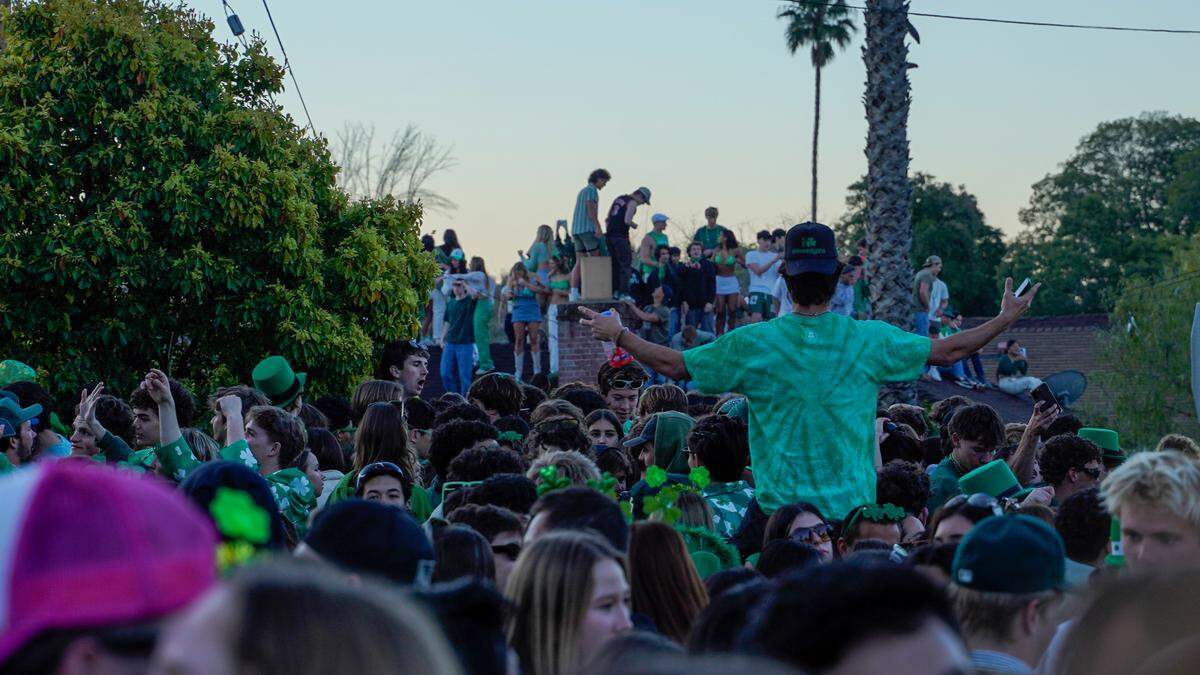
This success was thanks to years of planning by city staff — and to Cal Poly, for taking on more responsibility than it has in previous years, the city said.
The grand jury also said the city failed to effectively engage with community members to find solutions, and hasn’t fully enforced its zoning regulations or conditional use permits for fraternities. The city denied each of these allegations, pointing to multiple avenues for community engagement, and to the fact that the Planning Commission already revoked three fraternities’ conditional use permits this year after noise complaints.
As for zoning enforcement, the city said it is difficult to identify and confirm where unsanctioned fraternities might be operating, due to legal limits that prevent government officials from asking certain questions about residents of a private home.
“Proactively monitoring private residential properties would not only exceed available resources but also risk eroding public trust and infringing on privacy — values the city is committed to upholding,” the city wrote.
The grand jury also said the city’s appeal fee structure is prohibitive for citizens trying to file complaints — but the city said that isn’t true. The fee structure identified by the grand jury is used only for formal appeals, not noise complaints or safety concerns.
“It is free for any member of the public to report a potential zoning or conditional use permit (CUP) violation,” the city wrote. “Once a complaint is submitted, city staff investigate and, if a violation is substantiated, may initiate enforcement action or bring the matter before the Planning Commission—at no cost to the reporting party.”

The grand jury’s final finding accused the SLO Police Department of not fully cooperating with the jury’s investigation.
“While one sworn officer did participate in an interview, efforts to interview two additional sworn officers were unsuccessful,” the grand jury wrote. “This unwillingness to engage hindered the grand jury’s ability to corroborate statements, obtain essential information, and maintain transparency in its oversight role.”
The city, however, says it gave the grand jury “unimpeded access” to records, Police Chief Rick Scott and the department’s public affairs manager. The city also provided thousands of data points, it said.
The Police Department did reject requests for voluntary interviews with lower-level officers because the city believed they were “not appropriate or necessary,” since the jury had already interviewed those most knowledgeable, according to the response document.
The grand jury’s investigation also included seven recommendations for the city, including that it work to eliminate St. Fratty’s Day, proactively address future unsanctioned parties, develop a process to identify satellite fraternities and adopt more uniform conditions for fraternity conditional use permits.
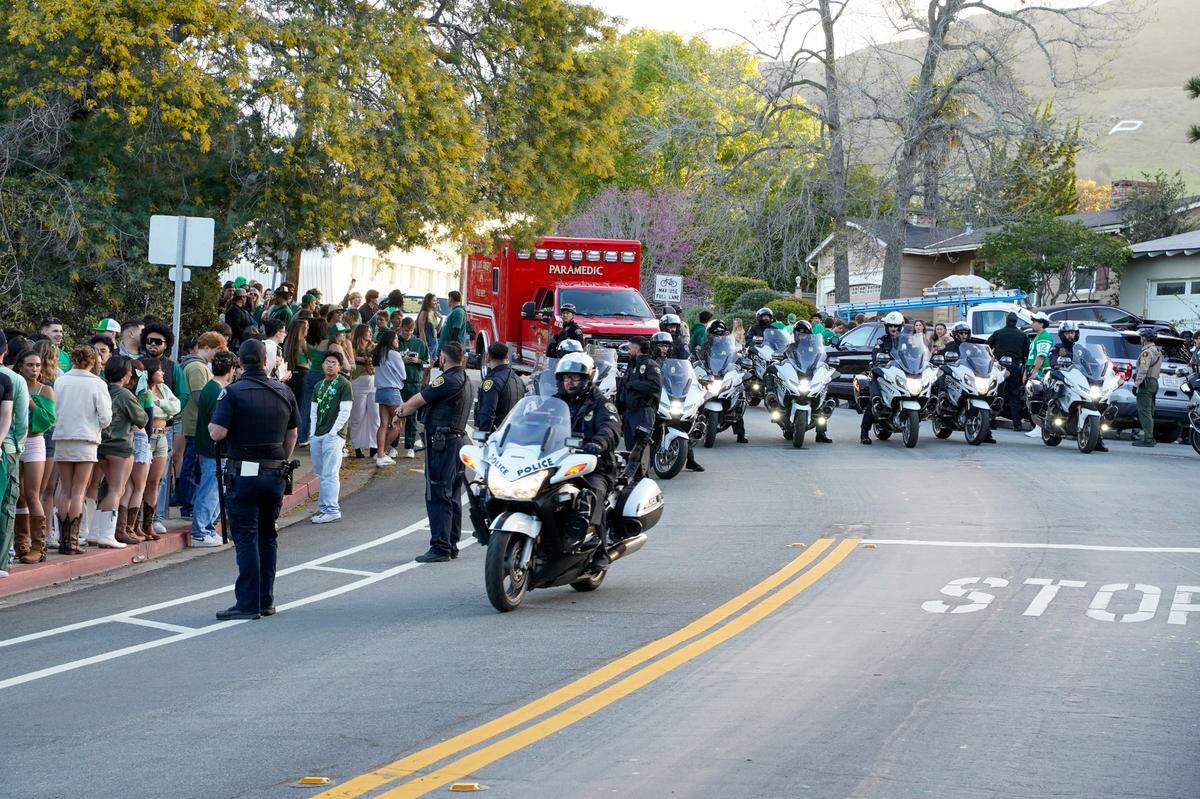
SLO said it already implemented most of the recommendations.
The jury’s recommendation that the city change its appeal fee structure will not be implemented, the city said, because it isn’t necessary, based on the explanation that citizens do not have to pay to file noise or safety complaints.
Similarly, the city said the recommendation that it train the Police Department on how to respond to the grand jury is not warranted.
The final recommendation encouraged the city to explore a student overlay zone. That would allow the city to create different requirements for the areas near campus to better address the needs of residents and the campus community, the jury said.
The city said it won’t immediately implement that recommendation, but is working toward similar goals.
Though the council rejected much of what was in the grand jury’s report, members said they’re committed to solving the problem at hand. They also hoped the investigation would serve as a launchpad into better collaboration with Cal Poly.
“Even though this report, if you read it, might look like we disagree with everything and we are not implementing the things that have been recommended, we really all do care about all of these things,” said Councilmember Michelle Shoresman.
“We hear you, and we’re going to keep working on it,” she continued.
There was no public comment on the item during Tuesday’s meeting.
.JPG)