
Cal Poly students design device that uses waves to charge batteries
Cal Poly students took to the seas Thursday morning to test a device that could one day harvest the energy of waves to charge batteries.
A team of mechanical and electrical engineering students have been working on the project since October, when the U.S. Navy approached Cal Poly, according to electrical engineering student Julian Steele.
The Navy is working with the team to develop the device, Steele told The Tribune.
The goal of the project, Steele said, is to develop something that can be easily deployed by two people and can be used to recharge batteries using energy in the water that already exists.
“The idea is to not have any impact on the environment, where we’re not dragging anything on the bottom, we’re not putting any petroleum products in the water,” Steele said. “The idea is, it’s just something like a kayak or person kind of bobbing on the water.”
First launch shows promising future for device
Three boats deployed in the Morro Bay harbor Thursday morning to watch the prototype — called The Expeditionary Ocean Power Generator, according to a Cal Poly news release — in action for the first time.
Steele said the device has a generator inside that spins as it makes contact with waves.
The system is then supposed to store that energy and transfer it to a battery inside the device, where a computer sits to track the energy transfer. The battery stored inside the device on Thursday was the type typically used to power small drones, Steele said.
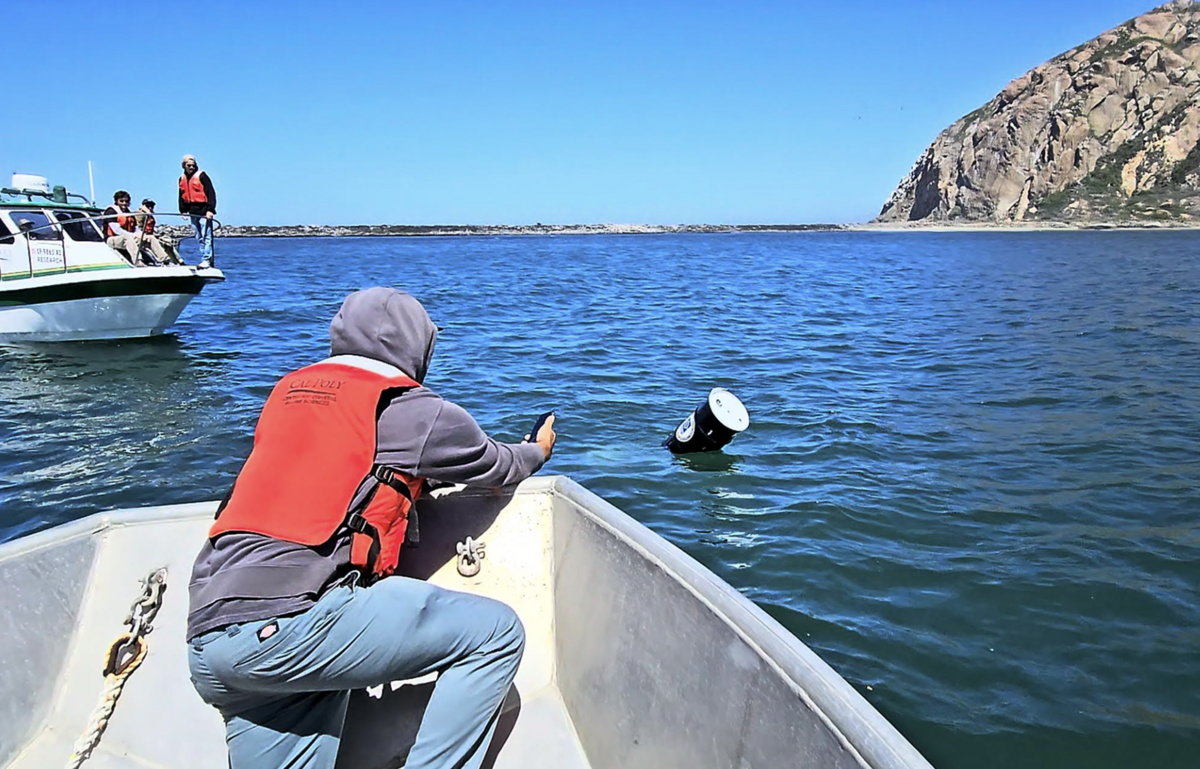
The team can then connect with the device via Bluetooth to watch the battery voltage in real time.
During Thursday’s test, the Bluetooth connection showed that the device wasn’t yet harvesting energy, but the team could see the voltage going up and down with the waves, showing promise for future tests, Steele said.
“We’re excited about that,” Steele told The Tribune. “We’re excited even to have a functional prototype at this stage. We only started in October, so, in the planning and building world, that’s a short amount of time. So we’re excited to have something to put in the water and feel good about.”
The team is currently in the first of a five-year plan to develop and improve the product, Steele said.
This story was originally published May 24, 2025 at 1:00 PM.
.JPG)