
How hard is it to get into Cal Poly? See the data for every major
Some majors at Cal Poly had room for less than 3% of students applying to attend the university in the fall after it received another record-breaking number of applications.
A report from Cal Poly Strategic Enrollment Management showed the university received 81,899 applications this admissions cycle, marking the first time that number has surpassed 80,000.
That’s a 3.6% increase compared to last year’s 79,034 applications, according to the report.
Of the record number of applicants, over 36,600 had GPAs above 4.0, the university said. The average GPA for selected students was 4.06, the report said.
And of the more than 80,000 students who applied, Cal Poly accepted only 22,531 — or roughly 27.5% of applicants.
But it actually has room for far fewer than that.
The university plans to enroll only 6,420 new students in the fall, according to the report — 5,500 freshmen and 920 transfer students. That’s 100 more freshman seats than were available in 2024, but 36 fewer seats for transfer students, according to numbers previously reported by The Tribune.
Overall, it amounts to an estimated 7.8% enrollment rate.
Further data provided by the university showed that the influx of applications narrowed the odds for students applying to some majors and made for an extremely competitive admissions season.
The Tribune analyzed the numbers to discover what the most competitive fields were and found that while the university is extremely competitive overall, some majors and colleges were significantly harder to get into than others.
The university did not provide data indicating how many students were accepted to each major — only target enrollment numbers compared to applications received for each program. The university told The Tribune it wouldn’t be able to provide the acceptance data until after enrollment was confirmed in the fall.
What Cal Poly majors were the most competitive?
Cal Poly’s most competitive majors were similar to previous years — but the demand differed depending on whether applicants were prospective freshmen or transfer students.
According to data from the Cal Poly Office for Institutional Research, the most competitive major for freshman applicants was again psychology, which received 3,759 applications but had room for just over 2.1% of those — about 80 students.
Psychology was also the most competitive major in 2024 — but at that time it had room for just 2% of applicants, The Tribune reported last year.
For the upcoming school year, psychology was followed by biological sciences, which received 5,351 applications but had room for only 159 students — or about 3% of applicants.
Aerospace engineering came in third, with room for just 3.5% of applicants — about 85 of the 2,405 students who applied.
The odds were even slimmer for transfer students — with some majors having room for only one or even none of the students who applied.
Both dairy science and bioresource and agricultural engineering received transfer applications, but had no seats available, according to the report.
Of the majors that had space to take transfer students, public health was the most competitive with room for 1.41% of its 141 applicants, meaning it could accept only two students.
Biochemistry landed in second with room for just 1.43% of its 70 applicants — equivalent to one student.
Meanwhile, construction management was third. It had only two seats available, or roughly 2.35% of its the 85 applications it received.
What majors were the least competitive?
For freshman applicants, the least competitive field of study was bioresource and agricultural engineering, which had room for just under 30% of applicants.
Next was wine and viticulture, which had room for 69 of the 243 who applied, or about 28.4% of students.
Agricultural communications was the third-least-competitive major for freshmen, with room for 26.2% of its 202 applicants.
Meanwhile, the least competitive major for transfer applicants was agricultural systems management, which had room for 50% of students. However, that equates to just three students since the major received only six transfer applications.
Next was industrial technology and packaging, which had room for just under 31% of applicants, or four of its 13 applicants.
Plant sciences was the third-least-competitive major for transfer students. It had room for 16 — or 29.6% — of the 54 students who applied to the field.
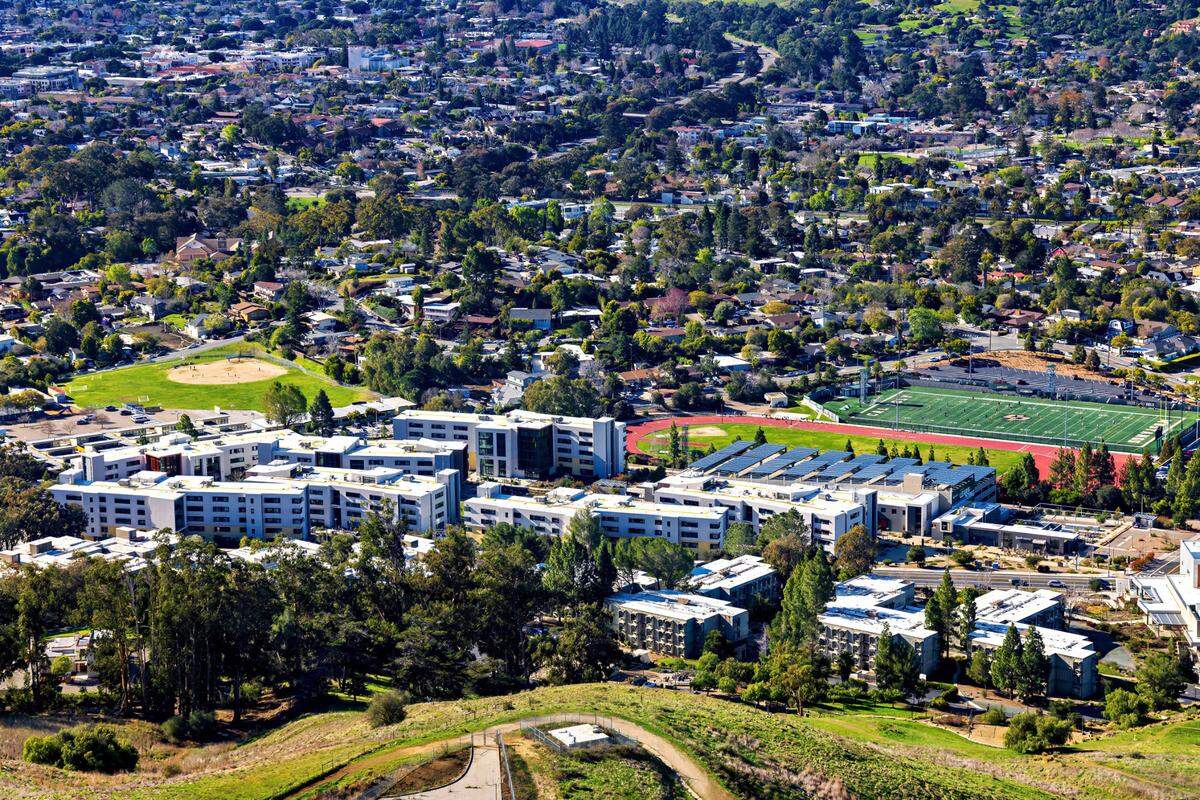
How do the Cal Poly colleges compare?
The demand for seats at Cal Poly also differed based on the college.
For freshmen, the College of Engineering had the most seats available at 1,409 — but it also received the highest number of applications at 21,443. This means it had room for roughly 6.6% of students who applied.
The Bailey College of Science and Mathematics came next in number of freshman applications received at 15,345. But it had only 786 seats available — far fewer than the College of Engineering. It had room for only 5.1% of applicants.
Here’s a breakdown of the other colleges for freshman applicants:
- Liberal Arts: 12,774 applications received, 927 seats available, 7.2%
- Business: 10,858 applications received, 807 seats available, 7.4%
- Agriculture, Food and Environmental Science: 6,885 applications received, 1,137 seats available, 16.5%
- Architecture and Environmental Design: 3,861 applications received, 434 seats available, 11.2%
For transfer applicants, the College of Engineering also received the highest number of applications at 3,128, compared to the 205 transfer seats available, leaving it with room for about 6.6% of applicants.
Meanwhile, the Orfalea College of Business had the highest number of spaces available at 250. With 2,264 applications, it had room for 11% of transfer students who applied.
Here’s a breakdown of the remaining colleges for transfer applicants:
- Liberal Arts: 2,685 applications received, 203 seats available, 7.5%
- Science and Mathematics: 1,353 applications received, 71 seats available, 5.2%
- Agriculture, Food and Environmental Science: 755 applications received, 111 seats available, 14.7%
- Architecture and Environmental Design: 545 applications received, 43 seats available, 7.8%
Search the database for available majors
Using data provided by the university, The Tribune created a database showing the numbers for all available majors, both for freshman and transfer applicants.
You can search the data using the charts below.
This story was originally published May 14, 2025 at 5:00 AM.
.JPG)