
Can’t go to Cal Poly? New community college program adds degrees from SLO university
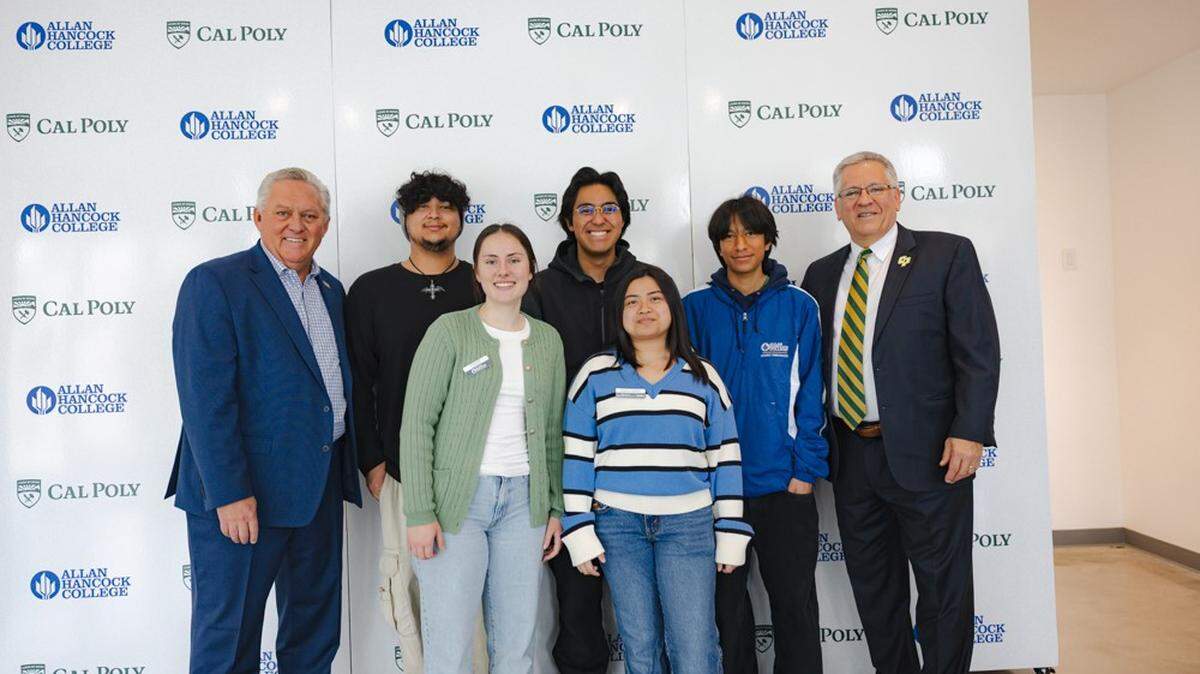
It just got easier for San Luis Obispo County students to get a Cal Poly degree, thanks to a new partnership with a Central Coast community college.
Cal Poly and Allan Hancock College in Santa Maria announced Monday they are partnering to offer several new options for community college students to obtain a four-year degree — a path that has been notably difficult for some community college students on the Central Coast.
Cal Poly is the closest four-year degree option for students in San Luis Obispo County and northern Santa Barbara County — but it’s also the most competitive university in the California State University system and boasts the lowest transfer student representation rate among the CSUs, according to a September audit.
Those factors — combined with the fact that many community college students can’t relocate due to financial concerns or family responsibilities — have left some students stuck in limbo.
To help bridge the gap, Cal Poly and Hancock partnered in 2024 to establish a 2+2 program, which allows students to obtain a Cal Poly degree in sociology without leaving their home campus in Santa Maria.
Now, the program is expanding, Hancock and Cal Poly officials announced Monday.
Starting in 2026, Hancock and Cal Poly will offer a bachelor’s degree in business administration under the same 2+2 model.
By 2030, another two degree programs will be added through the partnership, though those degrees are still to be announced.
Programs will ‘change everything’ for some students
At a news conference Monday, Hancock president Kevin Walthers told The Tribune the new degree options will be transformative for many students at Hancock.
Walthers has been vocal about his desire to see more bachelor’s degree options at Hancock for the last 12 years he’s served at Hancock.
“We know that more education leads to better life outcomes, so for people in this community to not have access to a four-year degree like you would have in any other community in California this size was just inequitable,” Walthers told The Tribune. “We wanted to make sure we changed that.”
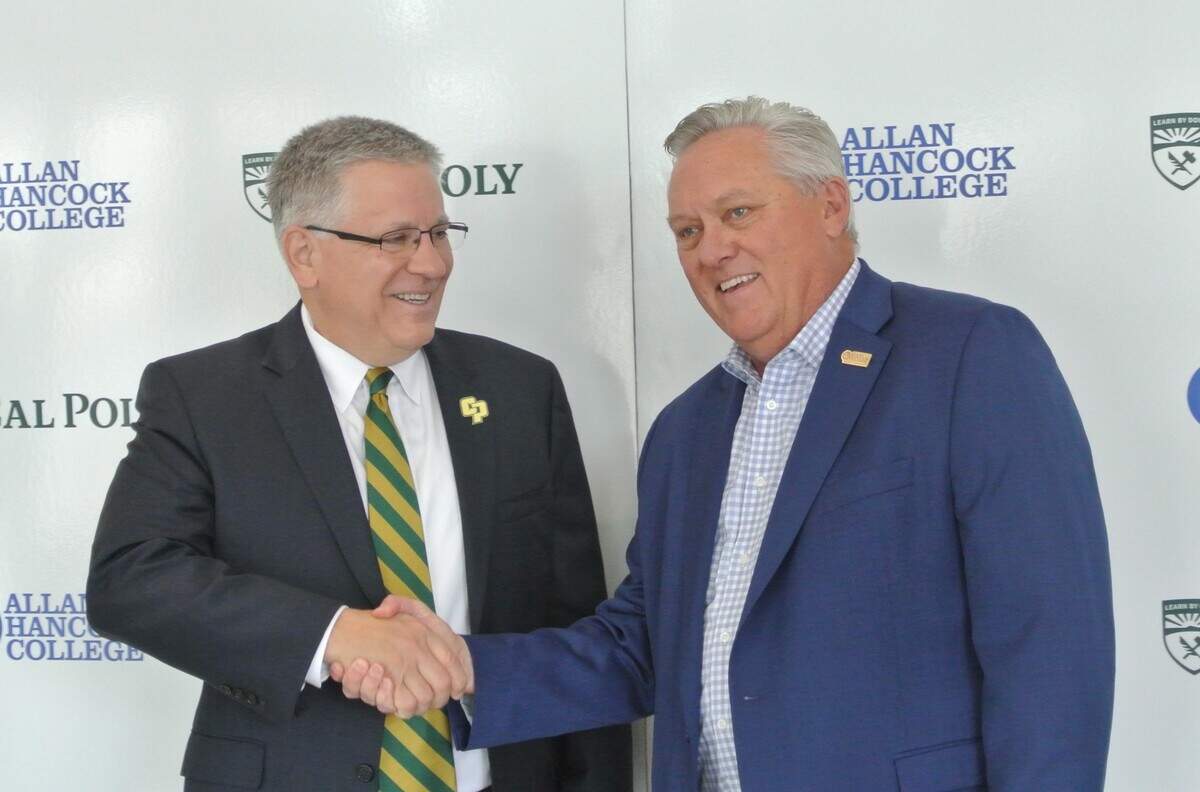
Hancock previously sought approval of a bachelor’s degree in applied professional science as an attempt to remove barriers for students — but thanks to the partnerships with Cal Poly, Walthers said there’s no need to move forward with that option now.
“The Cal State system was not supporting our community,” Walthers said. “Now that Cal Poly has ... made a long-term commitment to make those degrees — that’s really going to change the odds for students.”
Cal Poly President Jeffrey Armstrong added that the degrees will allow Cal Poly to serve the Central Coast in new ways.
He viewed the four multi-year 2+2 programs as “the minimum” of what can be done to improve the outcomes for residents of Santa Maria and the Central Coast.
“There are individuals who just can’t relocate to San Luis Obispo, let alone a distance farther away, and even commuting is difficult,” Armstrong said. “It’s critical that we can have this opportunity.”
Hancock student Edward Lamberson is a sociology student at Hancock, who intends to enroll in the 2+2 program and graduate with a bachelor’s degree from Cal Poly. Lamberson was one of the students who would have been unable to relocate to obtain a four-year degree.
Lamberson said the new options will “change everything” for students like him.
“It’s about setting up students in northern Santa Barbara County for jobs that provide a livable wage so we do not have to struggle to make ends meet,” he said. “It means more of us can build careers, buy homes and contribute to the local economy, because when a student succeeds, our whole community benefits.”
By the time all four degree programs are fully operational, they’ll serve around 350 to 400 students, Walthers said.
Expanding to offer additional programs in the future is an ongoing conversation, he added.
Want to apply?
While the three programs announced Monday aren’t up and running yet, the 2+2 program in sociology is currently available to students. The business administration program will kick off in 2026, and the other two will arrive by 2030.
To qualify for the sociology bachelor’s program, students must complete two years of undergraduate coursework and meet Cal Poly’s transfer criteria, according to the 2+2 program website.
Prospective students are encouraged to obtain an associate degree for transfer — a two-year degree that is fully transferable to the CSU — to “maximize” their chances of being accepted, the website reads.
“The degrees will be structured specifically for Hancock students seeking to continue their education at Cal Poly,” a news release stated. “Once students complete an associate degree at Hancock, they can apply for the Cal Poly program as part of a cohort to complete upper-division coursework with Cal Poly professors on the Hancock campus in Santa Maria.”
Accepted students will pay Cal Poly tuition, but all students are encouraged to apply for financial aid and scholarships.
If students have questions about whether their courses meet the transfer criteria, Cal Poly encouraged them to reach out to an advisor at their community college.
Students at Allan Hancock can reach out to the college’s University Transfer Center at counseling@hancockcollege.edu.
Students were encouraged to visit the university’s website for more information about the sociology program, or contact Dr. Lata Murti at lmurti@calpoly.edu.
.JPG)