
What happens when you can’t transfer to Cal Poly? Local students say they’re stuck in ‘limbo’
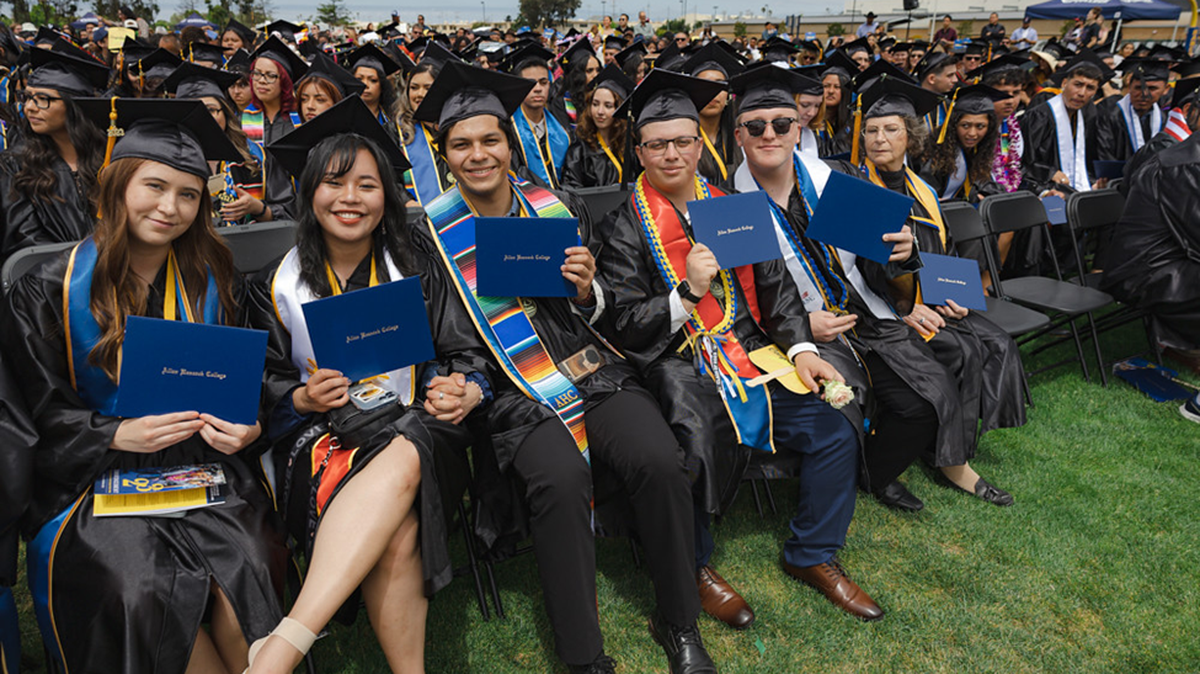
Community college graduate Anias Diaz is stuck.
Diaz, who holds two associate’s degrees from Allan Hancock College in Santa Maria, wants to pursue higher education. She plans on working her way through her bachelor’s, master’s and doctorate degrees to eventually become a college professor.
The Santa Maria native works over 40 hours a week on top of classes as the outreach program manager for the Good Samaritan Shelter in Santa Maria. She is a local homeowner and is actively involved in her community, serving homeless veterans, survivors of human trafficking, sexual violence victims and members of the LGBTQ+ community.
But her plans were put on hold after she was rejected from Cal Poly’s sociology program — one of a few feasible options available for her to obtain a four-year degree.
Now, she doesn’t know where to turn.
“I am in an odd limbo,” Diaz told The Tribune. “It’s been really difficult to navigate the next steps of my education career.”
Though she was accepted at CSU Channel Islands in Ventura County, Diaz can’t afford to relocate to attend the university.
“That would require me to basically move … or quit my job to be able to go to school there and pursue my education, and I don’t have the financial means to really do either of those,” Diaz said. “Going to a space like Cal Poly would be a dream because it’s so close.”
Diaz’s story is not unique among community college students on the Central Coast.
Cal Poly is the most competitive university in the CSU system and the only one within commuting distance for students in San Luis Obispo County and northern Santa Barbara County.
It also has the lowest transfer representation rate among the CSUs, according to a September audit published by the state.
These factors combined leave some local community college students and graduates, like Diaz, feeling stranded within the higher education system.
But there may be hope on the horizon as local education providers look to try to bridge the gap with new specialty programs and the upcoming opportunity to potentially offer bachelor’s degrees from one Central Coast community college.
.JPG "imagejpeg_0 (1).JPG")
Transfer hopefuls limited by lack of local options
Allan Hancock graduate Gerardo Hernandez is in a similar boat to Diaz.
A first-generation college student, Hernandez told The Tribune that navigating the higher education system has been difficult.
Growing up separated from his parents, Hernandez had to figure a lot of things out for himself.
“For me, it was a little difficult, you know, navigating through college, because I didn’t have somebody to look up to and know exactly what to expect and what to do to be successful,” Hernandez said.
He worked to pay his way through community college, put food on his own table and put a roof over his head. He also supports his sibling, who doesn’t speak English.
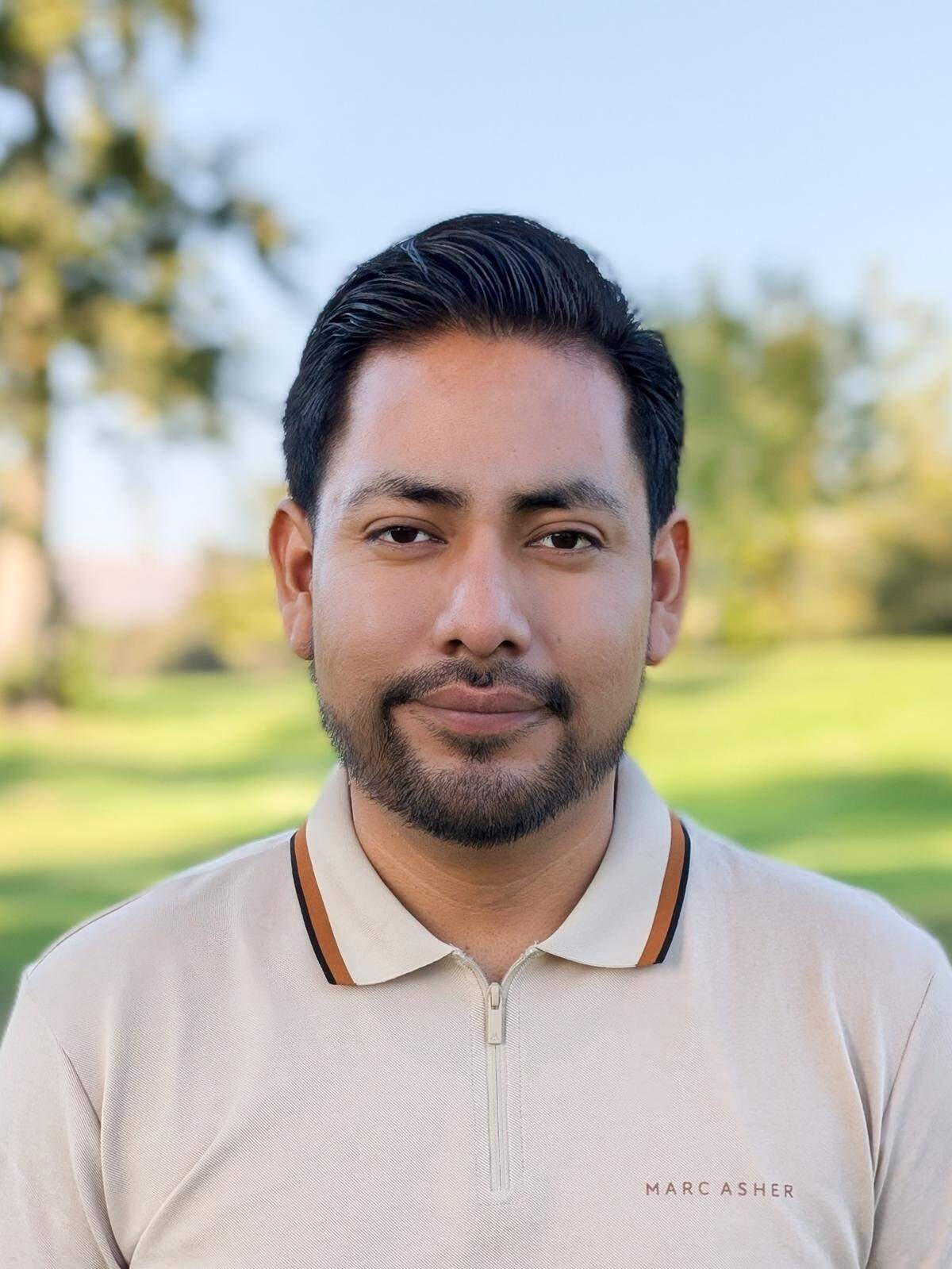
Hernandez obtained his associate’s degree in engineering from Allan Hancock, but ultimately wants to become a school counselor to help other students navigate the education system like his own mentors helped him.
“There’s a lot of staff here, faculty that really helped me out,” he said. “It guided me.”
After graduating, Hernandez applied to Cal Poly and was not accepted, but he was accepted at Fresno State. He planned on relocating to pursue his bachelor’s degree but ultimately was unable to due to family responsibilities and financial constraints — plus, he said, Santa Maria is his home.
“This is the only thing I’ve ever known. This is where I grew up, and it is a little tough to relocate,” Hernandez said.
“I would like to give back to this community,” he added.
Research shows that bachelor’s degrees do make a difference.
A young worker with a bachelor’s degree earns, on average, over $16,000 more per year than one with only an associate’s degree, according to 2021 numbers from the National Center for Education Statistics.
People who hold bachelor’s degrees are also more likely to work higher-quality jobs and receive benefits, according to the Public Policy Institute of California.
Diaz told The Tribune that obtaining a bachelor’s degree would impact her career “100%.”
“I just was surpassed at my employment now because I did not have a bachelor’s,” Diaz said. “That was literally the only definitive remark when I was running up against a pretty big promotion at work. I have 10 years of experience in what I do, and that didn’t matter because someone came from college, had just graduated and had a piece of paper that I do not have.”
“Having work experience is great, but as I become older, it has been very obvious that having a bachelor’s, a master’s, pursuing your doctorate is something super important,” Diaz added.
Hernandez told The Tribune he wants a bachelor’s degree so he can set an example for the younger generation in his family.
“No one in my family has ever had (a bachelor’s degree), and I just feel like it’s something that shows that you’re capable of doing something and achieving something,” Hernandez said. “I have some nieces … if I could show that I was able to do it, maybe they’ll also go off to a UC or CSU.”
Officials from local community colleges told The Tribune that it’s not uncommon to see students in similar situations, though it’s difficult to track who goes where after students graduate.
Whether it’s the cost of Cal Poly tuition or the cost of relocating to another university, financing college is one of the biggest barriers for students who want to transfer but don’t, both Allan Hancock President Kevin Walthers and Cuesta College transfer center coordinator Kate Porter told The Tribune.
“The financial limitations are a huge consideration and reason that students don’t actually go on to transfer,” Porter said. “Even if they’ve applied and been admitted, it might be a reason they don’t take that step.”
She added: “If it’s a financial limitation or a location limitation that’s holding them back, there might not be a remedy on our end that we can help them with.”
The limited access to higher education on the Central Coast also impacts first-generation students, many of whom are Latino.
Walthers told The Tribune that these barriers call for a “generational change.”
“We’re looking at the long term of the Central Coast, and we’ve got to build a place that values the Latino students that are in our community,” Walthers said.
Cal Poly has boosted transfer rates for local students but still falls shy of average
Cal Poly is often lauded for its “Learn by Doing” approach to education and extremely competitive enrollment. College rankings have named Cal Poly one of the best universities in the nation and the best public master’s level university in the West.
But Cal Poly falls behind the average in at least one metric — transfer representation rates.
In September, the California state auditor published a study on the state’s college transfer system.
The report found that for academic years 2018-19 to 2022-23, just 18% of incoming students at Cal Poly were transfers, far below the CSU average of 53% and the recommended ratio of 33%. Cal Poly was one of two CSUs that did not surpass the one-third benchmark.
The second was Cal Maritime, a small, selective institution that was recommended to merge with Cal Poly after struggling with decreasing enrollment and fiscal sustainability.
The report found that Cal Poly denied 81% of transfer applicants during the audit period, including applicants who met the university’s minimum transfer qualifications and major-specific requirements.
Cal Poly’s vice president of strategic enrollment management told auditors that the low transfer acceptance rates were due to high application demand and limited capacity in certain majors, and added that Cal Poly accepted the “vast majority of qualified applicants who are considered local to campus,” according to the report.
Cal Poly spokesperson Matt Lazier confirmed this to The Tribune.
According to Lazier, Cal Poly has several programs targeted toward supporting transfer ratios, including a mandatory orientation designed specifically for transfer students and a transfer center, launched in 2020, that offers resources, peer support and guidance to incoming transfer students.
The university also removed the supplemental transfer application requirement, which Lazier said previously added extra work for candidates attempting to transfer to Cal Poly.
“We are continually working to address barriers such as course availability and transfer criteria while expanding associate degrees for transfer options to create more pathways for students,” Lazier wrote to The Tribune in an email.
This year, Cal Poly also announced the 2+2 program, which is set to allow a small cohort of students to earn a Cal Poly sociology degree from the Allan Hancock campus. A similar program will begin in 2025 at Cuesta College to serve future educators.
The university’s focus on improving transfer representation has so far seen success — particularly for local transfer students.
The university’s transfer enrollment was up from 16% of new enrollments in 2023 to 18% in 2024.
Cal Poly’s most recent data showed the university received 882 transfer applications from Hancock and Cuesta colleges in 2024, Lazier told The Tribune. The university accepted 530 applicants and enrolled 402.
According to Lazier, Cal Poly accepted 93% of local qualified applicants from Hancock and 95% of local qualified applicants from Cuesta.
Additionally, Lazier told The Tribune that Cal Poly received 29 applications for the 2+2 program at Hancock. Of those applicants, 25 were qualified and all 25 qualified applicants were accepted, according to Lazier.
Cuesta and Hancock officials told The Tribune they work to ensure all students are aware of Cal Poly’s competitive requirements.
Despite progress in the success of local transfer students making it to Cal Poly, the university still sits well below the CSU average — and some argue that there’s more work to be done.
“This speaks to the general problem for our community — Cal Poly will decide who is qualified and who is not,” Walthers told The Tribune in an email. “So, if you don’t meet the requirements for the single degree being offered, you are once again left with no options in our community.”
Officials from both Cuesta and Hancock said they would welcome additional opportunities to collaborate with Cal Poly.
Hancock clears major hurdle on its way to offering bachelor’s degrees
Meanwhile, Allan Hancock College is one step closer to being able to offer its own bachelor’s degree program — marking a major milestone for the Santa Maria college.
In October, Hancock received provisional approval from the California Community Colleges Chancellor’s Office for a proposed bachelor’s degree program in applied professional science, which the college applied for in January.
The program would prepare students for careers in a diverse set of professions, including agriculture, manufacturing and healthcare, according to a news release.
“The provisional approval of our bachelor’s degree marks a defining moment for our college and the region,” Walthers said in a news release. “This program will give our students access to high-quality, affordable education, helping them secure meaningful careers in industries critical to the Central Coast. We are proud to continue expanding opportunities for our community.”
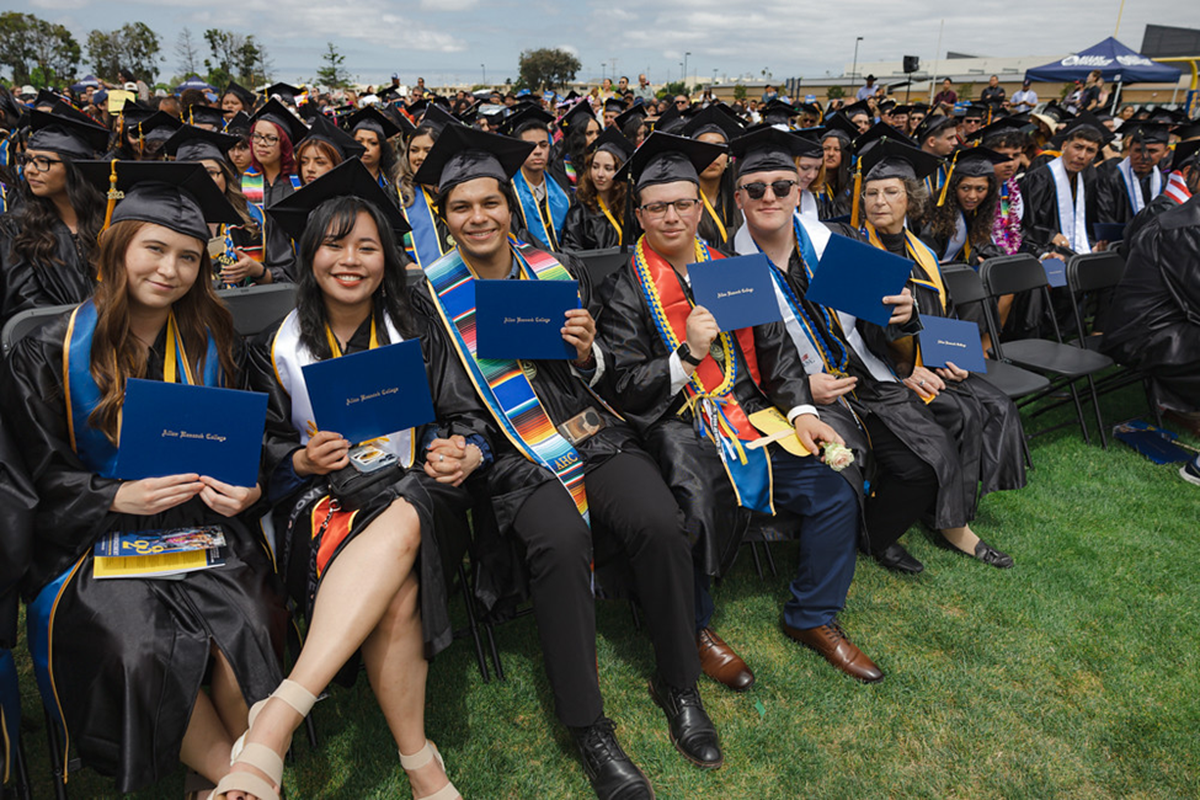
The college estimates that the four-year program’s tuition would cost about $10,560 — less than the average cost of in-state tuition for one year at Cal Poly.
It’s notoriously difficult for California community colleges to offer bachelor’s degrees. Currently, only 15 of 116 community colleges offer bachelor’s degree programs.
To avoid having a negative enrollment effect on California universities, community colleges must prove that their proposed programs will not duplicate degree programs at CSUs or UCs.
Hancock’s proposed program will now enter a consultation phase, where UC and CSU stakeholders can provide feedback on — or object — the proposal. Hancock hopes to receive final approval by March 2025 and implement the program by 2026.
“We’re excited that the Chancellor’s Office recognizes the importance of this program,” Walthers said, “and we are confident that further collaboration with our UC and CSU partners will make this opportunity a reality for our students by 2026.”
This story was originally published November 18, 2024 at 5:00 AM.
.JPG)