
See how Cuesta College used a $275 million bond to upgrade its campuses
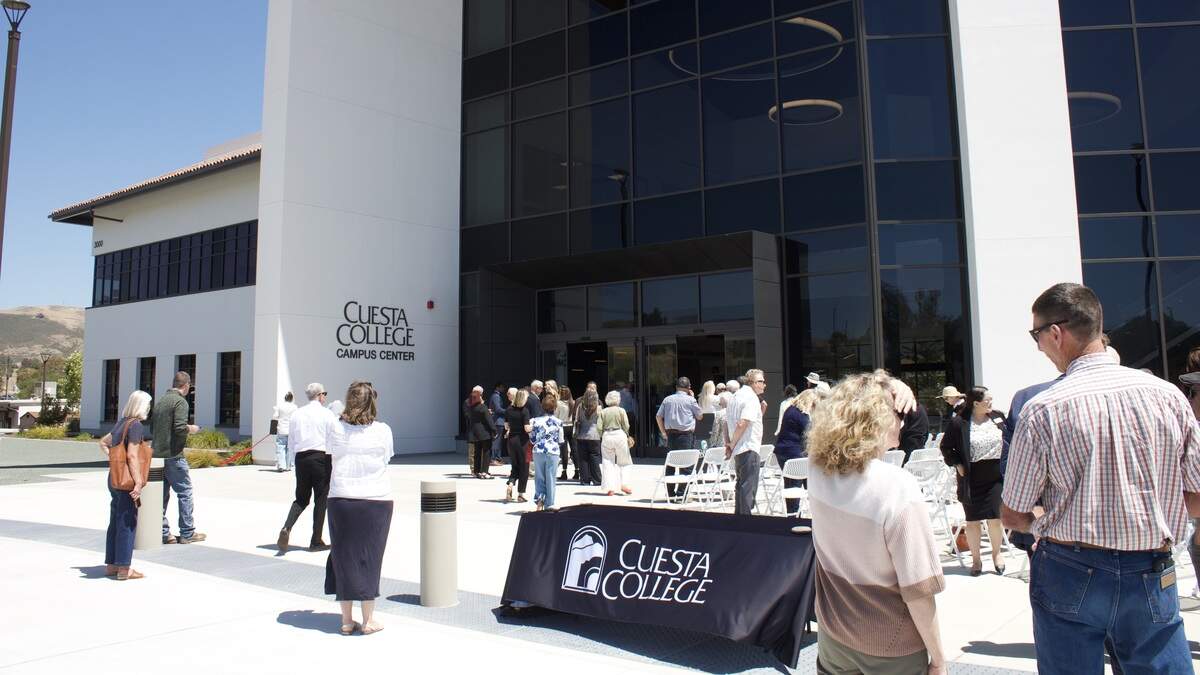
On Nov. 4, 2014, San Luis Obispo County voters approved Measure L, a $275 million general obligation bond measure that allowed Cuesta College to address longstanding infrastructure, technology and debt-retirement needs.
The bond required 55% approval from SLO County voters to pass, and it achieved 62%, making Measure L the first bond Cuesta had received in over 40 years.
With each issuance of the bond, every three years, Cuesta has been able to address needs across its two campuses, ranging from roofing, HVAC repairs and floor replacements to technology upgrades and the creation of new facilities.
Now 12 years later, Cuesta is in the final stages of the bond’s implementation and is celebrating the opening of its newest building, the SLO Campus Center, which was a $37 million project that began construction in the spring of 2023, with an expected two-year completion date, but due to significant procurement and construction delays, took three years to complete.
The Campus Center was built to combine activities from two existing buildings on campus, the administrative offices and the student center, creating a one-stop shop for Cuesta students to receive the assistance they need and socialize in the new cafe, Drip Coffee.
At the ribbon-cutting ceremony celebrating the opening of the SLO Campus Center on June 3, Cuesta College President Jill Stearns, thanked the community for the trust that was required to pass Measure L in 2015.
“Measure L has allowed us to align with today’s teaching and learning methodologies, which allows us to provide more educational opportunities, which is the most important thing we do here,” Stearns said.
How the Cuesta College bond worked
The bond was split up into four installments, with the first arriving in March 2015, for $75 million, the second in January 2018, for $73 million, the third in February 2021 for $70 million, and the fourth and final bond issuance was for $57 million, in February 2024.
Each issuance of the bond had different priorities, but they all focused on the same four categories: new facilities, critical repairs, technology upgrades and debt retirement.
Major facility projects began in 2015 with the creation of the North County Campus Center, followed by the Martinez Building, an instructional building on SLO’s campus.
Board of Trustees President Debra Stakes said that student feedback was immediate once construction began.
“Students told us after the creation of the North County Campus Center that they enjoyed the bigger buildings on campus because it made Cuesta feel like a university, and made them take their studies more seriously,” Stakes said. “We listened to that and continued trying to bring that feeling to SLO for students there also.”
Other major new facility projects funded by Measure L include the North County Children’s Center, a data center on the SLO campus, the SLO Campus Center, a North County instructional building and the Tenant Improvement construction, which is a remodel of the 3100-3400 buildings on Cuesta’s SLO campus.
Each issuance of the bond also allowed for infrastructure improvements and upgrades, beginning with the most critical in 2015: the SLO campus Aquatic Center renovation, because the pool’s aluminum liner was corroded and leaking, chipping away at Cuesta’s water budget.
Roofing and other critical repairs were also addressed in each issuance, including long-standing HVAC repairs, roofing, the creation and redesign of parking lots on both campuses, floor replacements, fresh paint and new doors.
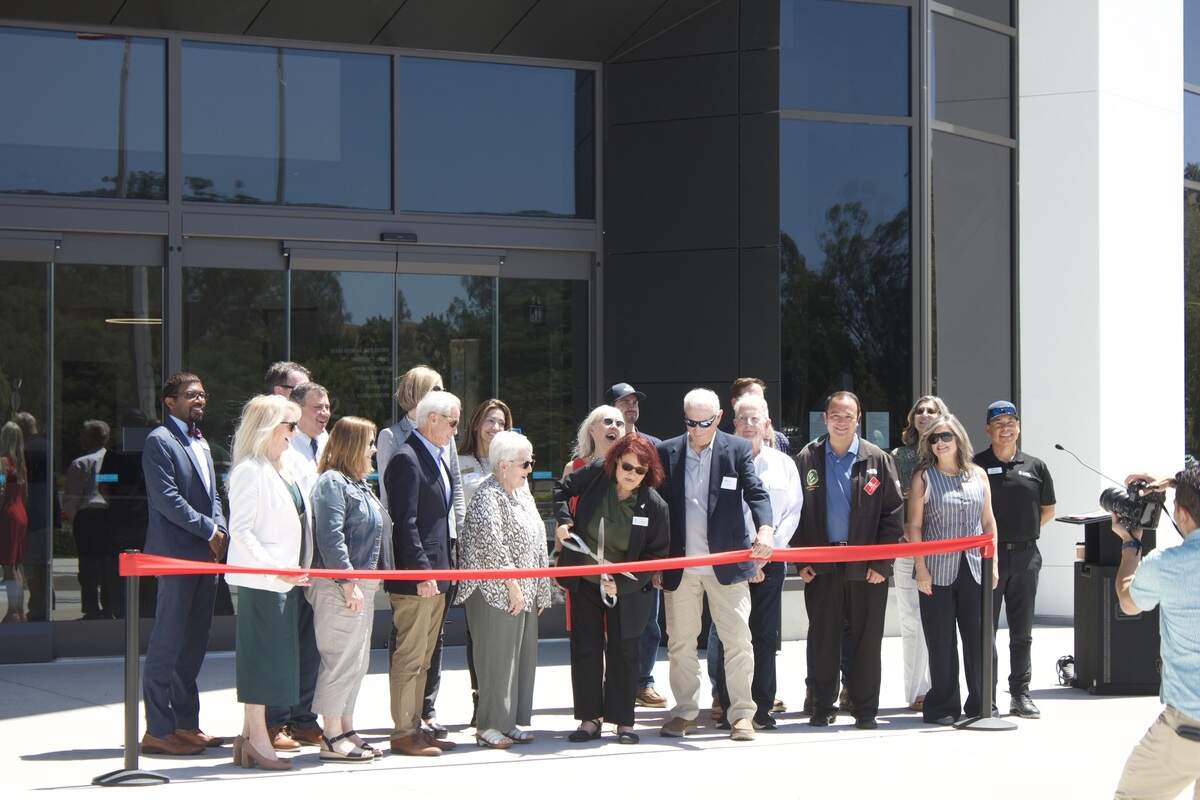
The last two Measure L-funded major facility projects are the new North County Instructional Building, which is expected to be completed by August 2026, and the renovation of the 3100-3400 building on SLO’s campus, which is home to the library, student programs, the math lab, the Student Success Center and the transfer/career department. The 3100-3400 building is expected to start construction this fall, with a hopeful completion date of December 2028.
The renovation of the 3100-3400 building, known as the Tenant Improvement Construction, is the most disruptive and complex of all Measure L-funded projects because many staff must be relocated to other buildings and portables during construction. Students will also be affected by the loss of the library, and finding relocated student programs on the SLO campus.
Construction costs have also increased dramatically due to tariffs, rendering the estimated $18 million for the project outdated. Since Measure L’s remaining bond money may not cover the entirety of the new estimated cost of the renovation, Cuesta is prepared to use other funds if necessary.
“In the late stages, you have to be strategic to make sure we can do the things we want to do,” Vice President of Administrative Services at Cuesta College Todd Hampton said. “Sometimes that means taking out the really beautiful features you want, just to make it happen.”
Stearns and Hampton both have firsthand experience with the disruption involved with Measure L construction, as their offices have been in portable buildings for the last three years, waiting on the completion of the SLO Campus Center.
“The reality is, construction can be inconvenient, but being able to point to projects that are already completed to remind people of what is coming helps keep morale up,” Stearns said. “The inconvenience is worth it when we are able to have spaces that align with creating inclusive and comfortable spaces for our Cuesta community.”
Stearns was sworn into office in July 2018, six months after the bond’s second issuance and at a time when both campuses were undergoing various construction projects. However, Stearns was not intimidated by the prospect of walking into an incomplete bond project.
“Part of the strength I brought to the job is that I’ve had the opportunity to be involved in $901 million worth of general obligation bond projects across three different districts: West Hills Community College District, Modesto Junior College and Cuesta,” Stearns said.
Stearns said she was immediately impressed by how things were planned when she began working on Measure L.
“Cuesta had things well in hand, which isn’t always the case. Projects were in line with what the district said they were going to do,” Stearns said.
One thing Stearns did notice was lacking: campus engagement in the design and imagining process, which is something she has worked to change.
“Bringing input from departments into the process is really important, because these are the people who are going to ultimately be using the facilities,” Stearns said.
Hampton, who was sworn into office in January 2025, shared similar sentiments when reflecting on what it felt like to walk into a bond project in its later stages.
“I’ve seen bonds at other campuses that weren’t as well managed and that dragged on for much longer than they needed to,” Hampton said. “If you look at the 2014 plans and what has happened now, it’s almost identical, which is a testament to all of the pre-planning and legwork that went into this.”
Both Stearns and Hampton gave credit to the Measure L Citizens’ Bond Oversight Committee, which was required by Education Code 15278. The committee was tasked with informing the public concerning the district’s expenditure of Measure L bonds, checking in on timelines and plans and presenting an annual report to the Cuesta Board of Trustees outlining the activities and conclusions regarding Measure L.
Education Code 15278 requires at least seven different representatives from the SLO community to serve on the committee, including one active community college student, one member active in a business organization located in the district, a senior citizen representative, a member of a taxpayers association, a member of a support organization for the college, and two members of the community at large.
“Our Bond Oversight Committee has really been exceptional. We have people who have lots of experience, including two retired community college presidents, which is great, because they understand the responsibility that comes with these projects,” Stearns said.
One of the retired college presidents, who serves as the Oversight Committee chair, is former Cuesta President Gil Stork, who served in that role from 2010 to 2018 and was president at the time of Measure L passing in 2014.
History of bonds at Cuesta
Prior to Measure L, the last bond Cuesta had received was for $8 million in 1974 and went to completing basic infrastructure on the SLO campus.
After California voters passed Proposition 39 on Nov. 7, 2000, which authorized school districts to issue up to $310 million in bonds for the purpose of financing the construction, reconstruction, rehabilitation, or replacement of school facilities, Cuesta began working on a new bond proposal.
In 2006, Cuesta President Marie Rosenwasser proposed Measure G, a $310 million general obligation bond aimed at campus renovations and facilities. The measure didn’t pass, capturing only 45.9% of the primary election ballot vote, short of the 55% majority required.
After failing to pass the bond, Cuesta was in a dire financial situation, as the administration was counting on the passage of Measure G to pay off the Certificate of Completion Loans used to fund campus infrastructure updates in prior years, which had major balloon payments due.
“We had a consultant come in to talk to us about accreditation issues, and she joked and said, ‘Well you were almost bankrupt,’” said Stakes, who was a Cuesta faculty member at the time of the bonds’ failure to pass.
Stakes said that a large part of the bond’s failure in 2006 was due to a lack of trust in Cuesta’s administration at the time. Because of the debt, Cuesta had not been able to give Cost of Living Adjustments to faculty, further deepening the already divisive culture on campus at the time.
“People couldn’t trust the administration to not divert funds for their own salaries,” Stakes said.
When Stakes became president of the Cuesta Faculty Union in 2014, she used her role to promote the need for Measure L, having experienced what the failure of the 2006 bond put the school and employees in.
“I went around to any place that would let me give presentations to talk about the bond,” Stakes said. “People were still so worried the money would be used for administration salaries, and I really wanted to talk to them about all the ways it would actually be used.”
“I would tell people, ‘I give you my word if that happens, I’ll scream from the rooftops,’” she said.
Stakes was not allowed to collaborate with Cuesta’s Foundation because of her role with the faculty union, but she remembers feeling motivated and inspired seeing how many people on campus were pushing as hard as she was to get the measure passed.
When Measure L passed in November 2014, Stakes didn’t slow down. She attended every board meeting and joined every committee and task force she could to ensure she knew what was happening with the bonds.
“I was very vocal about keeping our promises to the community because I felt like that was really what I was representing,” Stakes said.
Thanks to Measure L, the $17.8 million loan debt Cuesta was in due to the Certificate of Completion Loans was able to be paid off by the third issuance of the bond.
After being elected to the Cuesta Board of Trustees in December 2020, Stakes has continued her work with Measure L in a new capacity, one that is centered on students.
“Our mantra on the board is, ‘What is it that students need?’” Stakes said. “We come back to that over and over, and we have to make sure we don’t get caught up in nostalgia, because the modern students have different needs, especially when it comes to technology.”
Technology updates
Although the infrastructure updates to Cuesta’s campuses are evident upon examination, one of the biggest provided by Measure L bonds goes completely unseen.
The implementation of ubiquitous Wi-Fi on both the SLO and North County campuses has made Wi-Fi consistently accessible for students and staff anywhere on campus, something that was a struggle in the past due to unreliable coverage by location.
Stakes said there was a lot of debate over the decision to spend the money required to implement the new Wi-Fi on both campuses.
“We have a board member who always wants to do things cheaply, and we had to fight to explain that students want to sit outside and work on their computers, and they need wireless connection for that,” Stakes said. “As a commuter school, we want to create spaces that make students want to stay on campus.”
The decision to make this an early priority in the bond process proved highly beneficial for the school when COVID-19 hit.
“When students were struggling to get access to Wi-Fi at home or in public, we were able to redirect all of our Wi-Fi to the parking lots so that students could come to campus and feel safe still, but know that they had access to their studies,” Stearns said.
The technological updates have also allowed Cuesta to make classroom technology more consistent between rooms and campuses.
“We are trying to ensure that our new technology and learning space updates support the methodologies that faculty are already using, like the flexibility that allows a classroom to move and be more centered on discussion, not just rigid, fixed seat arrangements,” Stearns said.
Refinancing and looking ahead
The Cuesta administration’s appreciation and respect for the SLO community has been top of mind throughout this project.
“We understand the weight this puts on the community who have to literally decide to pay more in taxes to support us,” Hampton said.
The Measure L bond costs SLO County property owners $19.45 per $100,000 of assessed value and will be paid off in 2049, but Cuesta is hoping to lessen that number by refinancing the bond.
“If we are successful in refinancing, hopefully we can save the taxpayers a couple million in property taxes,” Hampton said. “Making sure the toll on the taxpayer is minimal has been something the board has been really concerned with.”
Refinancing could also improve Cuesta’s chances of securing another bond.
“Most colleges are kind of always in a bond,” Hampton said. “The cost to do work on campuses is much higher than the real world, and we don’t get a lot of funding from the state to match our needs.”
College campus construction is significantly more expensive, particularly when financed through a bond, for several reasons, first being the differences in regulations and standards on school campuses.
For buildings to be approved, colleges must first pay an architect to design the building and then, often, pay hundreds of thousands of dollars to have a Division State Architect approve the design. Another reason for high costs is prevailing wage, which requires that any contractor working on a bond receive a much higher rate than they would in commercial real estate.
Although the added expenses can feel significant, Hampton also appreciates the standard that the regulations set.
“We have things like all gender restrooms, lactation spaces and accessible pathways — all things that won’t be a priority in the private sector, we emphasize,” Hampton said.
The high level of standards and oversight is something everyone involved with Measure L feels proud of.
“Dr. Stearns, especially, runs a tight ship. There have been instances in the measure where people have dropped the ball, and she makes the hard decisions,” Stakes said. “On other campuses, they may have let things slide if they knew someone personally, but we want another bond, so we don’t.”
Stakes appreciates the way Stearns keeps an eye on the horizon.
“Her focus isn’t on just maintaining what we have; she’s looking ahead to what is coming,” Stakes said.
On Stearn’s current horizons is the next bond.
“Frankly, as big as Measure L is, we still haven’t touched everything,” Stearns said. “There are spaces that need a refresh, and I want to continue seeing how this college can grow.”
This story was produced by The Cuestonian, Cuesta College’s student newspaper, and is published in partnership with the San Luis Obispo Tribune. The partnership is supported by the Center for Community News at the University of Vermont.