Housing or offices? SLO County city weighs ways to use ‘gold mine’ school property
Morro Bay is brainstorming future uses for the Morro Elementary School site — and members of the public shared their vision for the property at a meeting on Wednesday night.
The Morro Bay City Council voted unanimously to purchase the property from San Luis Coastal Unified School District for $5.3 million in March. Now, the city is seeking funding to complete the purchase and considering ways to use the property.
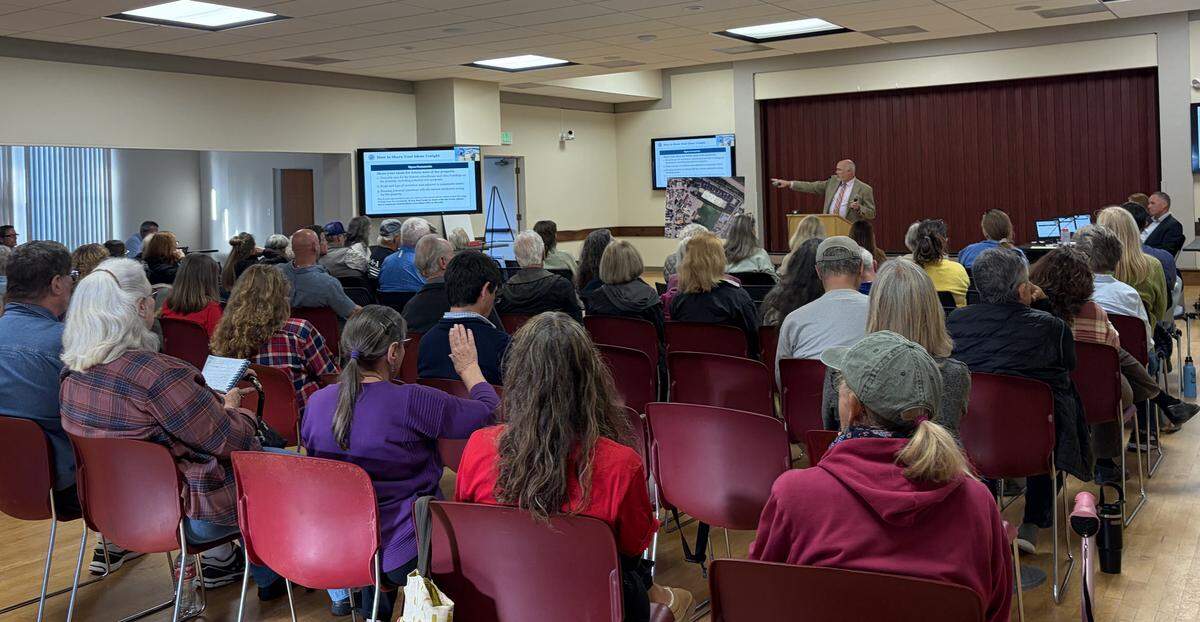
The city hosted a public forum on Wednesday night at the Veterans Memorial Building to brainstorm ideas with the community.
Members of the public shared plenty of ideas, from preserving the sports fields for public use to building senior housing. While some people disagreed over how the site could be used, everyone in attendance agreed on one thing: Purchasing the property would be a boon for the city.
“To be able to purchase even an acre in our area for $530,000 is unheard of,” Morro Bay resident Judy Setting said. “We have hit a gold mine.”
City wants to buy Morro Elementary for $5.3 million
In March, the city placed an earnest deposit on the property of $500,000 from the city’s general fund. Escrow closes on Oct. 31, and the city has until then to create a plan for paying the remaining $4.8 million.
Now, the city is in a due diligence period, where it is conducting an environmental review of the property, site and building code inspections and testing for hazardous materials like asbestos and lead. The city is also creating cost and timing estimates for property improvements.
“We’re trying to be very diligent to ensure what we’re buying is what we think we’re buying,” Craig said.
The city will host another community meeting in June to share progress on the project. Then, on Aug. 24, the City Council will decide whether to officially purchase the property.
Morro Elementary site could have city offices, sports fields
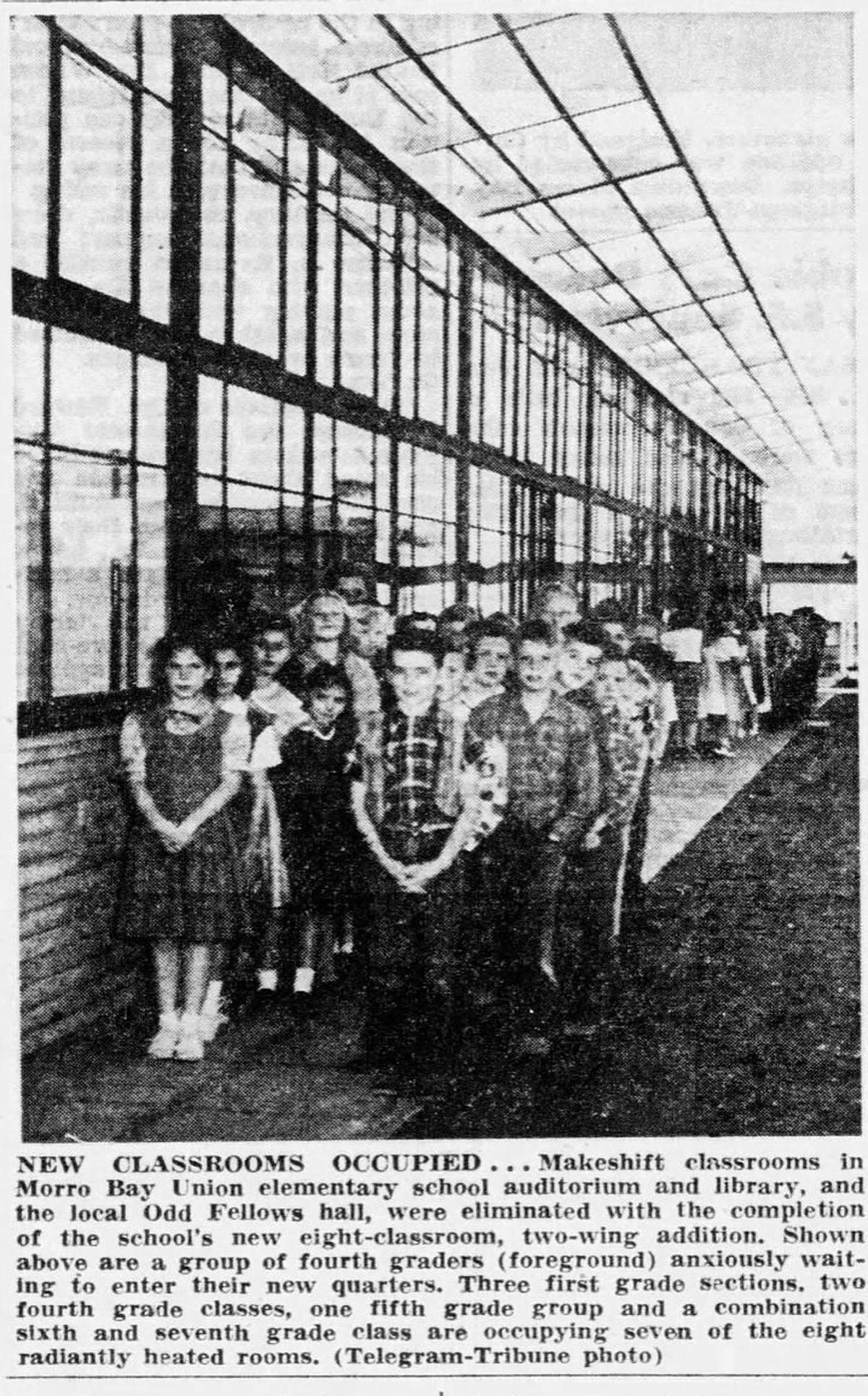
The 9.7-acre property includes eight buildings and about 4 acres of sports fields, Craig said.
The main building was built in 1936, and the city applied to have it designated as a historic site — which could make the city eligible for grants to renovate it.
At the meeting, city staff passed a microphone around the room, allowing community members to share what they wanted the property to be used for.
A handful of speakers suggested that the buildings be repurposed into a conference center or event space for weddings and funerals. Some said the property should be used for seniors — from housing to care services.
Others wanted the buildings to be used for a new City Hall.
Morro Bay resident and architect Christi Van Cleve specializes in historic preservation housing, and she said it would be feasible for the city to refurbish the building for office space.
The Santa Maria City Hall was designed by the same architect in 1933, and the city later renovated that building to include city offices, she said.
Local nonprofit Friends of Morro Elementary advised the city to keep the Montessori School as a tenant on site, as the rent could provide revenue for maintaining the property, Friends of Morro Bay board president D’Arcy Castro said.
Overwhelmingly, speakers at the meeting wanted the sports fields to be preserved. The fields are currently used by soccer and flag football leagues, as well as by Pacific Wildlife Care for raptor rehabilitation, Castro said.
The public wanted these uses to continue, and one speaker noted that the fields could be used as a community gathering place during emergencies.
“If we get rid of those fields, we don’t get them back,” Castro said.
Friends of Morro Elementary also thinks there’s room for workforce housing on the property.
“This site can be a win-win-win, if done thoughtfully,” Castro said
Should the city allow high-density housing on site?
The property is zoned for high-density residential housing, which requires at least 15.1 to 27 units of housing per acre, Morro Bay community development director Airlin Singewald said at the meeting.
If, for example, the city dedicated 5 acres of the property to housing, a developer would need to build a minimum of 75 units there, he said.
The city will likely need to approve some form of housing to comply with the property’s zoning and to afford the purchase, but the City Council would have the final say over housing built on the property, Singewald said.
Meanwhile, the city is behind on meeting its state-mandated housing goals, known as the Regional Housing Needs Allocation.
From 2019 to 2028, the city is required to plan for 157 units of low income housing, 70 units of moderate income housing and 164 units of above moderate income housing. As of Wednesday, the city still needed to issue permits for 122 units of low income housing, 27 units of moderate housing and 32 units of above moderate housing, Singewald said.
The Morro Elementary site could help the city meet those goals, he said.
Some residents supported the idea of high-density housing on the property.
Cherise Hansson is raising three teenagers in Morro Bay, and many of the families they grew up with have moved elsewhere, she said. She asked the city to preserve the sports fields and use some of the property for housing.
“We definitely need to have the housing that provides these opportunities for single moms to live here and work here and raise their kids,” she said.
Los Osos resident and Morro Bay business owner Susan Stewart agreed. She said she wants to see workforce housing for firefighters, retail and restaurant works, teachers, and nurses.
“We have folks who spend most of their days here who can’t afford to live here,” she said.
Morro Bay Chamber of Commerce board member Bob Fowler referenced U.S. Census Bureau data, which estimated that the population of people aged 75 to 84 will increase by 43% during the next 10 years in Morro Bay, while younger age groups are projected to decrease.
“I think that’s indicative of the housing that’s available here in Morro Bay,” he said. “We need that missing middle population to see a healthy population in Morro Bay and future growth.”
Carol and Frank Skrah, however, did not support the idea of high-density housing. They own a home next to the school site, and the house has been in Carol’s family for three generations.
“The housing situation here, it scares the hell out of me because I live there,” she said. “I hope that the neighborhood will be taken into consideration for something that doesn’t just ruin everything for us.”
Frank said city should consider whether it has the necessary police, fire and ambulance services for a larger population.
“If you’re going to do high density at low income, they’re going to bring in a problem. I speak from experience,” he said, referencing his career in law enforcement.
Morro Bay resident Courtney Shepler defended low income housing. She volunteers with AARP to help seniors and low-income residents with their taxes.
“I have seniors that I helped with their taxes that make $9,000 a year and are just getting by, and they’re lovely human beings. I’d be happy to have them as a neighbor,” she said. “So I take exception to the characterization that low income housing brings problems.”
Sometimes, a pair of married seniors can survive on two Social Security incomes, but if one of them dies, they can’t make their rent anymore, she said.
“There’s a lot of people in this community that are amazing,” she said. “They’ve lived here for many, many years. They’ve done their time, and they are low income, and they deserve to live in dignity.”
This story was originally published May 4, 2026 at 9:00 AM.