
Can foundation save San Luis Coastal schools from budget cuts? Here’s a Reality Check
When it was announced that Diablo Canyon nuclear power plant would close, leaving agencies in San Luis Obispo County without a large chunk of income, San Luis Coastal school district leaders got to work negotiating a settlement with PG&E to receive payments to help wean schools off the annual funding.
Included in that settlement was a $10 million endowment intended to provide “long-term funding” for the school district as it navigated projected budgetary troubles, according to a 2016 news release.
That endowment helped establish the San Luis Coastal Education Foundation, reported by The Tribune at the time to be the “fundraising arm” of the school district. As a nonprofit, the foundation has fewer restrictions than the school district itself when it comes to raising money and accepting donations.
It funds its programs with both the money it raises from donors, and annual investment returns on the original endowment.
“Diablo taught us that school funding can be unpredictable, and it is imperative that we build community investment in our schools,” Superintendent Eric Prater told The Tribune in 2019, when the foundation opened. “Rather than allowing the Diablo closure to rock us back on our heels, we are leaning in to this opportunity in order to innovate and excel through deeper collaboration with local partners.”
Seven years later, as those predicted budgetary issues caused in part by Diablo’s depreciation have hit the district’s pocketbook and started to affect students and staff, some community members have wondered at school board meetings why the foundation isn’t backfilling the cuts.
But both foundation and district leaders say that isn’t the organization’s purpose. The Tribune looked into the question as part of its Reality Check series.
Parents inquire about foundation during budget talks
The San Luis Coastal school board has approved about $10 million in cuts over the last three years to rectify a structural budget deficit that the district has blamed on multiple factors — chiefly, lost funding due to Diablo Canyon’s depreciation and the lack of state funding for transitional kindergarten.
As the district deliberated the cuts in 2024 and 2025, parents and community members showed up at school board meetings to protest the loss of teachers, counselors, support staff for English learners and district funding for band and choir.
Parents stood at the dais and gave their own recommendations for how the district could fix its budgetary woes with the least impact on students — and some of those suggestions included pulling funding from the education foundation.
At a meeting in January 2025, a community member held up a sign in the audience of a packed board meeting suggesting the school board allocate money from the foundation to avoid cutting transitional kindergarten — the district’s money-saving suggestion at the time, which was later rescinded.
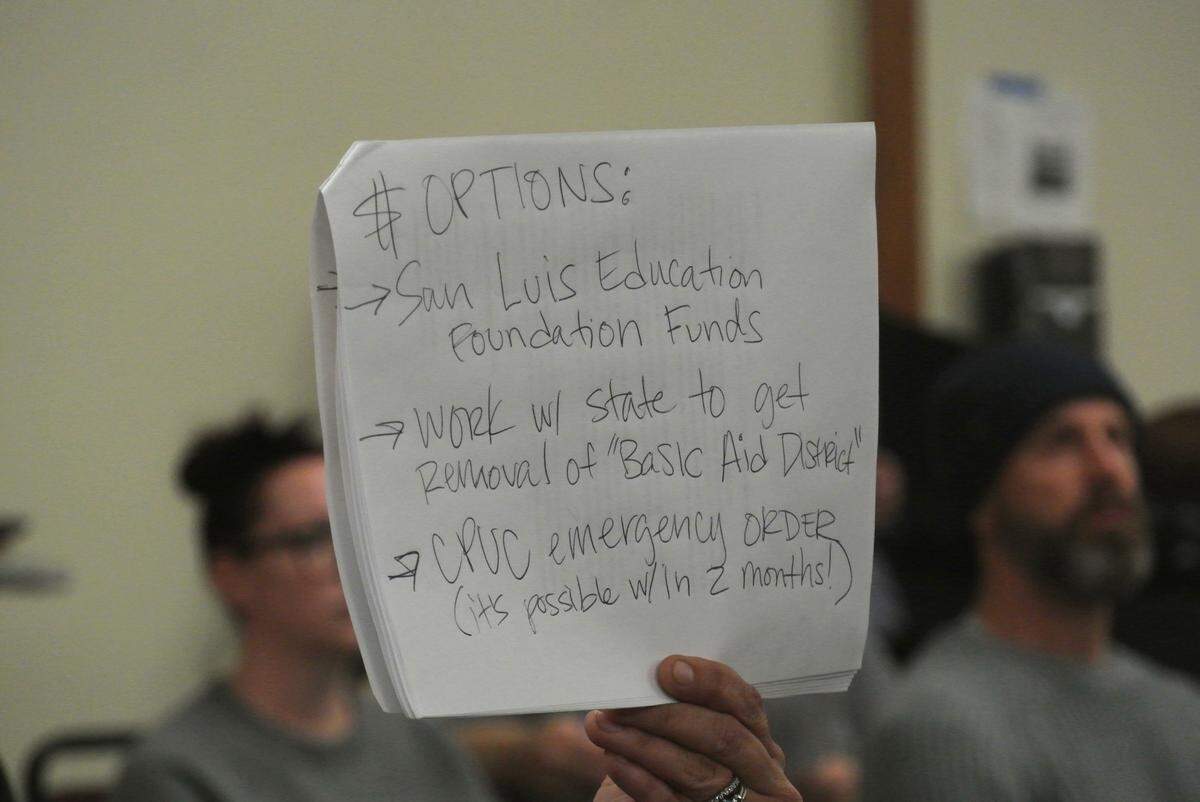
In February 2025, more parents suggested pulling money from the foundation, The Tribune reported at the time.
Those suggestions carried through until December, when San Luis Coastal parent Ben Lippert raised another concern about the foundation during a school board meeting.
“The district has an employee who’s not student-facing, who makes $200,000, who is the ED (executive director) of a foundation that is sitting on $11 million,” he said. “I’ve been told not to talk about this because the foundation has a lot of powerful people on the board, but I can’t go back to my kids tonight without mentioning this.
“You need to look at that, guys,” he told the board. “You just have to. We have kids in here talking about instruments, we’re cutting counselors, and you have an executive director of the foundation making that much money as an employee of the district. It’s just — we need to look at that.”
What’s the purpose of the education foundation?
The Tribune reported in 2019 that the purpose of the education foundation was to raise money to support the district’s budget in anticipation and throughout the closure Diablo Canyon and the accompanying loss of millions in school funding.
It was reported at the time that the nonprofit would “help fill gaps in technology, innovation and student equity and achievement,” and plug holes caused by Diablo’s closure.
The foundation would likely offer funding for students for college applications, provide access to robotics and computing resources and offer opportunities for other initiatives or grant funding, The Tribune reported.
While executive director Christine Robertson said at the time the foundation would help the district avoid making “negative and draconian” budget cuts, Prater told The Tribune that foundation money would not be used to fund teaching positions.
“We have to be cautious and prudent in moving beyond these levels — especially as revenues decline while the cost of employees rise,” he said in 2019. “The foundation should not get into the business of hiring teachers as this would make for an uncertain funding model post the Diablo closure.”
The Tribune interviewed Prater again in January to discuss the purpose and intent of the foundation.
Since its inception, the foundation hasn’t been intended to plug year-to-year budgetary holes, Prater told The Tribune.
“When we negotiated SB 1090, part of the thinking was to build a foundation unlike traditional foundations that backfill,” he said, referring to the law that outlined how mitigation funding would be paid out to SLO County agencies ahead of Diablo’s closure.
“What we were looking for was something different, something that really was a bigger idea that transcended the year to year,” he continued. “The general idea was to create a thought partner around innovation and best practices.”

The foundation’s goal has been to identify where equity gaps exist — whether that’s in STEM education, college acceptance rates or athletics — and lift where it can.
“What the foundation has done with us is pay close attention to those situations and those groups of kids that tend to get left out, especially when financial times are tight,” Prater said. “But the vision of the foundation is to be a thought partner around big, bold initiatives that impact all kids, but also especially the most marginalized and vulnerable student populations.”
The education foundation’s website states its mission is to “provide resources and opportunities for innovation in learning and excellence in teaching through big ideas, bold action and community collaboration.”
Nonprofit was built on $10 million. What’s it doing with the money?
The $10 million endowment paid by PG&E as part of the school district’s negotiations is just that — an endowment. There are restrictions on how and when that money and its investment growth can be spent.
According to the foundation’s most recent audit, the organization allows the annual disbursement of no more than the previous year’s growth.
And the decision to distribute funding always depends on the economy, Robertson told The Tribune.
“For many years, I think three years, maybe four, we had no distribution out of our endowment because the markets were down, and so our board did not deem it prudent to spend out of the endowment,” she said.
The balance of the foundation’s endowment was about $11.6 million as of June 2024, according to the audit.
When money is distributed, it goes to fund operations, overhead and some programming — “but the primary source of program funding is from fundraising and community giving,” Robertson added. “It is our community that is investing generously in these programs.”
Because the majority of the funding the foundation disperses comes from community donations, Robertson said the organization works to invest in programs that the community wants to support.
The foundation operates three main programs in San Luis Coastal schools.
One is iINNOVATE, which was created soon after the organization’s inception.
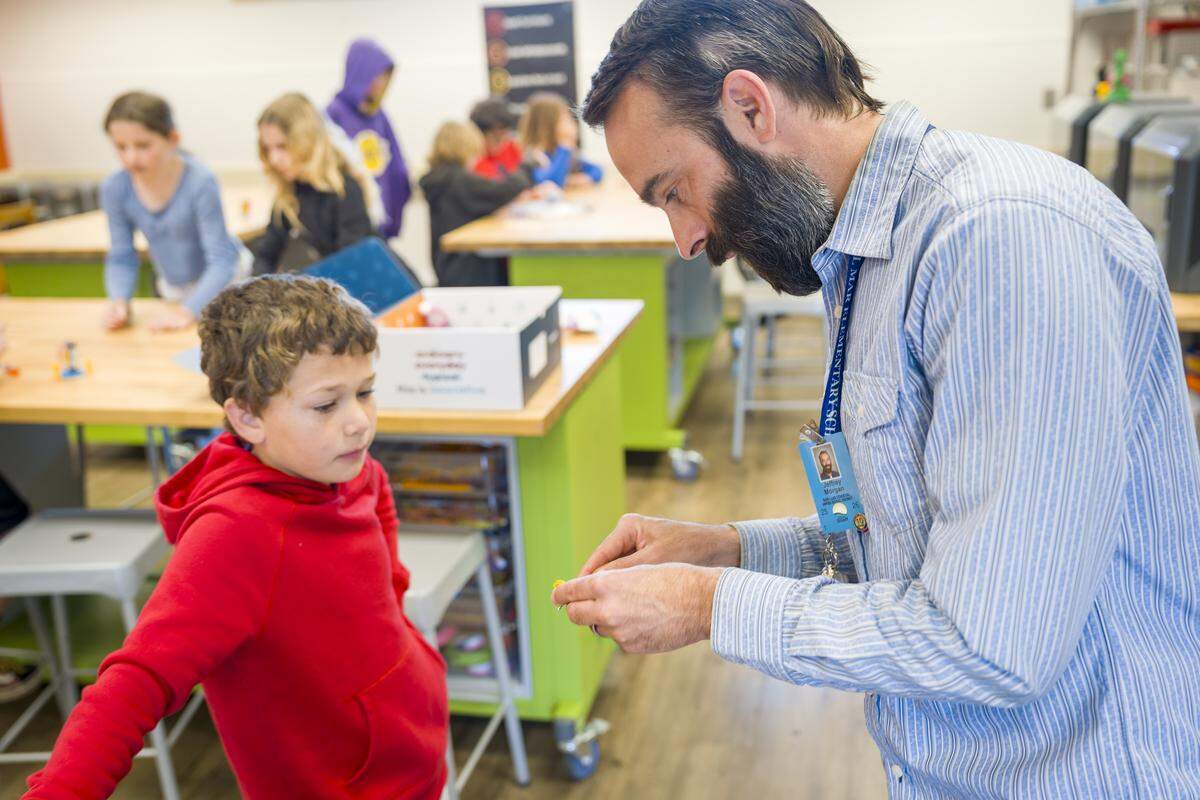
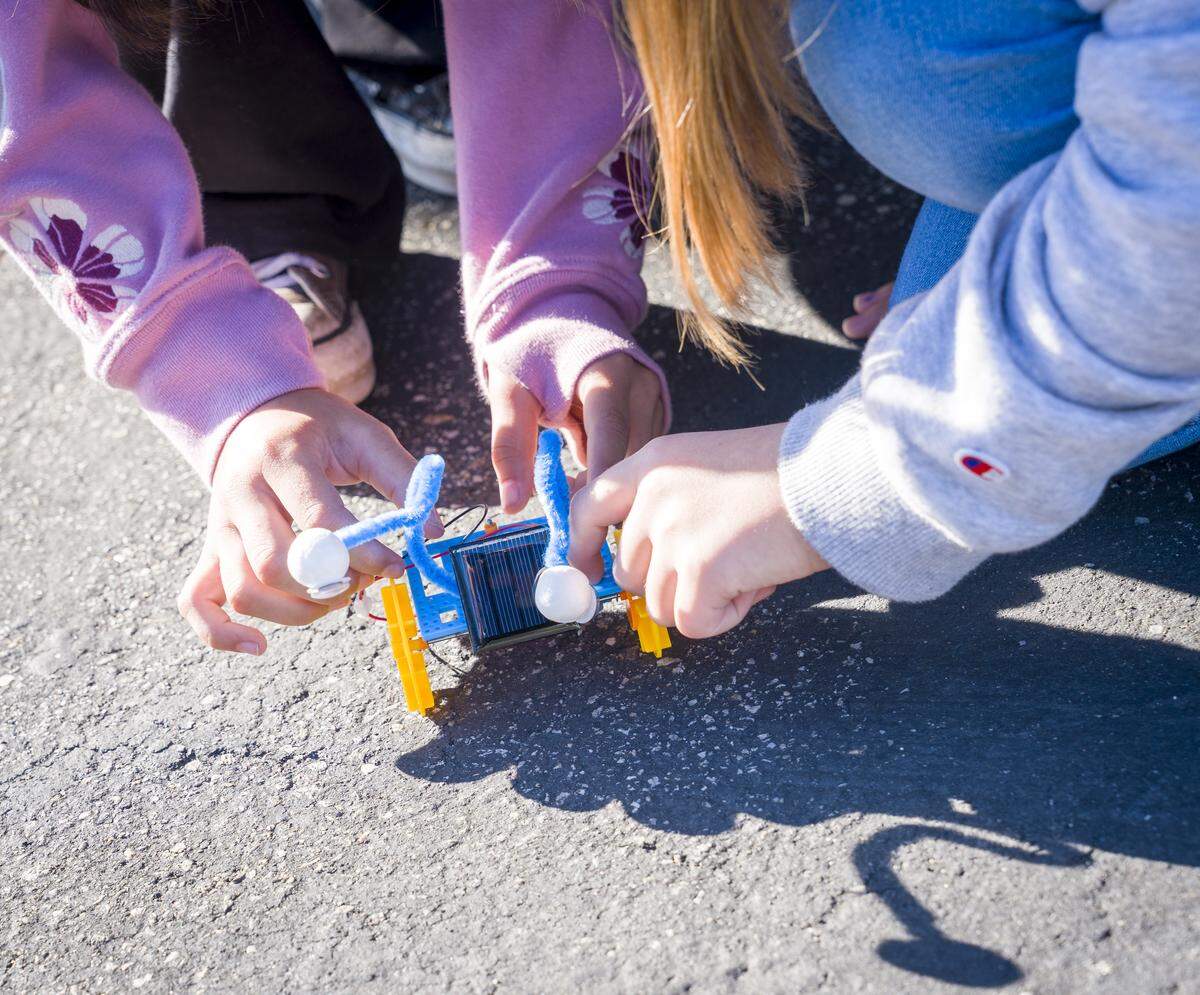
iINNOVATE’s goal is to close equity gaps by introducing students to hands-on STEM education and at a young age.
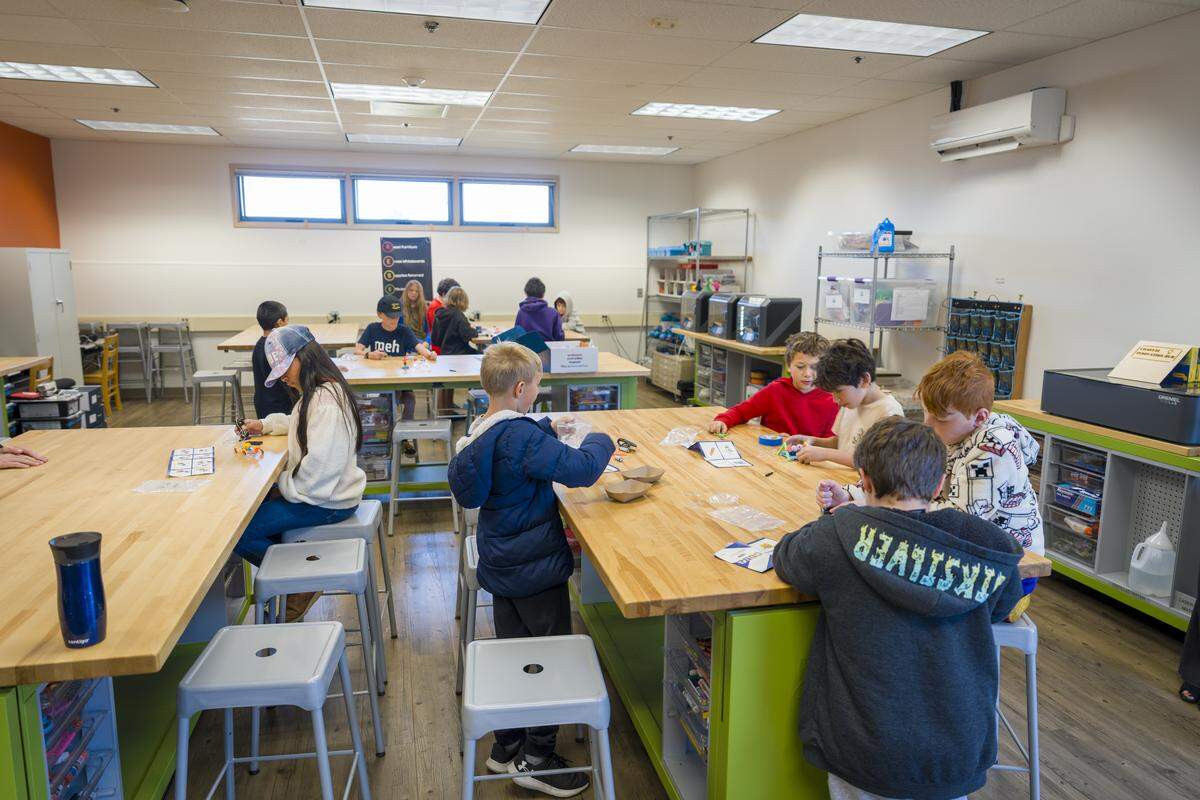
The foundation put “innovation labs” at each of the district’s elementary schools and provided curricular support and professional development to show educators how the labs could be used, Robertson said. The labs are intended to provide all students with access to hands-on learning experiences.
When the iINNOVATE program first started, Robertson said about 2% of socioeconomically disadvantaged students were opting into STEM electives. At the end of last year, about 70% of socioeconomically disadvantaged students opted into a STEM class in middle school.
“The work of the foundation is to come back to this core premise that if you can reach kids early with exposure and experiences tied to the real world, give them hands-on experiences where they’re solving problems in a concrete way, in a format that mirrors what industry is saying they need most, then we can set kids up to feel more confident empowered when they hit middle school and high school,” Robertson said.
This year, the foundation will have channeled a total of $3 million into the program across its school campuses since it started, Robertson told The Tribune.
Athletics for Achievement is another of the foundation’s programs, offering free, year-round sports opportunities at all the district’s elementary school sites.
Robertson said that idea cropped up after hearing local industry leaders say they look for people with team sports experience when hiring.
“I had a CEO from the healthcare sector here on the Central Coast tell me team sports is a really strong indicator that somebody will be a successful hire, because they know, literally, how to work in a team,” Robertson told The Tribune. “They have a healthy attitude around competition, they want to excel, and also they know the requirements around discipline and training in order to meet the goal of, kind of, winning, that kind of healthy competitiveness.”
Robertson added that sports also help students forge social relationships and get involved at school.
From an equity perspective, Robertson said the athletics program provides opportunities for students whose families couldn’t afford to pay for club sports.
“We want to make sure that all students have the opportunity to play, to be part of a team, but also from an early age, be cultivating these really strategic, in-demand skills,” she said.
Prater said the district now has over 500 fourth- through sixth-graders involved in the athletics program. The foundation also added a pilot robotics program this year in the same vein as the sports program, Robertson said.
Since the start of the program, the foundation has committed about $500,000 to Athletics for Achievement at the elementary and now middle-school levels, accoring to Robertson.
The third main program is NextGen Scholars, an initiative that aims to remove some of the financial barriers that can prevent socioeconomically disadvantaged and first-generation students from accessing higher education.
The foundation identifies students in need and provides small-scale scholarships to cover things like advanced placement tests, which cost about $99 each, and the cost of submitting college applications, Robertson said.
“All of these little micro-barriers that litter the path to college were things that the foundation looked at and said, ‘We want to make sure that our hard-working, high-achieving students are free to run hard and fast after their goals,’” she told The Tribune.
According to Prater, the crew of 45 NextGen scholars has a cumulative GPA of 3.8, and 24 of those students have a GPA of a 4.0 or higher.
Since the start of the program, the foundation has committed about $600,000 toward NextGen, Robertson said.
Additionally, the foundation has routed about $300,000 to grants for teachers and in the past, distributed $250,000 to outdoor education, she added. The foundation has also made recent allocations to its new advanced manufacturing apprenticeships.
The money that has been distributed to the foundation’s programs was mostly fundraised, Robertson said.
Last year, the foundation raised about $1.5 million for the school district, according to assistant superintendent of business services Ryan Pinkerton.
Foundation director is paid by school district. Why?
As of the 2025-26 school year, Robertson was receiving a salary of $175,792 with $71,276 in benefits, according to Pinkerton.
In total, Robertson was set to receive about $247,068 in pay and benefits.
While community members like Lippert have questioned Robertson’s salary and placement on the district’s payroll, Prater told The Tribune that setting up the foundation this way was a strategic action on the district’s behalf.
Prater said he’s seen education foundations in other places become disconnected from their school districts. He said putting the foundation’s executive director on the district’s payroll, which means she reports directly to the district, reinforces the partnership between the two organizations.
“We have common interests, common shared values, and that can be promulgated throughout the foundation as they go out and get board members that serve on the foundation,” he said. “So, we don’t stray from the district’s initiatives and the district’s priorities.”
He continued: “If the foundation were to go off and hire their own executive director, over time, you’re going to get organizational drift and disconnect depending on who the executive director is, who the foundation board is, who the school board is.”
Prater added that the district also wanted to ensure that the majority of foundation funding and donations received went to student programming by removing the cost of Robertson’s role from the foundation’s budget and having the district cover it. He said high administrative costs are one of the biggest unspoken burdens that other foundations face.
“Donors don’t like it,” he added.
The school district has faced criticism about its own administrative costs as it deliberated budget cuts. It previously responded, during a December board meeting, that it has the lowest student-to-administrator ratio compared to its peers in the county.
Prater reiterated this to The Tribune again, saying that even with Robertson on the payroll, the district maintains a comparatively low administrator-to-student ratio.
State data backs this up, showing that San Luis Coastal had about 242 students per administrator across the district last school year, while Lucia Mar, the largest SLO County district, had about 214 students per administrator, Atascadero had about 228 and Paso Robles had about 188.
In an email detailing Robertson’s salary to The Tribune, Pinkerton described Robertson’s role as an “excellent return on investment.”
How is the foundation evaluated?
According to Prater, there are two main oversight bodies who evaluate the work of the foundation and Robertson. One is the school district and the other is the foundation’s board of directors.
According to its website, the foundation has about 19 people on its board, with Prater and school board member Chris Ungar serving as liaisons.
Prater said the board reviews Robertson primarily based on the reach of the foundation’s programming and how much money was secured through community donations.
As a nonprofit, the foundation’s annual tax filings and audits are also made public on its website.
Prater told The Tribune he evaluates Robertson based on the extent to which the foundation supports district initiatives and school board goals.
The district tracks metrics like the number of students who participate in foundation programming and their GPAs, in addition to program outcomes.
Prater said hundreds, if not thousands, of students in the district are benefiting from the foundation’s involvement.
“Accountability is alive and well,” he said. “I can point to datasets and students who are positively influenced by this, and boy, oh boy, it is something to behold.”
This story was originally published February 8, 2026 at 5:00 AM.
.JPG)