State test scores show how hard COVID hit SLO County kids. See your district’s results
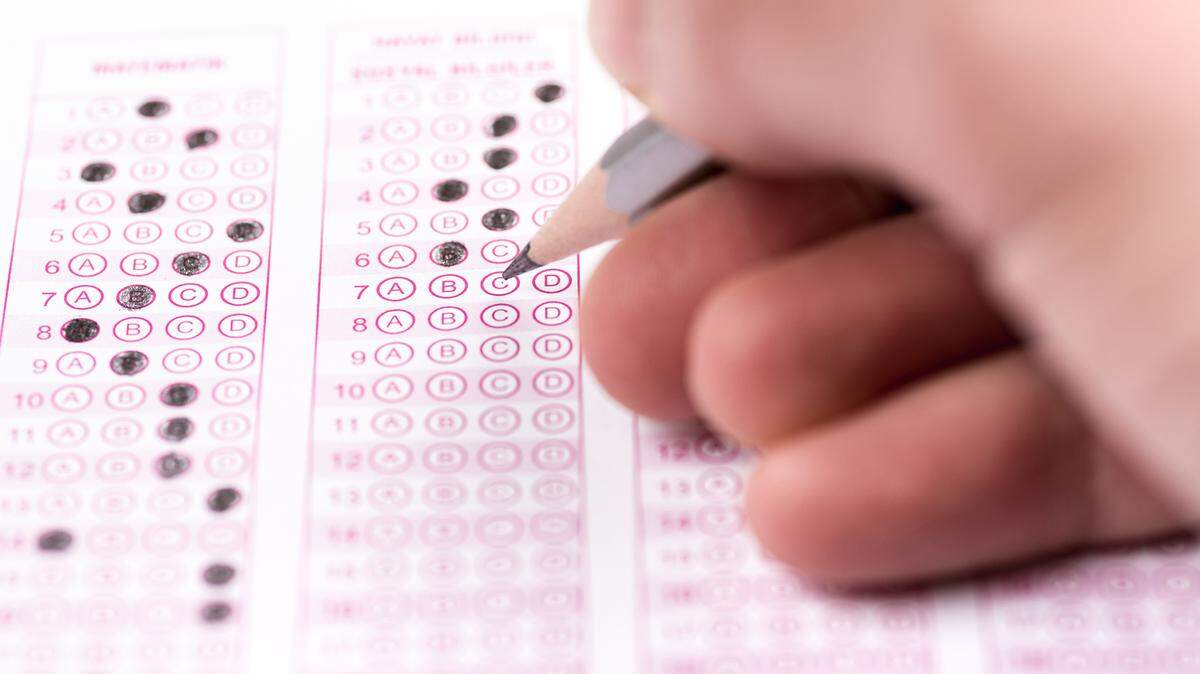
State standardized test scores released this week show San Luis Obispo County students have slipped substantially as a result of impacts from the COVID-19 pandemic.
However, the local students continue to score higher on the Smarter Balanced summative assessments than the state average, data from the California Department of Education show.
Statewide, the number of students who met or exceeded standards on the English and language arts test dropped by 4 percentage points, or from 51.1% to 47.1%, from 2019 to 2022. Those who met or exceeded standards on the math test dropped more than 6 percentage points — from about 39.7% to 33.5% in the same time frame — according to the state’s data.
In San Luis Obispo County, the number of students who met or exceeded standards on the reading test dropped 5.5 points from 56.9% to 51.4% from 2019 to 2022. In those same years, student achievement of the math standards dropped 7 points from 45.5% to 38.5%, the state’s data show.
The state assessment data is yet another indicator of how hard the COVID-19 pandemic has hit schools and eroded students’ ability to grasp learning concepts.
“No question, we took a hit; everybody took a hit,” said Rick Mayfield, San Luis Coastal Unified School District’s director of elementary learning and achievement. “Overall, we’re still behind where we were pre-COVID.”
These impacts on learning in schools were likely due to the online instruction format schools had to use in 2020 in 2021 to prevent the spread of COVID-19, on top of the overall gravity of the deathly pandemic, school administrators said. During months of online learning, many students struggled with isolation, bad home internet connections, and sibling childcare responsibilities with parents away at work, and as a result received more failing grades in classes than in years prior.
Once schools were able to return to fully in-person learning by the end of the 2020-21 school year, it took a massive effort to get kids back on track.
Schools implemented extra after-school learning pods and invited struggling students to attend. Teachers extended late-work deadlines, worked overtime to contact students with low grades, and held meetings with families to work out plans so students could graduate.
In the online and hybrid format, San Luis Obispo County schools scaled back their curriculum to teach students little beyond the basics needed to move on to the next grade.
“Our teachers did a really good job in our school sites of trying to prioritize the most important things that we needed to teach,” said E.J. Rossi, Atascadero Unified School District’s assistant superintendent of educational services. “The kids are coming back. We’ve missed a lot. What are those foundational skills we really need to hit? So we spent a lot of last year doing that.”
Despite those efforts, school district administrators noted that the standardized test scores released on Monday highlight how much work there is still left to be done.
“The drop that we have experienced, we see it throughout the state, we see it throughout the county, we see big schools and little schools,” Shandon Joint Unified School District Superintendent Kristina Benson said. “There’s a lot of work to be done in helping our students to bring up scores in both ELA (English and language arts) and math.”
Breaking down the testing data
Generally, San Luis Obispo County schools saw a more precipitous decline in math scores versus English and language arts.
Eighth-grade math scores fell the steepest, from 43.9% achieving or exceeding state standards in 2019, to 34.8% this year, a 9-point drop, according to the department of education data.
Seventh-grade math, third-grade reading and fourth-grade math scores each took the next-largest drops in scores in 2022 compared to 2019, the data show.
There were discrepancies between how individual school districts fared as well.
Cayucos Elementary School District was the only one to see overall improvements in its state standardized test scores from 2019 to 2022.
Its reading scores increased from 65.8% of students meeting or exceeding standards in 2019, to 69.7% in 2022. And in math, 54.4% of students met or exceeded standards in 2019, while 60.7% did so in 2022, according to the data.
Atascadero Unified saw only minor drops in the number of students testing at or above state standards. It lost about 1 percentage point in both reading and math, according to the data.
Other districts in the county saw greater declines in test scores.
Lucia Mar, San Luis Coastal, Paso Robles and Templeton school districts all saw declines in reading scores of about 5 to 7 percentage points from 2019. The San Miguel Joint Union School District saw a dip of about 4.5 points in its reading scores from 2019 to 2022.
The Paso Robles district saw a dip of a little more than 6 percentage points in the math scores, whereas the Lucia Mar, San Luis Coastal, Templeton and San Miguel school districts saw math scores drop by between 8 to more than 9 percentage points from 2019 to 2022.
Shandon Joint Unified and Coast Unified school districts’ standardized test scores were hit particularly hard.
Coast Unified in Cambria saw a drop in its reading scores of nearly 15 percentage points — from 52% of students meeting standards in 2019, to 37.4% in 2022, the state’s data show. The district’s math scores dipped more than 11 percentage points in the same time frame to 26.8% achieving state standards in 2022.
And Shandon in the rural, northeastern reaches of the county saw just 14% of its students meet state standards in reading, down from 32% in 2019. Its math scores took a more than 16-point drop down to 8.7% achieving state standards in 2022.
“The decline is definitely larger than we expected,” Benson, the Shandon superintendent, said. “But because of the size of Shandon, any significant fluctuation in those students is going to show a large disparity when we look at the total scores.”
Shandon’s total enrollment across its kindergarten through 12th grade is 283, according to the California Department of Education. In contrast, Lucia Mar, the largest district in San Luis Obispo County, has a total of 9,793 students, state data show.
Administrators said it’s important to drill down on the individual testing data to see what concepts students were struggling with.
That’s normally something administrators can glean from the state’s scores, but the data released this year only gave a general overview of the scores broken down by subgroups such as race, economic status and English language proficiency.
“We’ve gotten much more detailed data in prior years. This year, we’re really just getting an overall score,” said Rossi of the Atascadero school district. “So it’s harder to use the data this year as a deciding factor when we’re making instructional and programmatic changes.”
Although this has frustrated administrators, they say by using district-specific testing, they can still drill down on what subjects or concepts students may not have grasped fully.
“To base our intervention work only on (the state testing) results would be a bad decision because it’s a one-point-in-time look at student performance,” said Hillery Dixon, assistant superintendent of curriculum and instruction at Lucia Mar. “There’s a lot of other data, including regular classroom assessments and unit tests and all that kind of stuff, as well as other diagnostics, that we use to apply interventions and check for student growth.”
Teachers are also playing a key role in constantly assessing students to check whether they’re on task with coursework and able to grasp concepts that will later be tested.
James Steaffens, a math teacher at Paso Robles High School, said he and other teachers at the school have noticed that it appears that skills taught in late 2020 — when COVID-19 pandemic safety measures first forced schools to transition to online learning — have been harder for students to fully comprehend.
“Second semester of algebra 1 is a lot of quadratics, and you’re dealing with quadratic formula and solving quadratic functions,” Steaffens said. “And if those kids were in an algebra 1 class in 2020, then they probably didn’t get a very deep understanding of that.”
“So it means that as teachers, we have to augment what we’re doing in the classroom to reteach and reinforce that,” he continued. “That doesn’t mean we’re throwing other things out, it just means that we’re aware of that so we can figure out what additional support we are going to offer these kids to make sure that they have that information.”
Benson, the superintendent from Shandon, noted that it’s vital to understand that the state standardized testing scores are only part of the equation.
Schools have also focused a lot on the social and emotional mental health of students.
“I think it’s important to look at the whole student and not just if they are able to do their multiplication factors or able to spell and complete reading comprehension assignments,” Benson said. “But also whether we are doing all that we can to help them be the most successful they can be in the classroom before they ever get to the test.”
Using extra funds given to them by the federal and state government, districts have focused on hiring more mental health counselors and opening up wellness centers at schools for students and their families to access key resources such as counseling and social services.
“How are we going to address something like learning loss on a large scale?” Benson asked. “We have to look at the whole child and address the traumas that have been associated with staying at home and distance learning and having inadequate internet service and things that maybe some populations are more affected by than other populations.”
This story was originally published October 26, 2022 at 12:29 PM.