SLO County school district under federal investigation for alleged discrimination
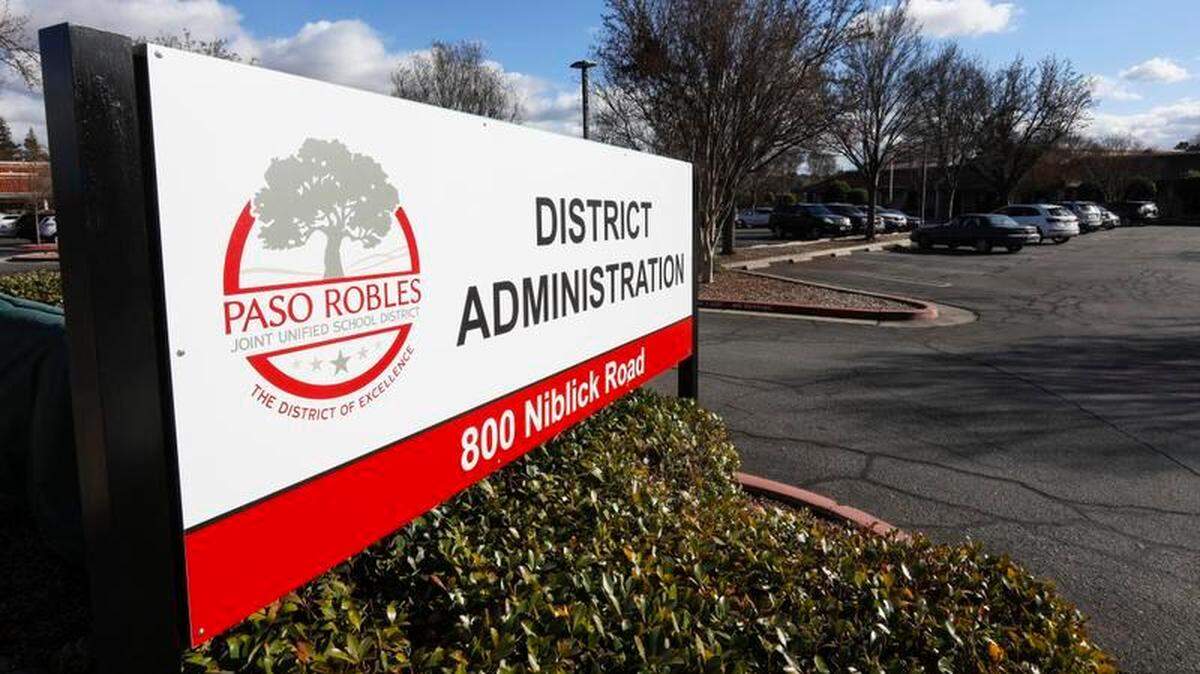
The U.S. Department of Education’s Office for Civil Rights has opened an investigation into the Paso Robles Joint Unified School District for allegedly discriminating against Latinx and Spanish-speaking community members.
The alleged discrimination primarily came during the school district’s 7-11 Advisory Committee process last year when the district body looked into whether it should close a school to cut costs and adjust to stagnant enrollment.
That committee chose Georgia Brown Elementary School — the district’s only site hosting a Spanish/English-language dual immersion program — as the campus that should close. The district has not yet taken action on the committee’s recommendation.
One of those meetings included a clash between activists and Board President Chris Arend, who berated them for addressing the board in Spanish.
Additionally, the board may have discriminated against Spanish-speaking community members in school board meetings following the 7-11 Committee’s announcement of its decision, according to the complaint about the alleged discrimination. The 7-11 Committee, named because it was required by law to have between seven and 11 members, was comprised of 11 members.
The district has since made improvements in how it communicates with Spanish-speaking members of the community, by adding an interpreter at board meetings and sending out agendas and announcements in Spanish.
The complaint was sent to the Office for Civil Right’s San Francisco office on June 2 from lawyers from two organizations, the California Rural Legal Assistance Inc. and the Lawyers’ Committee for Civil Rights, on behalf of local advocacy group Paso’s People Action.
“The school district’s deliberate negligence and purpose-driven pain towards the Latinx community in Paso Robles should not be ignored, whether it’s their failing to provide Spanish language committee forms or their desire to place profits over people in their closure of Georgia Brown Elementary school site — a school in a majority minority district,” said Yessenia Echevarria, co-founder of Paso People’s Action, in a prepared statement about the complaint. “The damage they’ve caused will have long-term impacts on the community and affect everything from educational equity to political participation.”
In reply to the June complaint, the Office for Civil Rights said it will investigate three main allegations:
- The district discriminates against Spanish-speaking parents and community members by failing to communicate with them in a language that they can understand at school board and 7-11 Committee meetings;
- The district treated Latino parents and community members differently by denying them the opportunity to participate as members of the 7-11 Committee; and
- The district discriminated against Latino and English learner students through the 7-11 Committee’s recommended closure of Georgia Brown Elementary School.
District Superintendent Curt Dubost responded to the complaint and Office for Civil Rights investigation Thursday afternoon, reiterating that one of the district’s priorities has been providing Spanish interpretation services at each board meeting and ensuring the public is informed of the ongoing process regarding the possible school closure.
“The district welcomes the opportunity to show evidence of our compliance with applicable law and engagement of all members of our school community in the governance of our district,” Dubost wrote in a statement. “We have corrected already any deficiencies in that compliance. The district firmly denies any discrimination against Latino students or their families and has numerous initiatives to ensure participation of all members of our community.”
“The district endeavors to go above and beyond to ensure all members of our community are informed and able to participate in all aspects of the education of the Paso Robles community’s children,” his statement continued. “We also welcome any conversation with members of our community who have suggestions to help us increase community participation.”
By opening an investigation into the allegations, the Office for Civil Rights said it “in no way implies ... their merits,” according to the agency.
The complainants say in their June 2 letter that the district should convene another advisory committee to reexamine the possible school closure and “engage in a decision making process that includes the Spanish-speaking parents of students enrolled in the district.”
The letter also asks the Office for Civil Rights to order the district “not to implement any steps to close Georgia Brown Elementary School.”
7-11 Committee members acknowledged lack of representation, translation
In their 144-page report to the school board in January recommending the closure of the Georgia Brown campus, members of the 7-11 Committee acknowledged the lack of representation during the process.
“Decisions of this magnitude and the processes to reach them (English-language learners) MUST include all stakeholders and I fear this important population has been left out of the discussion thus far in large part (due) to meeting restrictions imposed by the COVID-19 pandemic,” wrote committee member Rita Koski in the January report. “No future committee should hold a single meeting without representation of our district’s English Learner families.”
Moria McNellis, another member of the committee, indicated her agreement with Koski’s statements in the same report.
“Many members of the committee brought forward concerns they have heard from those not represented; however, not giving them the appropriate means to be a part of the discussions means there will likely be issues or challenges that we were unable to fathom or address in our own conversations,” McNellis’s comments read. “As the board moves forward I recommend that there is an effort to include parents, allow access in families’ native language (Spanish), and make it a welcoming environment in which families can be a part of the solution with our district.”
About 35% of the Paso Robles school district is comprised of English-language learners whose primary language is Spanish, according to data from the California Department of Education.
Public schools in California with 15% or more of their population who speak a primary language other than English are required by law to provide all “notices, reports, statements or records” in that language to parents or guardians.
The application sent out by the school district seeking 7-11 Committee members was released only in English. All of the committee’s meeting notices, agendas and minutes were also only posted in English.
Beginning in about March, the district began sending board meeting agendas and district announcements in Spanish.
In a response to the composition of the 7-11 Committee, Lozano Smith, the law firm representing the Paso Robles school district, said in a February letter that “it appears the District’s process for forming the Committee complied with sound practice and applicable law.”
That letter did not address the lack of Spanish translation for the 7-11 Committee application, meeting notices, agendas and minutes.
“Everyone should have an equal opportunity to get an education in this country. All parents should have an equal voice in the education of their children. These are the promises of our civil rights laws,” said Frank Kopcinski, directing attorney of California Rural Legal Assistance’s San Luis Obispo Office, in a prepared statement. “By denying Latinx parents the opportunity to participate in its advisory committee and by not providing adequate interpretation services at its board meetings, the Paso Robles Joint Unified School District violated these laws, silenced its community members, and engaged in unlawful discrimination.”
Alleged discrimination in previous Paso Robles school board meetings
The formal investigation by the Office for Civil Rights comes after months of heated arguments and public comments at Paso Robles school board meetings earlier this year.
In a meeting on Jan. 13, community members, including Echevarria, clashed with board members for attempting to speak in Spanish to discuss the 7-11 Committee’s impending recommendation to close the Georgia Brown campus.
After a few commenters attempted to speak in Spanish and demanded an interpreter, Board President Chris Arend responded by asking people to speak English.
“Under the California Constitution, the official language of the state of California is English, and we conduct our business in English,” Arend said during the January meeting. “We tried to accommodate speakers who do not have sufficient command of English, but I want to remind everyone out there: If you have sufficient command of English, please speak in a language that we understand.”
Elena Garcia, a social worker in Paso Robles, said during public comment at the January meeting that having no certified Spanish-language interpreter posed problems for the community.
“If our Spanish-speaking community members want to speak during public comment, it would technically be going on deaf ears for those who don’t understand Spanish,” Garcia said at the time. “That’s not welcoming to our Spanish-speaking community. And how do we ever expect them to be involved?”
Though the district later hired a certified Spanish interpreter to be present at all board meetings, Echevarria and other Spanish-speaking community members continued to face issues in their attempts to address the board.
In an April 27 meeting, Echevarria addressed how she believes Arend had been “abusive” to members of the Spanish-speaking community in his comments about interpretation at meetings.
Echavarria’s comments were given in Spanish and took longer than the typical three minutes allotted to public speakers due to the Spanish interpretation.
In response, Arend said “this was idiocy, this woman speaks fluent English and she has wasted roughly now another five minutes of our time to grandstand.”
“The exclusion of Latinx and limited English-proficient parents and community members from participating in school board meetings is a blatant violation of civil rights, particularly in a school district where Latinx students make up more than 56% of the total enrollment,” said Deborah Escobedo, senior racial justice attorney at the Lawyers’ Committee for Civil Rights of the San Francisco Bay Area, in a prepared statement. “Title VI prohibits school districts from denying anyone — regardless of their race, color or national origin — the opportunity to participate as a member of an advisory body, yet the school district continues to breach the law.”
It’s unclear how long the Office for Civil Rights’ investigation will take or what the result may be.
Editor’s Note: This story has been updated to include a statement from the Paso Robles school district.
This story was originally published December 2, 2021 at 1:13 PM.