CSU says it won’t invest in fossil fuels. What about Cal Poly?
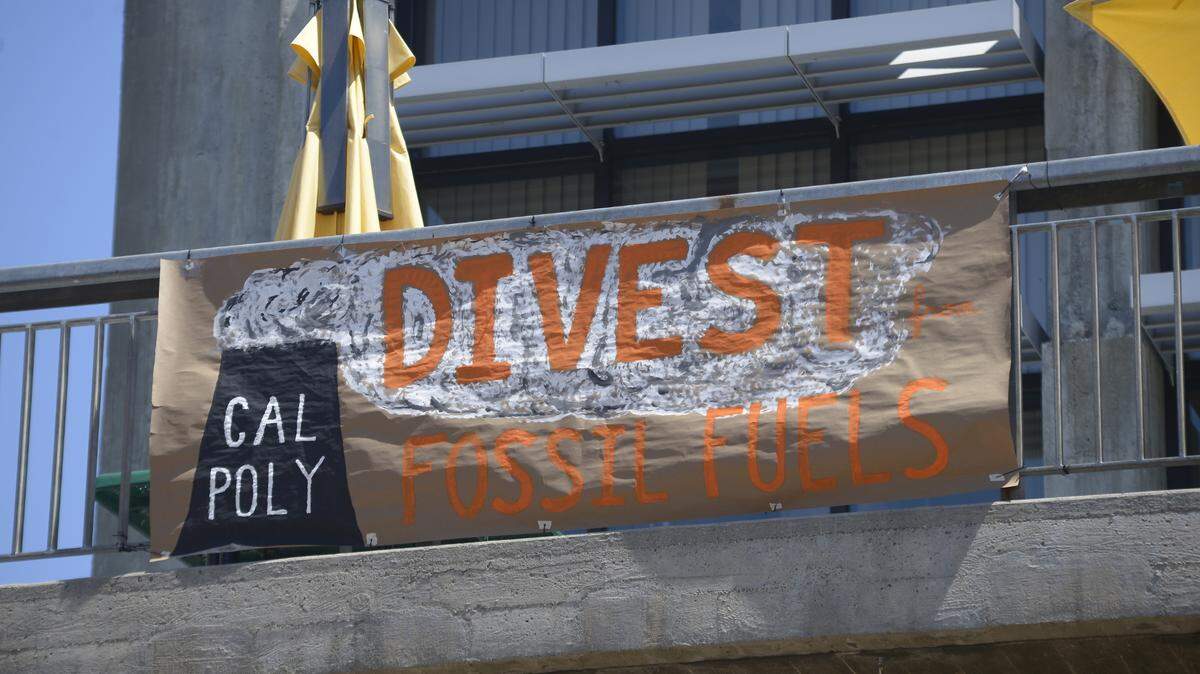
Cal Poly in San Luis Obispo plans to continue its investment in fossil fuels, even after the California State University chancellor announced the CSU system would divest.
The CSU’s announcement came Oct. 6 from Chancellor Joseph Castro.
“Consistent with our values, it is an appropriate time to start to transition away from these types of investments, both to further demonstrate our commitment to a sustainable CSU but also to ensure strong future returns on the funds invested by the university,” Castro said in a news release about the change.
As of June, CSU had a $5.2 billion investment portfolio. Of that, $162 million, or 3.2%, was invested in fossil fuel companies such as ExxonMobil and Chevron.
The system’s Investment Advisory Committee was tasked by Castro in May to find out whether divesting from fossil fuels would be a smart move for the massive university system.
The committee members’ shared conclusion was “yes,” and they gave Castro four main recommendations:
- To liquidate fossil fuel-related bonds held in the systemwide investment fund trust as soon as reasonable and restrict future fossil fuel investments for that same portfolio and the intermediate duration portfolio;
- To transition out of the total return portfolio’s direct energy mutual fund and into other non-fossil fuel mutual funds;
- To work as appropriate and feasible to further reduce fossil fuel exposures in the total return portfolio, which due to legislative restrictions is limited to mutual funds; and
- To allow CSU investment managers discretion to continue to invest in businesses that are successfully transitioning to sustainable green business models.
Castro agreed to implement those recommendations and has tasked staff at the chancellor’s office with implementation, according to the news release.
Student and employee advocates involved in the student-led Divest The CSU campaign called Castro’s announcement “the right thing to do for climate change” and a “smart financial move.”
“When I decided to start Divest The CSU, I knew that it was a winnable campaign,” said Lisa Swartz, a recent Cal Poly physics graduate. “Fossil fuels are destroying our planet, and the call to divest is louder and clearer than ever before. All the same, I was amazed by just how much support our movement garnered from so many people across the campuses, and so quickly.”
But Swartz’s alma mater, Cal Poly, does not plan to align with the CSU and divest from fossil fuels.
“At this time, the Cal Poly investment portfolio will not be changing,” Cynthia Lambert, a communications specialist at the university, wrote in an email to The Tribune on Oct. 7.
The Cal Poly Corp. has about $1.24 million invested in fossil fuels — about 1% of its investment portfolio.
The Cal Poly Foundation has about $5.6 million, or 2.1% of the overall value of the endowment, invested in “the energy sector,” although that is in both renewable energy sources and fossil fuels. The university was unable to provide a more concise breakdown of the investments, according to university spokesperson Matt Lazier.
Both the Cal Poly Academic Senate, a governing body that represents more than 1,300 faculty members, and Cal Poly Associated Students Inc., which serves as the official voice of university students, passed resolutions in earlier this year urging Cal Poly to divest from fossil fuels.
Heath Hooper, a Cal Poly student and co-chair of the Divest the CSU campaign, wrote to The Tribune in a written statement that participants will continue to “apply pressure on the university” to no longer invest in fossil fuels.
“Considering the scientific consensus regarding climate change, and the environmental destruction unfolding across our state, it is urgent that influential institutions such as our own look past short-term fallout and hold the industries that are causing this destruction accountable,” Hooper wrote. “The CSU board and financial advisors support this sentiment through their decision, as do our students through the resolutions passed by student government last year.
“The current momentum behind the divestment movement is strong, and we plan on using it to continue engaging with our university on this critical issue.”