Were medical records forged in SLO County teen’s death? Jury couldn’t decide
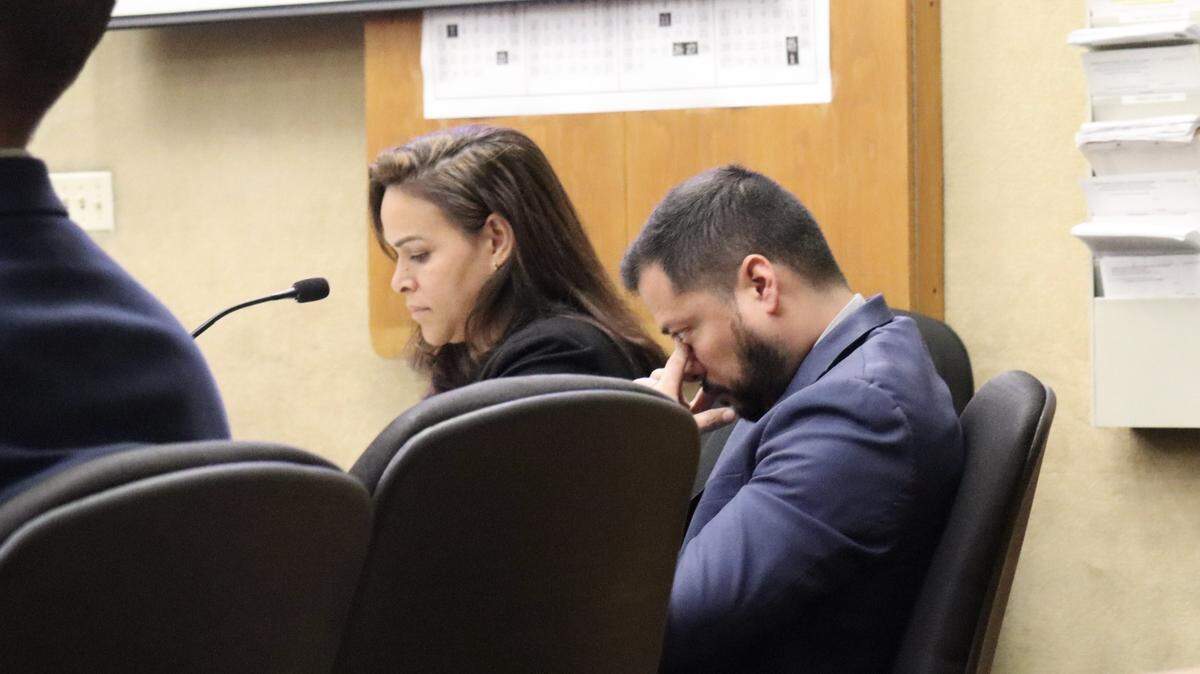
A San Luis Obispo County jury deadlocked this week as it tried to decide if an employee forged medical records for a Paso Robles teen who died during an overnight stay at the county’s Crisis Stabilization Unit last year.
Janet Marie Brown, 40, worked as a licensed psychiatric technician for Sierra Mental Wellness Group, the company contracted to run the now-closed county Crisis Stabilization Unit where 19-year-old Elina Branco was found dead on the morning of May 16, 2024.
Her mother, Linda Cooper, had taken her to the facility to be closely monitored following an overdose the previous day.
It was later discovered that Branco died from fentanyl poisoning between 10 p.m. and midnight, despite her charts reading she was sleeping and breathing normally all night, according to the coroner’s report presented in court.
The charges against Brown — one of multiple staff members on duty that night and the one put in charge of monitoring Branco — allege that she falsified five medical records with fraudulent intent. She was originally charged with 10 misdemeanors under both the penal code and the business and professions code for allegedly forging five records, but the latter charges were dropped.
Brown was not accused of being responsible for Branco’s death.
Brown’s trial ended Friday in a hung jury, meaning the 12 jurors could not come to a unanimous agreement over whether to convict or acquit her.
The court will next hear a motion in January to determine if the case should be dismissed or if it will be retried.
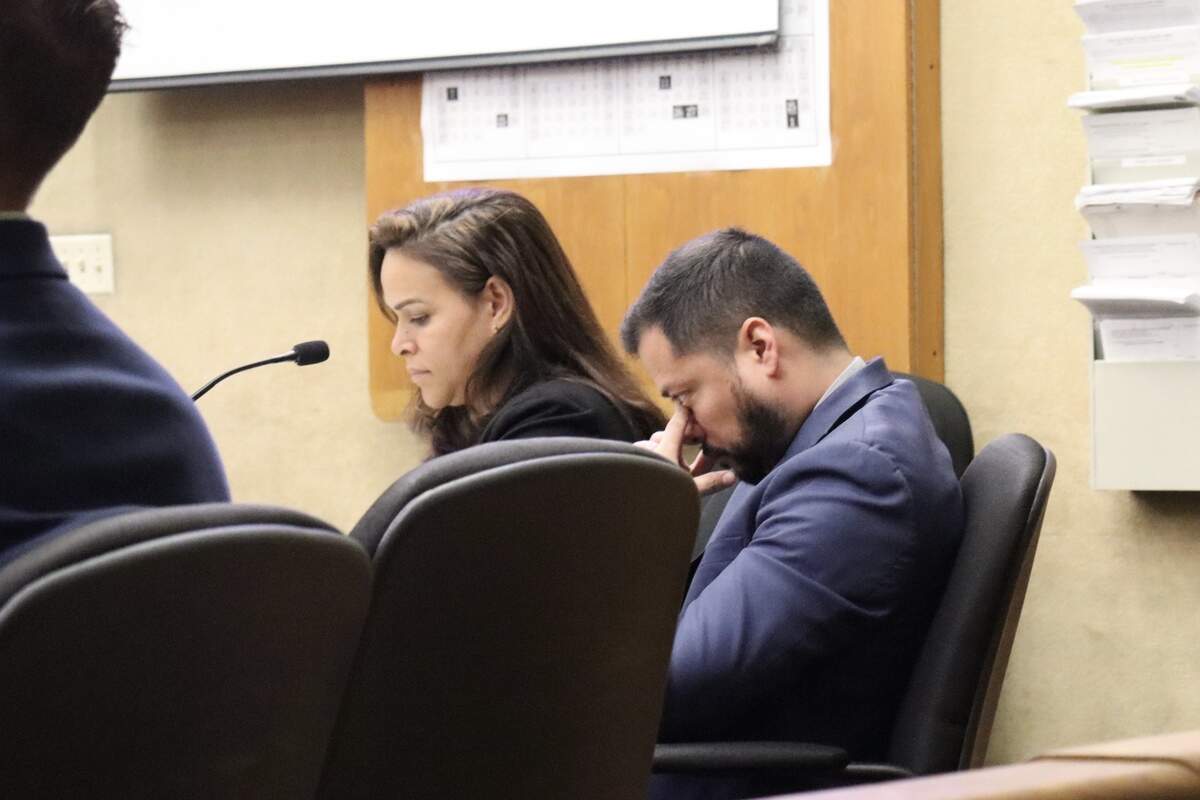
What evidence was presented to the jury?
Brown was one of at least seven staff members on duty at the Crisis Stabilization Unit last year when Branco died.
She was responsible for conducting and charting Branco’s monitoring checks overnight, which was a single document signed and submitted at the end of Brown’s shift, according to court records. Those documents were submitted as evidence in the trial.
Four entries taken every two hours from 11:30 p.m. until 5:30 a.m. read: “Client is currently engaged in therapeutic rest without incident. Breathing is even and unlabored. Will continue to monitor for any changes.”
The last entry at 7:30 a.m. read: “The client is lying in bed with eyes closed, breathing evenly and without labored breathing.”
Deputy District Attorney Jerry Lulejian alleged during closing statements on Wednesday that Brown was inattentive — watching Netflix with headphones in — and even absent throughout her night shift.
In closing statements, Lulejian said security footage showed Branco’s breathing became labored, and her legs were flailing for about 20 seconds in her bed around 10:52 p.m. that night, a reaction consistent with the effects of a fentanyl overdose.
She was then completely still and not moving with a blanket over her face until 8:51 a.m., Lulejian said.
However, Brown recorded Branco as sleeping and breathing normally on all five charts, without any evidence that she was in fact breathing, Lulejian said.
He said this was because Brown was not diligently checking on Branco.
Brown allegedly had her earbuds in and was “watching movies, scrolling her computer and scrolling her phone” until at least until 2:32 a.m., but she may have continued using them for some time after, Lulejian said.
Then, Brown was off camera from around 2:30 a.m. until 6:36 a.m. and may have left the room during that time, Lulejian said.
He noted in Brown’s testimony she said she heard Branco snoring and talking in her sleep throughout the night. Another staff member, Bonnie Sayers, however, testified that she heard Branco snoring early in the evening, but she did not hear any snoring or sleep talking from Branco for the rest of the night, Lulejian said.
“This statement was just an excuse made up out of whole cloth in an attempt to explain the defendant’s false medical record,” Lulejian said. “She realized that morning she got that call that Bronco had died, that she had a problem.”
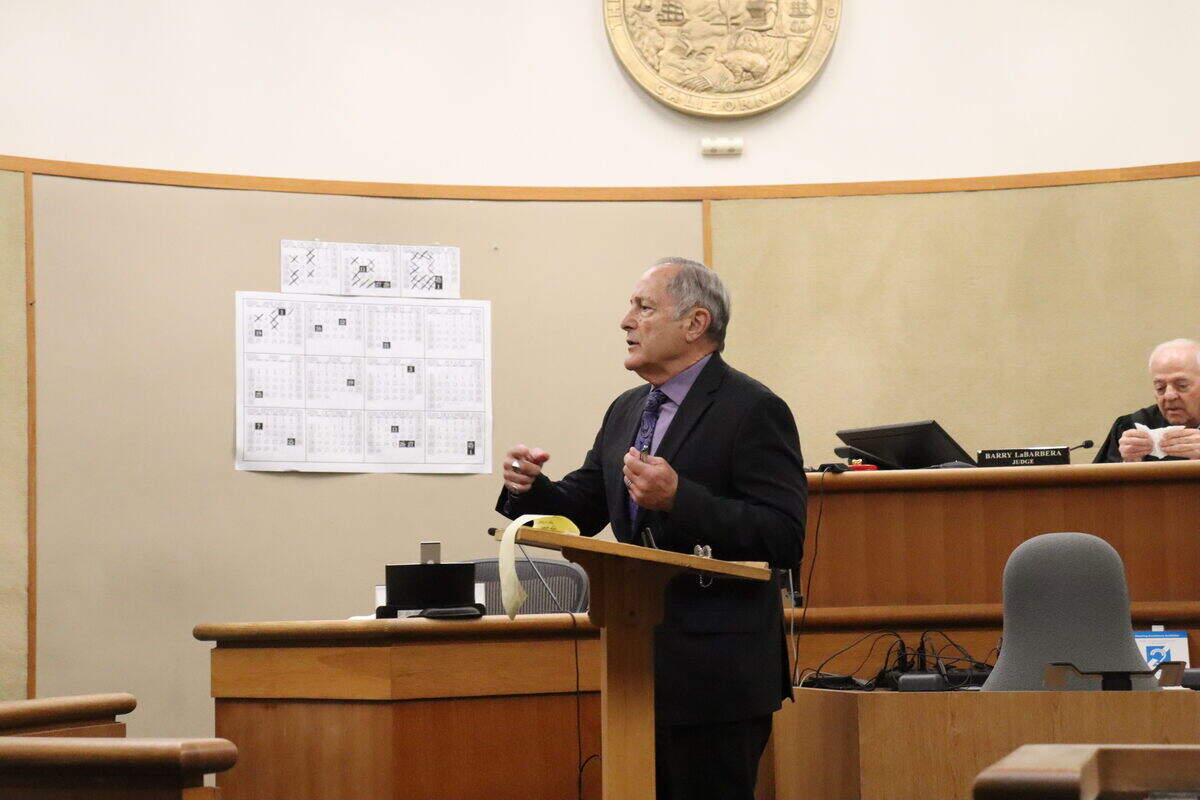
Lulejian ultimately argued that Brown acted with fraudulent intent by presuming and reporting Branco was alive without thoroughly monitoring her overnight. If Branco had been alive in the morning, no one would have known Brown wasn’t diligently checking on her, Lulejian said.
Brown’s defense attorney Gerardo Augstin rebutted, however, that “to the best of her knowledge, she charted accurately and truthfully,” not knowing Branco had died.
Staff at the Crisis Stabilization Unit were not required to go up to patients and physically check on them, and in fact the policy of the facility was to not wake sleeping patients and instead conduct line of sight observation only, Augstin said in his closing arguments.
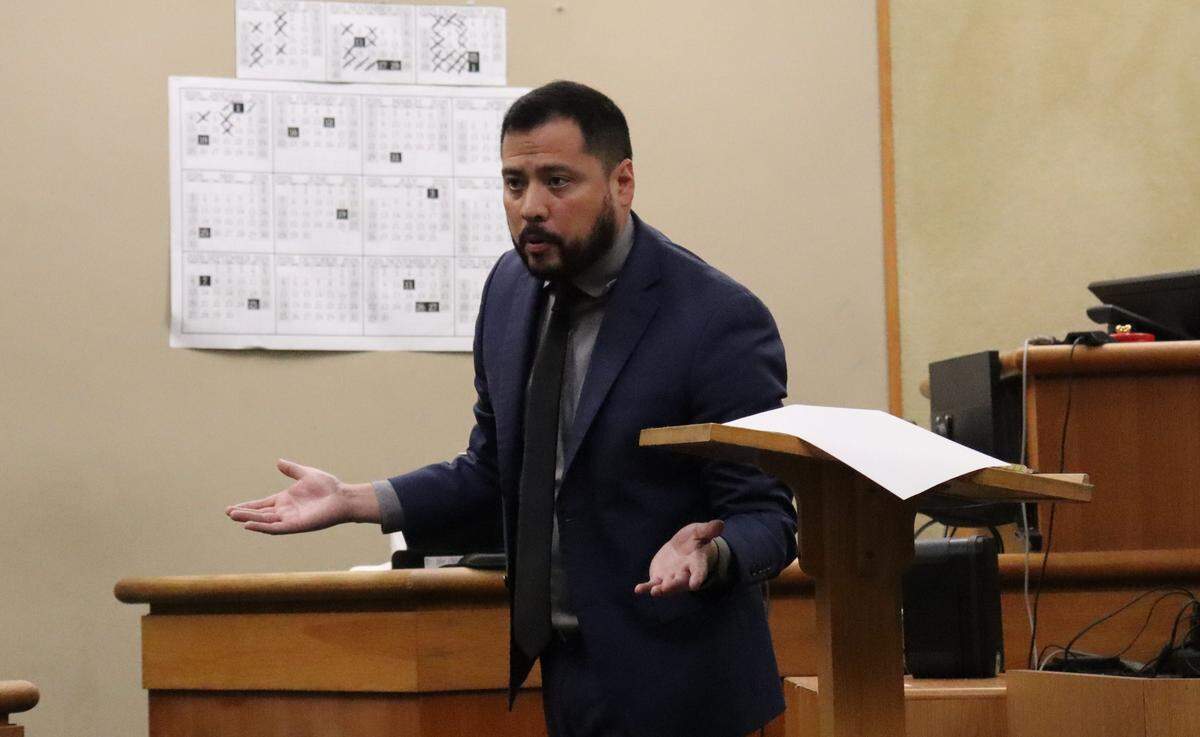
He additionally argued that Branco was not formally Brown’s patient, even though she filled out Branco’s charts.
He reminded the jury that this was not a murder case, and Brown was not being held responsible for Branco’s death.
“Why would she do this?” Agustin asked the jury. “Why would she lie?”
The jury went into deliberations on Wednesday at 11:26 a.m. after closing arguments.
At 3:44 p.m. on Thursday, the jury reported to the court it was at an impasse over the jury instructions statement “she intends to deceive,” noting “the interpretation seems to be the sticking point,” according to court records.
After over a day of deliberations, the jury could not unanimously find Brown guilty of intentionally falsifying any or all of the medical records beyond a reasonable doubt.
The court will hear a motion to dismiss the case on Jan. 23. If denied, the case will be retried with a new jury starting Feb. 9.
If tried again, she could face a maximum of six months in county jail for the misdemeanor charges.
A federal lawsuit filed by Cooper against SLO County and Sierra Mental Wellness Group is still pending.