Family of Atascadero boy killed in hit-and-run says maximum sentence isn’t enough
AI-generated summary reviewed by our newsroom.
- Bernal pleaded guilty to charges carrying a maximum sentence of 9 years, 8 months.
- Family of victim José Gutiérrez seeks harsher sentence, citing lasting trauma.
- DA cites lack of evidence for gross negligence or murder charges under state law.
Para leer este artículo en español, haga clic aquí.
The man who admitted to hitting and killing an Atascadero sixth-grader when he was driving under the influence of drugs faces a maximum punishment of nine years and eight months in state prison.
But for 11-year-old José Gutiérrez’s family, that’s not enough.
“Ten years is nothing for a max sentence on someone who was not only under the influence, but was a hit-and-run, he fled and has other cases in different states,” José’s aunt, Maria Contreras, told The Tribune. “How is that possible? I do not understand.”
Zachary Bernal was charged with vehicular manslaughter without gross negligence, which carries a maximum of four years in state prison. Leaving the scene added a sentencing enhancement of an additional five years, plus another eight months for possessing fentanyl. He has previous drug, theft and vandalism convictions in Santa Cruz County from 2013 to 2015, according to court records.
Bernal also entered an open plea to every charge without negotiating a sentence, meaning the judge has full discretion in sentencing.
But as they wait for the sentencing on June 25, José’s family is left learning how to live without him while trying to understand how the man who took their son’s life forever will be free in less than 10 years.
In fact, under California law, Bernal could serve half that time if he has good behavior.
The Tribune met with several members of José’s family at their Atascadero partment to discuss Bernal’s plea and what kind of justice they hope to find for José.
Family of boy killed in hit-and-run asks for maximum sentence
Maria Orozco and Francisco Gutiérrez, José’s parents, were still in Mexico when they heard that Bernal had pleaded guilty to all the crimes he was charged with.
They didn’t know what to think, Francisco Gutiérrez told The Tribune as his wife burst into tears.
“We just hope for justice for him,” Francisco Gutiérrez said in Spanish. “It is in God’s hands, and only God knows the sentence. We are not people to judge anyone. We don’t know if we will forgive him. Only God will judge him.”
For the family, justice would see Bernal locked up in prison for the rest of his life, Maria Orozco said.
“He’s not going to bring José back to us,” she said, “We want justice to be done and for the judge to put himself in our shoes.”
The whole family said they hope the judge sentences Bernal to the maximum allowable under the law.
“With all the damage he has caused to our family — that he is still causing — it’s going to take a long time to heal all of the wounds, all the damage he’s inflicted on us,” José’s grandmother, Maria Gutiérrez, said in Spanish. “It’s not fair that he’ll be in prison for such a short time.”
Maria Gutiérrez said she worries that because Bernal is white, he may receive a shorter sentence than he would if he were Mexican like her family, which has received racist comments about their heritage since the tragedy.
Both Maria Gutiérrez and Maria Contreras were skeptical about Bernal’s motivations behind his guilty plea.
“It’s hard to hear that you killed a child, an innocent child, and not only you didn’t take responsibility at that moment in time — you were under the influence, and you flee, you left. That means you didn’t care,” Maria Contreras said. “Now that you have to be sentenced, now you’re going to care about that. Now you worried about how long you’re going to be in prison. But did you worry, or did you care when you ran over Jose’s body? It’s unfair.”
Why did the district attorney charge the way it did?
San Luis Obispo County Assistant District Attorney Eric Dobroth told The Tribune the criminal law focuses on a defendant’s actions and mental state as well as the outcome of those actions.
In non-intentional killings, the focus is more concentrated on what the defendant did, knew, felt and was aware of at the time of the crime rather than the outcome, which in this case was the death of José.
“You have to look in the criminal law. You have to look at the defendant. What did they do? What did they know? What were they aware of at the time?” Dobroth said. ”If we look at the outcome, there’s really no difference between a misdemeanor vehicular homicide and a second-degree implied malice murder. The individual is deceased.”
Bernal was charged — and pleaded guilty to — vehicular manslaughter while intoxicated without gross negligence.
Without gross negligence can be interpreted as ordinary negligence, which could be zoning out while driving, slightly speeding, or anything that a normal driver might do that causes them to lose their focus while behind the wheel and break a traffic law, Dobroth said.
In order to charge vehicular manslaughter with gross negligence, which carries a maximum of six years, there would have to be some kind of evidence that Bernal was driving in a reckless way beyond being intoxicated, Dobroth said. This could be egregious speeding, weaving in and out of traffic or some kind of pre-collision driving that an ordinary person would find dangerous.
Intoxication by drugs or alcohol alone is not sufficient to support a gross negligence charge under the law, Dobroth said.
For the charge to be raised to implied malice murder, which carries a maximum sentence of 15 years to life, there would have to be evidence that a defendant knew they were driving recklessly and continued to drive anyway.
This can include previous DUIs or pre-collision driving that could give a driver a moment to check-in with themselves and realize they were driving dangerously, like hitting another car or property.
If there is no evidence that a defendant was driving recklessly or knew their driving was unsafe at the time of the crash, then the District Attorney’s Office can only charge vehicular manslaughter without gross negligence, which carries a maximum of four years.
In Bernal’s case, Dobroth said, there wasn’t evidence of speeding, weaving, running stop signs or anything that could be labeled as reckless driving prior to the crash.
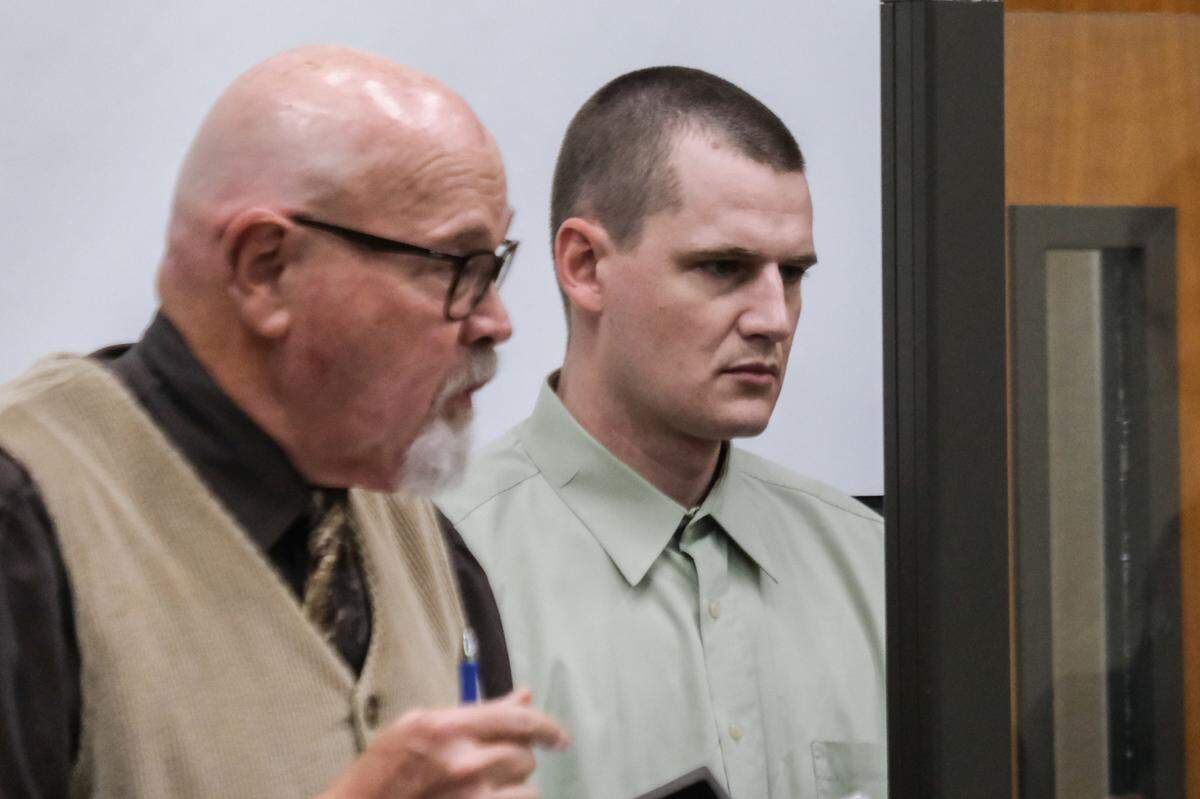
Driver was ready to accept responsibility since first court hearing, lawyer says
On the form where Bernal signed his plea, the date “4/10/25” was scratched out and replaced with “5/21/25.”
That’s because, according to Bernal’s attorney Ilan Funke-Bilu, Bernal wanted to plea guilty since his arraignment date on April 10. He said logistical reasons are why Bernal waited to enter a guilty plea until May 21.
Funke-Bilu said his client wanted to accept responsibility as early as possible because he had “extraordinary remorse and responsibility for this tragedy” and “to delay the acceptance would unnecessarily traumatize the family, and the family certainly did not deserve that.”
“He doesn’t want to continue living with something that he’s responsible for without accepting society’s punishment,” Funke-Bilu said.
Funke-Bilu said he plans to argue for his client to receive seven years, which would be the middle term for manslaughter — two years — plus the five-year sentencing enhancement for leaving the scene. He did not share any mitigating factors he plans to argue for at the sentencing on June 25.
Mitigating factors are elements that the judge would consider for a lighter sentence, while aggravating factors, which the District Attorney’s Office will argue, are elements that the judge would consider for a heavier sentence.
“He’s a broken man. He’s killed an innocent 11-year-old. And he’s broken, he see his flaws, he sees what he’s responsible for and he needs to atone,” Funke Bilu said. “He’s a good man who’s shown his flaws and his frailty and the consequences of a bad decision, and he feels terrible about it. But he’s on the way on the road to recovery, and it begins by accepting responsibility.”
Funke-Bilu said he understands why the family feels the maximum punishment of nine years and eight months isn’t enough, but added that California law has assigned appropriate punishments for crimes that the court must abide by.
Family plans to speak at sentencing
In the living room of their apartment, Maria Orozco and Francisco Gutiérrez continue to decorate an altar with photos of José, toy cars, his school projects and soccer medals.
The parents said they take each day at a time, grieving for their child while also being there for José’s younger brother, Luis.
Their family and community in both Atascadero and Mexico have offered overwhelming support and also believe Bernal deserves the maximum punishment or more for taking José’s life, they said.
Maria Orozco said she believes a longer sentence will help prevent Bernal from taking another person’s life.
“If he is released, something could happen to another child,” she said. “If he doesn’t receive a fair punishment, he’ll do it again.”
She said several community members have reached out to her asking to attend the June 25 sentencing because they also don’t think the maximum punishment is fair.
“It hurts that José is no longer here, and it’s not fair that (Bernal) will have so few years in prison and we will continue to suffer this pain forever,” Teresa Gutiérrez, José’s aunt, told The Tribune in Spanish.
For now, the family is waiting for their day in court, when they can finally speak to the judge about the impact this tragedy has had on their lives.
“He gets to come free in 10 years. Where’s Jose’s freedom? Where’s Maria and Francisco’s freedom? This whole family has been devastated by what he has done,” Maria Contreras said. “That is not justice.”
This story was originally published June 11, 2025 at 12:00 PM.